12 Garden Pathway Ideas That Add Charm to Your Yard
Introduction
Many gardens have beautiful plants, colorful flowers, and healthy greenery, yet something still feels missing. Often, it’s the pathway. Without a clear walkway, a yard can look unfinished, even when the landscaping itself is lovely. A thoughtfully designed path helps guide the eye, creates structure, and makes the entire outdoor space feel more welcoming.
The good news is that you don’t need a huge budget or a professional landscaper to create a charming garden walkway. These garden pathway ideas that add charm to your yard range from simple weekend projects to more polished designs that can completely change how your outdoor space feels. Whether you have a cottage-style garden, a modern backyard, or a small side yard, the right pathway can bring everything together.
In this guide, you’ll find practical inspiration, styling tips, and realistic ways to recreate each look. Many of these ideas can be customized to fit your budget and available space, making them easy to adapt for almost any home.
1. Classic Stepping Stones Through Lush Greenery
Few pathways feel as inviting as stepping stones winding through thick greenery. The natural contrast between solid stone and soft plants creates a relaxed garden feel that encourages you to slow down and enjoy the space. As flowers spill gently around the edges and sunlight filters through nearby trees, the pathway feels like a hidden trail waiting to be explored.
To recreate this look, place large stepping stones about 18 to 24 inches apart along your desired route. Surround them with low-growing ground covers such as creeping thyme, moss, or dwarf mondo grass. What I personally love about this style is how flexible it is. It works in both large and small gardens. Avoid placing stones too far apart, as this can make walking uncomfortable. Depending on stone type and size, expect to spend around $50 to $200.
2. Gravel Garden Pathway with Cottage Charm
A gravel path instantly brings a relaxed cottage-garden feeling to a yard. The soft crunch underfoot, combined with blooming flowers and natural textures, creates a space that feels welcoming and lived in. Light-colored gravel reflects sunlight beautifully and can make even a small garden appear brighter and more open.
Start by outlining your path with metal edging, bricks, or natural stone borders. Lay landscape fabric underneath to reduce weeds before adding gravel. A lot of people skip the edging step, but it makes all the difference by keeping the gravel neatly contained. Choose pea gravel or crushed stone for comfortable walking. This is one of the more budget-friendly garden pathway ideas, typically costing between $75 and $250 depending on the pathway length.
3. Garden Pathway Ideas Using Rustic Brick Walkways
Brick pathways bring warmth and character that never seem to go out of style. Their rich earthy tones pair beautifully with greenery, creating a yard that feels established and welcoming. Whether arranged in a herringbone pattern or a simple running bond design, bricks add texture and visual interest without overpowering surrounding plants.
For a traditional look, choose reclaimed bricks with slightly weathered surfaces. Install them over a compacted sand base to help prevent shifting. In my experience, the biggest mistake here is skipping proper leveling before installation. Uneven bricks can quickly become a tripping hazard. A brick pathway generally costs between $150 and $500, depending on materials and pathway size. If you’re looking for something with lasting charm, this option is hard to beat.
4. Curved Stone Walkway for a Natural Look
Straight pathways can sometimes feel formal, while curved walkways add movement and softness. A gently winding stone path encourages exploration and makes a garden appear larger because you can’t see the entire route at once. Combined with layered plants and natural textures, the effect feels relaxed and organic.
Use irregular flagstones or natural stone pavers arranged in gentle curves rather than sharp angles. Fill gaps with gravel, moss, or low-growing plants to soften the appearance. I always recommend this when someone wants a change without starting over because the curved design alone can make an existing garden feel completely different. Most stone pathways fall between $200 and $800, depending on the materials used and the overall size of the project.
5. Frame Your Walkway with Solar Lanterns
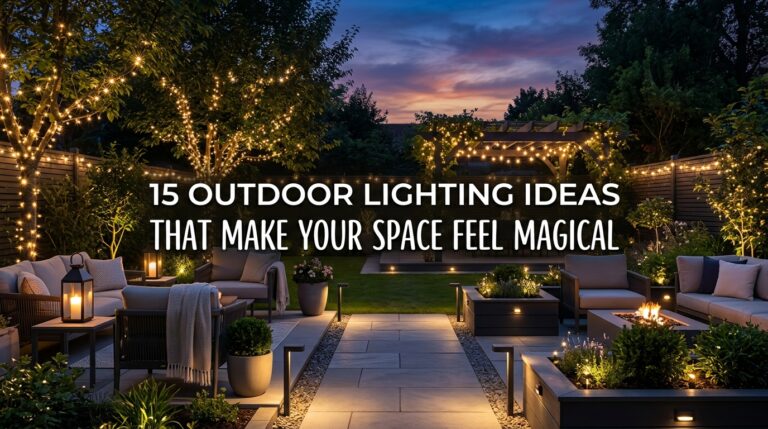
A garden pathway becomes even more inviting when it continues to shine after sunset. Small solar lanterns placed along the edges create a warm glow that highlights the shape of the path while making evening walks feel relaxing. As the light reflects softly on stone or gravel, the garden takes on a cozy atmosphere that encourages you to linger outdoors a little longer.
Choose warm white solar lights instead of bright cool-toned bulbs for a softer look. Space them about 6 to 8 feet apart so the lighting feels balanced rather than overwhelming. You can also mix stake lights with lantern-style fixtures for added character. A lot of people place every light at the same height, but varying the style slightly makes the pathway look more natural. A basic lighting setup usually costs between $30 and $120, making this one of the easiest weekend upgrades.
6. Add Character with Wooden Garden Boardwalks
If your yard has uneven ground or tends to stay damp after rain, a wooden boardwalk offers both function and charm. Natural wood creates a relaxed outdoor feel that pairs beautifully with wildflowers, ornamental grasses, and nearby trees. The rich grain of cedar or pressure-treated lumber adds warmth while giving your garden a distinct focal point.
Build the boardwalk slightly above ground level to improve drainage and extend the life of the wood. Seal the boards with an outdoor wood protector every few years to help prevent weather damage. What I personally love about this idea is how peaceful it feels, especially when surrounded by lush greenery. Avoid glossy finishes, as they can become slippery after rain. Depending on the wood and pathway length, expect to spend around $250 to $900.
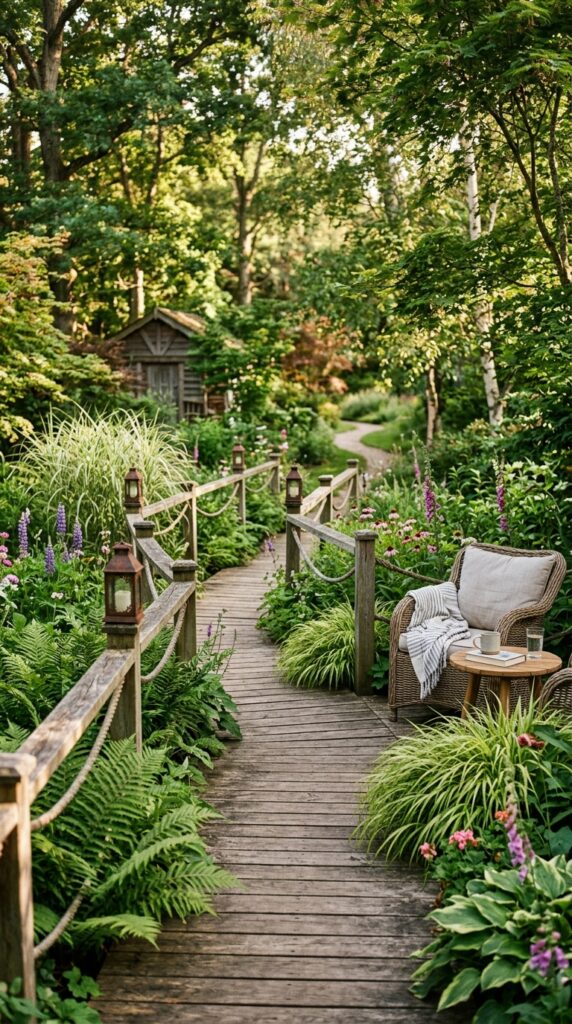
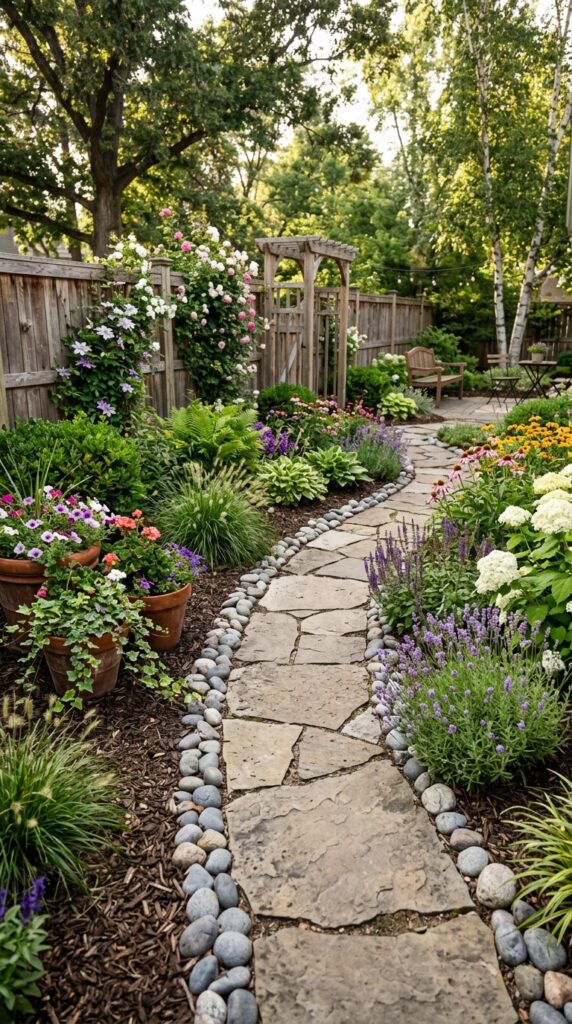
7. Garden Pathway Ideas with River Rock Borders
Sometimes it’s the edging that makes a pathway stand out. Smooth river rocks placed along both sides of a stone or gravel walkway add texture while creating a clean, finished appearance. Their rounded shapes contrast beautifully with crisp pavers and colorful plants, giving the garden a calm, natural feel.
Choose river rocks in shades of gray, tan, or mixed earth tones to complement your landscaping. Lay landscape fabric beneath the stones to reduce weed growth and help keep everything in place. In my experience, the biggest mistake here is choosing rocks that are too small, which can scatter easily during heavy rain. Medium-sized river rocks usually provide the best balance. This update typically costs $60 to $250, depending on the size of the area.
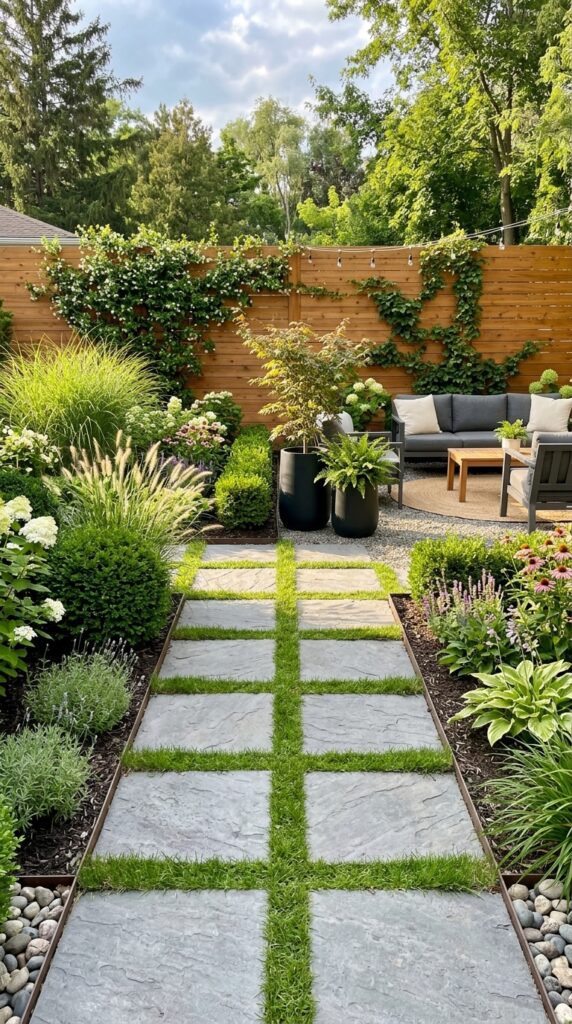
8. Mix Pavers and Grass for a Modern Garden
If you enjoy clean lines with a softer touch, alternating stone pavers and green grass creates a fresh, modern look. Large square pavers separated by strips of healthy lawn feel open and uncluttered while still blending naturally with the surrounding landscape. The contrast between smooth stone and fresh greenery gives the pathway plenty of visual interest without looking busy.
Use concrete or natural stone pavers that are at least 18 inches wide to create comfortable footing. Keep the spacing consistent so the grass grows evenly between each stone. I always recommend choosing drought-tolerant grass if your area experiences hot summers. A common mistake is leaving gaps that are too wide, making the path harder to walk on. Most paver pathways cost between $150 and $500, depending on the materials and installation.
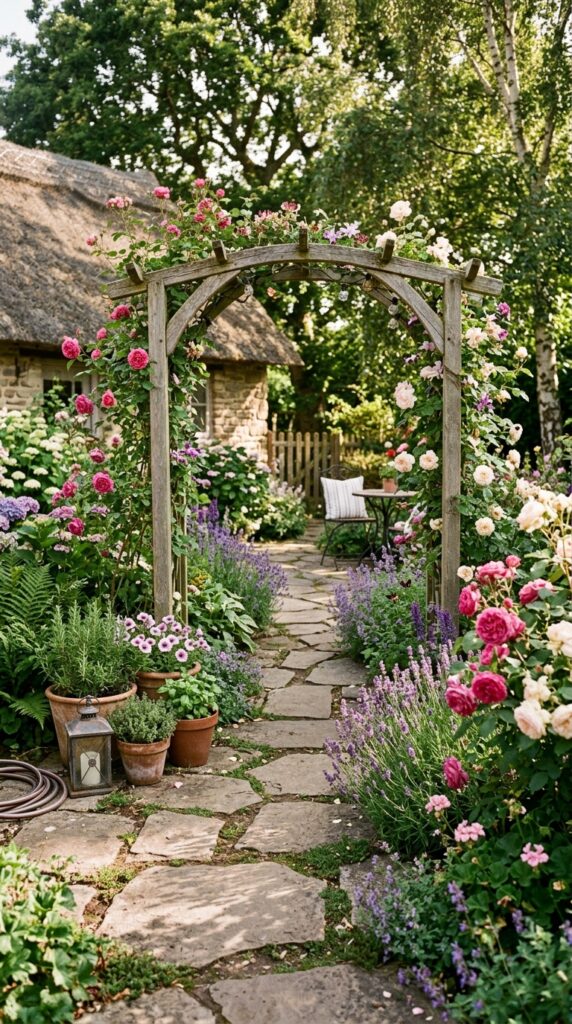
9. Create a Storybook Look with Flagstone Paths
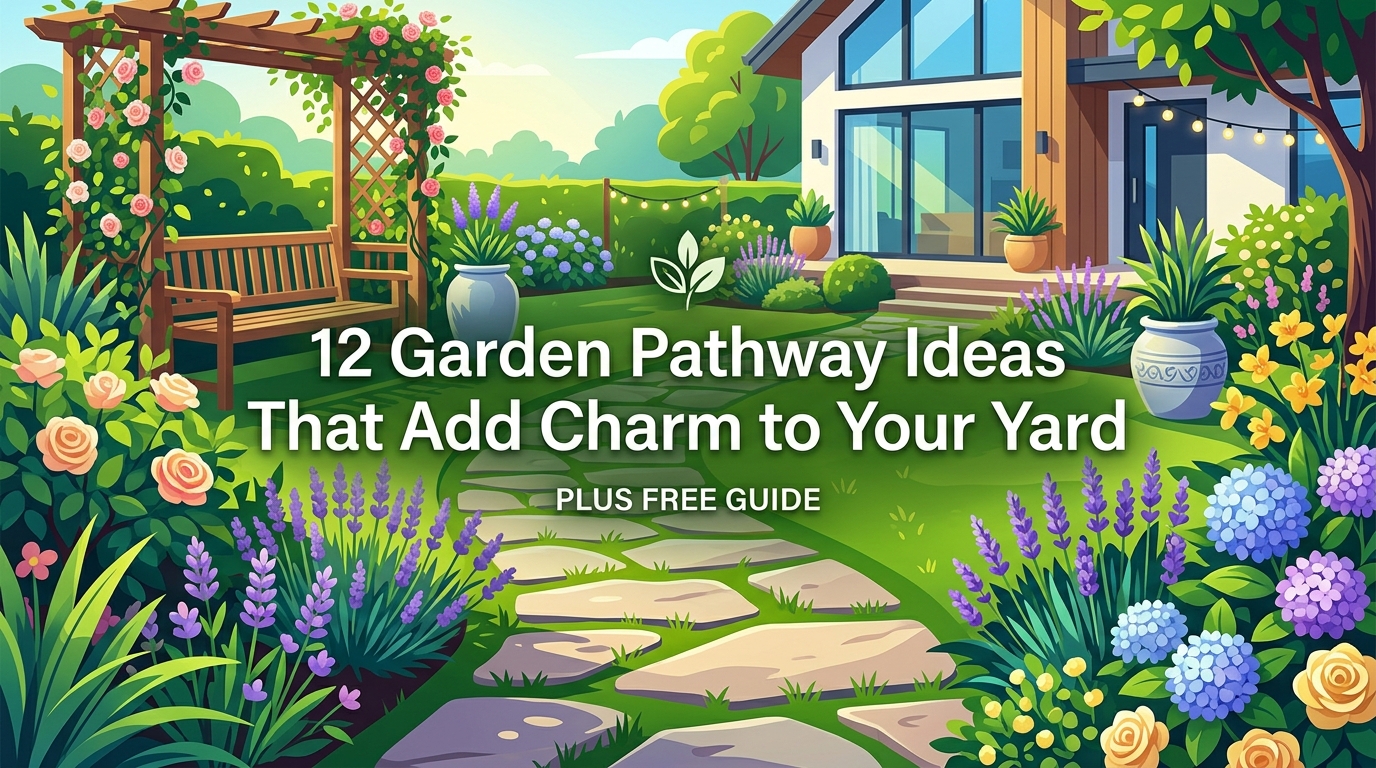
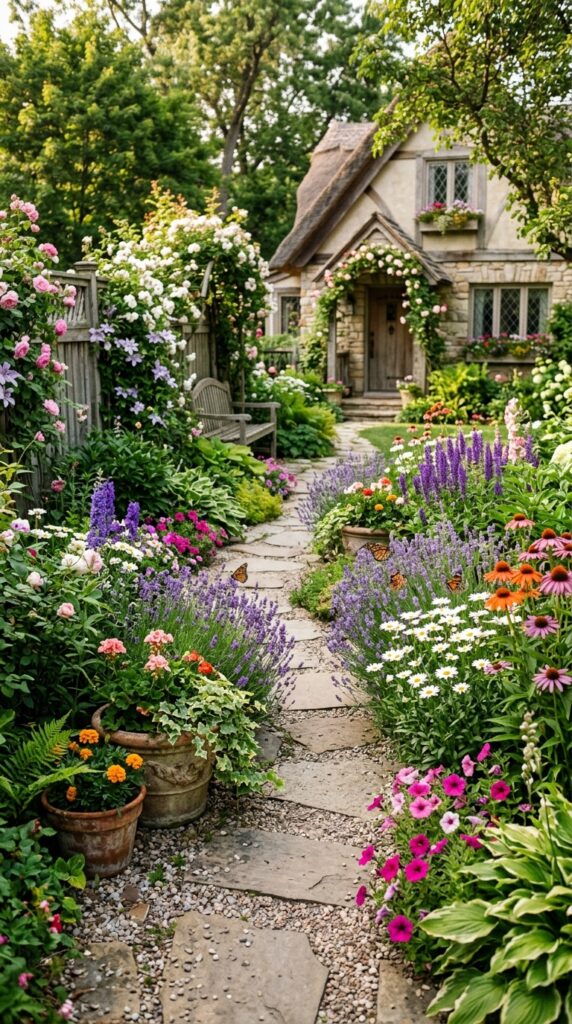
A flagstone pathway has a timeless charm that makes any garden feel warm and inviting. The irregular shapes and natural color variations create a relaxed look, especially when surrounded by blooming perennials, climbing roses, and soft greenery. As sunlight filters through nearby trees, the stone surfaces catch the light in subtle ways, giving the walkway a lived-in character that feels as though it has always been part of the garden.
To recreate this style, choose flagstones with similar thickness so the finished path stays level. Leave small gaps between the stones and fill them with creeping thyme, Irish moss, or fine gravel for extra texture. A lot of people rush the layout, but taking time to arrange the stones before setting them makes the final result look much more natural. Depending on the stone and pathway size, expect to spend around $200 to $700.
10. Brighten the Walk with White Pebbles
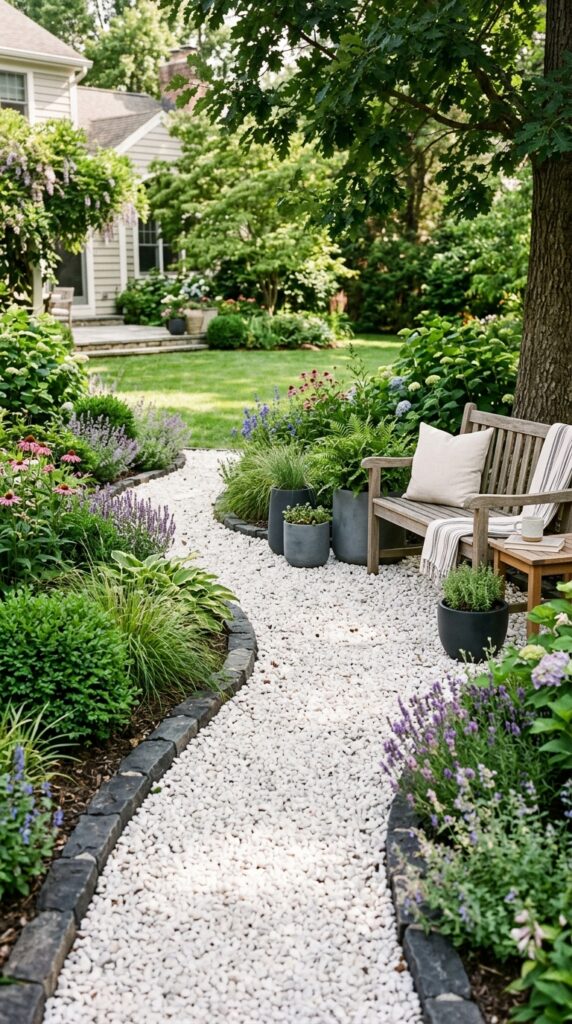
If your garden feels dark or narrow, white pebbles can instantly make the pathway look brighter. Their light color reflects natural sunlight and creates a fresh contrast against green plants, natural wood, and dark mulch. The clean finish works especially well in modern gardens, coastal-inspired landscapes, or simple backyard designs where you want the plants to stand out.
Lay landscape fabric before spreading the pebbles to reduce weeds and help keep the stones clean. Pair them with dark edging, black planters, or gray stepping stones for a balanced look. What I personally love about this style is how little maintenance it requires once installed. Avoid using very small pebbles on sloped paths because they can shift over time. Most white pebble pathways cost between $80 and $250.
11. Line Your Path with Colorful Flower Borders
Flowers can completely change the mood of a simple garden path. A walkway framed with lavender, daisies, salvia, coneflowers, or petunias feels cheerful from spring through late summer. As the blooms gently spill toward the edges of the path, they soften hard landscaping and fill the air with subtle fragrance, making every walk through the garden more enjoyable.
Choose flowers with staggered bloom times so there’s always something in color throughout the growing season. Taller plants should stay toward the back while shorter varieties line the front edge. In my experience, the biggest mistake here is planting everything too close together. Giving flowers room to mature improves both airflow and appearance. Creating beautiful flower borders usually costs between $50 and $200, depending on the plants you select.
12. Finish Your Garden Pathway with a Cozy Seating Spot
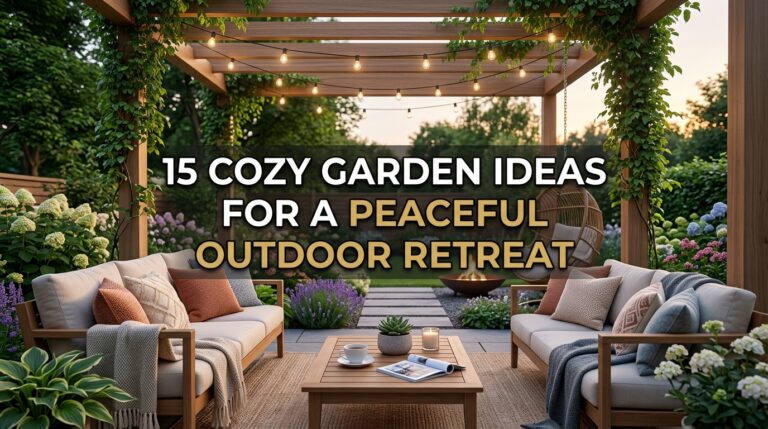
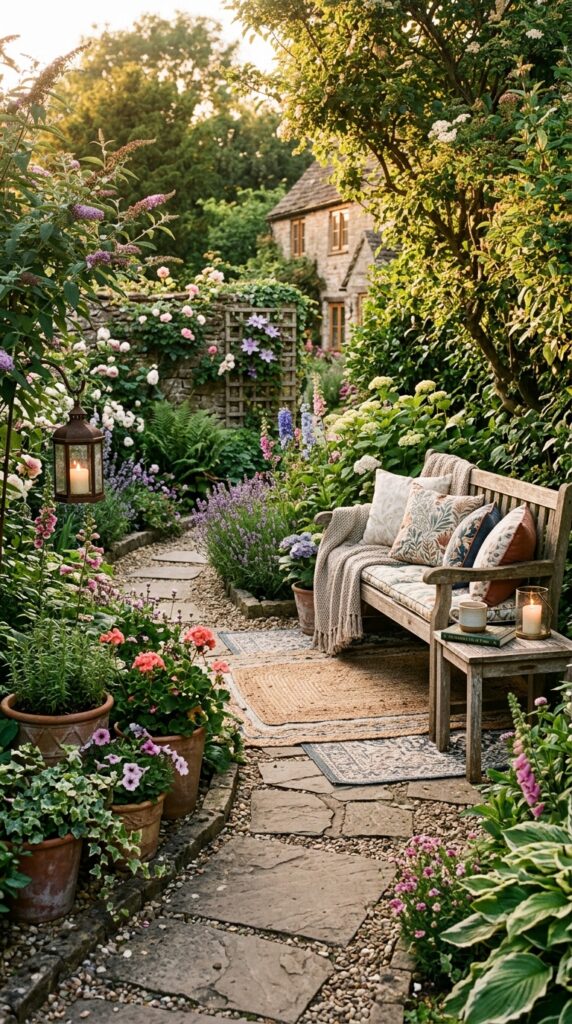
A pathway should lead somewhere worth visiting. Ending your garden path with a small seating area gives the entire yard a sense of purpose. A simple wooden bench, two Adirondack chairs, or a small bistro set surrounded by plants creates a quiet place to enjoy a morning coffee, read a book, or watch the garden change with the seasons. It turns an ordinary walkway into a destination.
Choose weather-resistant furniture that fits comfortably without overcrowding the area. Add outdoor cushions in earthy tones, a lantern, and a few container plants to make the space feel welcoming. I always recommend this when someone wants a noticeable change without redesigning the whole yard because it makes the garden feel complete. Depending on the furniture you choose, expect to spend around $100 to $400.
Conclusion
Creating a beautiful yard doesn’t always require major landscaping or a large budget. Sometimes, one well-designed walkway is enough to tie everything together and make your outdoor space feel more welcoming. These garden pathway ideas that add charm to your yard show that simple materials like gravel, brick, flagstone, wood, or stepping stones can make a lasting impression when paired with thoughtful planting and a few decorative details.
You don’t need to complete every project at once. Start with one pathway that suits your home’s style, then add lighting, flower borders, or a cozy seating area as time and budget allow. Small improvements often have the biggest visual impact because they make your garden easier to enjoy every day.
The best garden pathways feel natural, practical, and personal. Choose materials that complement your landscape, focus on comfort as well as appearance, and create a path you’ll enjoy walking through season after season.
Which of these garden pathway ideas that add charm to your yard would you try first? I’d love to hear what you’re planning in the comments.
FAQs
How wide should a garden pathway be?
Most garden pathways work well when they’re between 30 and 48 inches wide. A narrower path is suitable for quiet garden strolls, while a wider walkway feels more comfortable for two people walking side by side. Always consider how you’ll use the space before choosing the width.
What is the most affordable material for a garden pathway?
Gravel is one of the most budget-friendly options. It’s easy to install, drains well, and suits many garden styles. Mulch and recycled bricks are also affordable choices if you’re looking to keep costs low.
How do I keep weeds from growing in my pathway?
Installing landscape fabric beneath gravel, pebbles, or stones helps reduce weed growth. Regular sweeping and occasional hand weeding will keep the path looking tidy. Refreshing gravel or mulch every few years also helps maintain a neat appearance.
Which pathway material lasts the longest?
Natural stone and brick are among the most durable materials for garden pathways. When installed on a properly prepared base, they can last for decades with minimal maintenance. Regular cleaning and occasional leveling will help extend their lifespan.
Can I build a garden pathway as a DIY project?
Yes. Many garden pathways are beginner-friendly and can be completed over a weekend. Gravel paths, stepping stone walkways, and simple paver designs require only basic tools and careful planning. Starting with a smaller section is a great way to build confidence.