14 Monochromatic Eye Makeup Ideas Using One Color Family
Choosing several eyeshadow colors can make a simple makeup routine feel more complicated than it needs to be. You may like a palette in theory, then struggle to decide which shades belong together or how to stop the finished eye from looking muddy.
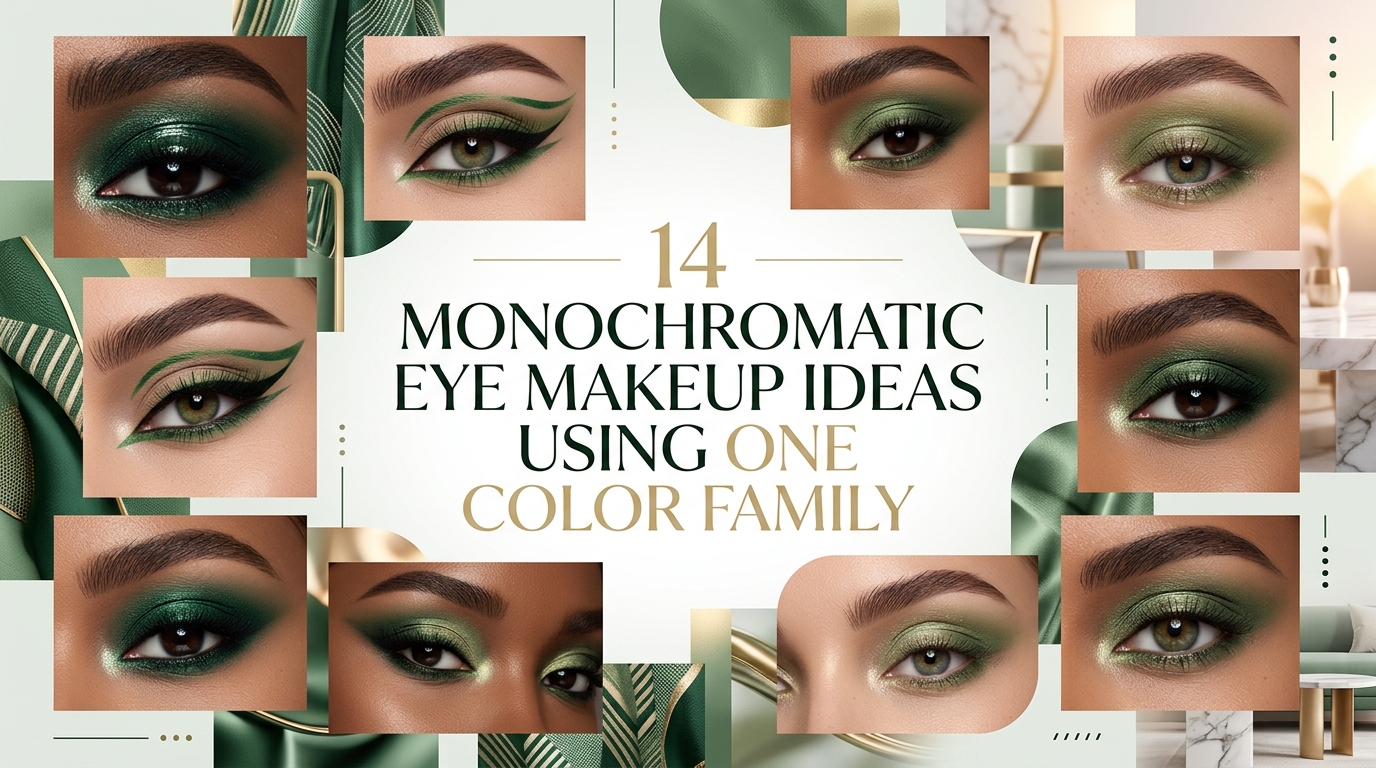
These 14 monochromatic eye makeup ideas using one color family make color pairing much easier. Instead of mixing unrelated shades, each look stays within one family and creates depth by changing the tone, finish, or intensity. You can use dusty pink with deep rose, taupe with chocolate brown, sage with forest green, or pale blue with navy.
Monochromatic eye makeup does not mean applying one flat shade everywhere. The most flattering versions use lighter color where you want brightness and deeper color near the crease, outer corner, or lash line. You also do not need a large makeup budget. A small three or four shade palette can create a complete look. Start with a color family you already enjoy wearing and build from there.
1. Soft Brown Monochromatic Eye Makeup Ideas
Brown is one of the easiest color families to use because you can move from pale beige to caramel, chocolate, and espresso without introducing another hue. The finished eye feels warm and polished beside cream clothing, soft denim, linen, and gold jewelry. A satin beige lid keeps the deeper brown from feeling heavy.
Sweep caramel through the crease, press medium brown over the lid, and deepen only the outer corner with chocolate. Add espresso close to the upper lashes if you want more definition. In my experience, the biggest mistake is using the darkest brown over too much of the eye, which removes the gradient. Keep at least three clear levels of depth. A small brown palette may cost between $15 and $40 and can also work for everyday makeup.
2. Dusty Rose From Lid to Lash Line
Dusty rose creates a soft, romantic eye without relying on several unrelated colors. Pale blush, muted rose, and deeper berry pink can build enough contrast to define the eyes while keeping the overall look gentle. The color family pairs beautifully with cream satin, gray knitwear, pearl jewelry, and a soft nude lip.
Blend a light rose shade through the crease, press dusty pink onto the lid, and use a deeper rose brown around the outer corner and lash line. What I personally love about this look is that the color stays visible without feeling overly bright. Avoid using several pale pinks with the same depth, since the eye can look flat. A small pink toned palette may cost between $18 and $45, while an individual rose shadow usually costs $8 to $20.
3. Taupe Monochromatic Eye Makeup for a Soft Smoky Finish
Taupe gives you the depth of smoky makeup without the intensity of black. Pale mushroom, cool taupe, and charcoal taupe create a muted gradient that looks especially refined with gray, black, cream, or silver accessories.
Start with a light taupe through the crease, add a medium shade over the lid, and press a deeper taupe along the outer lashes. Keep the darkest color low so the eye stays open. A lot of people over blend taupe shades until everything becomes one gray patch. Use a clean brush only on the edges and let the individual tones remain visible. A compact taupe palette may cost between $15 and $40. If you already own a brown palette, you may only need one cooler taupe shade for around $8 to $18.
4. Plum Eyeshadow in One Rich Color Family
Plum gives monochromatic makeup more drama while still feeling cohesive. Mauve, dusty plum, aubergine, and wine tones can move from soft to deep without introducing a second color family. The result works beautifully with burgundy clothing, cream satin, charcoal, and silver jewelry.
Blend mauve through the crease and press medium plum onto the lid. Deepen the outer third with aubergine and use a slightly darker plum close to the lashes. In my experience, the biggest mistake is choosing several plum shades with strong red undertones and no neutral transition. A muted mauve between your skin and the deeper color keeps the edges softer. A plum palette may cost between $18 and $45, while a small detail brush may add $5 to $12 if needed.
5. Olive Green Monochromatic Eye Makeup Ideas
Olive is an easy way to wear green without moving into a very bright look. Pale sage olive, muted khaki, moss, and deep forest olive create an earthy gradient that feels rich beside camel, cream, brown leather, and gold jewelry.
Blend light khaki through the crease and press olive across the lid. Add moss green to the outer corner and use the deepest olive near the lashes. What I personally love about this family is how easily it works with neutral clothing and warm accessories. Avoid adding a bright emerald into the same look if you want the finish to stay muted and cohesive. A green palette may cost between $18 and $45. Individual olive shadows usually range from $8 to $20.
6. Peach and Apricot Eye Makeup
Peach creates a warm, fresh monochromatic look that works especially well during the day. Pale apricot, soft peach, terracotta peach, and deeper burnt peach can shape the eye while keeping the finish bright. The color family looks lovely with white cotton, beige linen, gold jewelry, and warm nude lips.
Sweep pale apricot through the crease, add medium peach across the lid, and place a deeper terracotta tone at the outer corner. Keep the strongest color close to the lashes if you want more definition. A common mistake is using only pale peach shades, which can disappear once blended. Include one medium or deeper tone. A small peach palette may cost between $15 and $40, while a single deeper accent shadow may cost around $8 to $18.
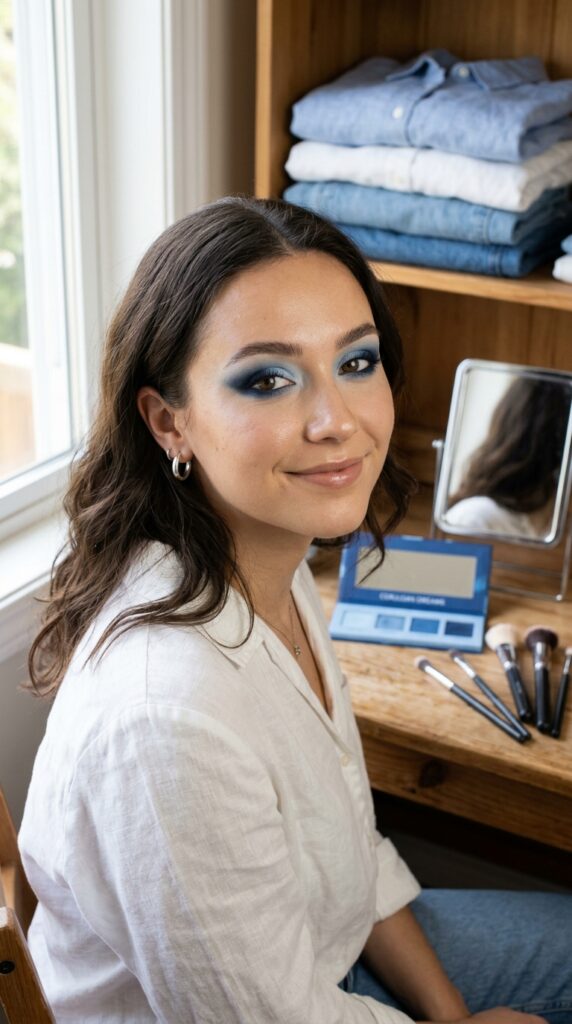
7. Blue Monochromatic Eye Makeup From Powder to Navy
Blue becomes easier to wear when you keep the entire look within one family. Powder blue, denim, cobalt, and navy can create a clear gradient with plenty of depth. The result looks striking with white, gray, soft denim, and silver jewelry.
Blend a muted denim tone through the crease, add medium blue across the lid, and keep navy concentrated at the outer corner and lash line. Use pale blue on the inner lid if you want more brightness. In my experience, the biggest mistake is mixing several very bright blues at equal intensity. Let one medium shade lead and use the others to create light and shadow. A blue palette may cost between $18 and $45, while individual shadows often cost $8 to $20.
8. Burgundy Eye Makeup With Wine Tones
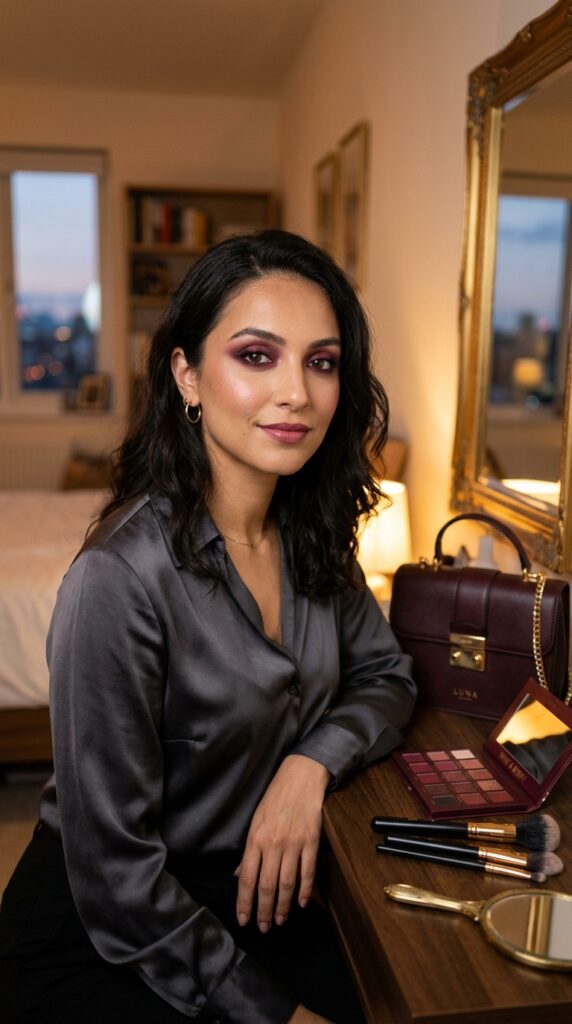
Burgundy creates a dramatic monochromatic look without relying on black. Soft berry, burgundy, wine, and deep maroon can shape the eye while maintaining a rich, coordinated finish. The colors pair beautifully with cream, charcoal, blush, or black clothing.
Begin with a muted berry transition shade and add burgundy across the mobile lid. Use wine or maroon around the outer corner and upper lashes. What I personally love about this look is that it feels colorful while still having enough depth for evening makeup. Avoid taking dark wine shades too far beneath the lower lash line unless you want a stronger smoky effect. A burgundy palette may cost between $18 and $45. One versatile wine shadow can cost around $10 to $20.
9. Monochromatic Eye Makeup Ideas in Soft Lavender
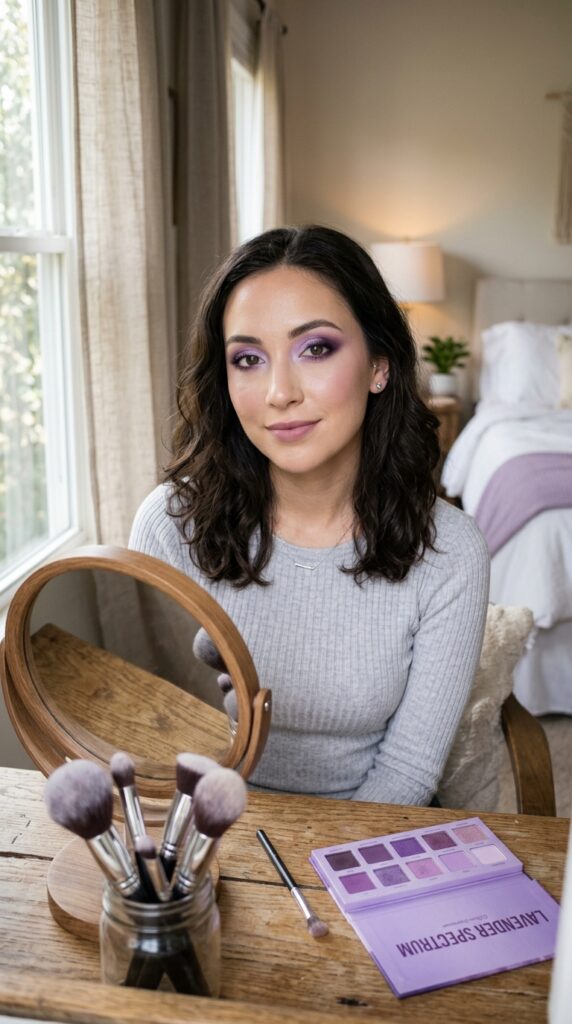
Lavender creates a lighter color story that can still have plenty of dimension. Pale lilac, muted lavender, soft violet, and deeper purple give you several levels of depth without leaving the same family. This combination looks especially fresh with gray, cream, white, or silver accessories.
Apply pale lilac through the crease, press lavender across the lid, and place soft violet on the outer third. Add deeper purple close to the lash line if you want more structure. A lot of people use only cool lavender tones and find that the eye looks washed out. Choose one slightly deeper muted purple for balance. A small purple palette may cost between $15 and $40, while a single lavender shadow may cost $8 to $18.
10. Terracotta and Rust Eye Makeup
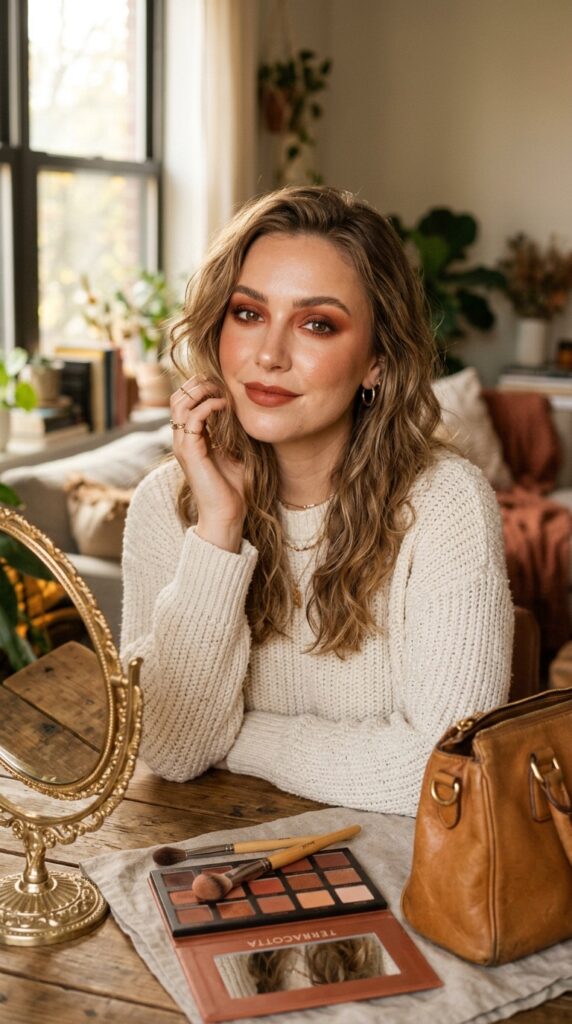
Terracotta gives monochromatic makeup a warm, earthy finish that feels especially flattering during autumn or evening events. Soft clay, burnt orange, rust, and deep brick shades create a gradient that pairs well with cream knits, camel coats, brown leather, and gold jewelry.
Blend soft clay through the crease, place terracotta across the lid, and deepen the outer corner with rust or brick. Keep the deepest shade near the lashes so the warm color remains clear. In my experience, the biggest mistake is adding too much orange too high toward the brow. Let the transition fade into a softer clay tone. A rust toned palette may cost between $18 and $45. If you already own warm neutrals, one terracotta shadow may cost around $8 to $20.
11. Gray Monochromatic Eye Makeup for Evening
Gray can create a modern smoky eye without using a completely black lid. Dove gray, pewter, charcoal, and deep slate move smoothly from light to dark and look especially striking with black satin, silver jewelry, or a soft pink lip.
Sweep dove gray through the crease and place pewter across the lid. Use charcoal at the outer corner and deep slate along the lashes. What I personally love about this color family is how much control you have over the level of drama. Avoid applying charcoal everywhere at once, which can remove the softer layers underneath. Build the deeper shades gradually. A gray palette may cost between $15 and $40. A small blending brush can cost another $5 to $15 if you need one.
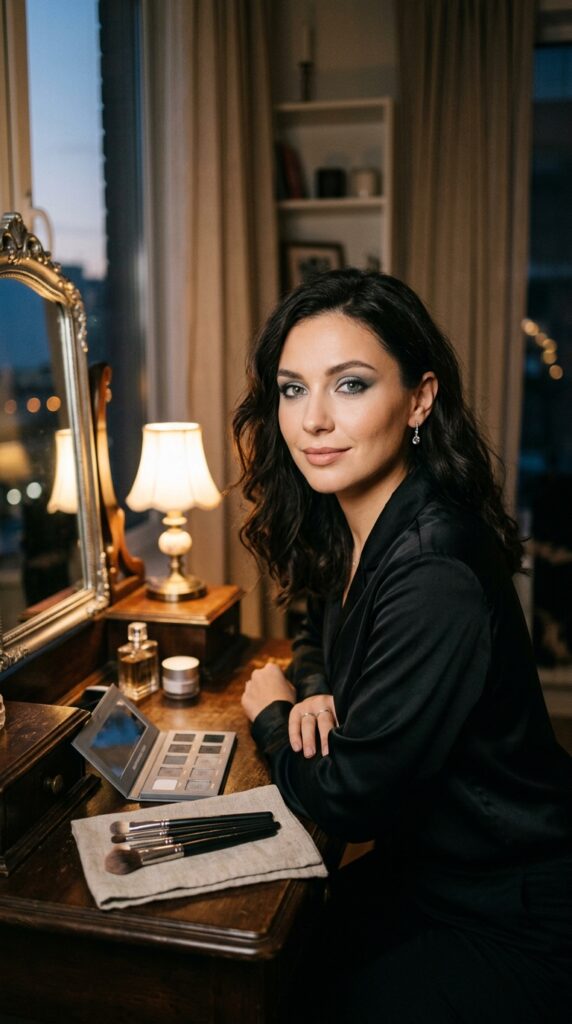
12. Copper Eye Makeup Using One Warm Family
Copper gives the eyes a glowing metallic finish while still allowing the look to stay monochromatic. Pale copper, warm bronze copper, and deep burnt copper create enough variation to make the lid look dimensional rather than flat.
Blend a matte copper brown through the crease, press metallic copper onto the center of the lid, and deepen the outer corner with a burnt copper shade. A common mistake is using reflective finishes everywhere, which can make the eye lose shape. Keep at least one matte tone around the crease or outer corner. A copper palette may cost between $18 and $45, while a metallic copper shadow usually costs $10 to $22. Pair the eye with a soft nude lip so the warm tones stay central.
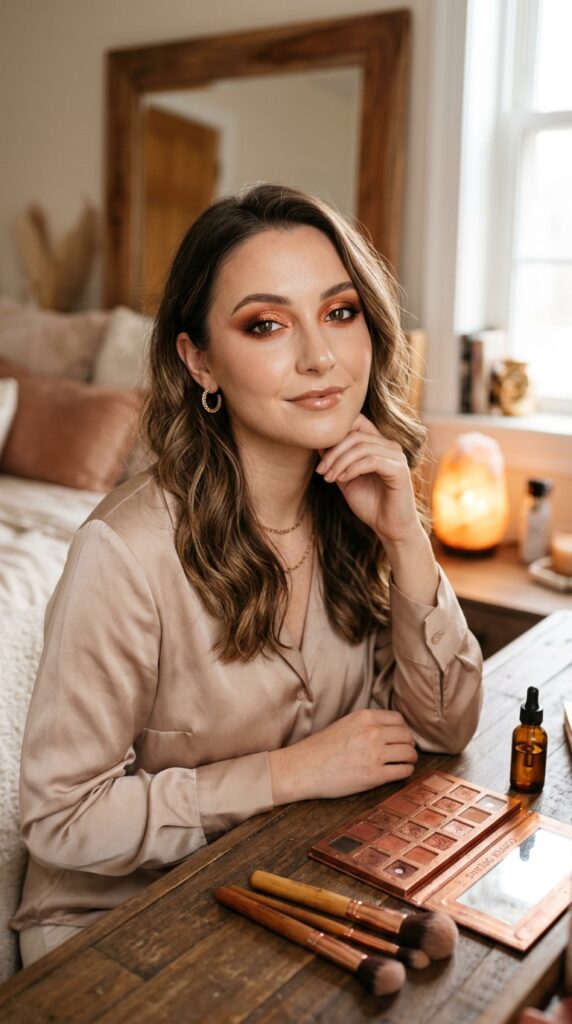
13. Sage Green for a Softer Monochromatic Look
Sage creates a lighter monochromatic green look than olive or emerald. Pale sage, dusty green, eucalyptus, and muted forest tones give the eyes color without feeling too intense. The family pairs beautifully with cream linen, soft gray, natural wood tones, and delicate gold jewelry.
Blend the palest sage through the crease, add dusty green across the lid, and keep muted forest green on the outer corner. I always recommend this when someone wants to experiment with color without moving straight into a very bright eye look. Avoid blending the deepest green too far across the lid, which can cover the softer sage tones. A small sage palette may cost between $18 and $45. Individual green shadows often cost $8 to $20.
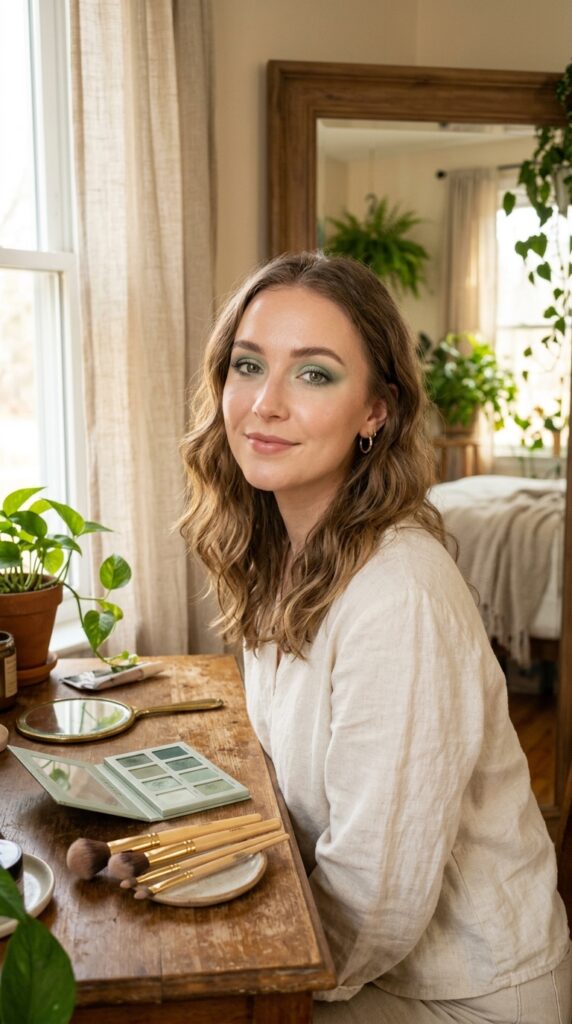
14. Soft Pink to Deep Rose Monochromatic Glam
A pink monochromatic eye can move from delicate to evening ready simply by changing the depth. Pale blush on the inner lid, dusty pink through the crease, rose on the outer section, and deep raspberry near the lashes create a clear gradient without introducing another color family.
Begin with the lightest pink and work gradually toward the deepest shade. Keep raspberry concentrated near the outer lashes so the eye remains bright. In my experience, the biggest mistake is adding several shimmery pinks at once, which can make the lid look overly reflective. Choose one satin or shimmer shade and let the rest stay matte or softly finished. A pink palette may cost between $18 and $45, while one deeper rose shadow can cost around $8 to $20.
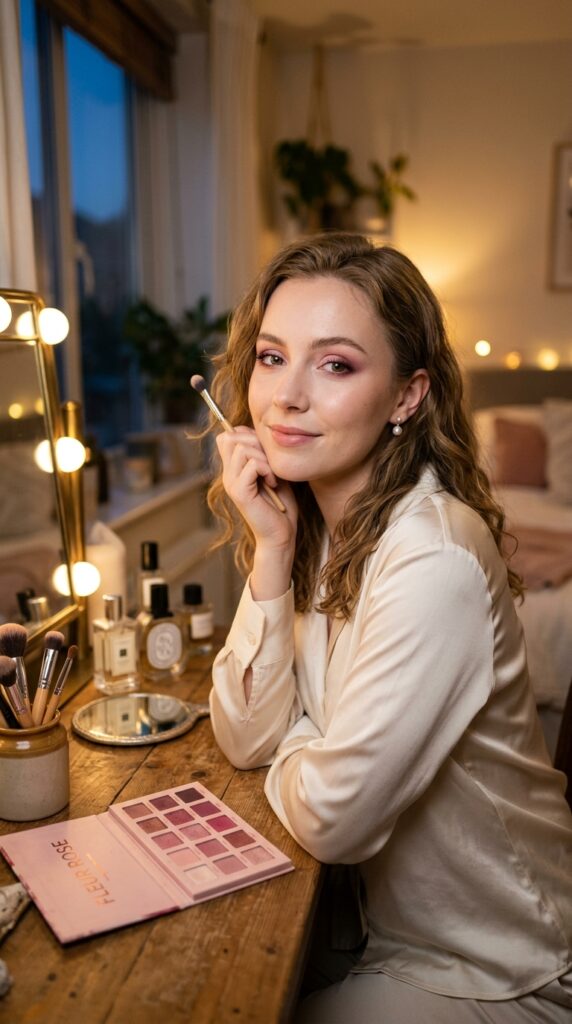
One Color Family Can Create More Depth Than You Expect
Monochromatic makeup does not have to look flat or repetitive. The key is using several levels of the same color family instead of applying one shade from lash line to crease. A pale tone can brighten the inner lid, a medium shade can carry the main color, and a deeper version can add definition where you need it.
These 14 monochromatic eye makeup ideas using one color family give you plenty of options, whether you prefer soft browns, dusty pinks, muted greens, dramatic plums, or cooler blues and grays. Start with one or two color families that already work with your wardrobe and makeup preferences.
You also do not need to buy a large collection. A small palette containing three or four related shades can create multiple looks for day and evening. Focus on contrast, placement, and texture rather than adding more colors.
Which monochromatic eye makeup color family would you try first? I’d love to hear what you’re planning.
Frequently Asked Questions
What does monochromatic eye makeup mean?
Monochromatic eye makeup uses shades from the same color family across the eye. You might combine pale pink, dusty rose, and deep raspberry, for example. The depth and finish can change even though the overall color family stays consistent.
How do you keep monochromatic eyeshadow from looking flat?
Use at least two or three levels of depth. Keep a lighter shade toward the inner lid, a medium tone across the main lid, and a deeper shade near the crease or lashes. Mixing matte and satin finishes can also add dimension.
What monochromatic eye color is easiest for beginners?
Brown and taupe are usually easy places to start because the shades blend naturally and small mistakes are less noticeable. Peach and soft rose are also beginner friendly. Begin with light layers and deepen only the outer corner.
Can monochromatic eye makeup work for evening events?
Yes. Choose deeper tones such as plum, burgundy, navy, charcoal, or chocolate and add a satin or metallic shade to the lid. Keeping the color family consistent can make a stronger eye look feel polished.
Do I need a special palette for monochromatic makeup?
No. You can combine individual shadows you already own as long as they belong to the same color family. A small three or four shade palette can make the process easier, but it is not required.