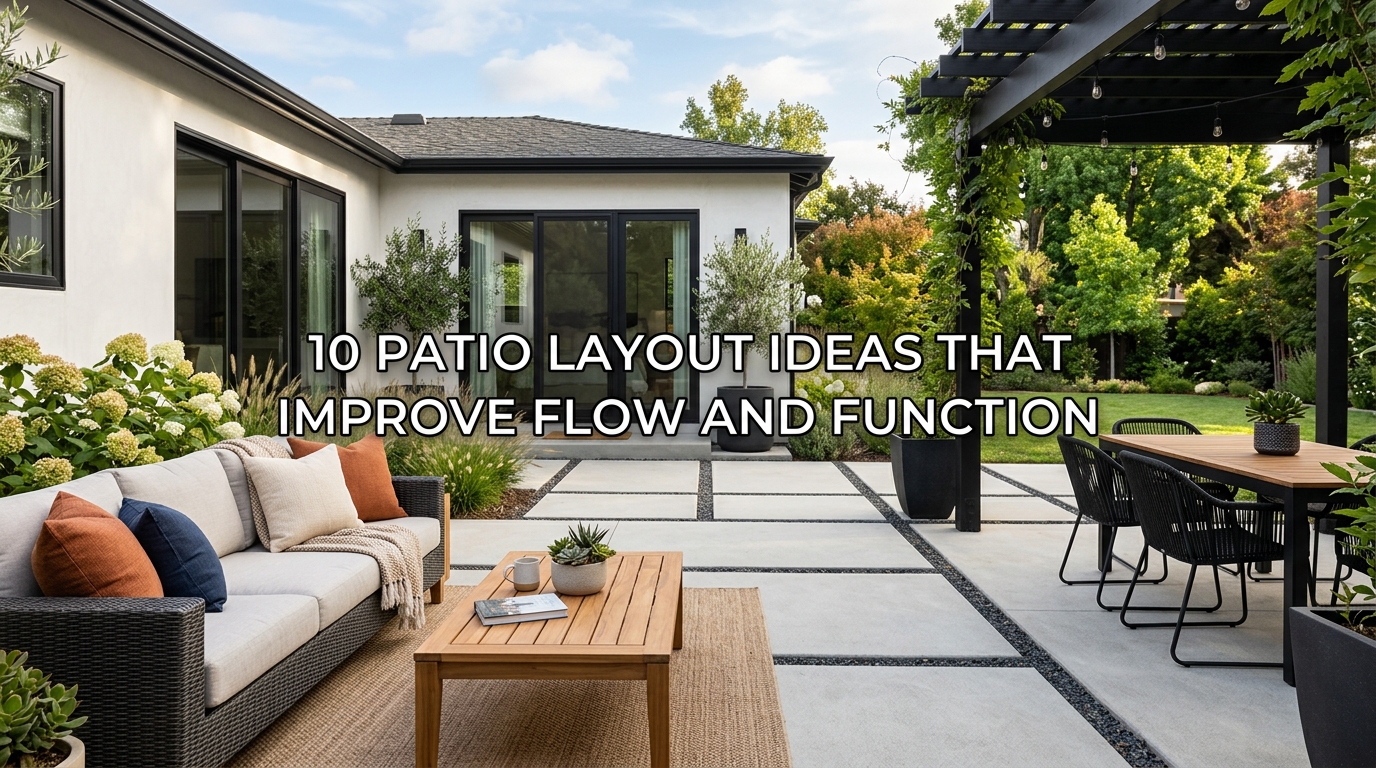
10 Patio Layout Ideas That Improve Flow and Function
A patio should feel like a natural extension of your home, but it’s easy for the space to end up feeling awkward or crowded. Maybe the furniture blocks the walkway, guests have nowhere to gather comfortably, or the layout simply doesn’t encourage you to spend time outside. Even with beautiful furniture, the wrong arrangement can make your patio feel smaller and less inviting than it really is.
These 10 patio layout ideas that improve flow and function are designed to help you create an outdoor space that’s both comfortable and practical. Whether you’re working with a compact balcony, a narrow patio, or a spacious backyard, a few smart layout changes can completely change how the area feels. You’ll find ideas that improve movement, define different zones, and make everyday outdoor living more enjoyable. I always recommend planning the layout before buying new furniture because using the space well often matters more than adding more pieces. With a little creativity and a thoughtful arrangement, your patio can become one of your favorite places to relax, entertain, and enjoy fresh air.
1. Divide Your Patio into Relaxing Activity Zones
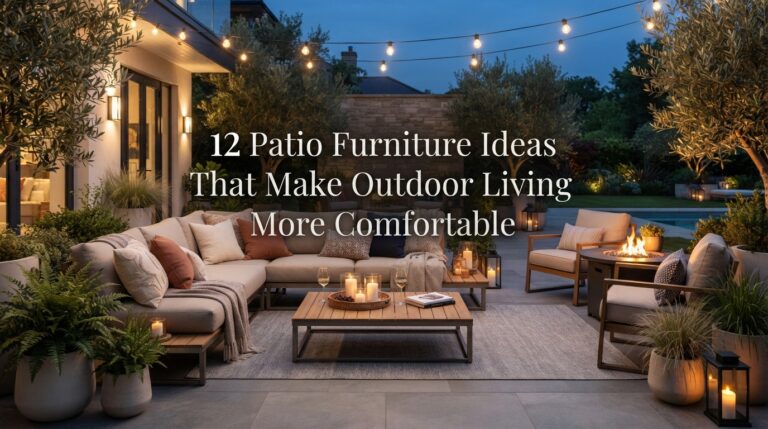
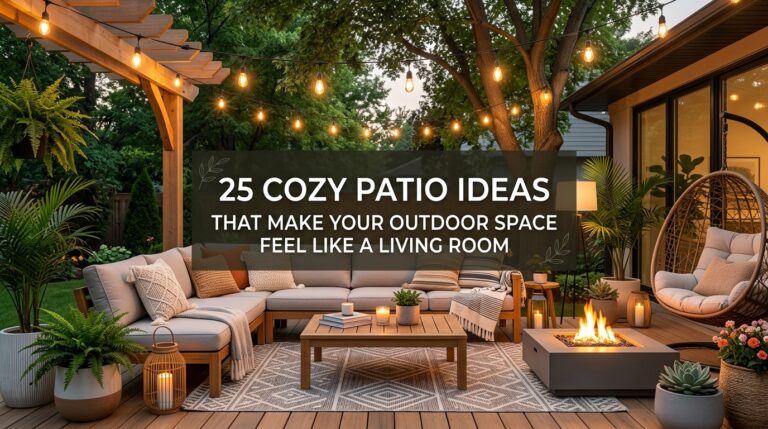
Instead of treating your patio as one large open area, think of it as several smaller spaces with different purposes. Picture a cozy lounge corner with soft cushions and a woven rug, a dining area surrounded by natural wood chairs, and a quiet reading spot tucked beside leafy planters. Breaking up the space this way makes the patio feel organized and welcoming while giving everyone a place to enjoy. Warm outdoor lighting and textured accessories help each section feel connected without looking repetitive.
Start by deciding how you actually use your patio. Leave clear walking paths between each area so movement feels natural. An outdoor rug costing around $60 to $150 is an easy way to define each zone without building permanent structures. In my experience, the biggest mistake here is filling every corner with furniture. Leaving open space helps each area breathe and makes the patio feel larger than it is.
2. Build Your Patio Layout Around a Comfortable Focal Point
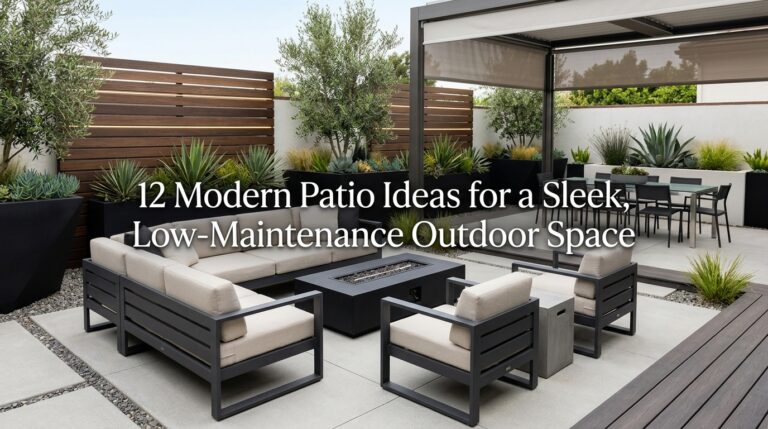
Every outdoor space benefits from having one feature that naturally draws people together. This could be a fire pit, a large coffee table, a water fountain, or even a beautiful outdoor dining table. Arranging your furniture around one central element creates balance and makes conversations feel more natural. The layout feels calm instead of scattered because every piece has a clear purpose.
Choose a focal point that matches the size of your patio. Leave at least three feet of walking space around it so guests can move comfortably. Fire pits generally range from $150 to $600, while a statement coffee table may cost $100 to $300. What I personally love about this approach is that you don’t need expensive furniture to make the patio feel finished. One well-placed centerpiece often has a bigger impact than adding several decorative items.
3. Keep Walkways Open for Better Patio Flow and Function
A patio feels much more relaxing when you can move around without squeezing between chairs or stepping over furniture legs. Wide walkways create a sense of openness, even in smaller spaces. Clean pathways also allow each seating area to feel connected while making everyday tasks, like carrying food outside or watering plants, much easier. Soft lighting along the edges helps guide movement after sunset while adding a welcoming glow.
Aim to leave at least 30 to 36 inches of space for main walkways whenever possible. Before buying furniture, mark the layout using painter’s tape to see how everything fits. This simple step costs almost nothing and prevents expensive mistakes. A lot of people skip this step, but it makes all the difference when creating a patio that’s comfortable to use every day.
4. Use Corner Seating to Make the Most of Every Inch
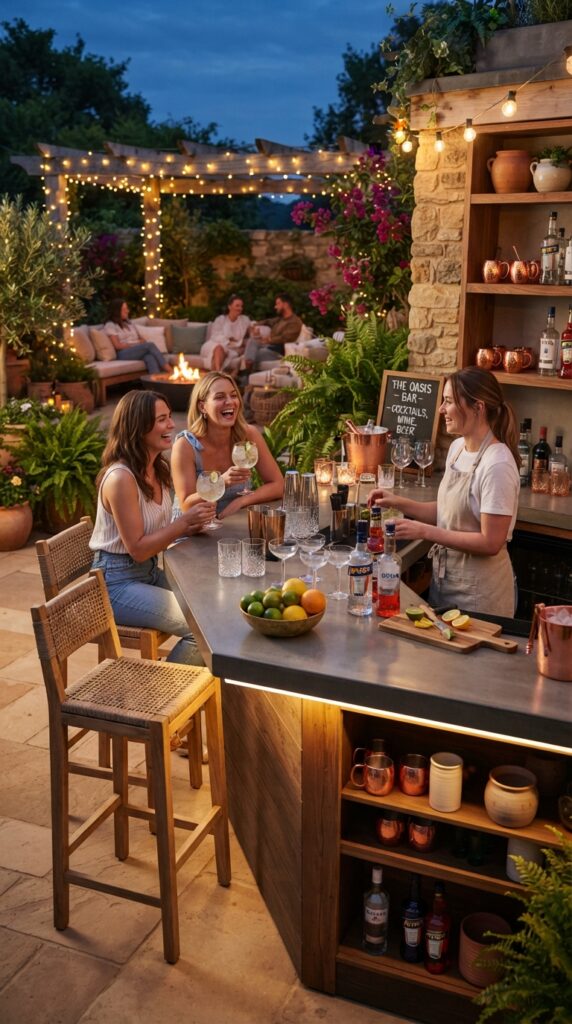
Corners are often overlooked, but they can become some of the most inviting spots on a patio. A sectional sofa or an L shaped bench wrapped with soft cushions creates a cozy gathering place while keeping the center of the patio open. Woven textures, neutral fabrics, and natural wood finishes give the area warmth, while nearby planters soften the edges and make the seating feel tucked into the landscape.
Measure the corner carefully before shopping so the furniture fits without blocking nearby walkways. Outdoor sectionals usually range from $600 to $1,800, while a DIY corner bench can often be built for $200 to $500 using pressure-treated lumber. I always recommend this when someone wants a change without starting over because moving seating into a corner instantly creates more usable floor space.
5. Create a Flexible Patio Layout with Lightweight Furniture
Some of the best patios can easily adapt to different occasions. Lightweight chairs, nesting tables, and movable benches let you rearrange the space in just a few minutes. During a quiet afternoon, you can pull the seating into a cozy circle for reading or relaxing. When friends visit, spread the chairs out to encourage conversation and make room for extra guests. Natural wood, woven wicker, and soft neutral cushions keep the space feeling warm no matter how you arrange it.
Choose weather-resistant aluminum or resin wicker furniture since these materials are easier to move than heavy cast iron pieces. Lightweight accent chairs typically cost $80 to $250, while nesting tables range from $60 to $180. In my experience, the biggest mistake here is buying furniture that’s too bulky for the space. Flexible pieces give you more options without making the patio feel crowded.
6. Frame Your Seating Area with Planters and Greenery
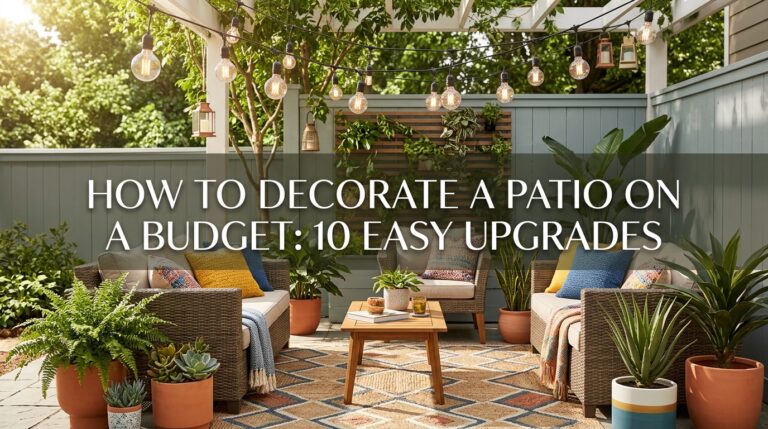
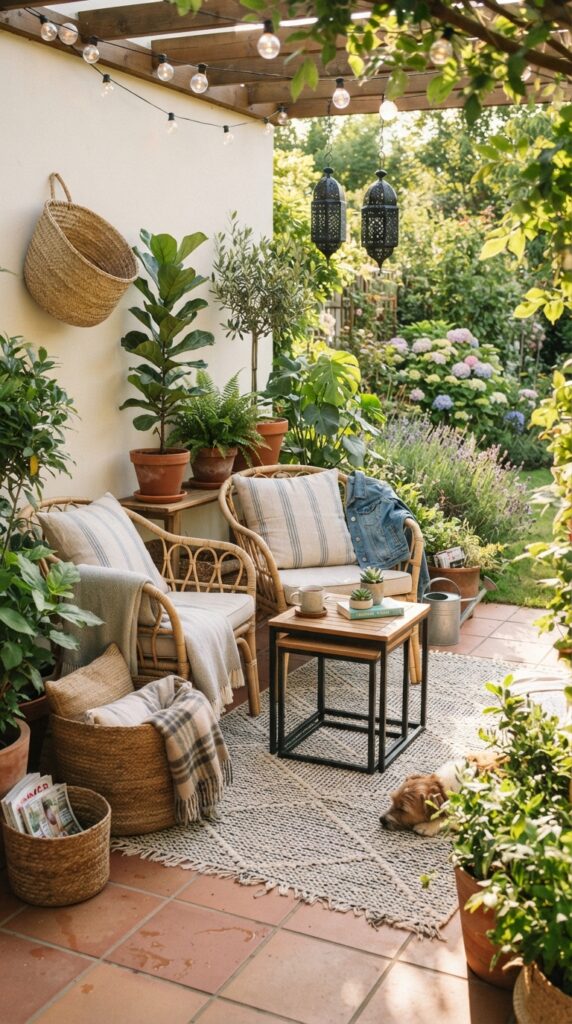
Plants can do much more than decorate a patio. They naturally define different areas while adding texture, color, and privacy. Tall grasses, olive trees, and flowering shrubs create soft boundaries around seating without making the patio feel closed in. Combined with woven planters, wooden furniture, and linen-look cushions, the result feels peaceful and welcoming throughout the seasons.
Place taller planters behind seating and smaller pots beside pathways to maintain clear sightlines. Mixing planters in different heights creates depth without taking up much extra room. Large outdoor planters usually cost $40 to $120, while smaller ceramic pots can be found for $15 to $40. What I personally love about this layout is that greenery makes even simple furniture feel richer and more inviting.
7. Center Your Dining Space for Better Everyday Use
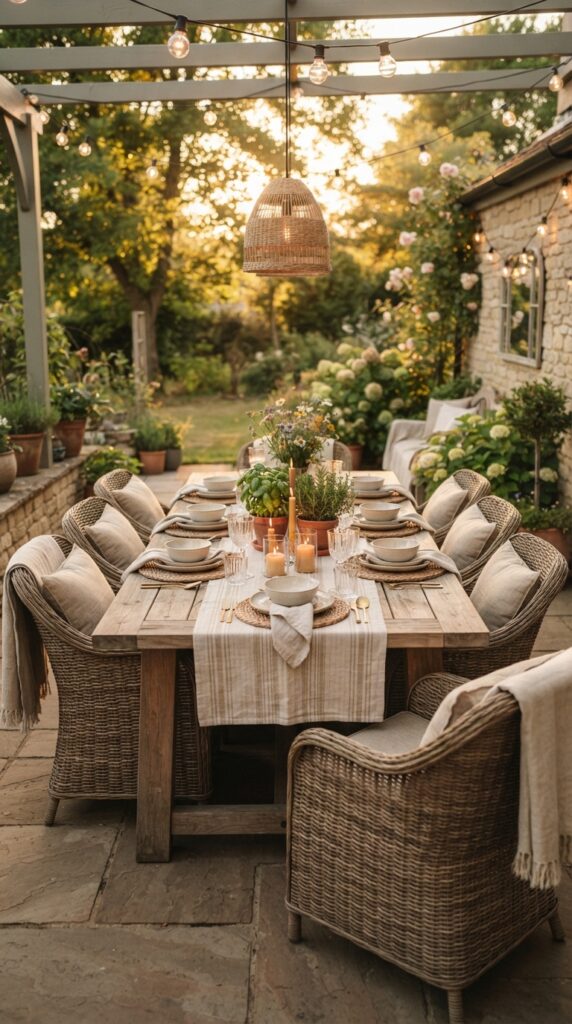
When your dining table sits in the middle of the patio with enough space around it, the entire area feels balanced. Chairs slide out easily, people can move comfortably around the table, and serving meals becomes much less stressful. Pair a natural wood table with woven dining chairs, soft seat cushions, and simple ceramic tableware for an outdoor setup that feels welcoming without looking overly styled.
Leave at least three feet of space around each side of the table whenever possible. This allows guests to move their chairs comfortably without bumping into nearby furniture or planters. Outdoor dining sets generally range from $400 to $1,200 depending on the material and size. A lot of people underestimate the importance of spacing, but giving everyone room to move makes outdoor meals much more enjoyable.
8. Add a Quiet Corner for Reading and Morning Coffee
Not every part of your patio needs to be designed for entertaining. A small reading nook tucked into one corner creates a peaceful escape where you can enjoy a slow morning or unwind after a busy day. A comfortable lounge chair, soft throw blanket, woven side table, and a few leafy plants make the area feel personal without taking over the entire patio. Gentle morning light and natural textures create an atmosphere that encourages you to linger a little longer.
Choose a shaded corner whenever possible to keep the seating comfortable throughout the day. A quality outdoor lounge chair typically costs $150 to $400, while a small side table can be found for $50 to $120. I always recommend adding a lantern or rechargeable table lamp so the space remains useful after sunset. Small details like these often make the biggest difference in how often you use your patio.
9. Use Symmetry to Create a Balanced Patio Layout
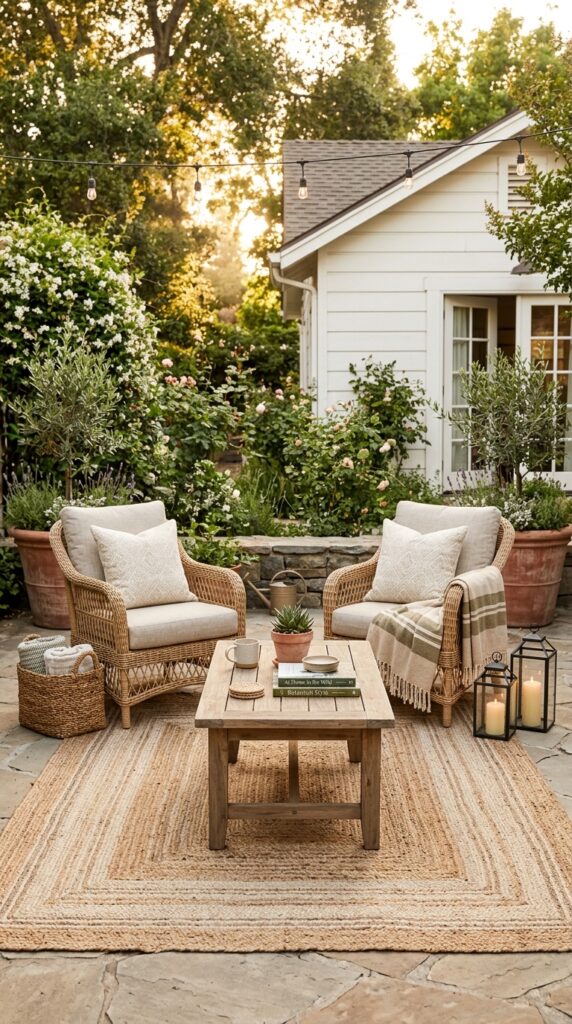
A balanced layout helps a patio feel calm and easy to enjoy. Placing matching chairs on either side of a coffee table or lining up two identical planters at the entrance creates a sense of order without making the space feel stiff. Soft cushions, woven textures, and warm wood finishes add character while the symmetrical arrangement keeps everything visually connected. This approach works especially well if your patio sits directly outside your living room because it creates a smooth transition between indoor and outdoor spaces.
Start with one central piece, such as a coffee table or fire pit, then arrange matching furniture around it. Decorative items like lanterns or planters can mirror each other without looking overly formal. Matching accent chairs usually range from $150 to $350 each, while decorative planters cost around $30 to $80. In my experience, symmetry works best when you leave a little room for natural touches like plants or textured throws so the patio still feels relaxed.
10. Finish with Multi Purpose Pieces That Keep the Patio Functional
The most enjoyable patios include furniture that serves more than one purpose. Storage benches, movable poufs, nesting tables, and rolling serving carts help the space adapt to everyday life without adding clutter. These flexible pieces can provide extra seating during gatherings, store outdoor essentials, or simply keep drinks and snacks within easy reach. Combined with cozy textiles and natural materials, they make the patio feel comfortable without overwhelming the layout.
Choose accent pieces that are easy to move and weather resistant. Storage benches generally cost $120 to $350, outdoor poufs range from $40 to $100, and serving carts usually fall between $80 and $250. What I personally love about this approach is that you can improve the function of your patio without replacing your larger furniture. A few smart additions often make the whole space feel more organized and easier to enjoy.
Conclusion
Creating a patio that feels comfortable isn’t about filling every inch with furniture. It’s about arranging your space so that moving around feels natural, conversations happen easily, and every area has a clear purpose. Even small adjustments, like opening up walkways, creating activity zones, or adding flexible seating, can make a noticeable difference in how often you enjoy your outdoor space.
These 10 patio layout ideas that improve flow and function show that thoughtful planning often has a bigger impact than buying more décor. Start with one or two changes that fit your patio and your budget. As you spend more time outside, you’ll discover what works best for your lifestyle and where you might want to add another chair, planter, or storage piece.
A welcoming outdoor area doesn’t require a complete renovation. With practical layouts, cozy textures, and furniture arranged with purpose, your patio can become one of the most relaxing places around your home.
Which layout idea would you try first? I’d love to hear what you’re planning.
FAQs
How do I create a good patio layout?
Start by deciding how you’ll use the space. Separate the patio into zones for dining, relaxing, or entertaining, then leave clear walking paths between them. Arranging furniture around a focal point also helps the layout feel balanced.
How much space should I leave between patio furniture?
Aim for about 30 to 36 inches of space for main walkways. Around dining tables, leave enough room for chairs to slide out comfortably without hitting nearby furniture or planters.
What furniture works best for a small patio?
Compact bistro sets, corner sectionals, storage benches, and nesting tables are all great options. Furniture with more than one function helps you make the most of limited space while keeping the patio organized.
How can I make my patio feel larger?
Use lighter furniture, define separate zones with outdoor rugs, keep walkways open, and avoid overcrowding the space. Vertical planters and layered greenery also add interest without taking up valuable floor space.
Is it better to buy matching patio furniture?
Matching furniture creates a cohesive look, but you don’t need every piece to come from the same collection. Mixing wood, wicker, and metal in similar colors often creates a warmer, more personal outdoor space.