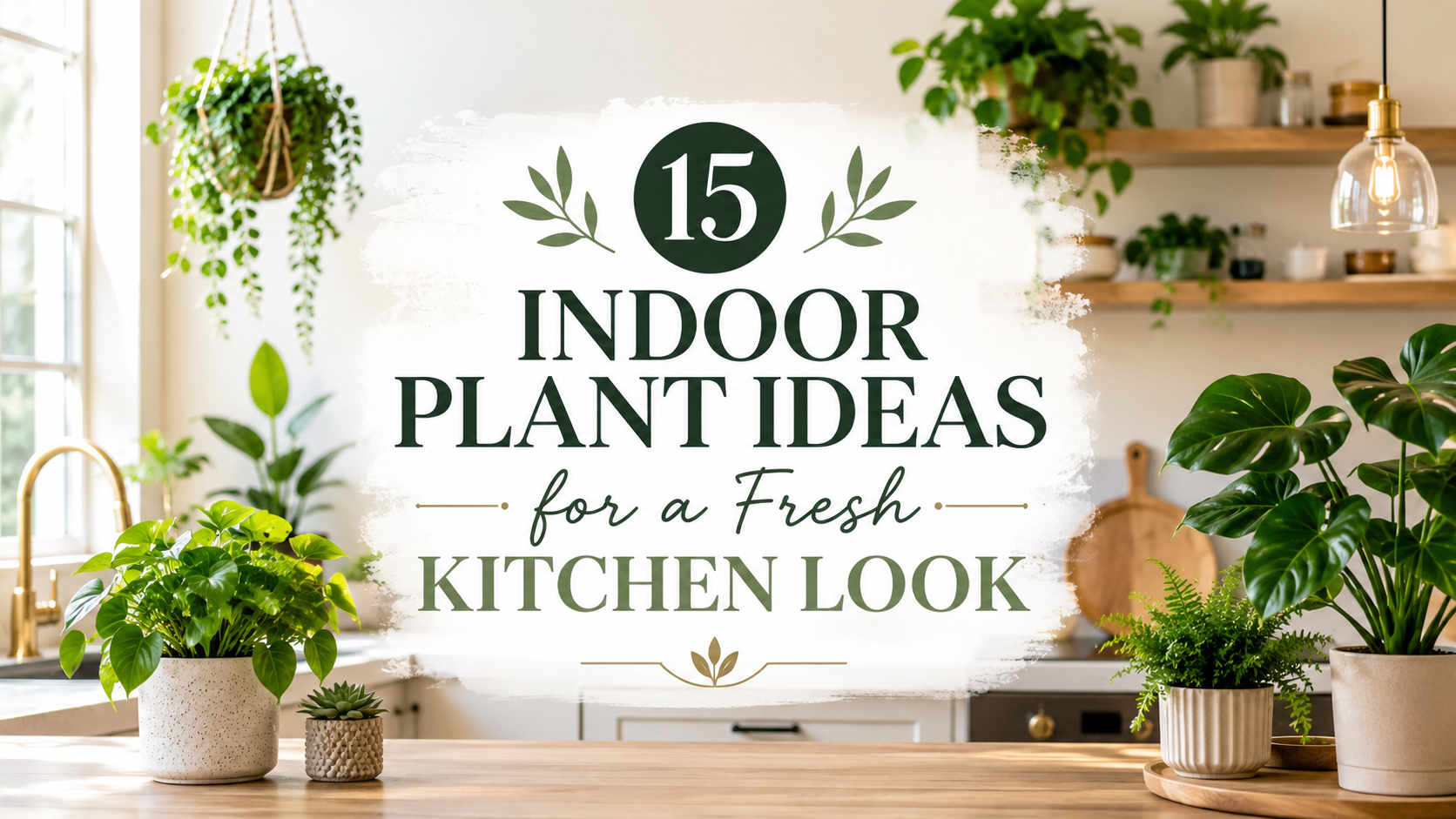
15 Indoor Plant Ideas for a Fresh Kitchen Look
You keep saving cozy kitchen photos with trailing plants, sunny windowsills, and little herb corners… but your own kitchen still feels flat. Maybe the counters feel cluttered. Maybe the shelves look empty no matter what you put on them. Or maybe you’ve bought plants before and somehow managed to kill every single one within a month.
Honestly, kitchens can feel tricky to decorate because they need to stay functional first. You still need room to cook, clean, and actually live in the space. That’s exactly why indoor plants work so well. They soften hard surfaces, add color without repainting anything, and make even the smallest apartment kitchen feel warm and alive.
In this post, you’ll find 15 indoor plant ideas for a fresh kitchen look that are realistic, affordable, and easy to copy. Some work for tiny kitchens with almost no light. Others are perfect if you want that cozy Pinterest-worthy styling without spending hundreds on decor. I’ll also share practical tips, common mistakes, and budget-friendly swaps along the way.
Because sometimes a single plant really can change the whole room.
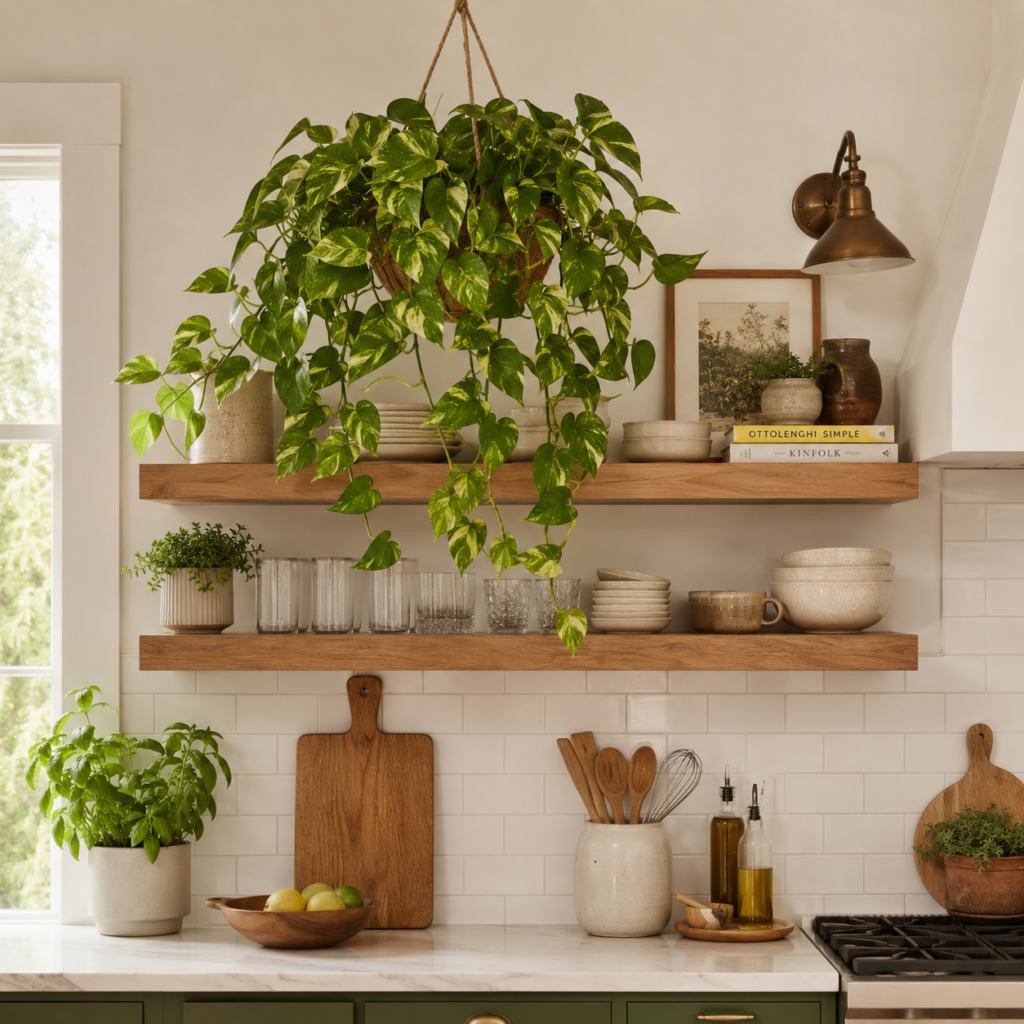
Hanging Pothos Above Open Kitchen Shelves
There’s a reason pothos shows up in so many cozy interior inspiration photos. The trailing vines instantly soften a kitchen full of sharp lines, metal appliances, and hard counters. When the leaves spill over open wooden shelves, the whole room feels warmer and more lived-in. Morning light hitting those glossy green vines makes even a basic rental kitchen look special.
Use a small hanging planter or place a pothos directly on the top shelf and let the vines fall naturally. Golden pothos works well in medium light, while neon pothos brightens darker corners. Keep the plant at least 12 inches away from your stove so grease doesn’t coat the leaves. I always suggest trimming one or two vines every few months because leggy pothos can start looking messy fast. You can find small pothos plants for around $12 to $25 at most garden centers or even grocery stores.
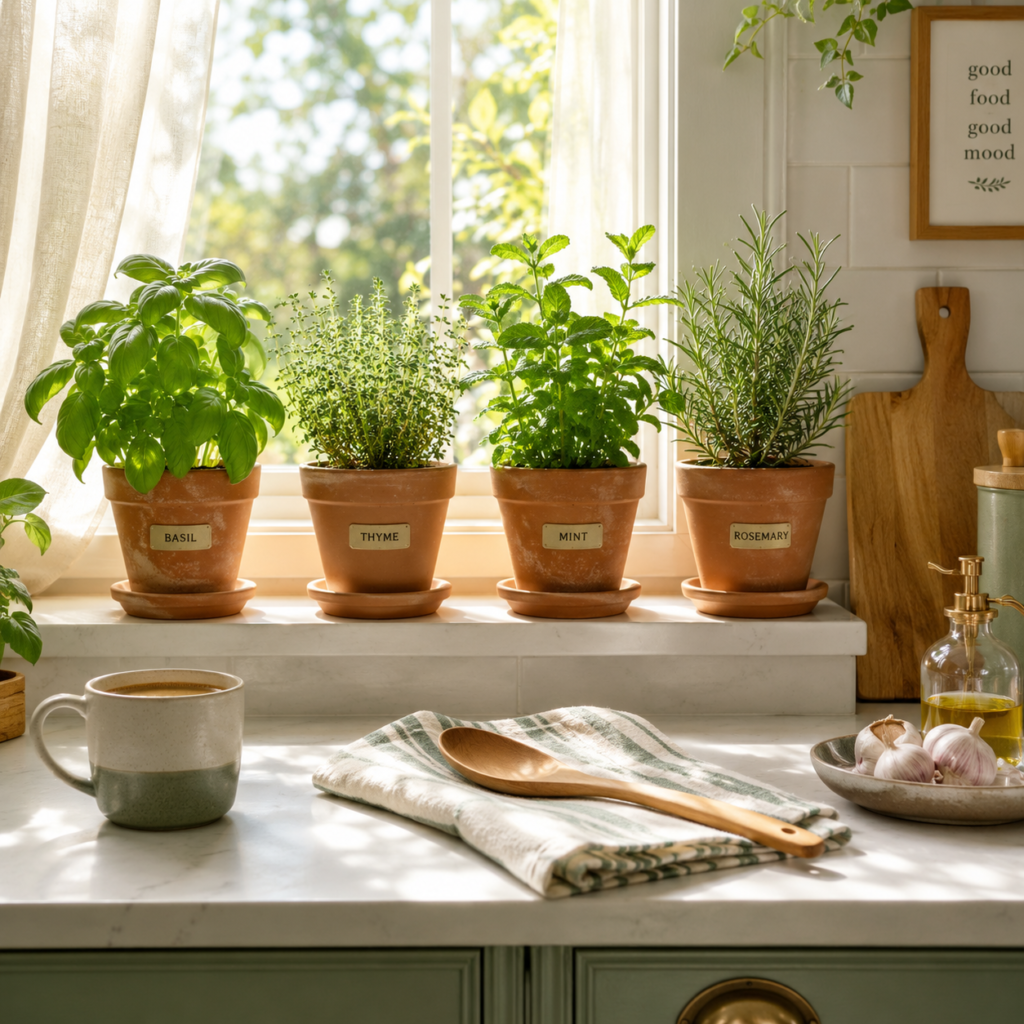
A Small Herb Garden Right Beside the Window
Fresh herbs make your kitchen smell amazing before you even cook anything. Basil, mint, rosemary, and thyme add color while also being genuinely useful. There’s something comforting about reaching over to snip fresh basil for pasta instead of digging through a fridge drawer full of wilted herbs.
Line up small terracotta pots on a sunny windowsill where they’ll get at least six hours of light daily. Terracotta works best because it prevents soggy roots. A lot of people skip drainage trays underneath and end up with water stains all over the sill, so don’t forget those. If your kitchen gets limited sunlight, use a small grow light strip under cabinets instead. You can start a simple herb setup for about $20 to $40 depending on the pots and lighting.
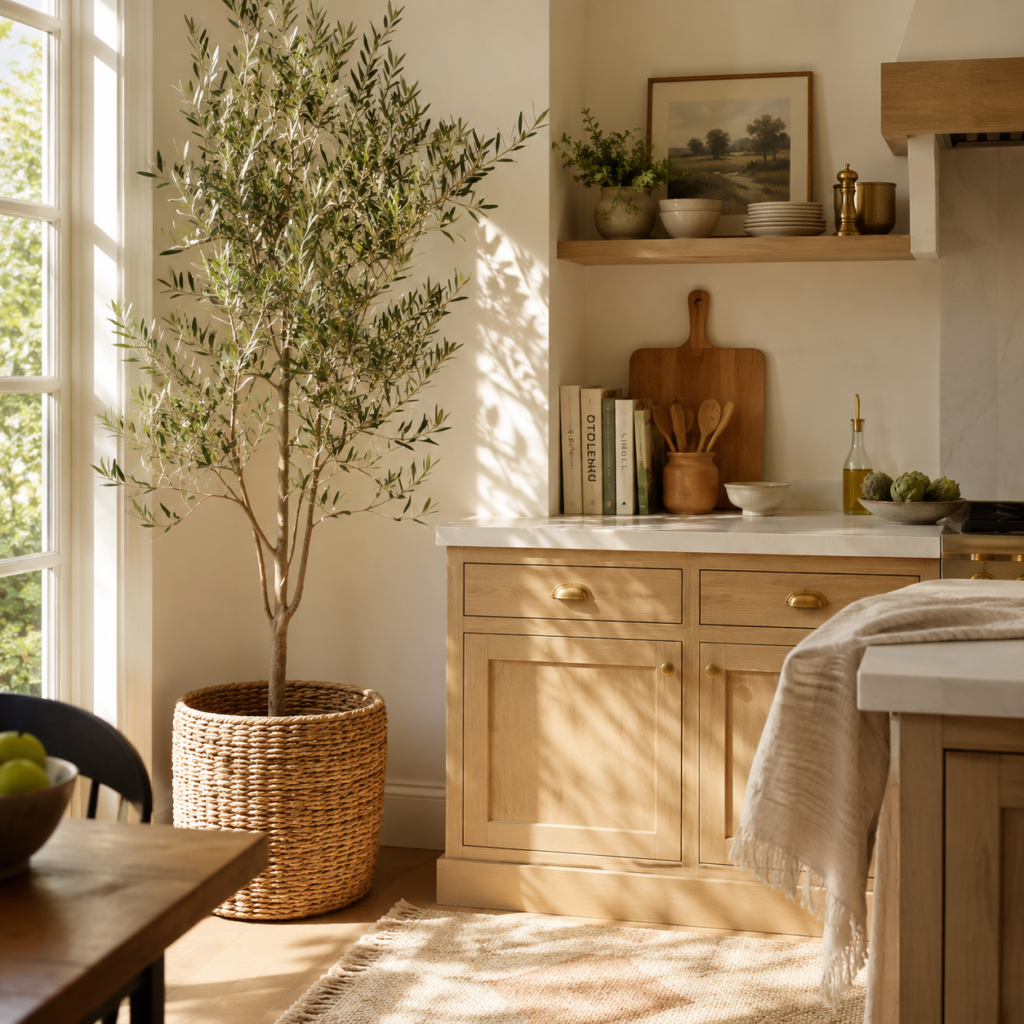
A Tall Olive Tree in an Empty Kitchen Corner
If your kitchen has one awkward empty corner that always feels unfinished, an olive tree fixes that instantly. The soft gray-green leaves add texture without making the room feel crowded. It gives the space that calm Mediterranean warmth people try so hard to recreate with expensive decor.
Choose a slim artificial olive tree if your kitchen lacks strong sunlight. Real olive trees need a lot of direct light and can struggle indoors. Place the tree in a woven basket or textured ceramic planter to make it feel grounded. In my experience, the biggest mistake here is choosing a tree that’s too small. Go taller than you think. Around 5 to 6 feet usually looks balanced in a standard kitchen. Expect to spend anywhere from $60 for faux versions to over $150 for mature real trees.
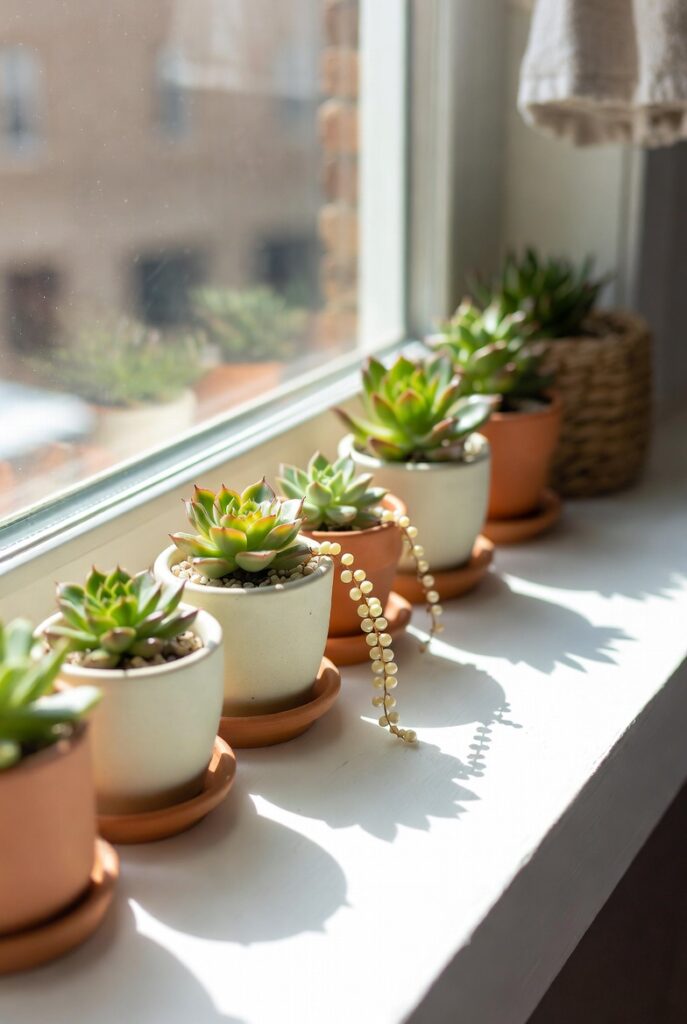
Tiny Succulents Styled Along the Kitchen Windowsill
Succulents are perfect if you forget to water plants for weeks at a time. They add soft color and texture without demanding much attention. A row of mixed succulents across a sunny kitchen window instantly makes the room feel brighter and more personal.
Mix different shapes and tones instead of buying identical plants. Pair soft green echeverias with darker jade plants and tiny string-of-pearls varieties. Use small ceramic pots in warm neutral colors so the display feels cohesive instead of cluttered. What I love about this is how affordable it is. Most small succulents cost under $10 each. Just don’t overwater them. Kitchens can already get humid, and soggy roots kill succulents quickly.
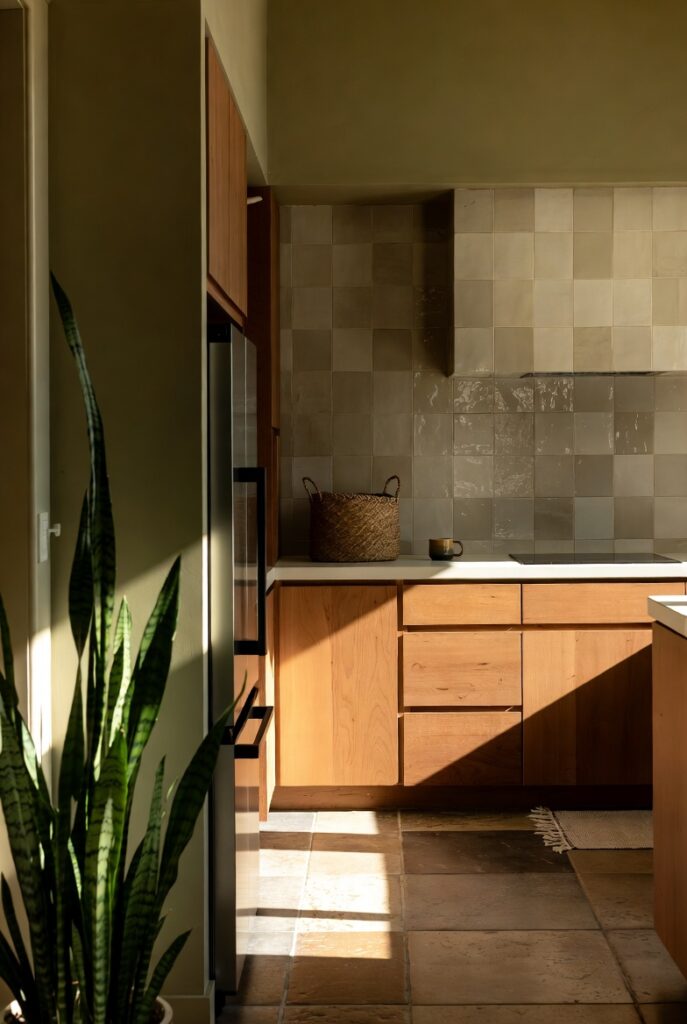
A Snake Plant Beside the Fridge for a Clean Modern Look
Snake plants work especially well in kitchens because they’re structured without feeling cold. The upright leaves draw your eye upward and make cramped kitchens feel taller. Plus, they survive low light and occasional neglect better than almost any houseplant.
Place one medium or tall snake plant beside the fridge, pantry cabinet, or kitchen entryway. Choose a matte ceramic planter in black, cream, or olive tones to keep the look clean. A lot of people use pots that are way too small, which makes the plant look awkward and top-heavy. Give it breathing room. You can usually find healthy snake plants for $25 to $60 depending on the size.
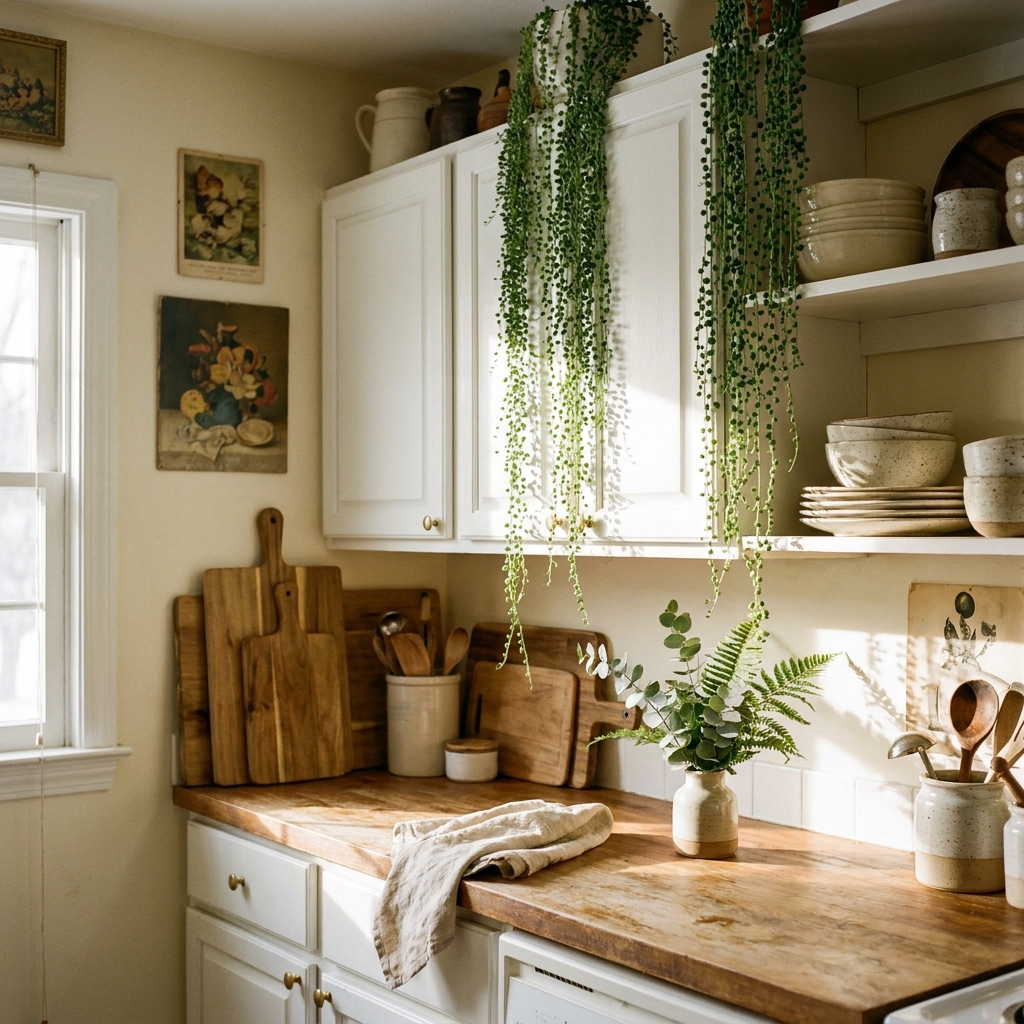
Trailing String of Pearls Over Kitchen Cabinets
There’s something playful about string of pearls hanging from the tops of cabinets. The cascading beads soften empty upper spaces that often collect dust or random clutter. It instantly gives the kitchen more personality without taking up counter space.
Use lightweight ceramic or plastic planters so they’re easy to lift and water. Place them where they’ll get bright indirect light. Too much harsh afternoon sun can scorch the pearls surprisingly fast. I always suggest using a watering squeeze bottle instead of pouring water directly because it’s easier to avoid overwatering. Small string of pearls plants usually cost around $15 to $30.
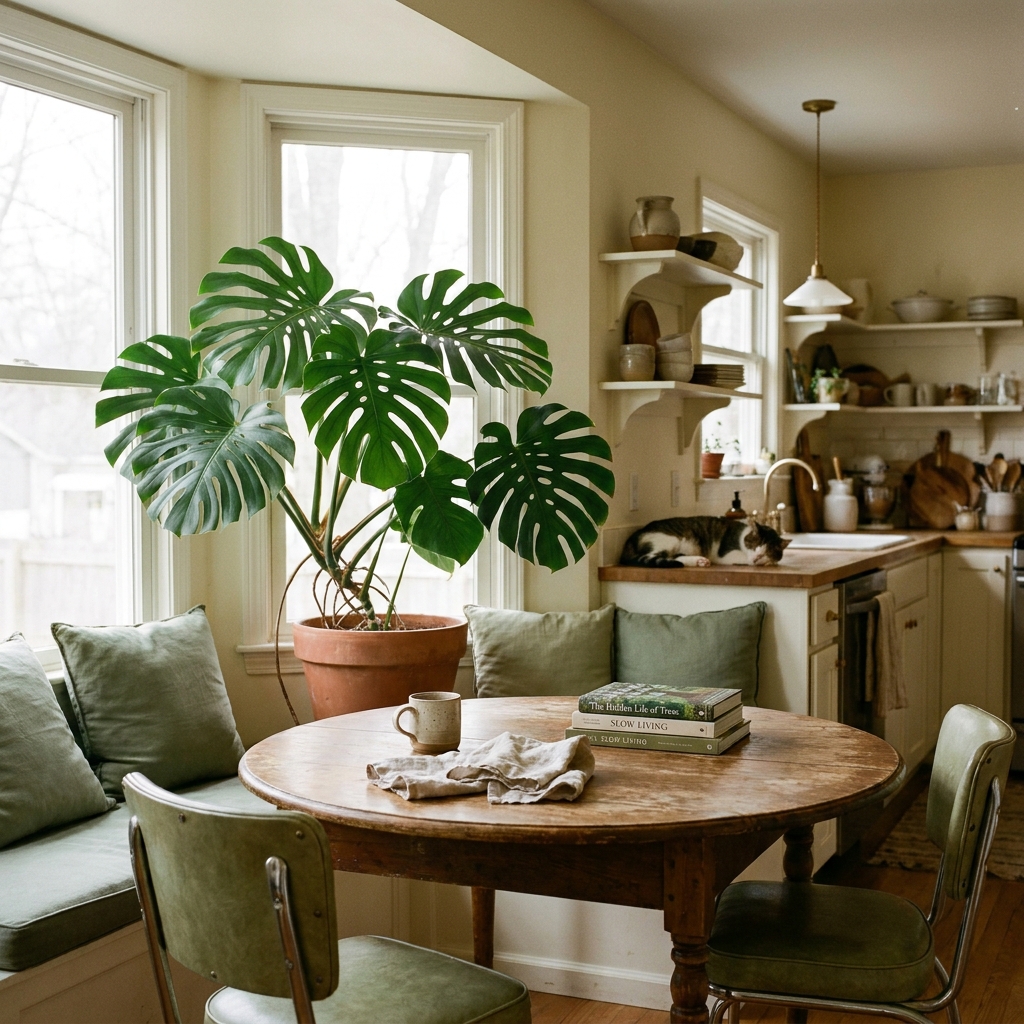
A Large Monstera Beside the Breakfast Table
Monsteras make even ordinary kitchens feel lush and layered. Those oversized split leaves bring softness to dining corners that often feel forgotten. If your kitchen includes a small breakfast nook, this plant fills empty space beautifully without needing extra furniture or decor.
Place the monstera near natural light but not directly against a scorching window. Rotate it every couple of weeks so it grows evenly instead of leaning hard in one direction. In my experience, the biggest mistake people make is buying a tiny monstera and expecting immediate impact. Go medium-sized if your budget allows. A healthy one usually costs between $40 and $100.
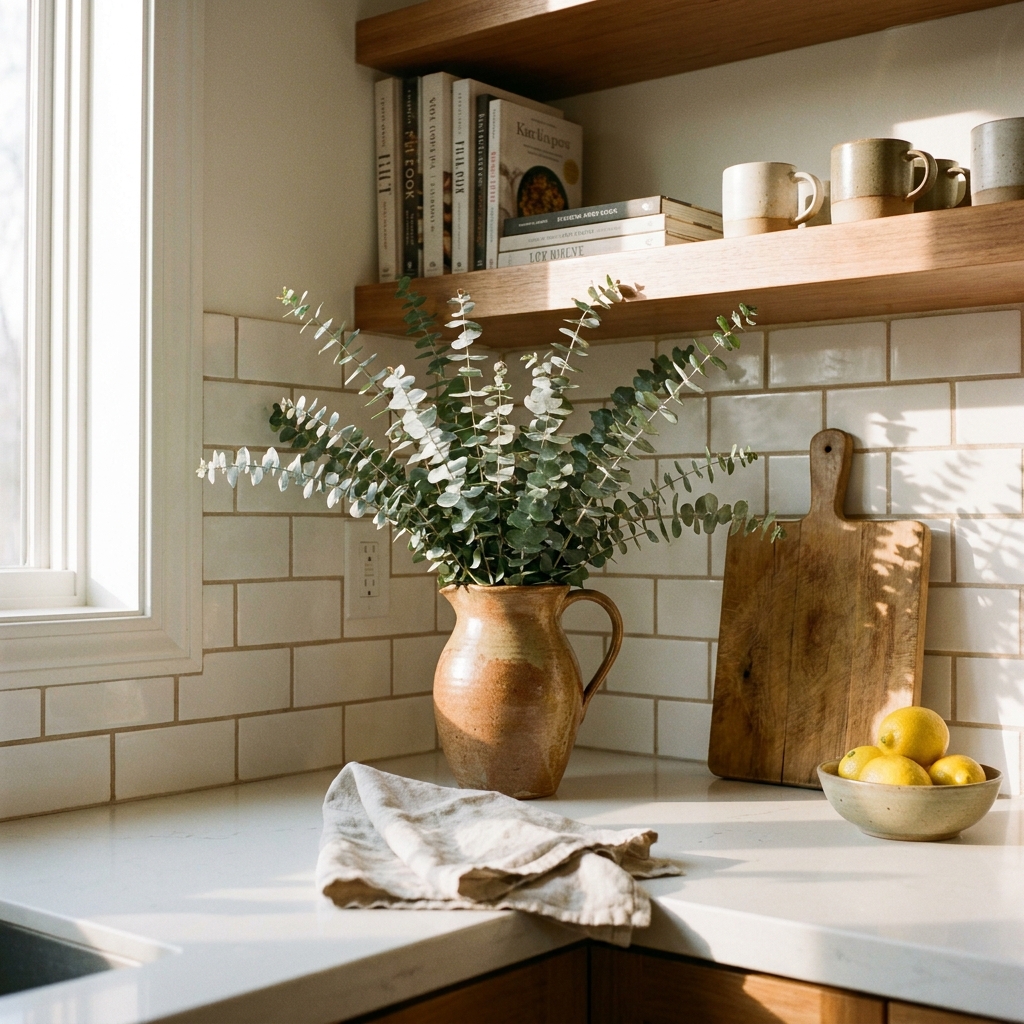
Eucalyptus Stems in a Rustic Ceramic Pitcher
Not every kitchen plant needs to live forever. Fresh eucalyptus branches bring color, texture, and a clean scent without the commitment of full plant care. The soft silvery green tones look beautiful against white kitchens, warm wood, or darker cabinets.
Place several stems inside a rustic ceramic pitcher or oversized vase near the sink or stove area. Dried eucalyptus works too and lasts much longer. A lot of people crowd too many stems together, which can look bulky instead of relaxed. Let the arrangement breathe a little. Fresh bundles usually cost around $10 to $20 at flower markets or grocery stores.
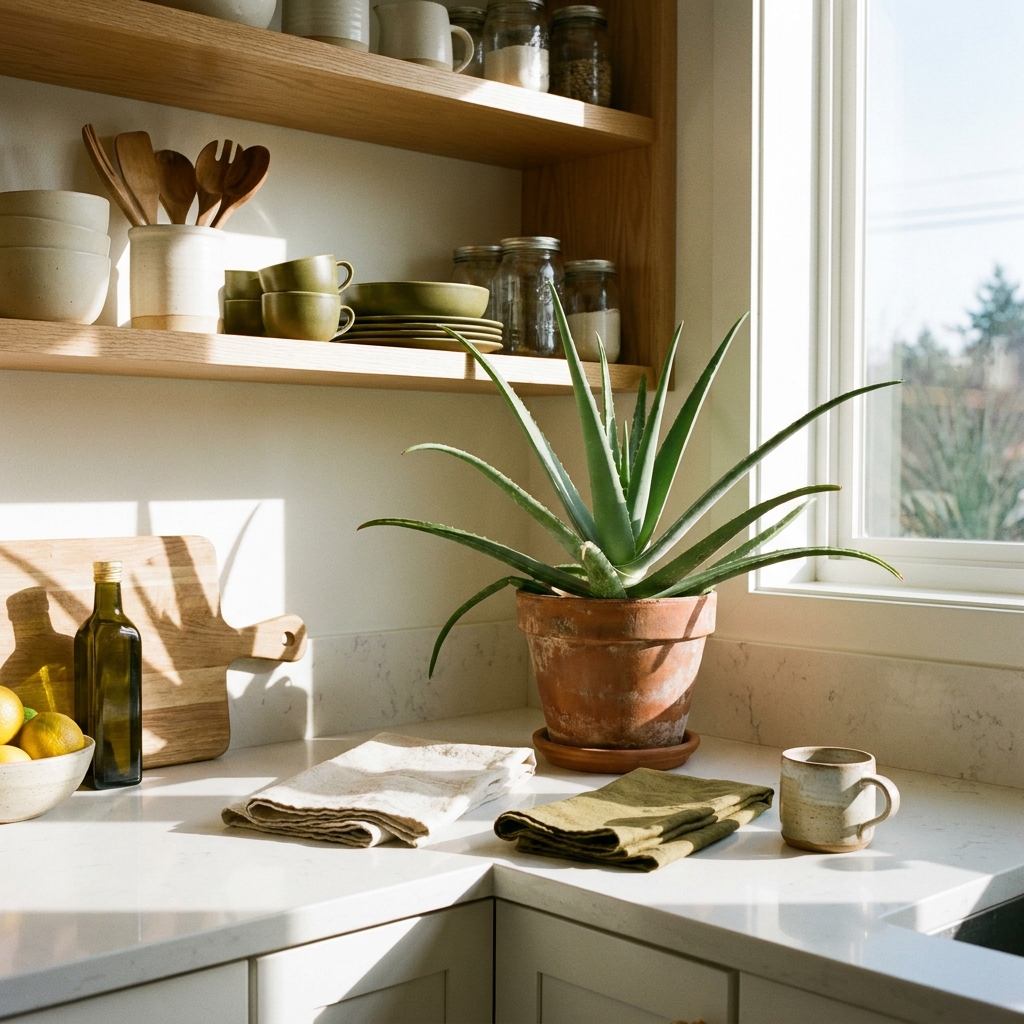
Aloe Vera on the Kitchen Counter for a Simple Green Accent
Aloe vera works well in kitchens because it looks clean and sculptural without demanding attention. The thick green leaves add freshness while still feeling minimal. Plus, it’s genuinely useful for small kitchen burns or dry hands after washing dishes all day.
Keep aloe near a bright window and use a pot with strong drainage. Terra-cotta or stone planters help prevent root rot. What I love about aloe is how low-maintenance it is. Water it only when the soil feels completely dry. Most medium aloe plants cost between $15 and $35 depending on the planter.
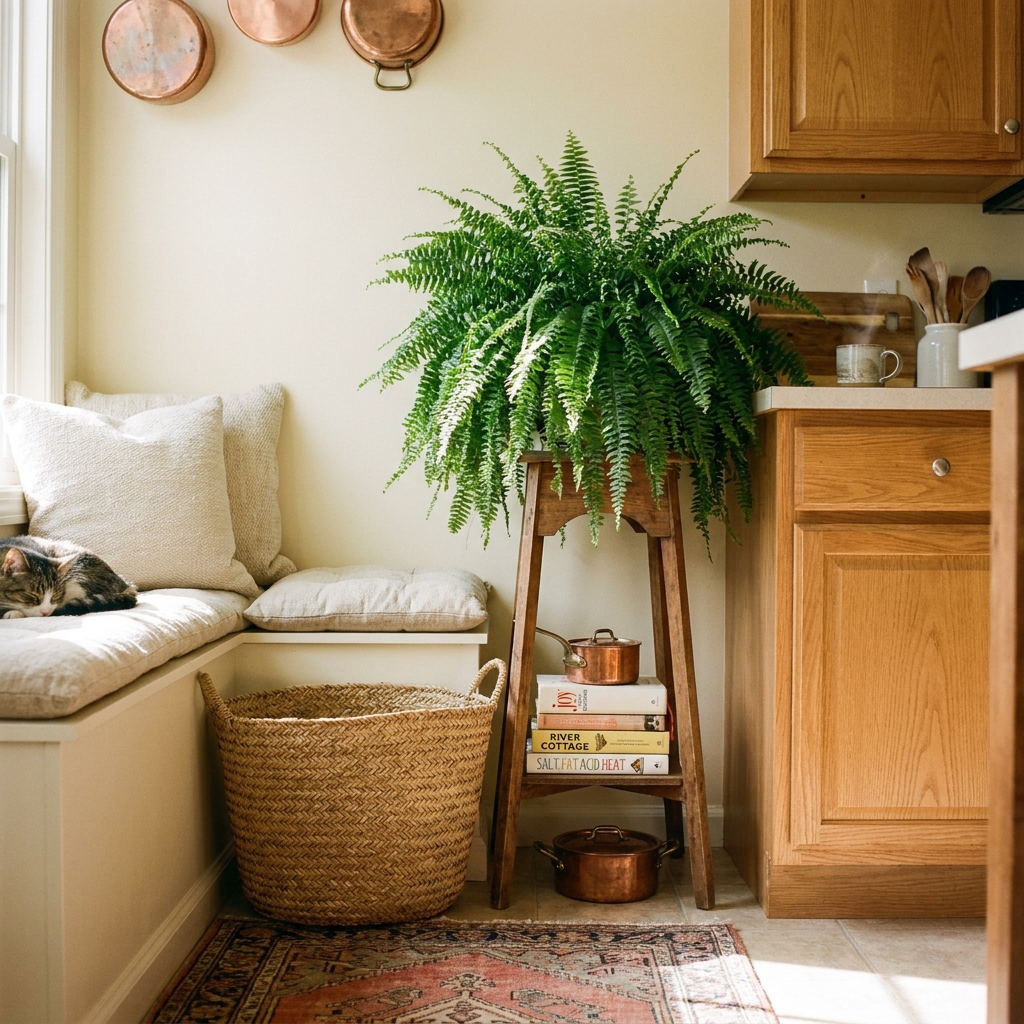
Ferns That Soften Hard Kitchen Corners
Kitchens can feel cold fast when everything is metal, tile, and stone. Ferns help fix that. Their soft feathery leaves add movement and texture that balance out harder surfaces beautifully. They especially work well in older kitchens that need warmth without a full remodel.
Boston ferns love humidity, which makes kitchens a surprisingly good spot for them. Place one on a shelf or plant stand away from direct heat vents. A lot of people let ferns dry out completely, and they turn crispy almost overnight. Keep the soil lightly moist instead. You can usually find full healthy ferns for around $20 to $45.
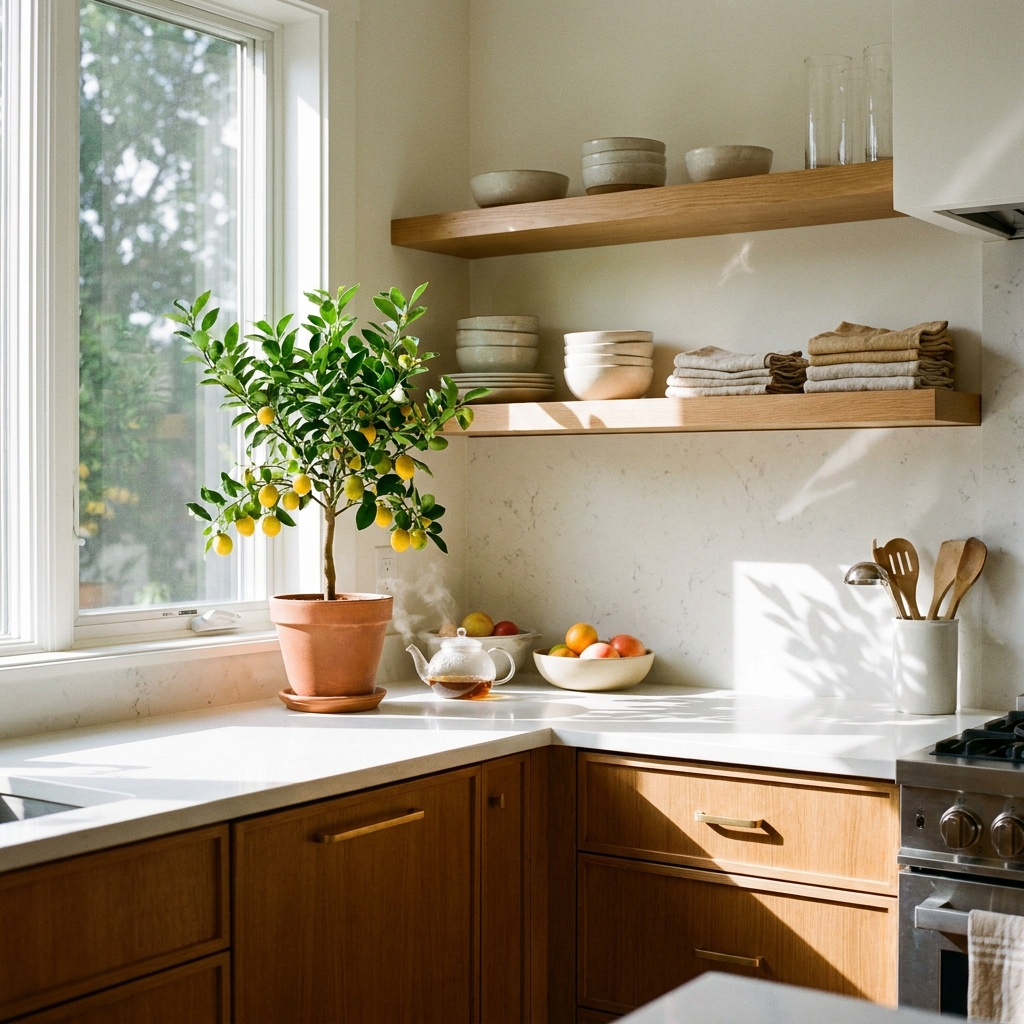
A Tiny Citrus Tree for a Sunny Kitchen
A small lemon or calamondin tree instantly brightens a kitchen. The glossy leaves and tiny fruits make the whole room feel cheerful and alive. Even when the fruit isn’t ripe yet, the color alone adds warmth to neutral spaces.
Place the tree near your brightest window because citrus plants need strong direct light. Rotate the pot regularly so it grows evenly. In my experience, the biggest mistake here is overwatering. Citrus roots hate soggy soil. Faux citrus trees also work surprisingly well if your kitchen doesn’t get enough light. Small indoor citrus trees usually start around $50 and go up from there.
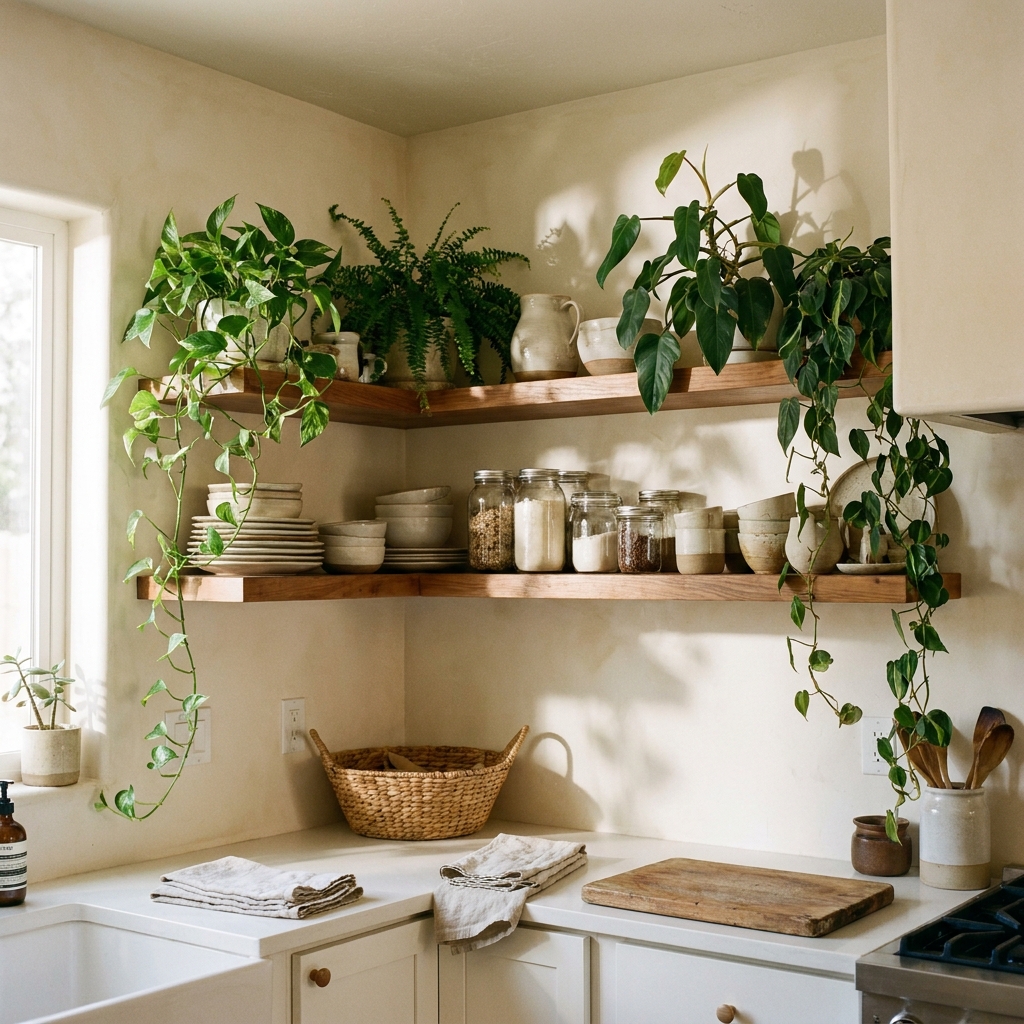
Floating Shelves Filled With Mixed Small Plants
Open shelves look better when everything isn’t perfectly matched. Mixing small plants with dishes, mugs, and cookbooks creates that collected-over-time feeling people love in Pinterest-worthy styling photos. The greenery breaks up visual clutter and keeps shelves from feeling heavy.
Mix trailing plants, tiny succulents, and upright varieties for balance. Stick to two or three planter colors so things still feel cohesive. I always suggest leaving empty space between items because overcrowded shelves quickly look chaotic. Budget-friendly nursery pots can easily fit inside thrifted baskets or bowls. Most shelf plants cost under $20 each.
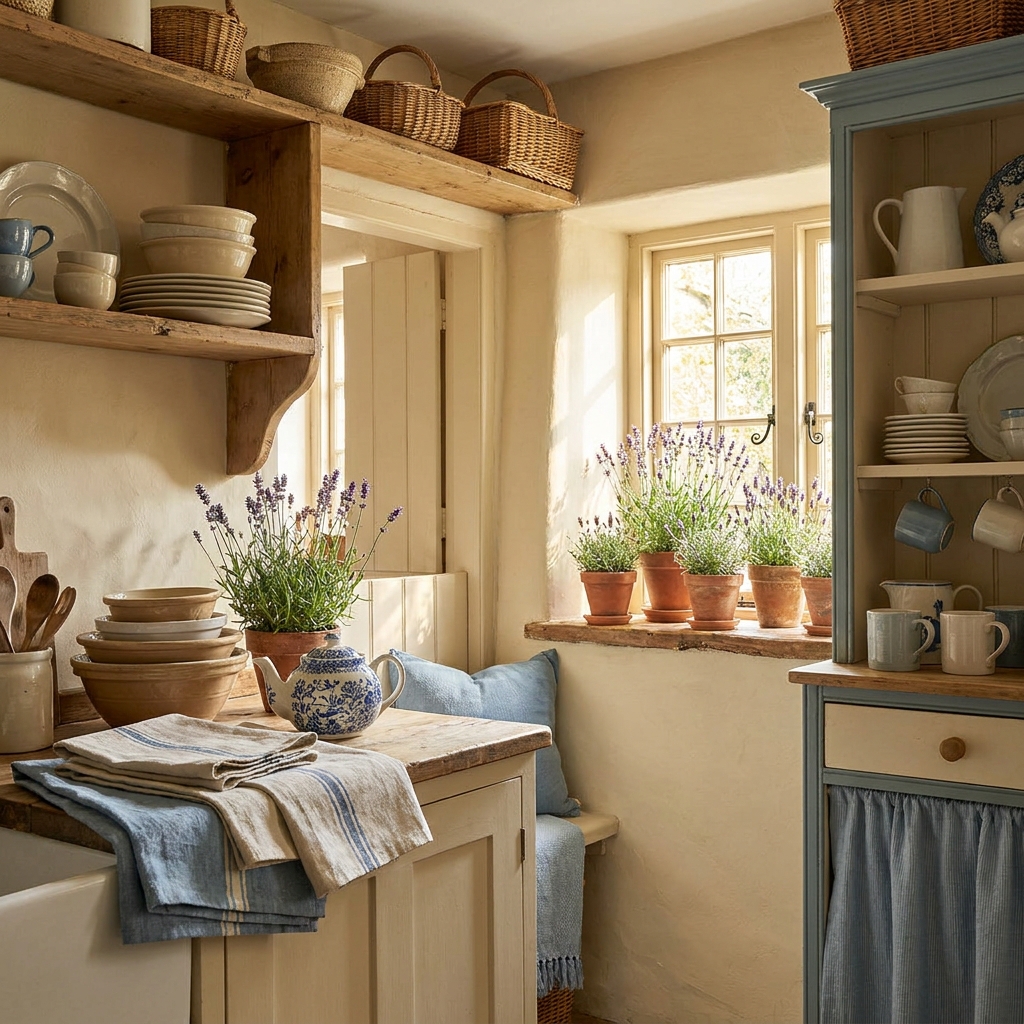
Lavender Pots for a Soft Cottage Kitchen Feel
Lavender adds a softer look than typical green plants. The muted purple tones bring warmth without overpowering the room. Even dried lavender has a comforting scent that makes kitchens feel calmer and more relaxed.
Use small lavender pots near windows with strong sunlight. English lavender works best indoors if the space stays bright and dry. A lot of people keep lavender in humid dark kitchens and wonder why it dies quickly. It needs airflow and sun. Faux lavender stems also look beautiful tucked into ceramic crocks if you want a zero-maintenance option. Small lavender plants usually cost around $15 to $25.
A ZZ Plant for Dark Apartment Kitchens
Some kitchens barely get sunlight at all, especially apartments with tiny windows. That’s where ZZ plants save the day. The glossy dark green leaves still make the room feel alive without needing constant care or bright light.
Place the ZZ plant on a counter corner, bar cart, or narrow shelf where other plants would struggle. Pair it with lighter decor like cream ceramics or warm wood so the darker leaves stand out. What I love about ZZ plants is how forgiving they are. Forget to water it for two weeks? It’ll probably survive. Most medium-sized plants cost around $25 to $50.
Fresh Cut Greenery in Simple Glass Jars
Sometimes the easiest kitchen decor ideas work best. Fresh greenery clipped from outside instantly brings life into a kitchen without spending much money at all. Olive branches, eucalyptus, rosemary sprigs, or even leafy stems from your yard can completely change the mood of the room.
Use recycled glass jars, old jam containers, or clear bottles for an easy relaxed look. Scatter a few throughout the kitchen instead of making one huge arrangement. In my experience, the biggest mistake people make is using arrangements that are too formal. Kitchens feel better when the greenery looks loose and natural. This is easily one of the cheapest affordable decor updates since you can often use what you already have.
Conclusion
You really don’t need a massive renovation to make your kitchen feel warmer, fresher, or more inviting. Most of the time, it’s the smaller details that shift the whole mood of a space. A trailing pothos over a shelf. A tiny herb garden near the sink. A simple glass jar filled with fresh greenery. Those little touches make a kitchen feel lived in instead of just functional.
What I love about these indoor plant ideas for a fresh kitchen look is that you can start small. You don’t need perfect lighting, expensive shelves, or a giant farmhouse kitchen from Pinterest. Pick one corner. One shelf. One windowsill. That’s enough to begin.
And honestly, plants have a way of making you slow down a little. Your kitchen starts feeling calmer. Softer. More personal. Even cooking dinner on a random Tuesday night feels nicer when the room around you feels cared for.
Which of these indoor plant ideas for a fresh kitchen look are you trying first? Tell me in the comments — I genuinely want to know!
FAQ
What are the best low-maintenance plants for kitchens?
Pothos, snake plants, ZZ plants, and aloe vera are some of the easiest options for kitchens. They tolerate missed waterings and can handle average indoor conditions without much fuss. If your kitchen doesn’t get strong sunlight, start with a ZZ plant or snake plant first. They’re hard to kill, which honestly makes them perfect for beginners.
Can indoor kitchen plants survive without direct sunlight?
Yes, many can. Pothos, ZZ plants, snake plants, and some ferns do well in indirect or lower light conditions. You just need to avoid placing them in completely dark corners with zero natural light. A small grow light can also help if your kitchen barely gets sun during the day.
How do I keep kitchen plants from getting greasy?
Kitchen grease builds up faster than people expect, especially near stoves. Keep plants at least a foot away from direct cooking areas when possible. Wipe leaves gently every couple of weeks with a damp cloth to remove buildup. A lot of people skip this step, but clean leaves help plants stay healthier and look brighter too.
Which indoor plants are safest near food prep areas?
Herbs like basil, thyme, rosemary, and mint are great because they’re edible and practical. Aloe vera and pothos can still work nearby, but keep toxic plants out of reach of pets or small kids. I always suggest using easy-to-clean planters around food prep zones since spills happen constantly in kitchens.
How many plants should you put in a kitchen?
You honestly don’t need dozens. Even two or three well-placed plants can completely change how a kitchen feels. Start with one trailing plant, one countertop plant, and maybe a small herb pot near the window. The biggest mistake people make is overcrowding every surface until the kitchen feels cluttered instead of cozy.
Meta Title (50–60 characters):
15 Indoor Plant Ideas for a Fresh Kitchen Look
Meta Description (140–155 characters):
Discover 15 indoor plant ideas for a fresh kitchen look, including herbs, pothos, and cozy styling tips for any budget kitchen.