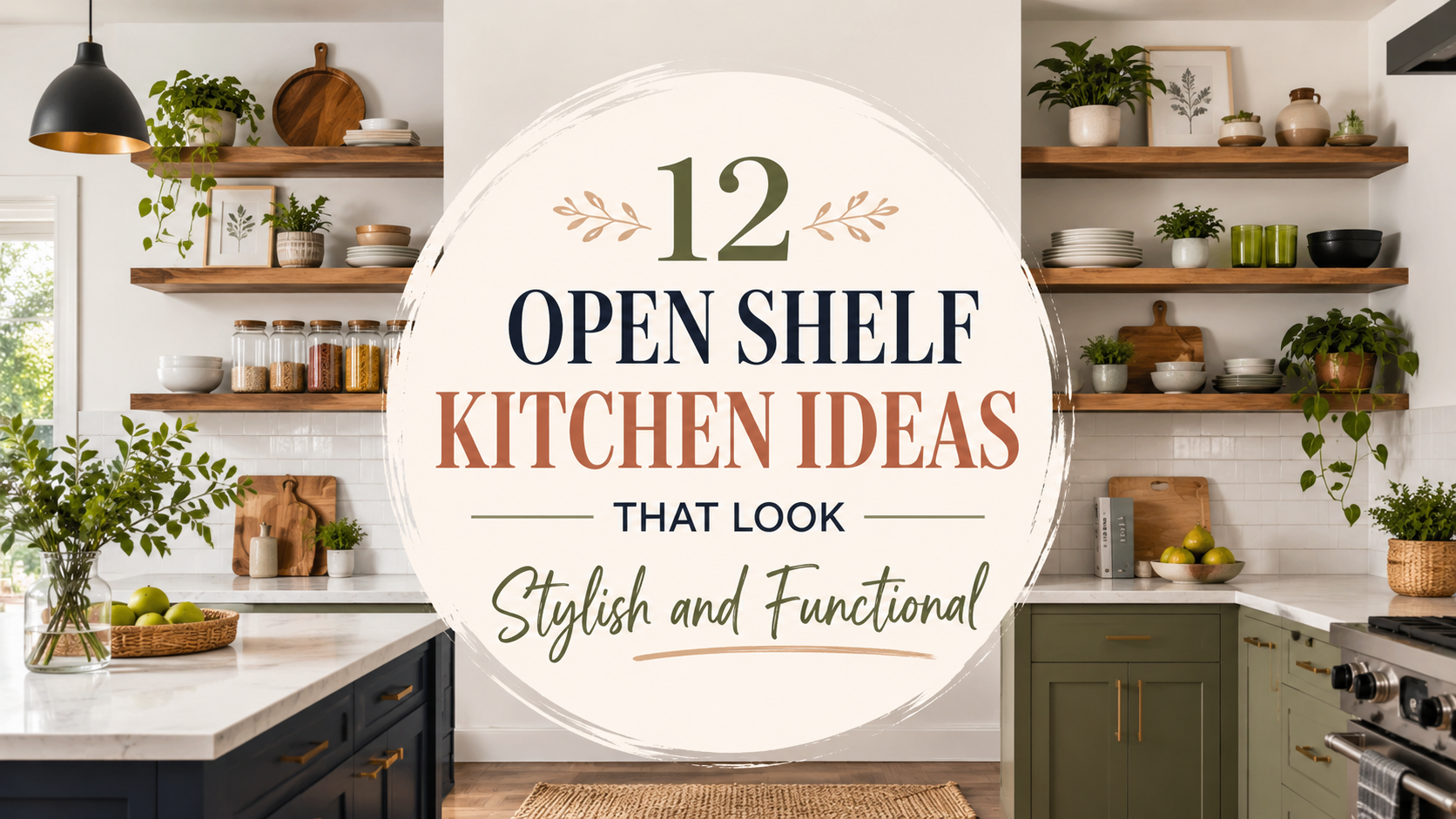
12 Open Shelf Kitchen Ideas That Look Stylish and Functional
You keep saving open shelf kitchen ideas on Pinterest, then staring at your own kitchen wondering how people make theirs look so clean and cozy without it turning into a cluttered mess. I get it. Open shelving can either make your kitchen feel warm and lived-in or like you forgot to finish installing cabinets. There’s rarely an in-between.
What I’ve noticed in real homes is that the best open shelf kitchens aren’t perfect. They just feel balanced. The shelves hold things people actually use. The colors make sense together. And there’s enough texture and warmth to keep the room from feeling flat or cold.
The good news is you do not need a full remodel to pull this off. A few wood shelves, better styling choices, and smarter storage can completely shift how your kitchen feels. In this post, you’ll find 12 open shelf kitchen ideas that are practical, affordable, and genuinely doable in a real home. Some are renter-friendly. Some cost under $100. All of them are designed to help your kitchen feel more organized, welcoming, and personal.
If your kitchen feels cramped, boring, or unfinished right now, these ideas will help you fix that without overthinking it.
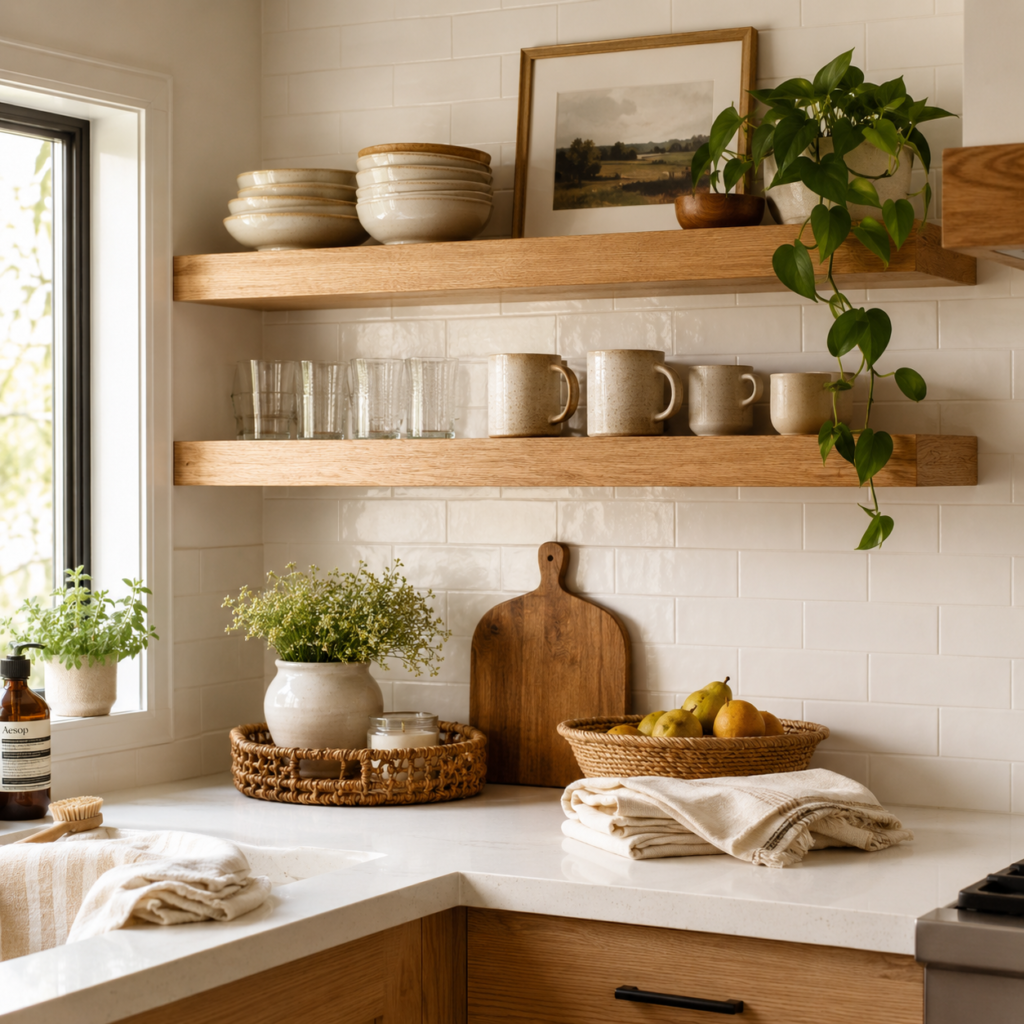
White Oak Floating Shelves Against a Warm White Backsplash
There’s a reason this look keeps showing up in cozy interior inspiration boards. White oak shelves instantly warm up a kitchen that feels too stark or builder-grade. Paired with soft white walls or subway tile, they create that clean but lived-in feel that makes a kitchen look brighter without feeling sterile. Add stacked ceramic bowls, a few clear glasses, and one trailing plant, and the whole room feels softer.
To recreate it, use shelves between 10 and 12 inches deep so plates and mixing bowls fit comfortably. I always suggest sealing natural oak with a matte finish so grease and water spots do not ruin the wood over time. Keep styling simple. Three stacks of dishes, one small plant, and maybe a wooden cutting board leaning nearby is enough. In my experience, the biggest mistake here is overcrowding every inch of shelf space. Leave breathing room between objects so the shelves feel calm instead of chaotic. Expect to spend around $80 to $250 depending on wood quality and hardware. IKEA and Lowe’s both have good budget options.
Black Metal Brackets for a More Collected Look
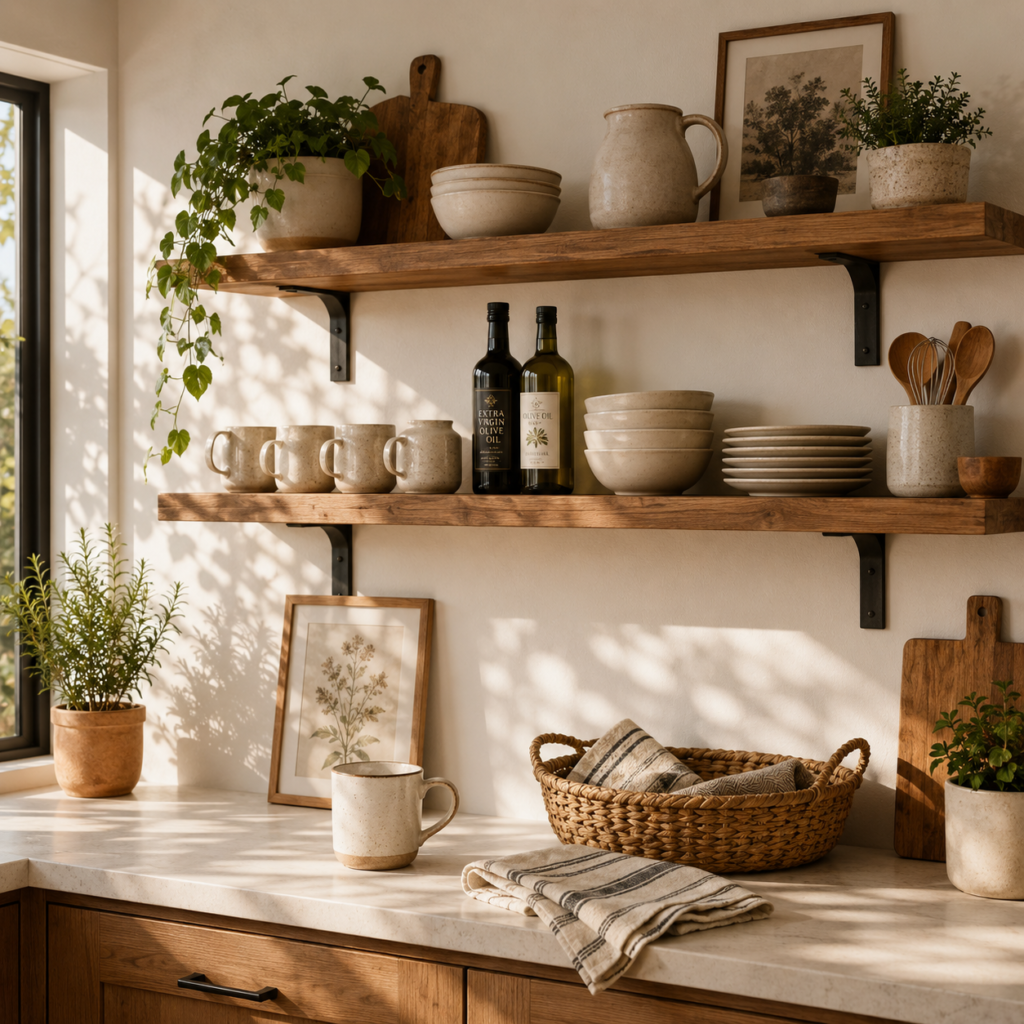
If floating shelves feel too polished for your style, black metal brackets add character fast. They make the kitchen feel more grounded and slightly vintage without trying too hard. I love this look in apartments or older homes where you want some contrast against white cabinets and pale walls.
Use thick wood shelves with matte black brackets spaced evenly about every 24 to 30 inches for support. Medium-toned wood works especially well because the black hardware pops against it. Style the shelves with everyday items like mugs, olive oil bottles, cookbooks, and textured pottery. A lot of people skip consistency here, but it makes such a difference. Stick to similar tones so the shelves look collected instead of random. Budget-wise, this setup can cost as little as $60 if you DIY the shelves with stained pine boards.
Corner Open Shelves That Make Dead Space Useful
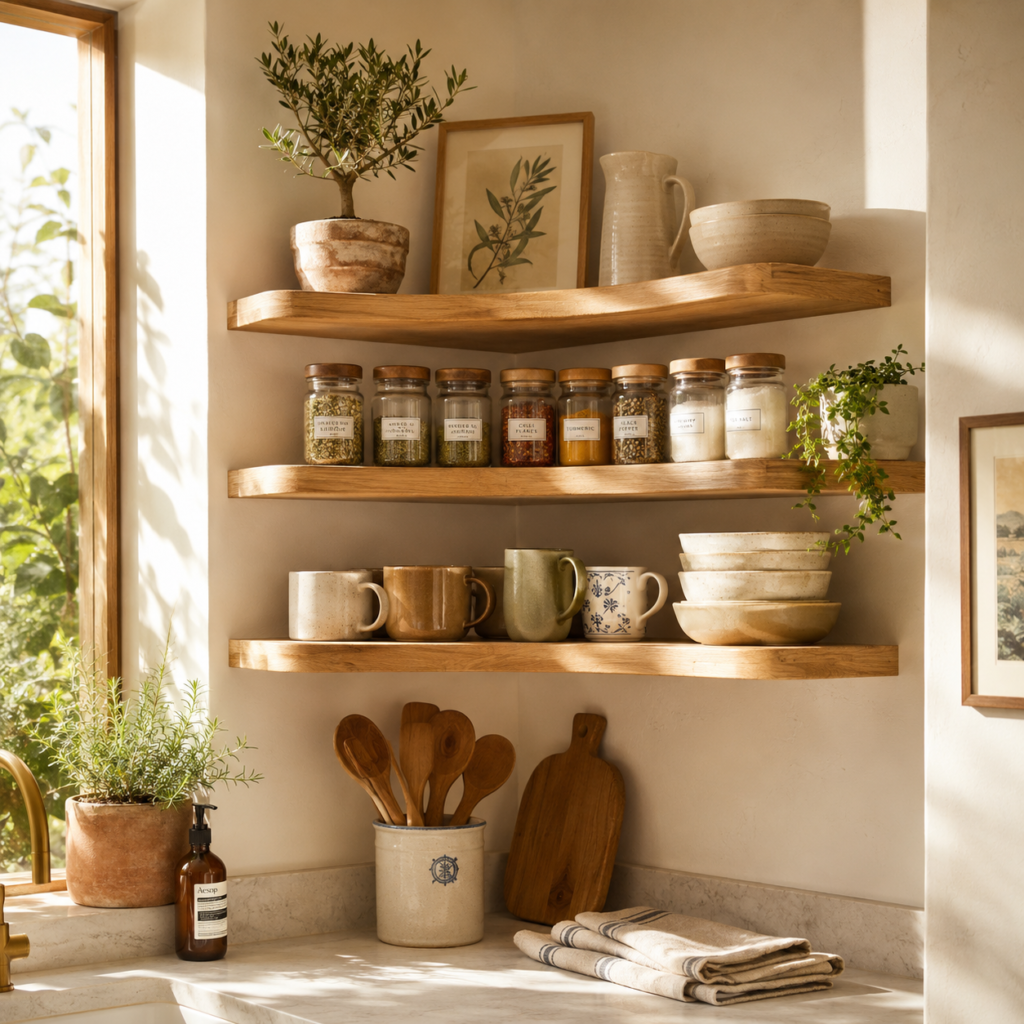
Kitchen corners usually become wasted space or awkward clutter zones. Open corner shelves solve that problem while making the kitchen feel more custom. What I love about this is how much lighter the room feels compared to bulky upper cabinets wrapping around every wall.
Install triangular or L-shaped shelves in unused corners near windows or beside the sink. Keep them slightly shallower than regular shelves so they do not overwhelm the space. This is the perfect spot for pretty everyday items like tea cups, spices in matching jars, or small plants. In smaller kitchens, I always suggest using lighter woods or painted shelves so the corner does not feel heavy. Most people try to cram too much into corners, but sparse styling actually works better here. You can build simple DIY corner shelves for under $50.
Open Shelving Around a Kitchen Window
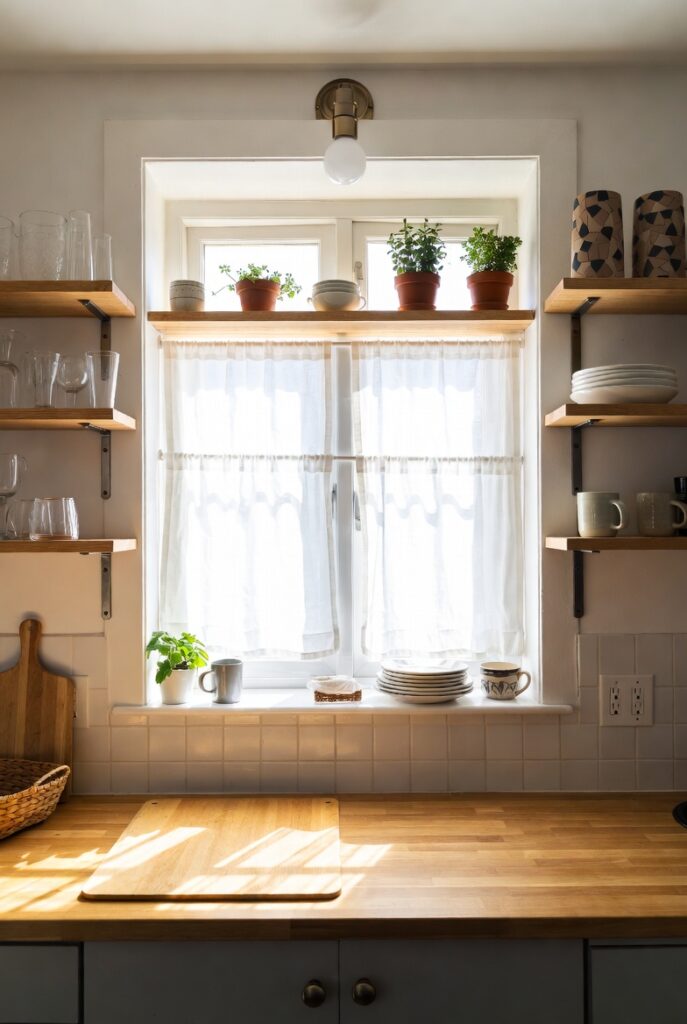
Shelves around a window make a kitchen feel open in the best way. Instead of blocking natural light with upper cabinets, the shelves frame the window and let the light become part of the design. The whole kitchen instantly feels bigger and less boxed in.
Install two or three shelves on each side of the window, keeping the center area open. Use the shelves for glassware, small dishes, or plants that thrive in sunlight. I always recommend keeping window shelves lighter and less cluttered because sunlight already creates visual movement. Clear glasses and white ceramics look beautiful here because they reflect light naturally. A common mistake is placing bulky appliances or dark storage pieces too close to the window area. Keep it airy. Budget-friendly wood shelves and brackets can keep this project under $120.
Dark Wood Shelves in an All-White Kitchen
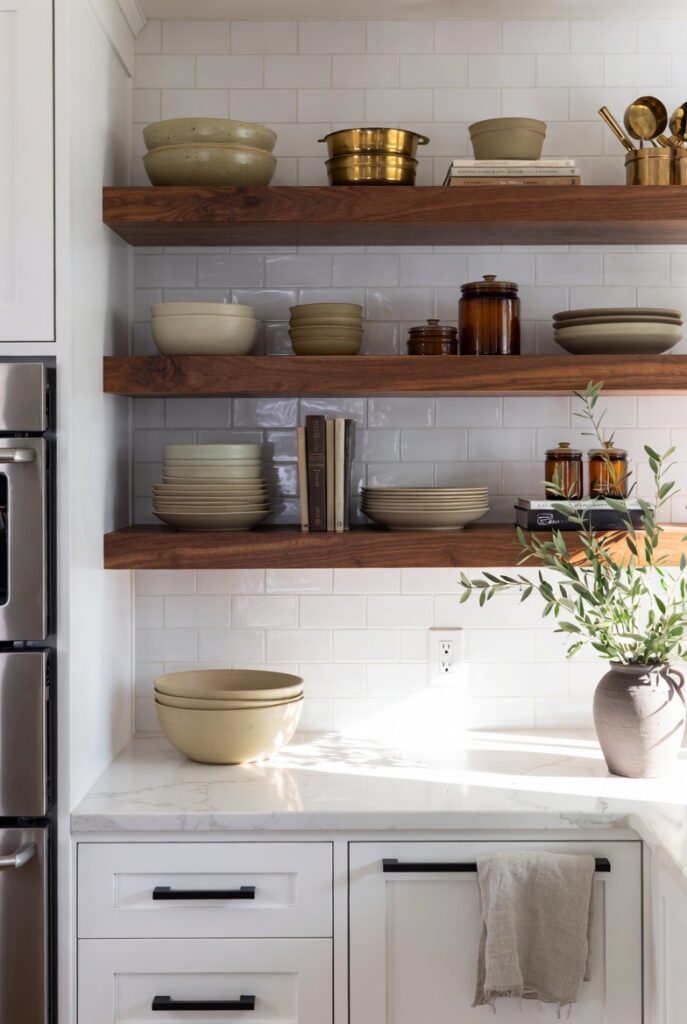
Sometimes an all-white kitchen needs contrast badly. Dark wood shelves break up the brightness and add depth without making the room feel smaller. Walnut, espresso, or even deep-stained pine shelves create that rich layered look you usually see in expensive custom kitchens.
Pair dark shelves with white walls, creamy tile, or pale countertops so the contrast feels balanced. I love styling darker shelves with warm neutrals like oatmeal ceramics, amber glass jars, and brass accents because it softens the heaviness. One thing people get wrong is using shelves that are too thin. Dark wood looks best when the shelves feel chunky and substantial. Aim for at least 2-inch thickness if possible. Depending on the wood, this project can range from $100 to $400, but stained pine is a great budget alternative.
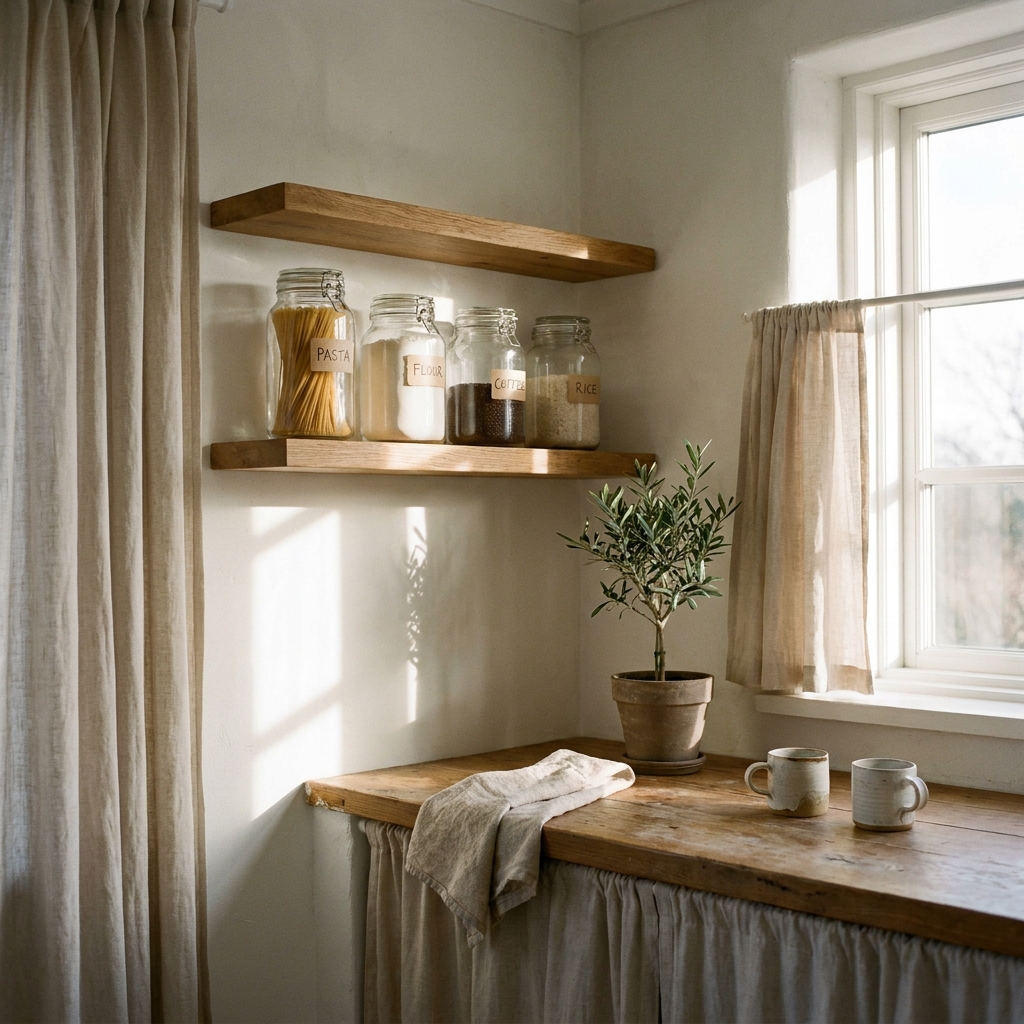
Minimal Open Shelves With Matching Glass Jars
If clutter stresses you out, this idea works beautifully. Matching jars make even practical storage look neat and calming. Flour, sugar, pasta, rice, and coffee suddenly become part of the decor instead of something you hide away.
Use clear glass jars in similar shapes and heights for the cleanest look. Bamboo lids add warmth without feeling too modern or cold. Keep labels simple and consistent. In my experience, people often mix too many container styles together, and that ruins the calm look fast. Two open shelves are usually enough for this setup. You do not need your entire kitchen exposed. Expect to spend around $40 to $100 depending on jar quality.
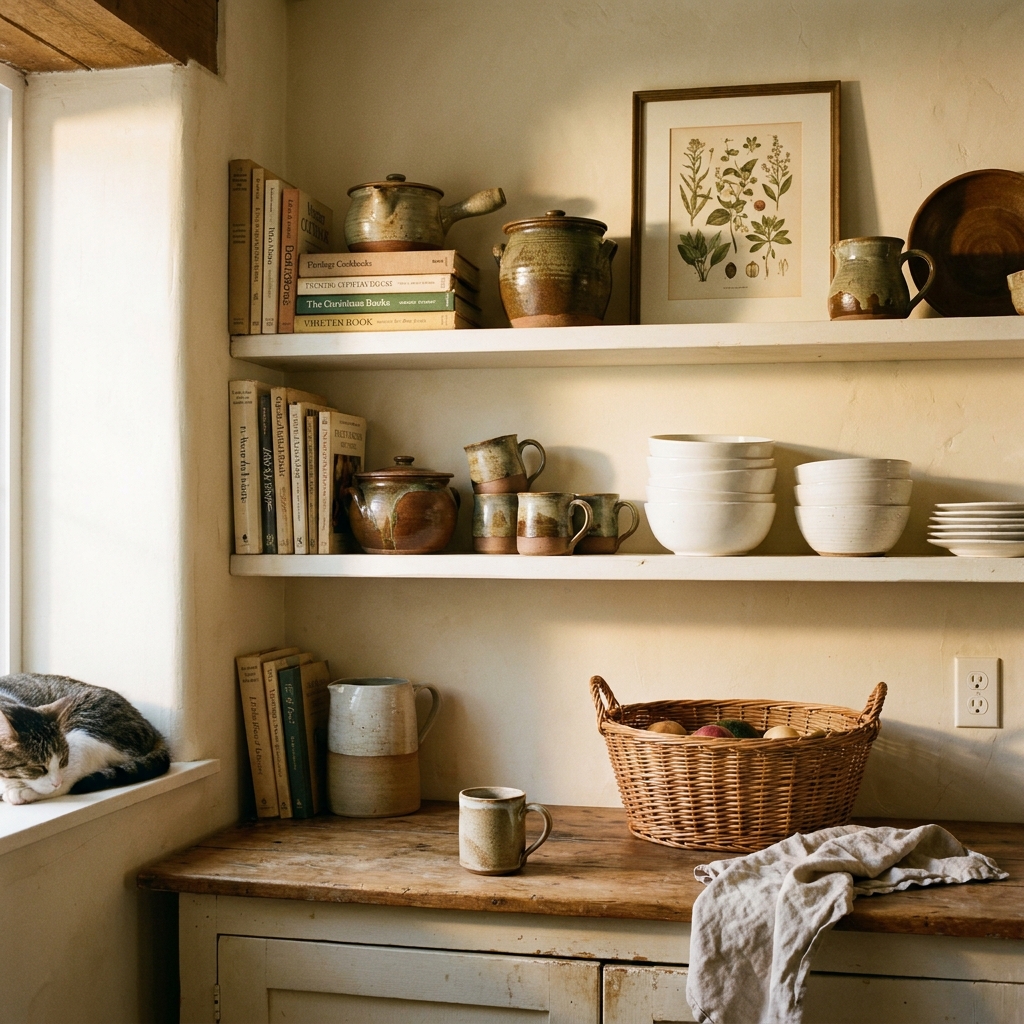
Layered Shelves With Cookbooks and Pottery
Open shelves should not feel like a store display. Mixing practical kitchen items with personal pieces makes the room feel lived in. Cookbooks stacked beside handmade pottery or a framed photo instantly warm up the space.
Use layered styling instead of lining everything up evenly. Stack two or three cookbooks horizontally, place a bowl or vase on top, then balance the other side with dishes or glasses. I always suggest choosing books with neutral or warm covers so they blend into the room naturally. A lot of people overlook scale here. Tiny accessories disappear on shelves, so include a few larger pieces for balance. Thrift stores are great for affordable pottery and vintage kitchen finds under $20.
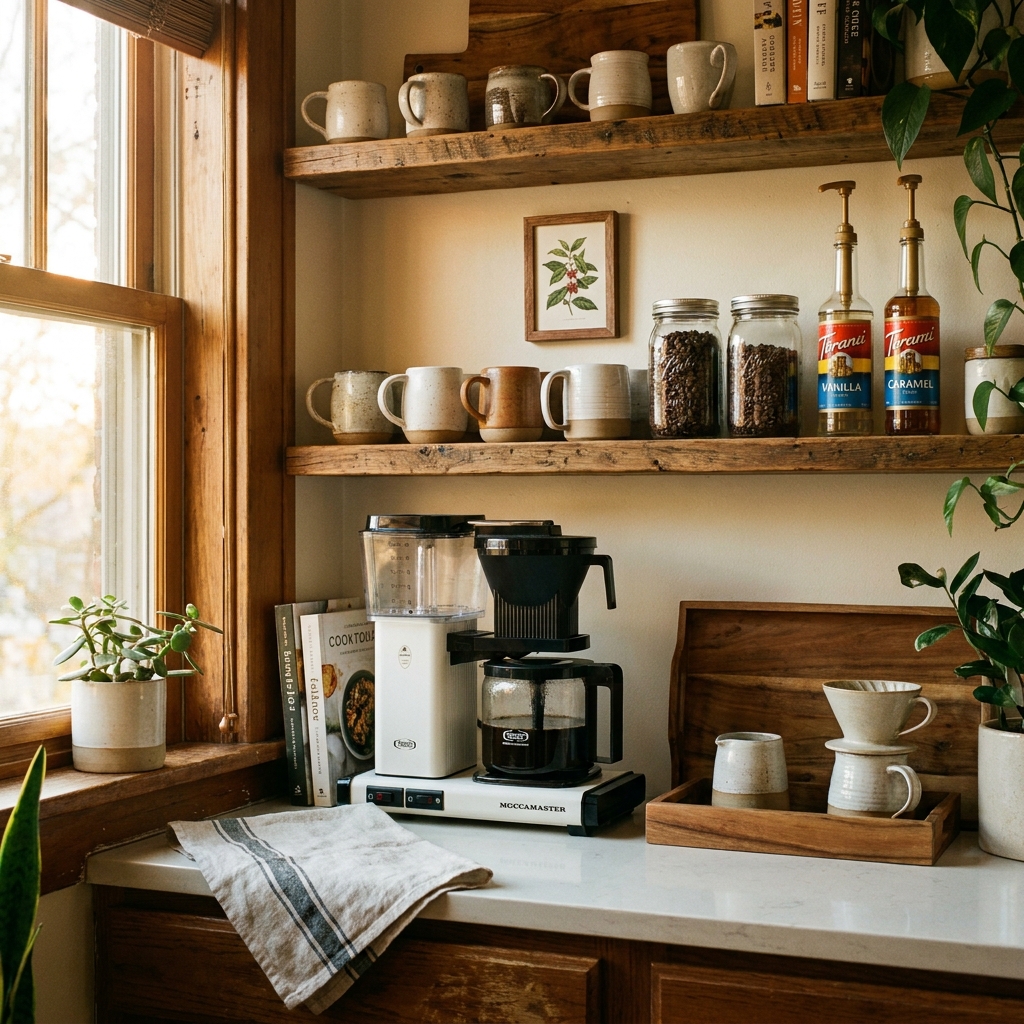
Small Open Shelves Above a Coffee Station
Even the tiniest kitchen can handle open shelving if you keep it focused. A dedicated coffee shelf setup feels cozy and useful without taking over the room. It also makes your morning routine feel a little nicer, which honestly matters more than people think.
Install one or two shelves directly above your coffee maker. Store mugs, coffee beans, syrups, and small canisters there so everything stays within reach. I always recommend adding one warm accent like a tiny lamp, framed print, or small plant to soften the setup. One mistake people make is storing too many random appliances nearby. Keep the area simple so it still feels intentional. This is one of the cheapest affordable decor updates you can do, often under $75 total.
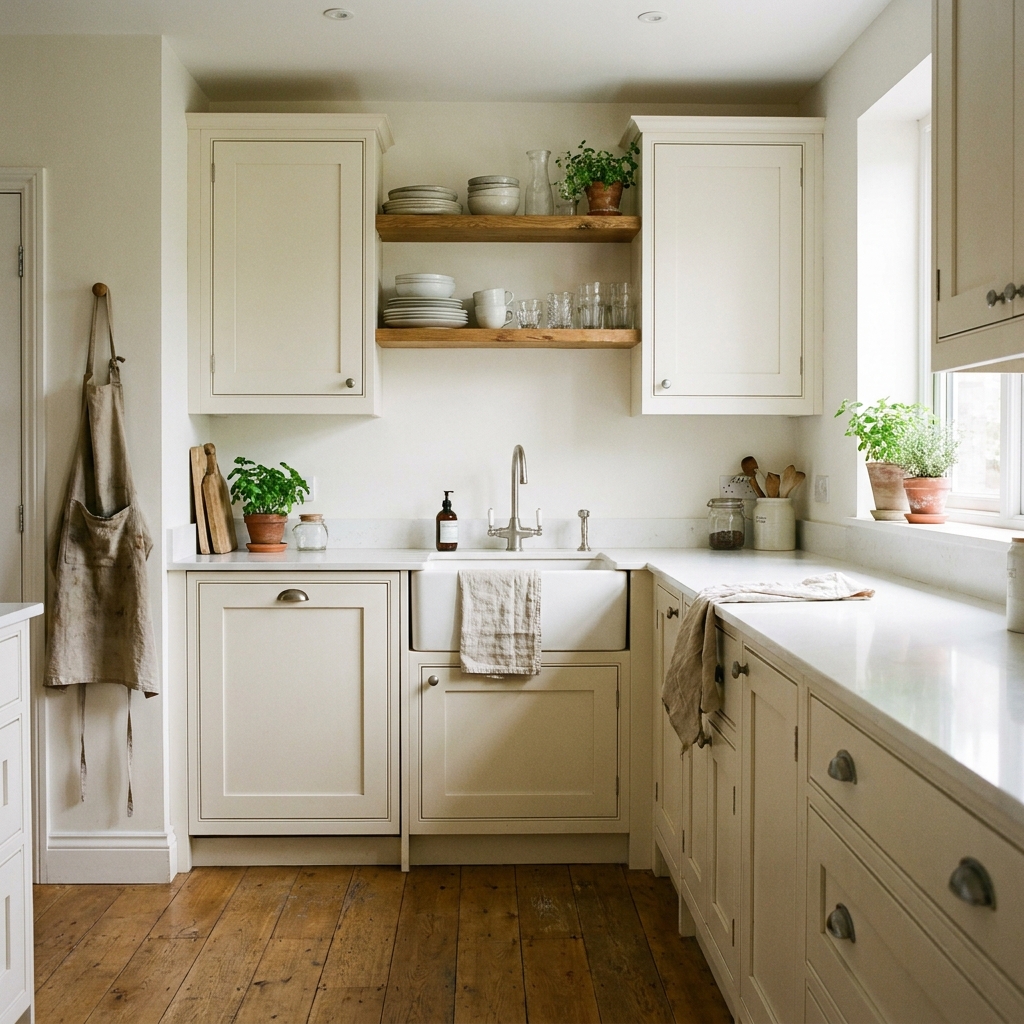
Open Shelves Mixed With Closed Cabinets
Not every kitchen should go fully open shelf. Honestly, most kitchens look better with a mix of both. Closed cabinets hide the ugly stuff while open shelves give the room personality and breathing room.
Replace one section of upper cabinets with two or three shelves instead of removing everything. This works especially well near a range hood or sink area. Use the shelves for items you reach for daily while keeping bulky appliances and food storage hidden behind doors. In my experience, the balance matters more than the styling itself. Too many shelves can feel messy fast. This partial approach usually costs less too since you are only replacing a small section.
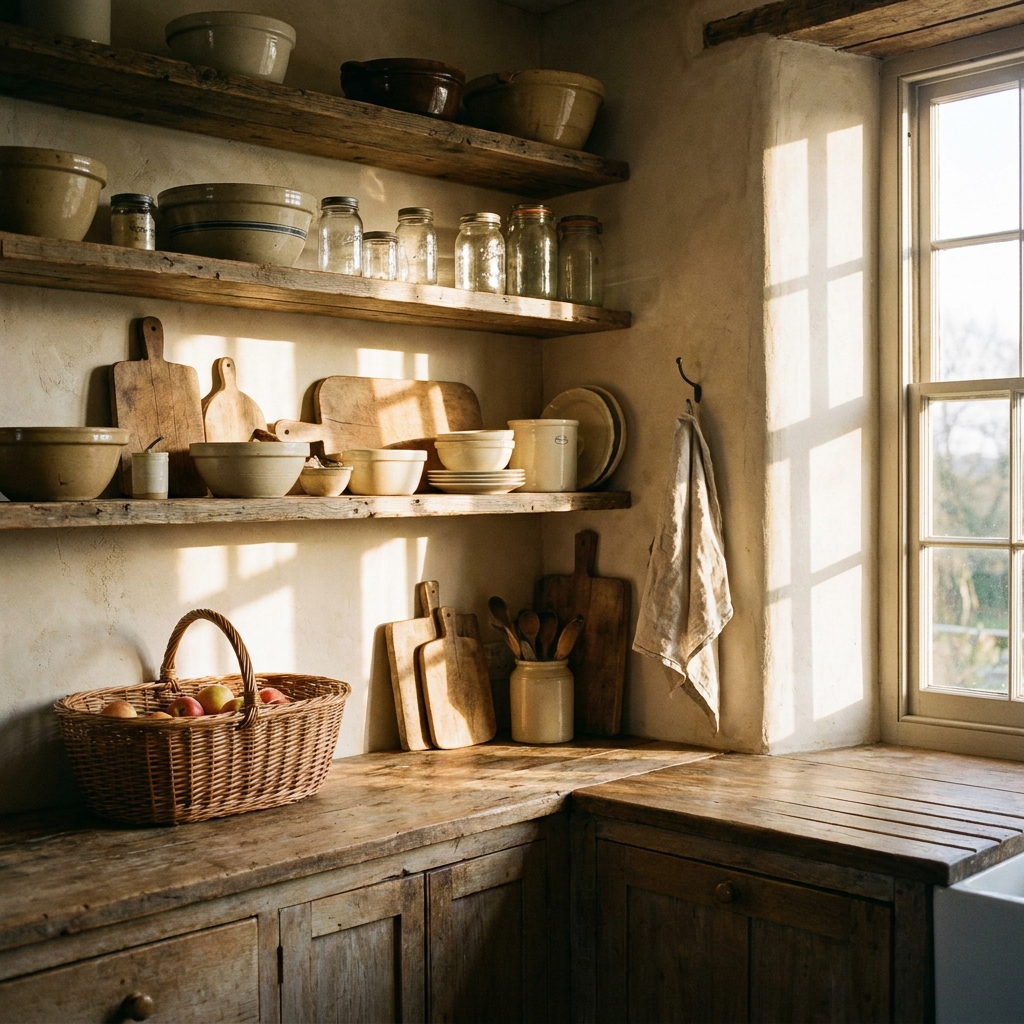
Rustic Shelves With Vintage Kitchen Decor
If you love cozy farmhouse kitchens but do not want your home looking themed, rustic open shelves are a great middle ground. A little aged wood and vintage texture add warmth without feeling cheesy or overdone.
Use reclaimed wood or shelves with visible grain and knots for character. Style them with old crock bowls, cutting boards, vintage jars, and neutral dishes. I always tell people not to over-style rustic kitchens with fake signs and too many antiques. A few worn pieces feel authentic. Too many make the space feel cluttered. Facebook Marketplace and thrift stores are honestly goldmines for affordable vintage kitchen decor.
Slim Shelves for Spices and Oils Near the Stove
One of the smartest open shelf kitchen ideas is also one of the most practical. Slim shelves near the stove keep cooking essentials easy to grab while freeing up cabinet space. Plus, olive oil bottles and spice jars genuinely look good when organized well.
Install narrow shelves around 4 to 6 inches deep near your cooking area. Use matching spice jars or glass bottles to keep things visually clean. I love adding small labels because it instantly makes the setup feel more polished. A common mistake is storing spices too close to direct heat, which can shorten their shelf life. Leave a little distance from burners if possible. This project can cost under $40 if you use basic wood boards and brackets.
Open Shelves Styled With Warm Neutral Tones
The easiest way to make open shelves look expensive is sticking to warm neutral colors. Cream, oatmeal, soft beige, muted terracotta, and warm ivory create a layered look that feels calm and welcoming instead of busy.
Choose dishes and decor within the same warm color family. Mix textures instead of adding more colors. Think matte ceramics, woven baskets, linen towels, and wood accents. What I love about this is how forgiving it is. Even inexpensive pieces from Target or thrift stores look cohesive when the tones match. People often focus too much on buying trendy decor when color consistency matters more. You can slowly build this look over time without spending much at once.
Conclusion
The best part about open shelf kitchen ideas is that you do not need a massive renovation to make them work. A couple of shelves, better organization, and warmer styling choices can completely change how your kitchen feels day to day. You start noticing the little things more. Morning coffee feels calmer. Cooking feels less cramped. Even grabbing a plate somehow feels nicer when the space around you feels warm and personal.
I always tell people to start small. Pick one area of your kitchen instead of trying to redo everything at once. Maybe it’s the coffee station. Maybe it’s replacing one upper cabinet with shelves. Tiny changes usually teach you what actually works for your home.
And honestly, the most beautiful kitchens are rarely the most expensive ones. They are the ones that feel used, loved, and lived in.
Which of these open shelf kitchen ideas are you trying first? Tell me in the comments — I genuinely want to know!
FAQ
Are open shelves in kitchens hard to keep clean?
They do collect dust faster than closed cabinets, but not as badly as people think. Since kitchen shelves usually hold items you use often, dishes and mugs naturally get rotated and cleaned regularly. I suggest wiping shelves down once every week or two with a damp cloth. Avoid overcrowding because clutter traps grease and dust much faster.
What should you put on open kitchen shelves?
The best items are things you actually use daily. Plates, bowls, glasses, mugs, spices, and cooking oils work beautifully because they combine storage with decor. Add one or two softer elements like a small plant, framed print, or woven basket so the shelves do not feel too rigid. In my experience, less always looks better than cramming shelves full.
Are open shelves cheaper than upper cabinets?
Usually, yes. Installing a few wood shelves costs far less than buying and mounting full cabinets. Budget DIY shelves can cost under $100 total depending on materials. That said, custom hardwood shelves with premium brackets can still get pricey, so it depends on the finish you want.
How do you make open shelves look organized?
Stick to a limited color palette and repeat similar materials throughout the shelves. Matching jars, neutral dishes, and warm wood tones create consistency fast. I also suggest leaving empty space between objects because packed shelves instantly feel messy. Layering height and texture helps too.
Do open shelves work in small kitchens?
They actually work especially well in small kitchens because they make the room feel more open and less boxed in. Heavy upper cabinets can visually crowd a tiny kitchen. Open shelving keeps sightlines lighter while giving you accessible storage. Just keep the styling simple so the room still feels calm and functional.