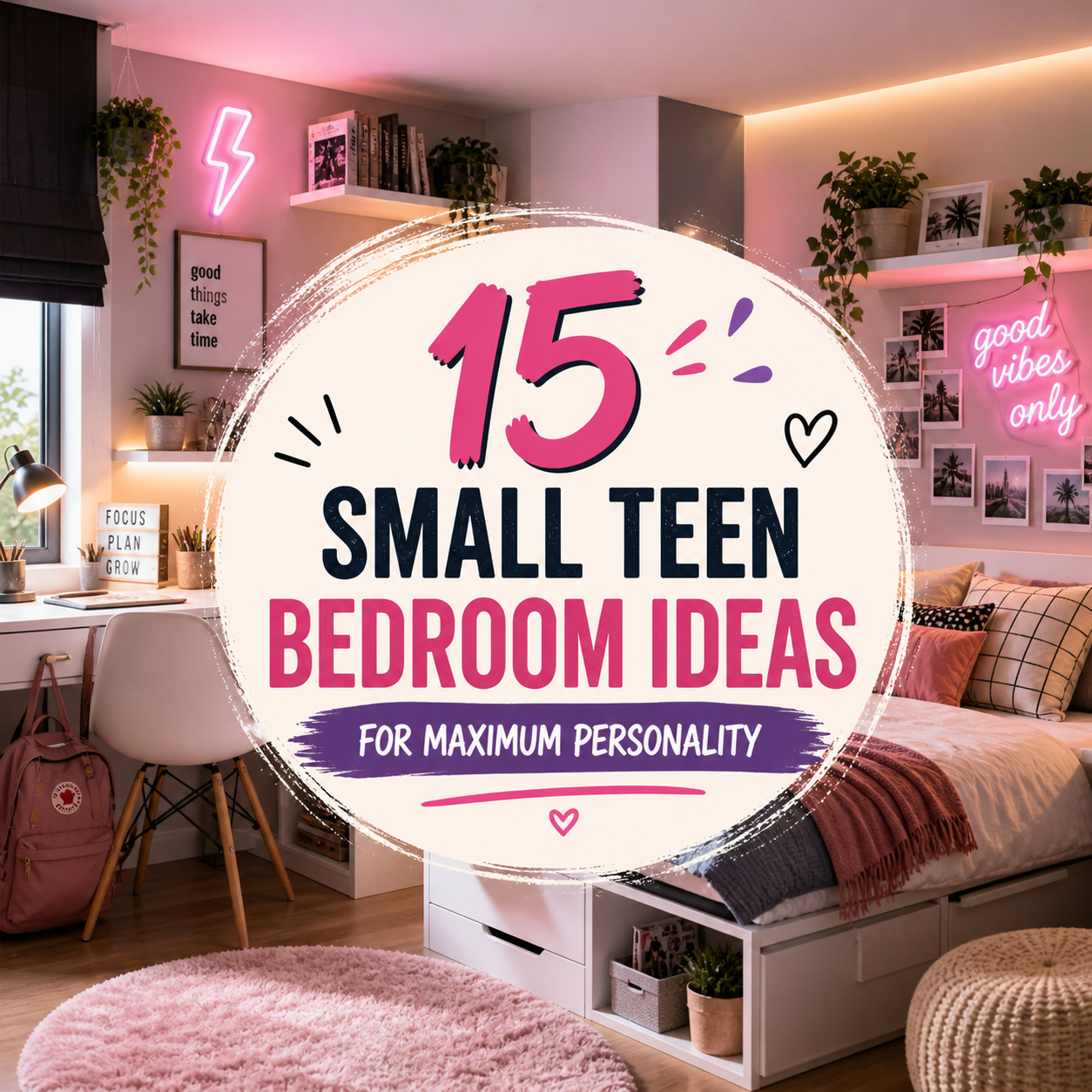
15 Small Teen Bedroom Ideas for Maximum Personality
You keep saving small teen bedroom ideas on Pinterest, but when you look at your own space, it feels… flat. Maybe it’s cramped. Maybe everything feels mismatched. Or maybe it just doesn’t feel like you yet. That’s the real issue, right? Not size — personality.
Here’s the good news. You don’t need a bigger room or a full makeover to fix it. In my experience, the smallest changes — a new layout, better lighting, a few layered textures — can completely shift how a room feels. And they don’t have to cost much either.
In this post, I’m sharing 15 small teen bedroom ideas that actually work in real life. These aren’t showroom setups. They’re practical, affordable decor updates you can pull together over a weekend. Think cozy corners, smart storage, and details that make your room feel like your space.
Pick one. Try it. Then build from there. That’s how rooms come together.
Let’s get into it.
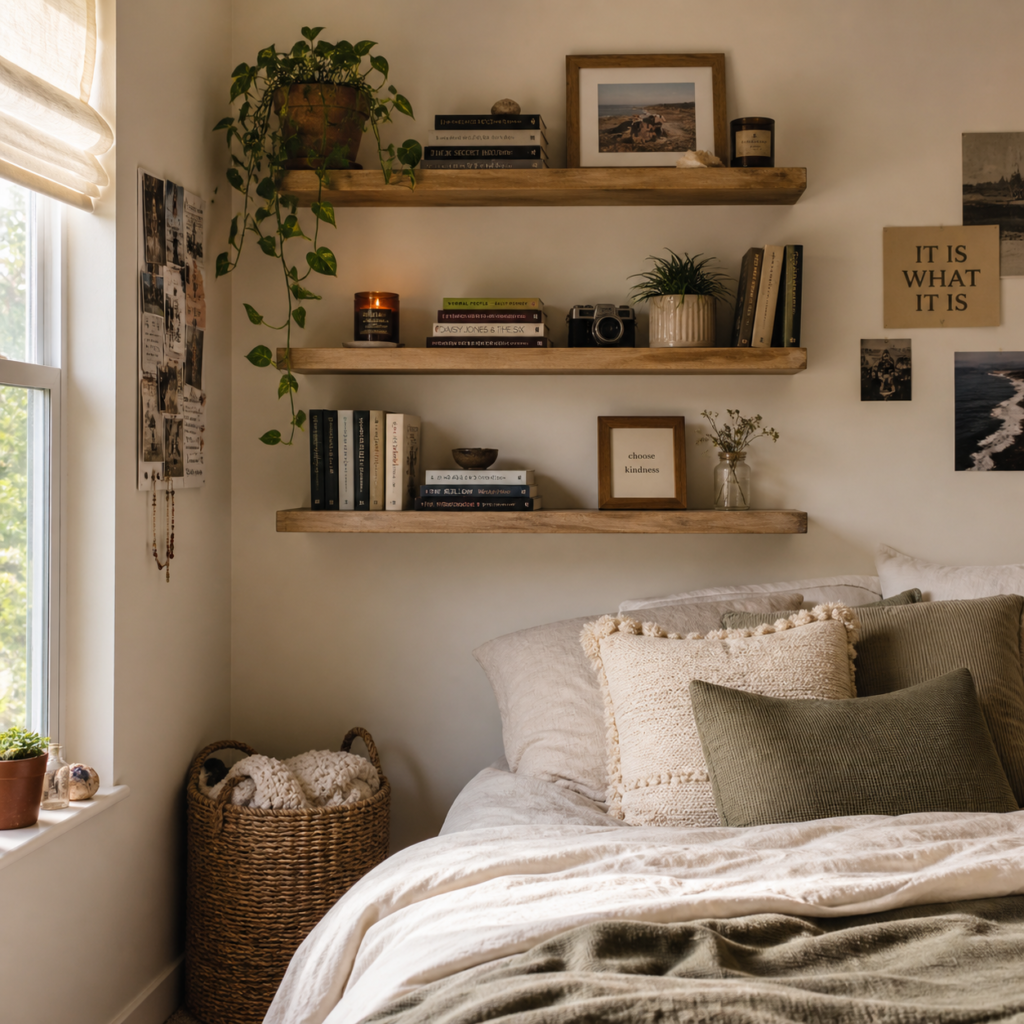
Floating Shelves That Show Off Your Personality (Not Just Store Stuff)
Blank walls make a small room feel even smaller. But when you add a few floating shelves, suddenly the space feels layered and alive. Think books stacked sideways, a candle, maybe a framed photo, and one random object you love. It feels personal without trying too hard.
Mount two to three shelves above your desk or bed, about 10–12 inches apart. Keep them shallow so they don’t crowd the room. I always suggest mixing items — don’t line everything up perfectly. The biggest mistake is turning shelves into storage bins. Leave breathing space between objects. You can do this for $20–$50 with basic wood shelves or even DIY them with brackets and boards.
LED Strip Lighting That Actually Feels Warm, Not Harsh
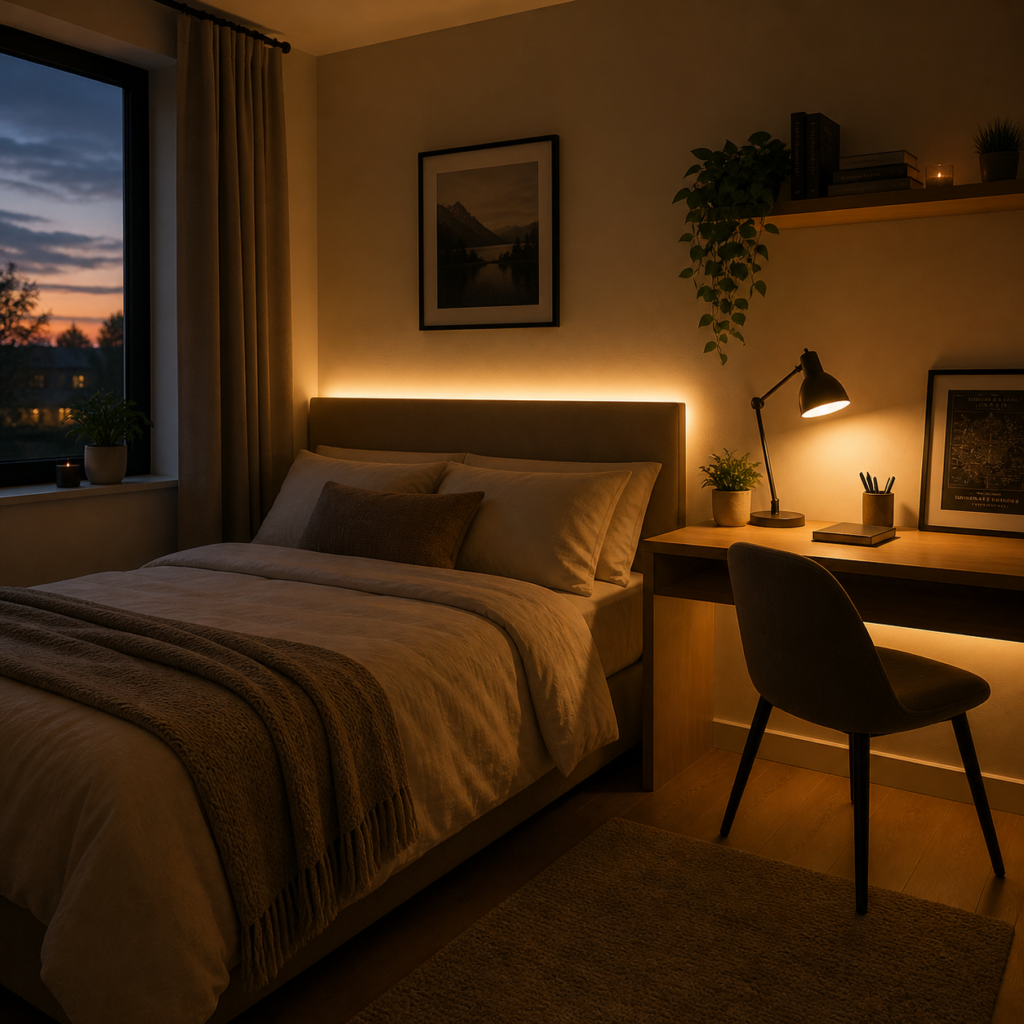
A lot of people slap LED lights around the ceiling and call it a day. But harsh blue lighting can make your room feel like a gaming setup instead of a cozy retreat. Done right, though, LED lighting can add depth and warmth.
Place warm-toned LED strips behind your headboard, under your desk, or along a shelf — not directly in your line of sight. Look for “warm white” or adjustable tones. What I love about this is how it softens the room at night. Expect to spend $10–$30. Avoid outlining the entire ceiling — it can feel overwhelming fast.
A Pinboard or Grid Wall That Evolves With You
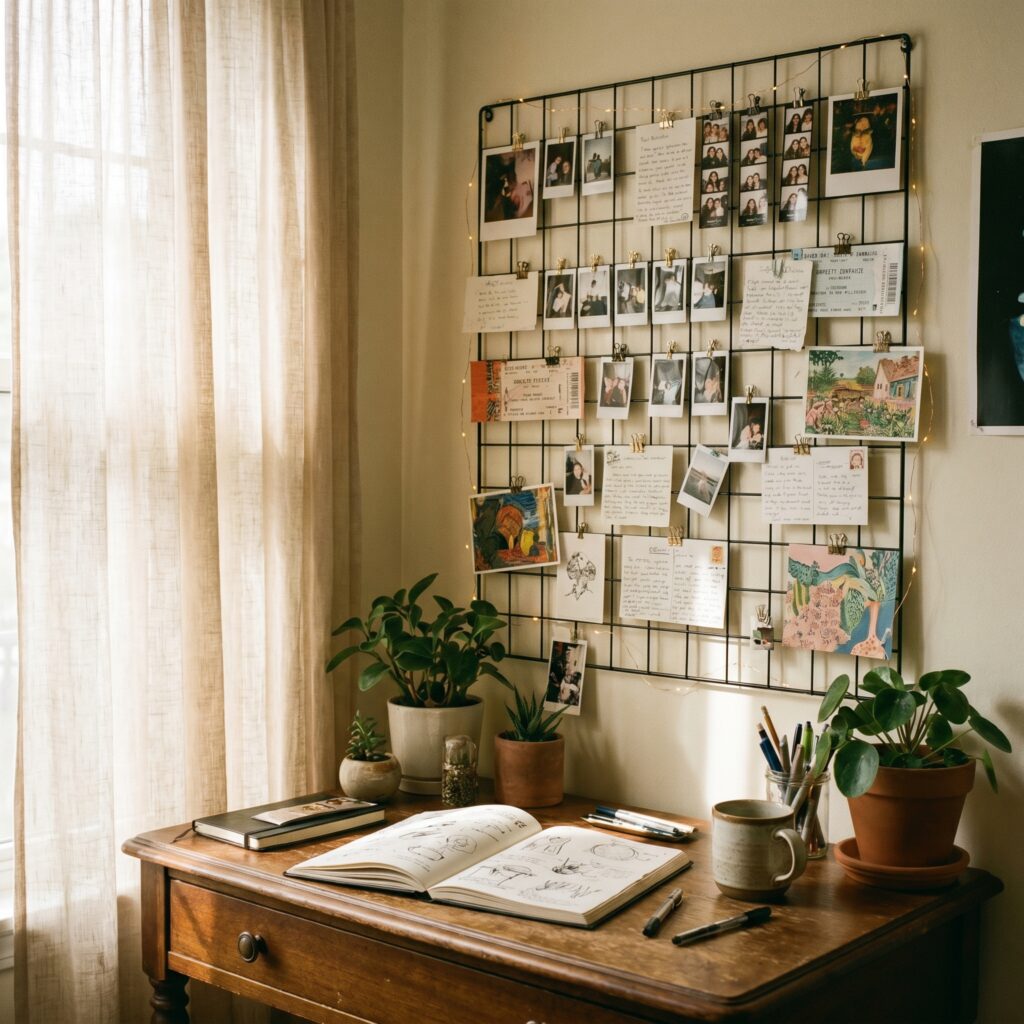
You need a space that changes as fast as your interests do. A pinboard or metal grid wall gives you that flexibility. Photos, notes, tickets, little prints — it all builds a story.
Hang it above your desk or beside your bed where you’ll see it daily. Use clips, washi tape, or push pins. In my experience, the mistake is overfilling it too quickly. Start sparse and add over time. You can get a good setup for $15–$40.
Under-Bed Storage That Doesn’t Feel Like Storage
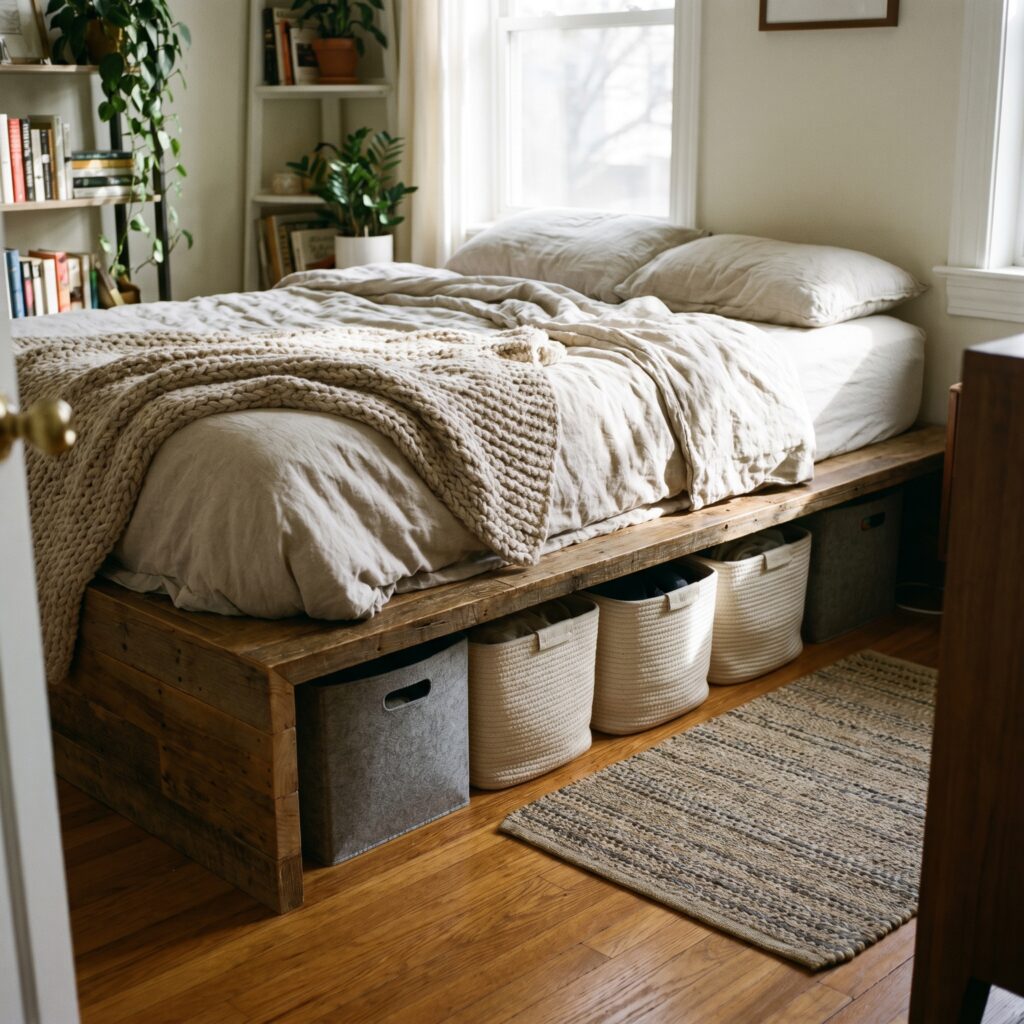
In a small room, hidden storage is everything. But bulky plastic bins can make things feel messy fast. The trick is choosing storage that blends in.
Use low fabric bins or wooden drawers that slide easily under your bed. Stick to neutral tones so they don’t stand out. I always suggest measuring your bed height first — people skip this and end up with bins that don’t fit. Budget around $25–$70 depending on quality.
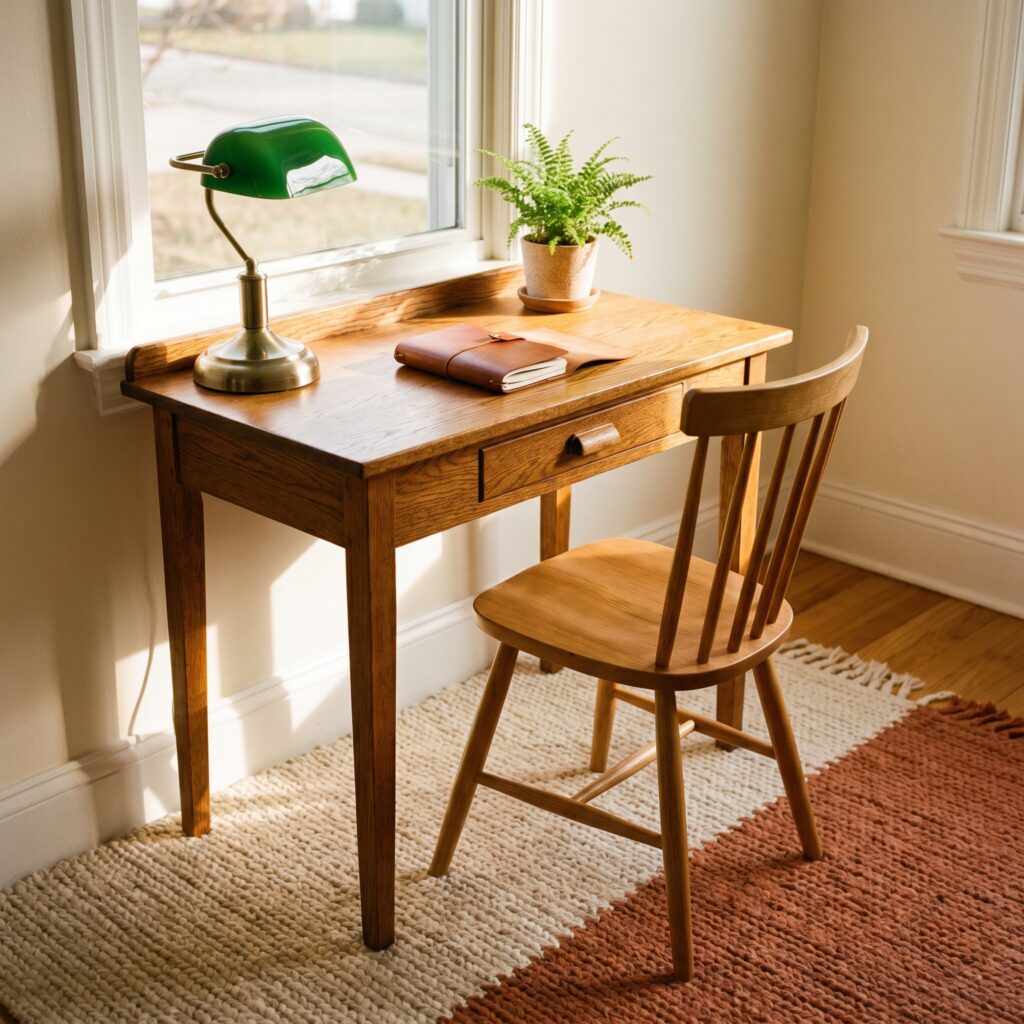
A Small Desk Setup That Makes You Want to Sit Down
If your desk feels cluttered or dull, you’ll avoid it. And that matters more than you think. Even a tiny desk can feel inviting with the right setup.
Keep only essentials on top: a lamp, one notebook, maybe a pen holder. Add a small plant or framed photo for warmth. Choose a chair that’s comfortable, even if it’s simple. What I love about this is how it changes your habits without effort. You can upgrade your setup for $30–$80.
Layered Bedding That Feels Cozy Without Bulk
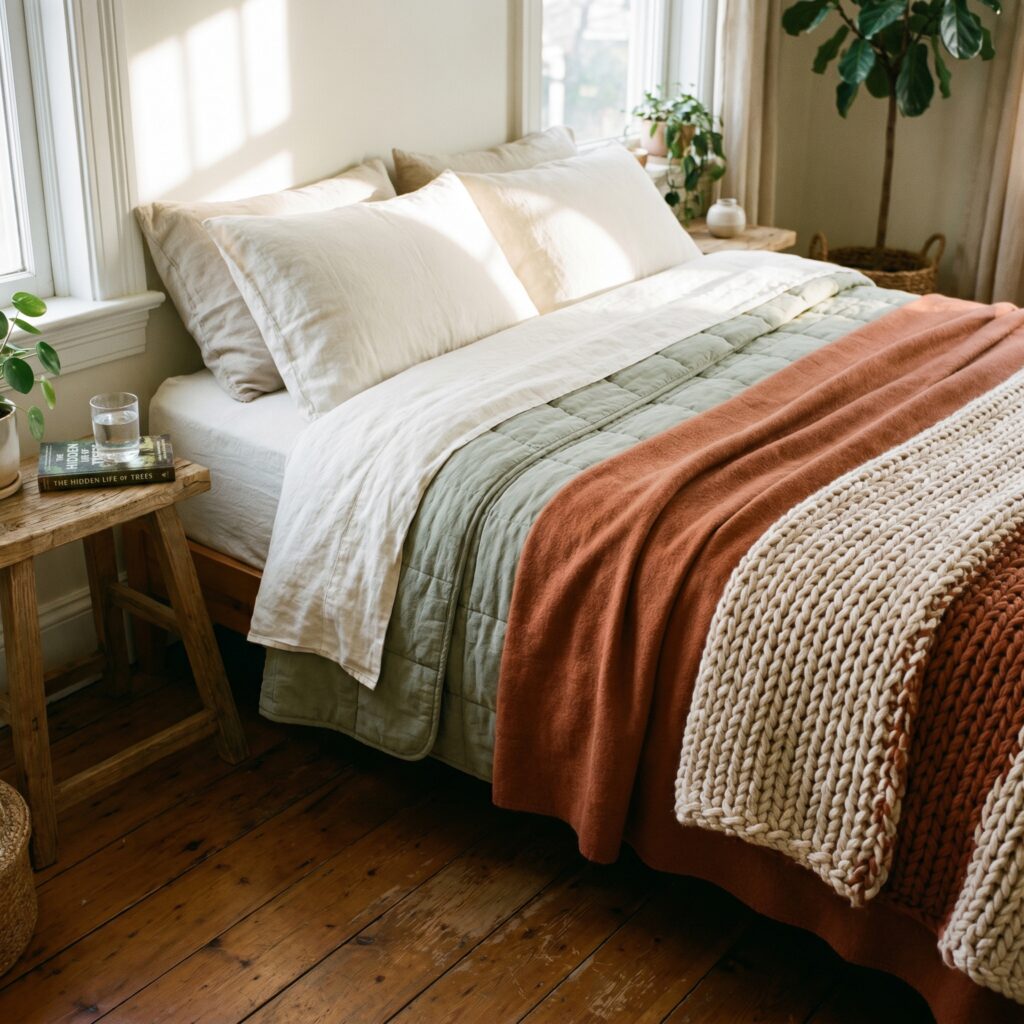
Your bed is the biggest thing in your room, so it sets the tone. Flat bedding makes everything feel unfinished.
Layer a duvet, a throw blanket, and two to three pillows in different textures. Stick to a simple color palette — maybe warm ivory, sage, and muted terracotta. In my experience, people overdo it with too many colors. Keep it tight. You can do this for $40–$100 depending on pieces.
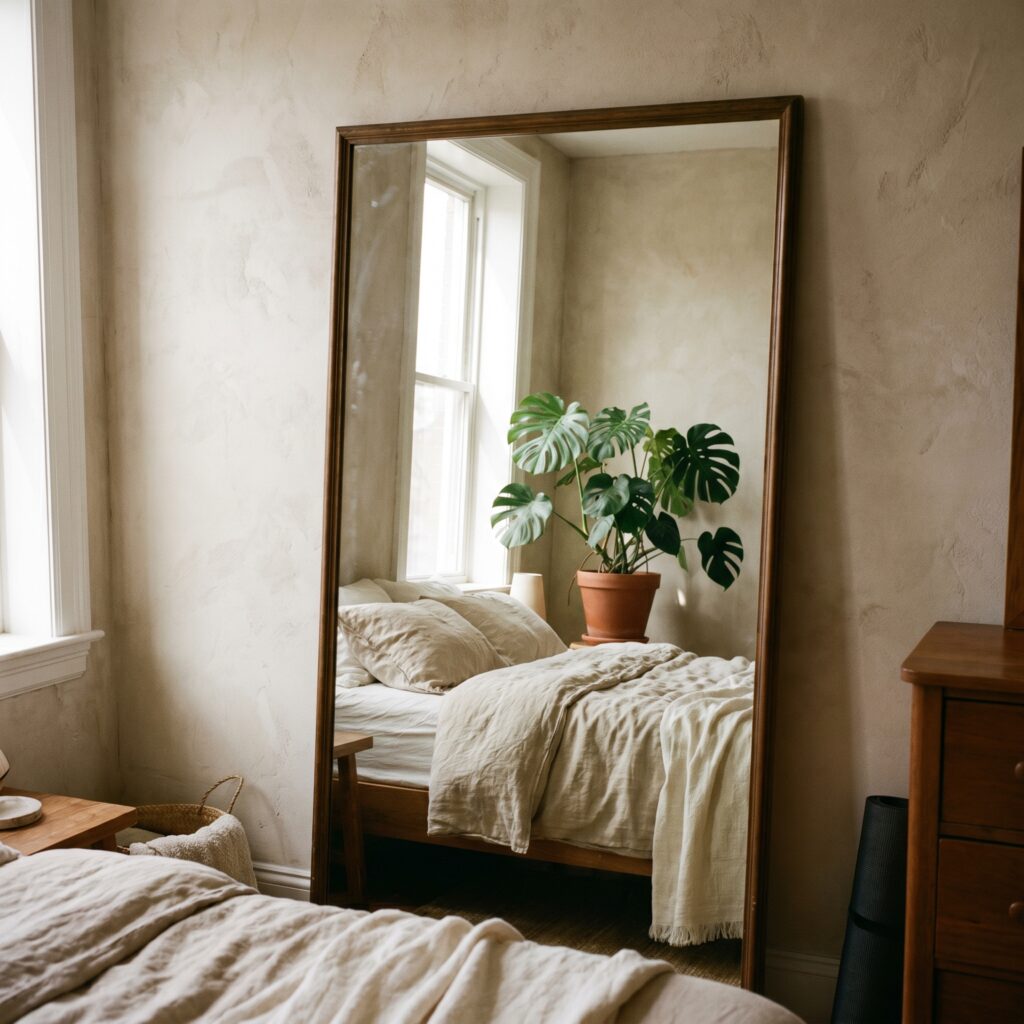
A Mirror That Opens Up the Whole Room
Small rooms need tricks, and mirrors are one of the easiest. They bounce light and make everything feel bigger instantly.
Go for a full-length mirror if you can. Lean it against a wall instead of mounting it for a relaxed look. Place it where it reflects light, not clutter. I always suggest avoiding tiny mirrors — they don’t do much. Budget $30–$100.
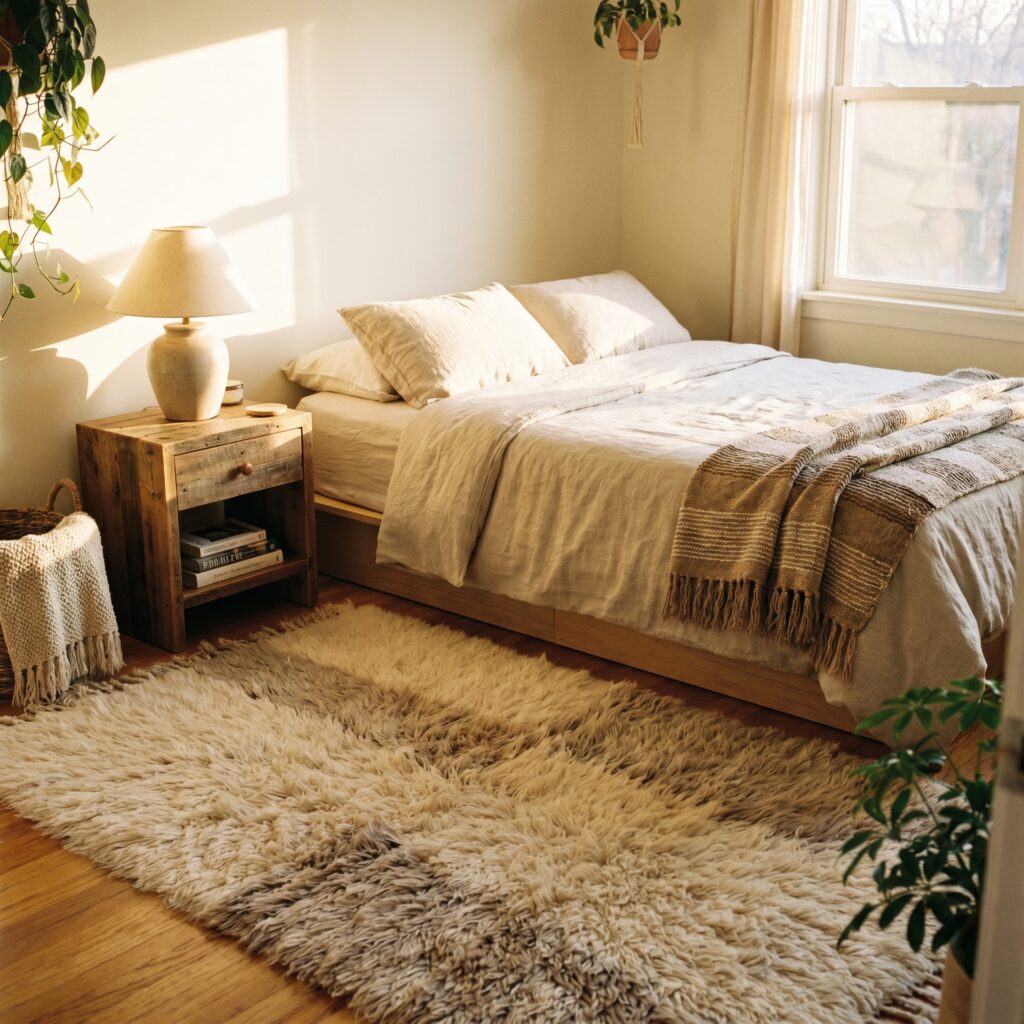
A Rug That Grounds the Entire Space
Bare floors can make a room feel cold. A rug adds warmth and pulls everything together.
Choose one that’s large enough to sit under at least part of your bed. Go for soft textures and muted tones. What I love about rugs is how they define space without taking up room. Expect to spend $40–$120.
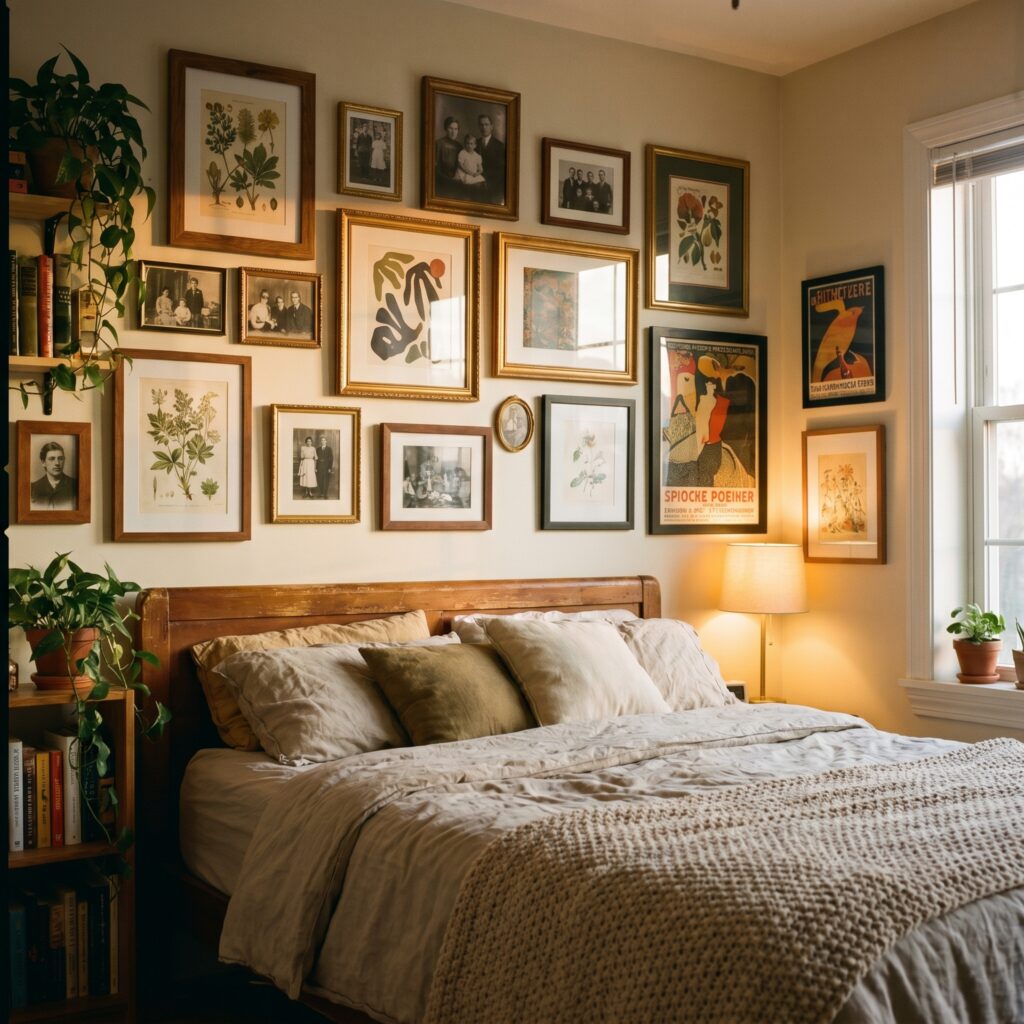
Wall Art That Actually Feels Like You
Generic prints don’t do much for personality. Your walls should reflect what you love.
Mix prints, photos, and maybe one bold piece. Arrange them loosely — not perfectly aligned. In my experience, symmetry can make things feel stiff. Budget $15–$50 with prints or DIY art.
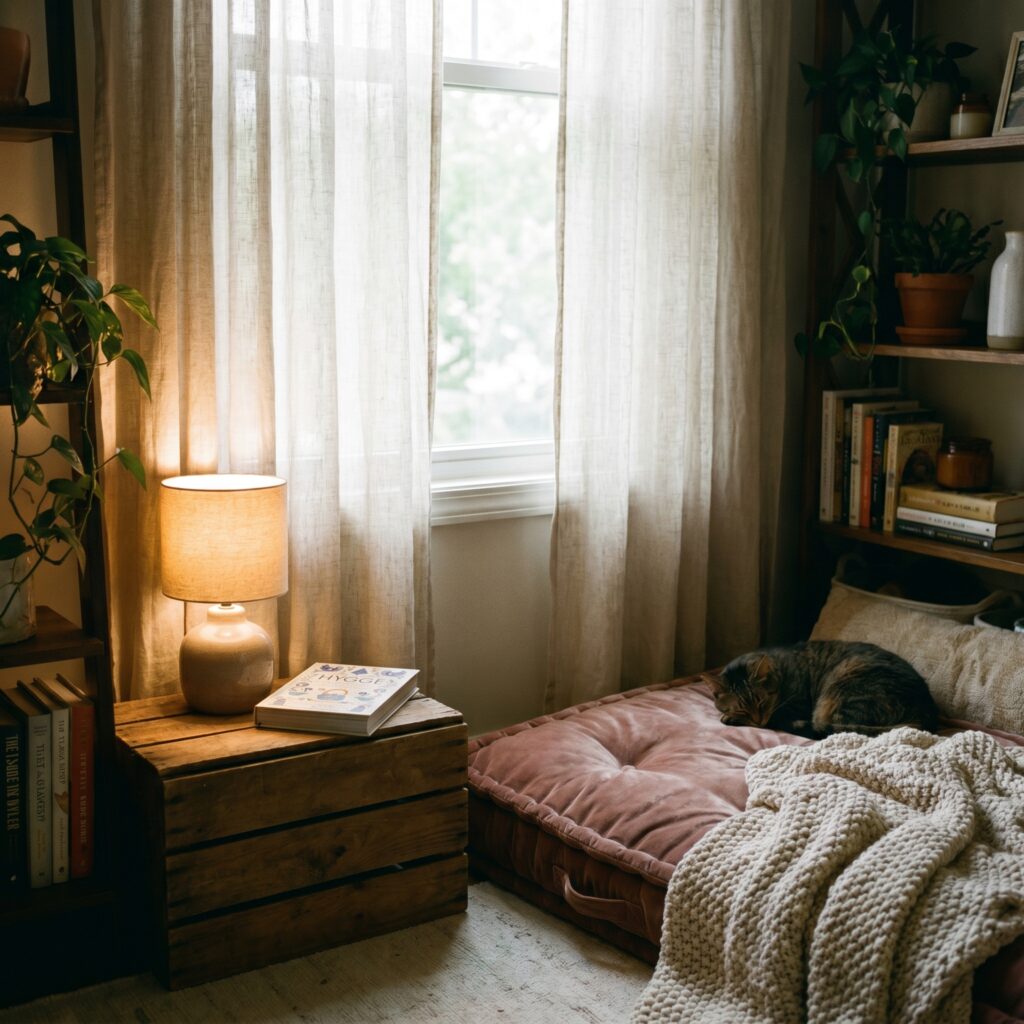
A Cozy Corner You Actually Use
Even in a small room, you can carve out a tiny corner just for you. That’s where the magic happens.
Add a floor cushion or a small chair, a throw blanket, and a soft light. Keep it simple. I always suggest placing it near a window if possible. Budget $30–$90.
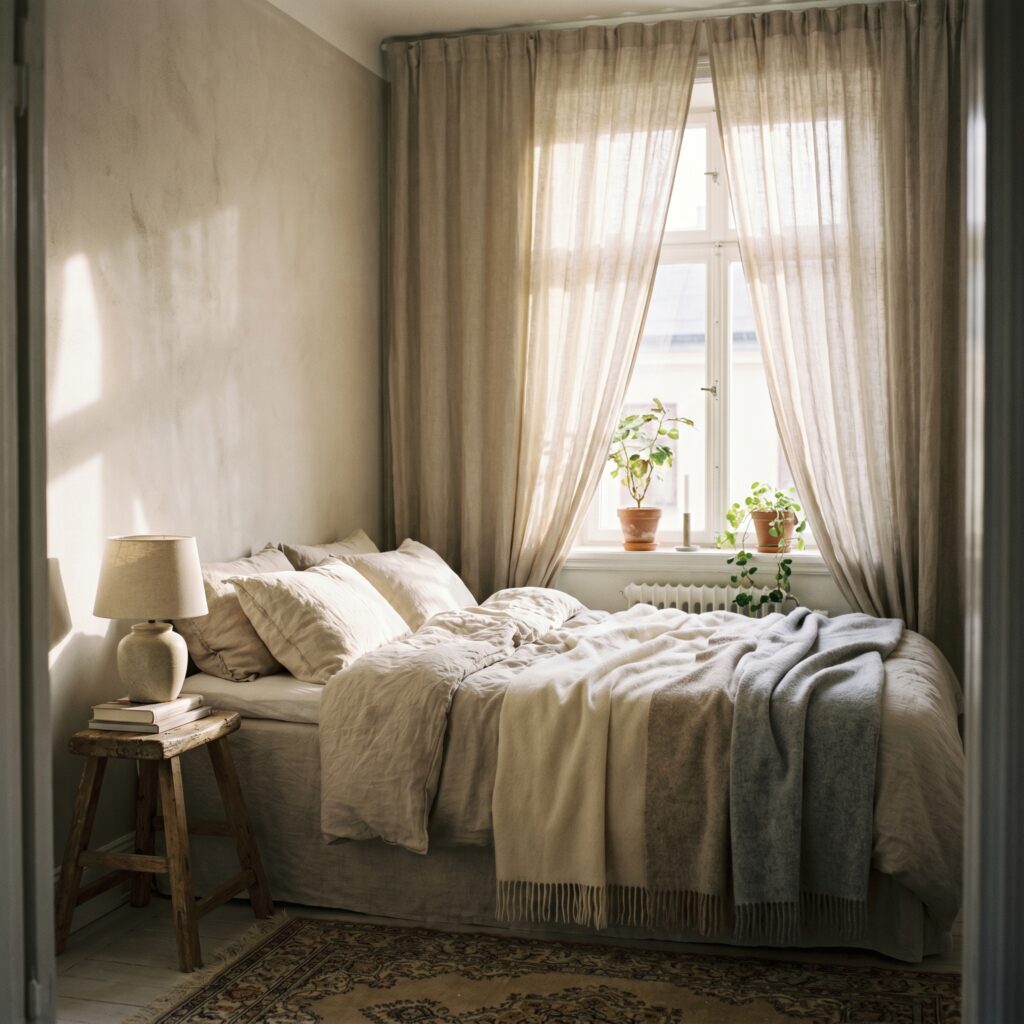
Curtains That Soften Everything Instantly
Bare windows can make a room feel unfinished. Curtains add softness and height.
Hang them higher than the window to make the room feel taller. Choose light fabrics that let in sunlight. The biggest mistake is going too short — always let them reach the floor. Budget $20–$60.
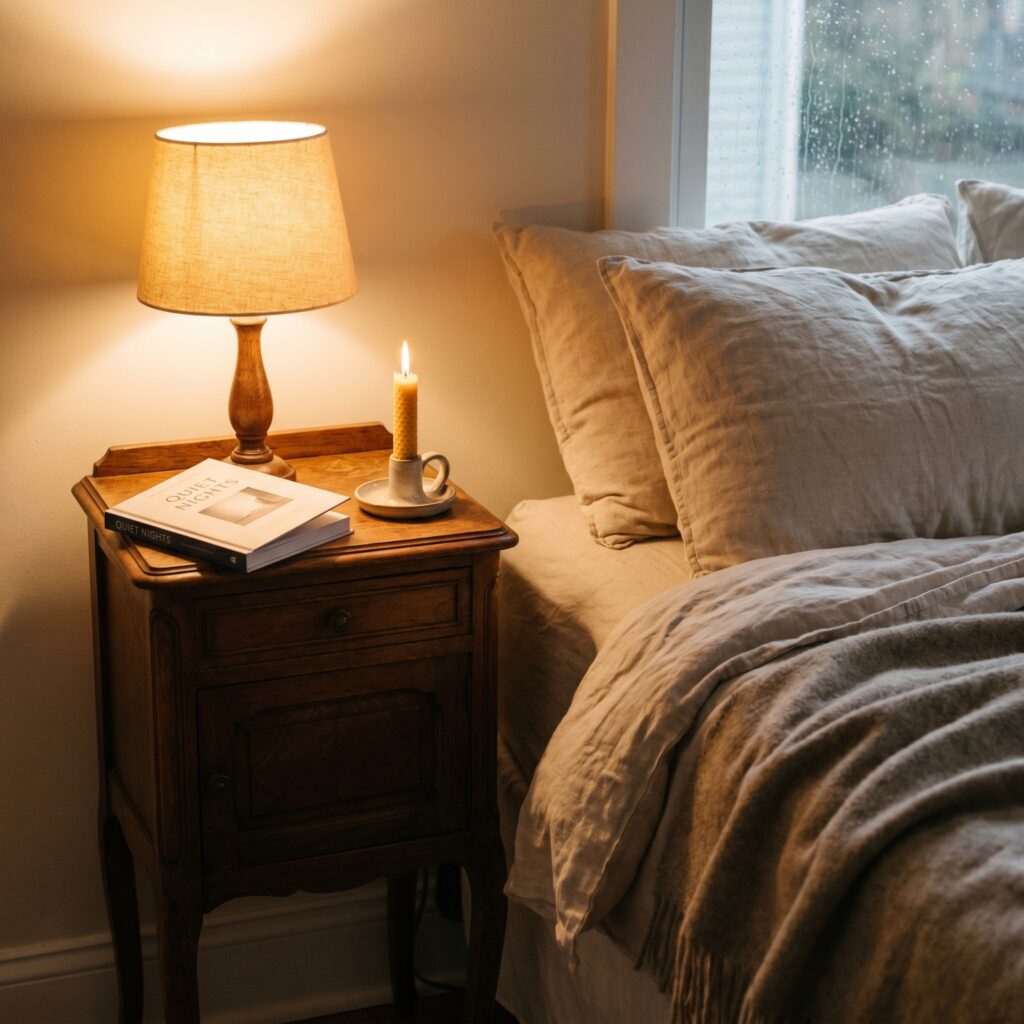
A Nightstand Setup That Feels Intentional
Your nightstand doesn’t need much, but it should feel put together.
Stick to three items: a lamp, a book, and one personal object. Keep it clean. What I love about this is how small it is, but how much it changes the feel. Budget $15–$50.
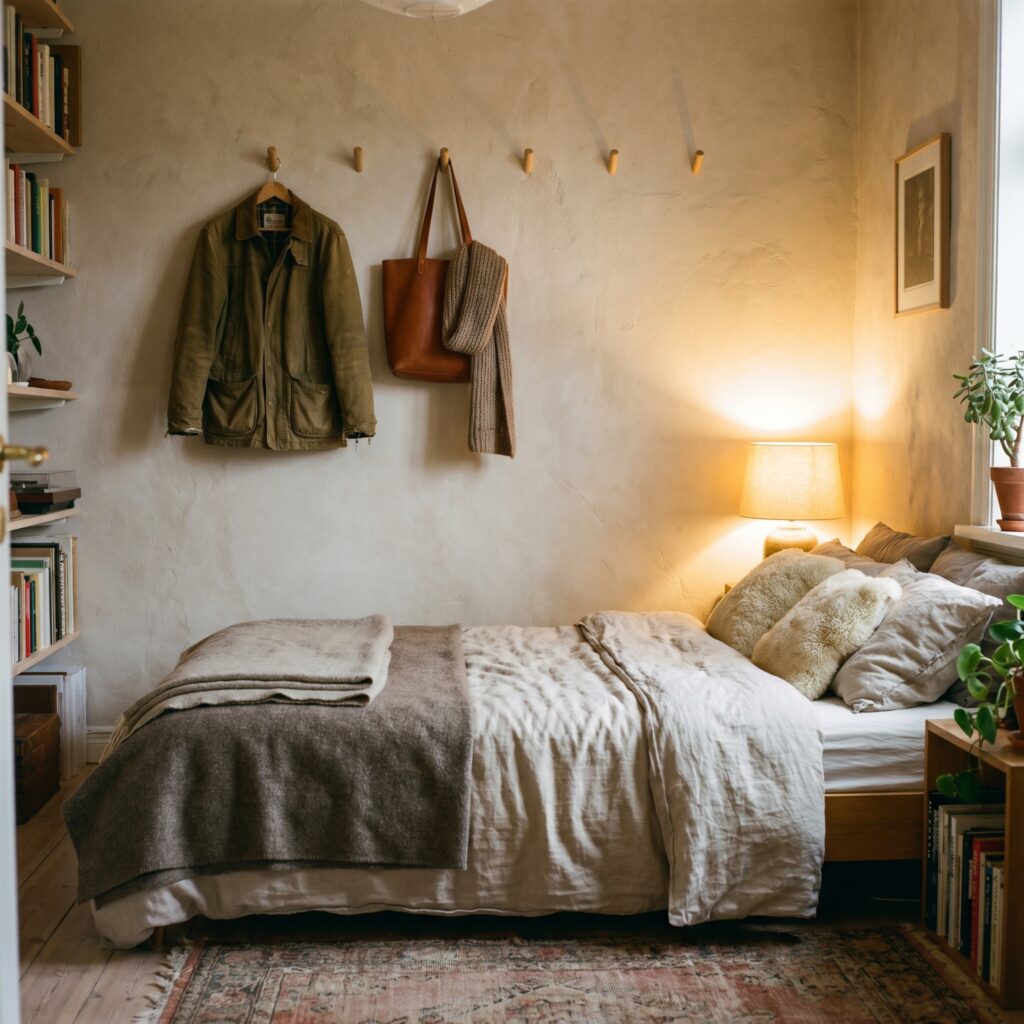
Hooks That Turn Clutter Into Decor
Clothes and bags often end up on the floor. Hooks fix that — and they can look good doing it.
Install a few on your wall or door. Hang items you actually use. In my experience, this works better than overstuffed closets. Budget $10–$30.
A Small Plant That Brings Life Into the Room
Even one plant can change how your room feels. It adds color and softness.
Start with something low-maintenance like a pothos or snake plant. Place it near light. I always suggest starting small — don’t overwhelm your space. Budget $5–$25.
A Color Theme That Pulls Everything Together
When everything feels random, it’s usually a color issue. A simple palette fixes that.
Pick two to three main colors and repeat them across your room — bedding, decor, art. What I love about this is how it instantly makes things feel cohesive. The mistake is adding too many tones. Keep it tight. Budget varies depending on swaps.
Conclusion
Here’s the truth. You don’t need a perfect room or a big budget to make your space feel good. You just need a starting point. That’s it.
These small teen bedroom ideas are meant to be real and doable. Pick one or two that stood out to you. Try them this week. See how your room feels after. In my experience, once you start, it gets easier. You notice what works, what doesn’t, and what you actually like.
Your room should feel like you when you walk in. Not like a copy of something you saw online.
So tell me — which of these small teen bedroom ideas are you trying first? I genuinely want to know.
FAQs
How do I make a small teen bedroom look bigger?
Use light colors, mirrors, and keep clutter off the floor. In my experience, the biggest difference comes from layout. Pull furniture slightly away from walls and let light move through the space.
What colors work best for small bedrooms?
Soft neutrals like warm white, beige, and light gray work well. Add one or two accent colors like sage or terracotta. Too many bold colors can make the room feel crowded.
How can I decorate my room on a low budget?
Focus on small changes like bedding, lighting, and wall art. DIY where you can. I always suggest starting with one area instead of trying to change everything at once.
What’s the biggest mistake in small bedroom design?
Overcrowding. Too much furniture or decor makes the room feel smaller. Leave some empty space — it matters more than you think.
How do I keep a small room organized?
Use hidden storage like under-bed bins and wall hooks. Keep surfaces clear. In my experience, daily small resets work better than big cleanups.