
15 Bedroom Ideas Inspired by Nature That Feel Calm, Grounded, and Actually Livable
You keep saving those soft, nature-inspired bedroom photos — linen bedding, wooden accents, sunlight pouring in — but when you look at your own room, it feels… off. Too cluttered, too flat, or just missing that calm feeling you can’t quite explain.
I’ve been there. In my experience, the biggest mistake people make is thinking they need a full makeover to get that grounded, natural look. You don’t. Small, thoughtful changes can shift how your room feels in a big way — without tearing everything apart or spending a fortune.
These 15 bedroom ideas inspired by nature are simple, realistic, and actually doable. No perfect lighting or designer furniture required. Just smart choices, natural textures, and a little intention in how you layer things.
If you want a space that feels softer, warmer, and easier to relax in, you’re going to find something here that works for you.
Let’s get into it.
Linen Bedding in Soft Earth Tones That Feels Relaxed, Not Stiff
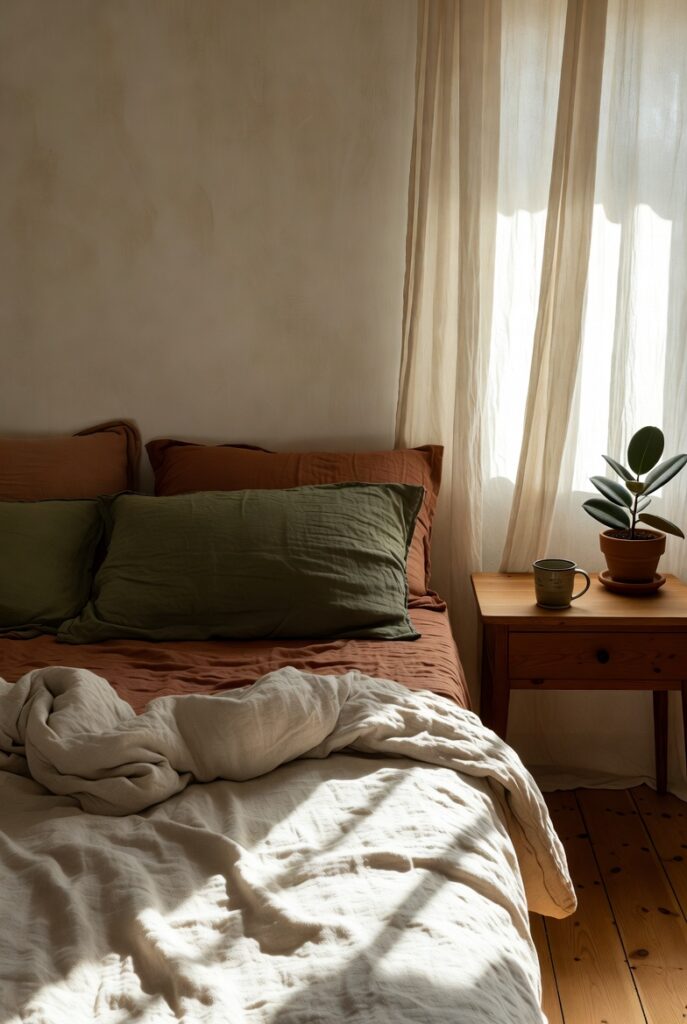
There’s something about linen that instantly softens a room. It’s slightly wrinkled, breathable, and has that relaxed look that feels lived-in without trying too hard. When you choose shades like warm ivory, olive, or muted terracotta, the whole space starts to feel grounded.
Start with a linen duvet cover in a natural tone — think beige, sand, or dusty green. Pair it with crisp white or oatmeal sheets underneath so it doesn’t look flat. Add two euro pillows and one smaller accent pillow in a deeper tone for contrast. I always suggest sticking to three colors max. A lot of people over-layer here, and it ends up messy instead of calm. Good linen sets can range from $50–$120, but you can find budget blends around $35 that still give the same effect.
A Simple Wooden Bed Frame That Grounds the Whole Room
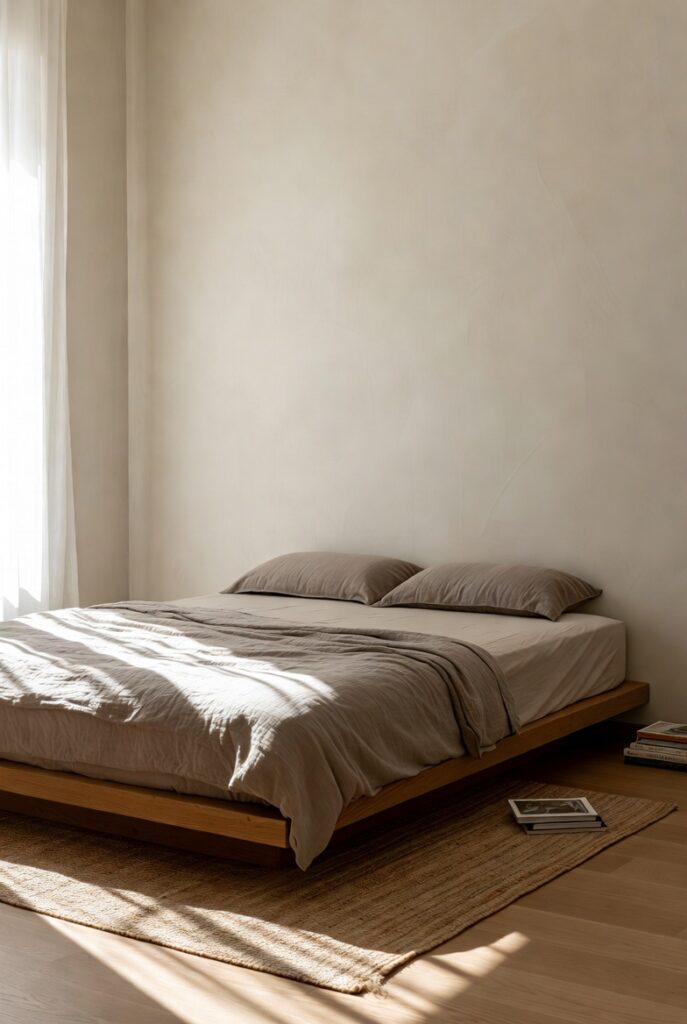
A solid wood bed frame changes everything. It anchors the space and adds warmth in a way painted furniture just can’t. Light oak feels airy, while darker walnut gives a more grounded feel.
Look for a low-profile wooden frame with clean lines. You don’t need anything ornate — simple works best here. If buying new isn’t in the budget, even a basic frame can be upgraded with a wood-look wrap or stain. In my experience, the biggest mistake is choosing something too bulky for the room size. Keep it proportional. Expect to spend $100–$300 depending on quality, or under $80 if you DIY the finish.
Layered Jute and Cotton Rugs for Warmth Underfoot
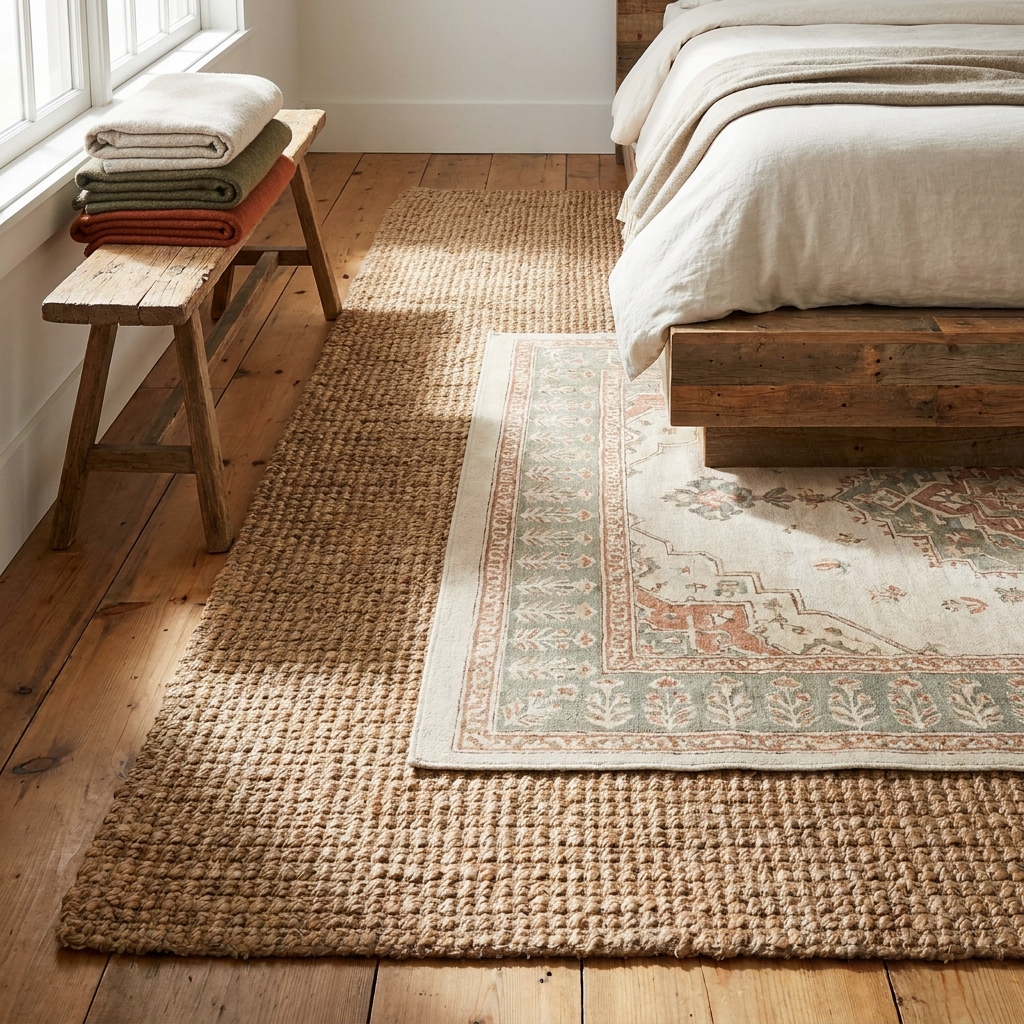
Bare floors can make a room feel cold, even if everything else is cozy. Layering a large jute rug with a softer cotton rug on top instantly adds warmth and texture.
Start with a neutral jute rug that covers most of the bed area. Then layer a smaller patterned or solid cotton rug near the foot or side of the bed. This works especially well if your room feels too plain. What I love about this is how forgiving it is — even slightly mismatched textures look intentional. A common mistake is choosing rugs that are too small. Go bigger than you think. Jute rugs start around $40, while cotton layers can be under $25.
Woven Baskets That Double as Storage and Decor
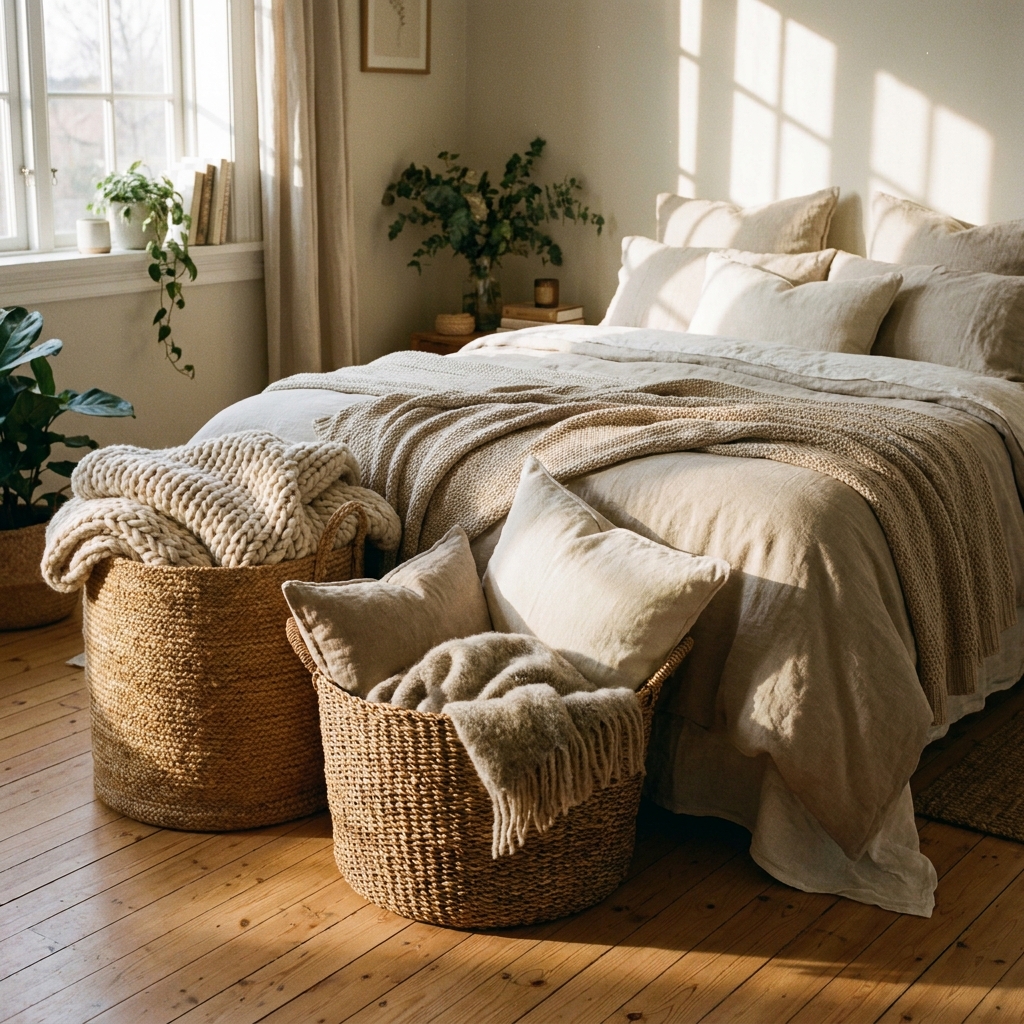
Nature-inspired rooms don’t hide everything — they use storage that actually looks good. Woven baskets are perfect for that. They bring in texture while keeping clutter under control.
Place a medium-sized basket next to your bed for extra blankets or pillows. Use a taller one in a corner for laundry or throws. Stick to natural fibers like seagrass or rattan for that organic feel. I always tell people not to overfill them — it ruins the look. Keep it slightly loose and breathable. You can find great options from $15–$40.
Soft Sheer Curtains That Let Natural Light Do the Work
Heavy curtains block the one thing you actually want more of — natural light. Sheer curtains soften it instead, making the room glow.
Go for white, cream, or light beige sheers. Hang them higher than your window frame to make the ceiling feel taller. Let them fall all the way to the floor. In my experience, the biggest mistake is using curtains that are too short — it cuts the room visually. Affordable options start around $20 for a set, and they instantly make the room feel softer.
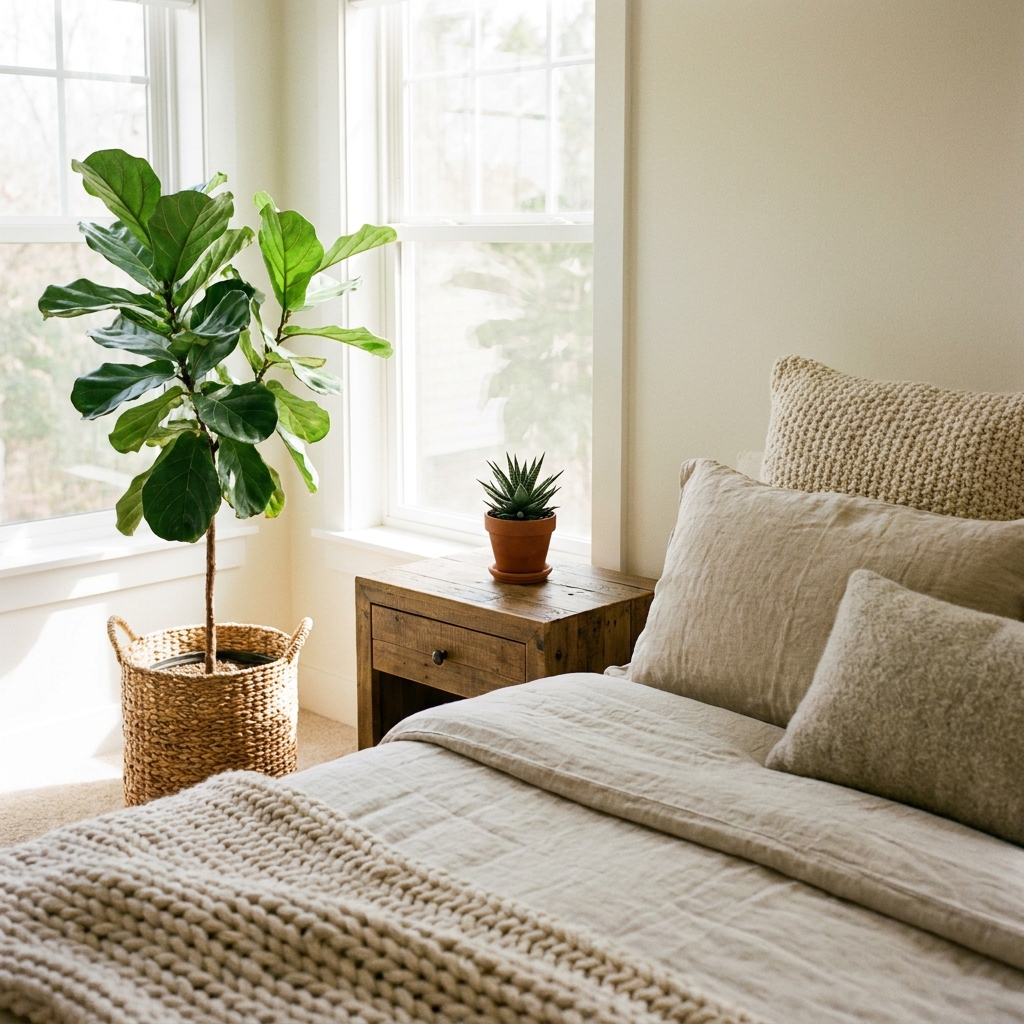
Indoor Plants That Make the Space Feel Alive
Nothing connects a room to nature faster than actual greenery. Even one or two plants can shift the energy completely.
Start simple — a snake plant, pothos, or peace lily. Place one on your nightstand and another near a window or corner. If you’re worried about maintenance, go for low-light plants or even realistic faux options. A lot of people crowd too many plants into one space. Keep it minimal. Expect to spend $5–$25 per plant.
Stone or Ceramic Decor Pieces That Add Subtle Texture
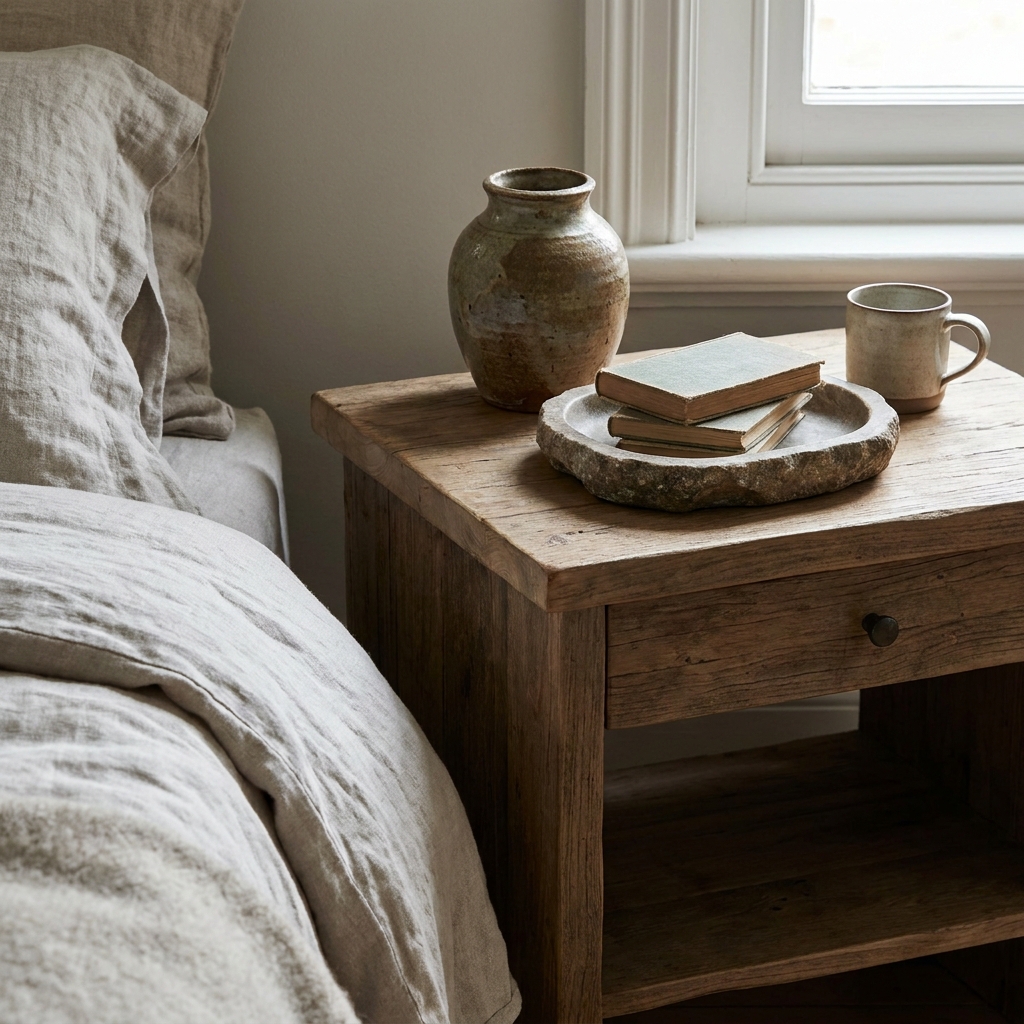
Nature isn’t all soft — it has contrast. Adding stone or ceramic pieces brings that balance into your room.
Think a small ceramic vase, a stone tray, or a textured lamp base. Keep the colors neutral so they blend in rather than stand out. What I love about this is how it adds interest without clutter. A common mistake is going too decorative — keep it simple. These pieces can be found for $10–$35.
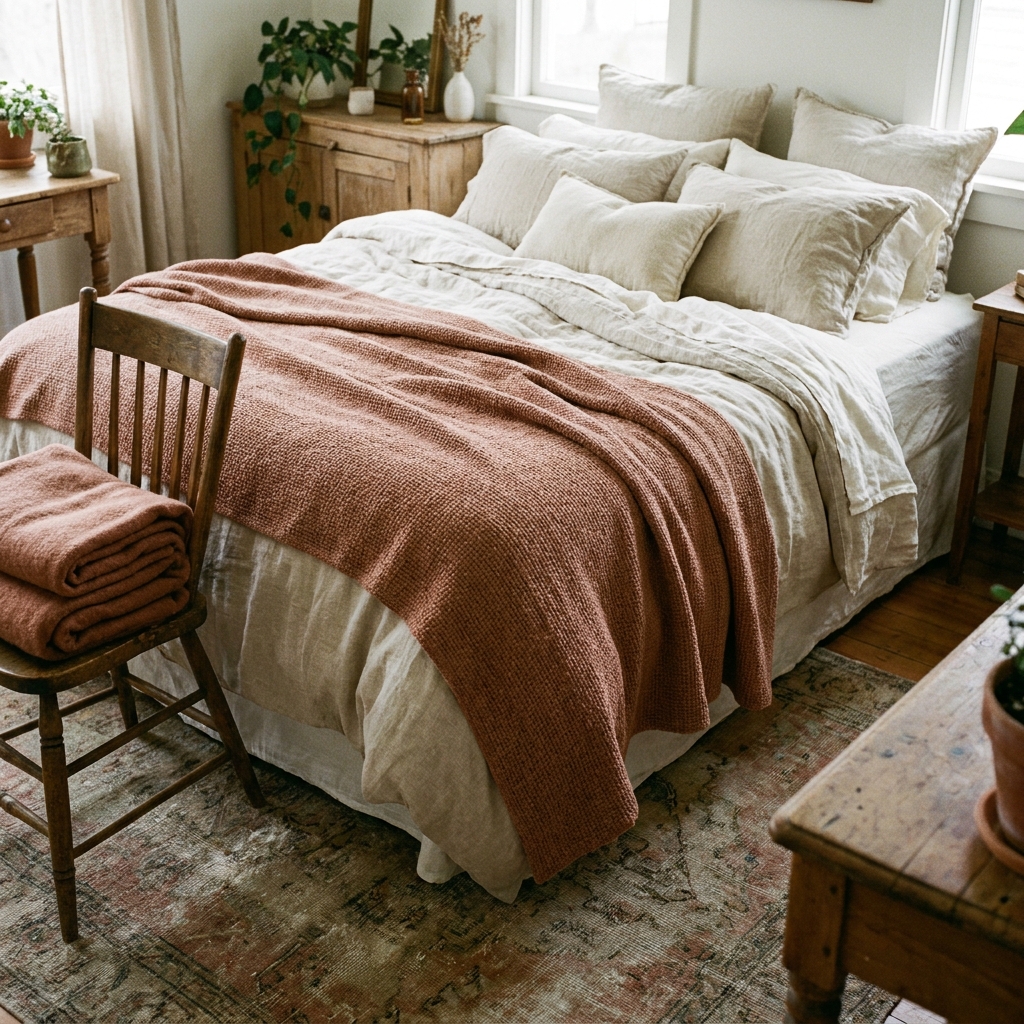
Earth-Toned Throw Blankets That Add Instant Warmth
A throw blanket might seem small, but it makes a big visual difference. Especially when you choose earthy tones like rust, sage, or warm brown.
Drape it casually across the foot of your bed or over a chair. Don’t fold it too perfectly — that relaxed look is what makes it work. I always suggest choosing something with texture, like knit or woven cotton. Prices range from $15–$50 depending on quality.
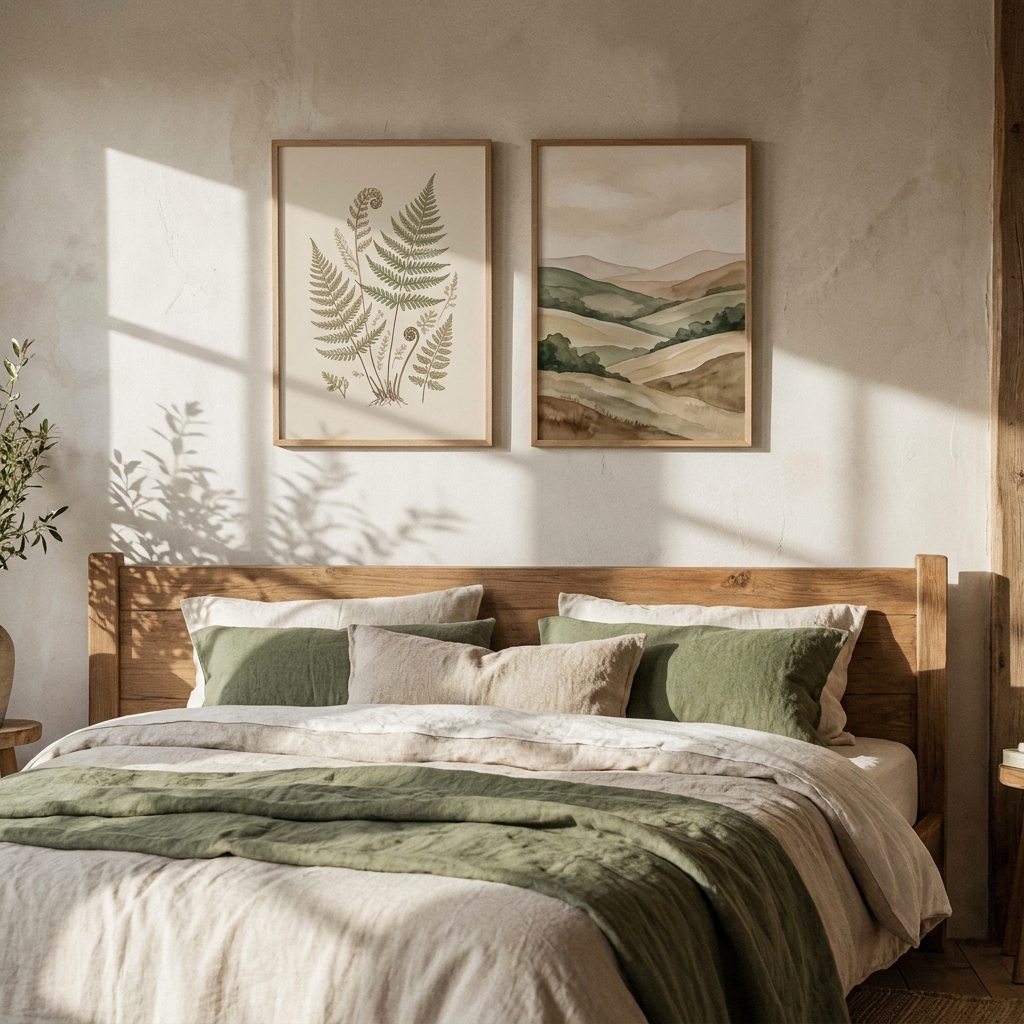
Nature-Inspired Wall Art That Doesn’t Feel Overdone
Wall art can quickly go wrong if it feels too themed. The goal here is subtle, not obvious.
Look for prints of landscapes, botanical sketches, or abstract earth tones. Frame them in wood or simple black frames. Keep spacing clean and don’t overcrowd the wall. In my experience, one or two larger pieces work better than a gallery overload. Budget prints start at $10–$30.
Wooden Nightstands That Feel Warm and Functional
Swapping out a cold metal or plastic nightstand for wood instantly warms up your room.
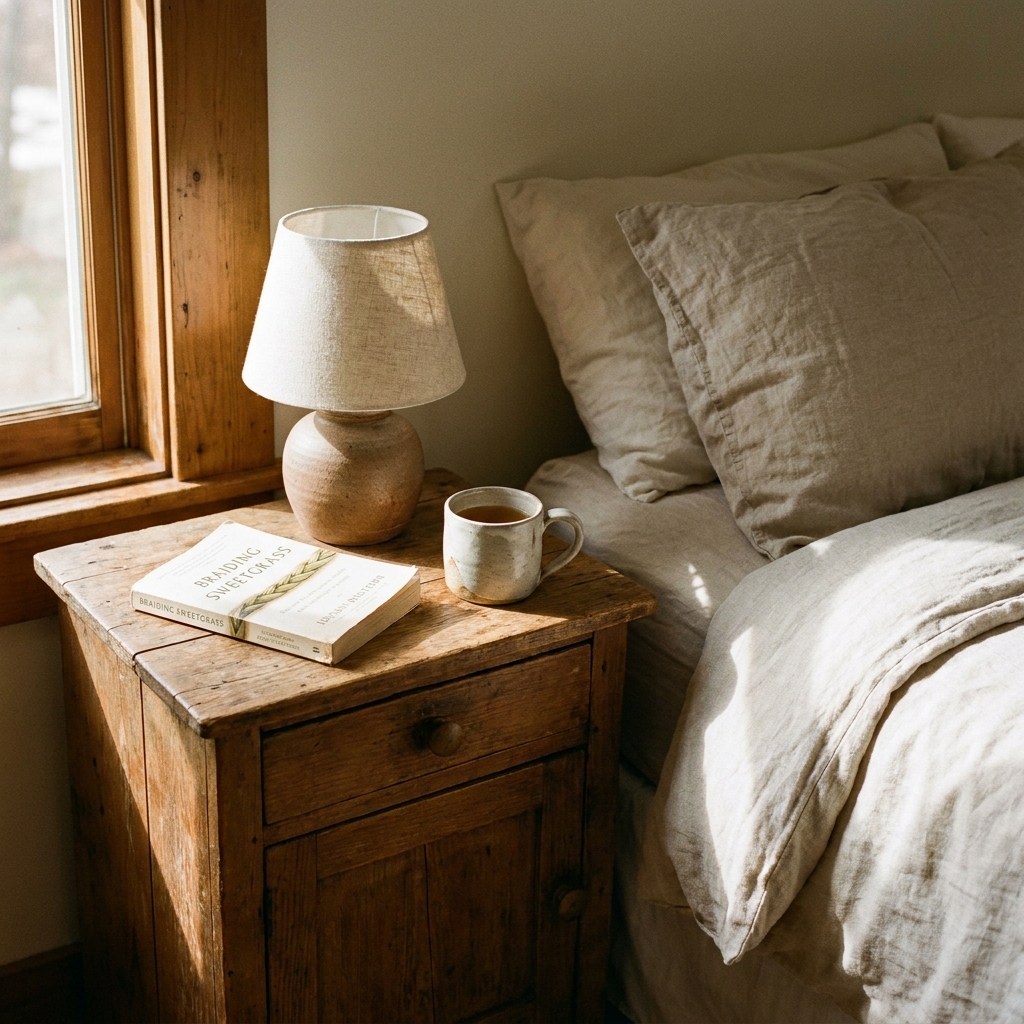
Choose something simple with clean lines. Even a small wooden stool can work. Style it with just a lamp, a book, and one small decor piece. A lot of people clutter nightstands without realizing it. Keep it minimal. You can find options from $30–$120.
Soft Neutral Paint Colors That Mimic Nature
Wall color sets the tone for everything else. Harsh white can feel cold, while soft neutrals feel calm and grounded.
Think warm beige, soft clay, or pale sage. If painting isn’t an option, even one accent wall can help. What I love about this is how it works with almost any decor. A common mistake is choosing colors that are too gray — they can feel lifeless. Paint costs usually range from $25–$60.
A Simple Bench or Stool at the Foot of the Bed
This is one of those small additions that makes your room feel complete.
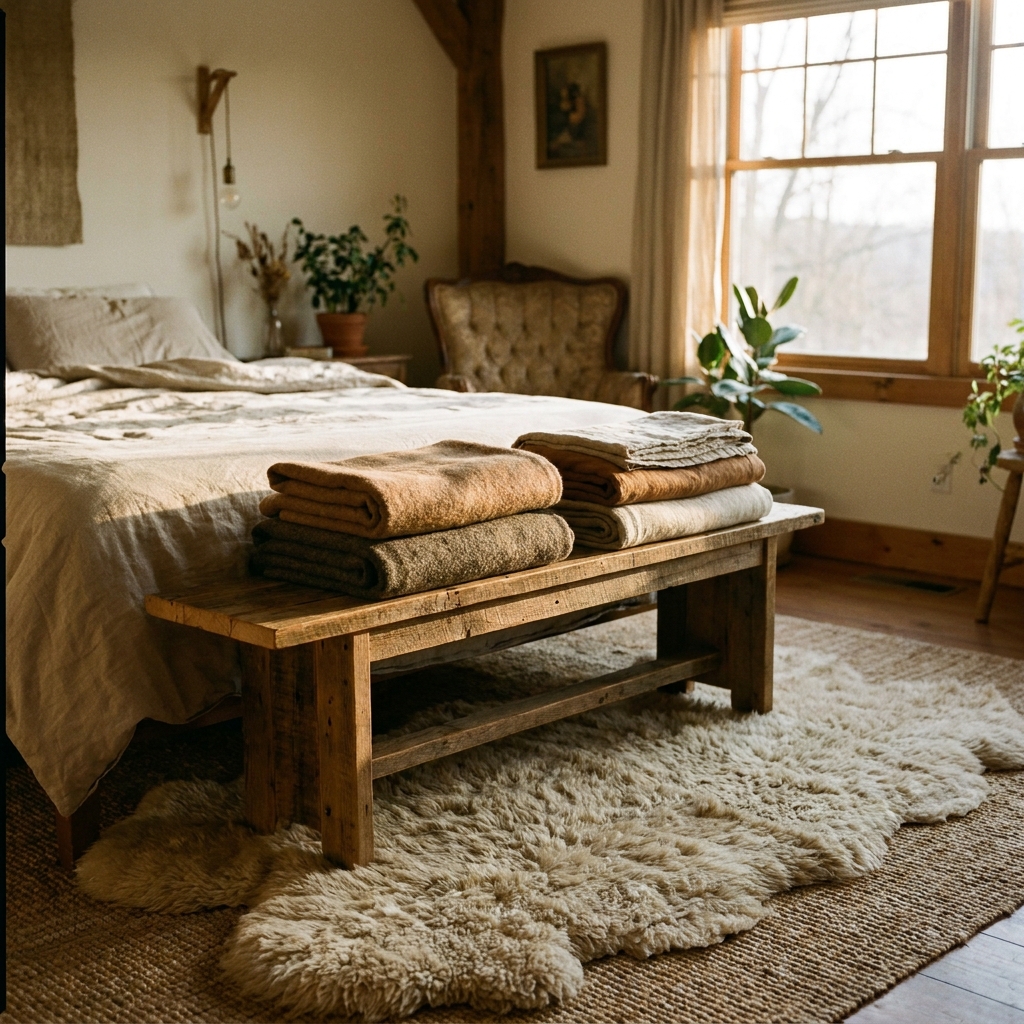
A wooden bench or woven stool adds function without taking over the space. Use it for extra blankets or just as a visual anchor. Keep it low and simple. I always suggest measuring your bed width first — too big and it looks awkward. Budget options start around $40.
Layered Lighting That Feels Soft and Relaxing
Overhead lights alone can feel harsh. Layering your lighting creates that softer, more natural feel.
Use a mix of table lamps, floor lamps, and warm bulbs. Aim for soft yellow tones rather than bright white. What I love about this is how it changes the mood instantly at night. A lot of people skip this and rely on one light source. Lamps can range from $20–$70.
Textured Cushions in Muted Natural Colors
Pillows are an easy way to bring in texture without committing to big changes.
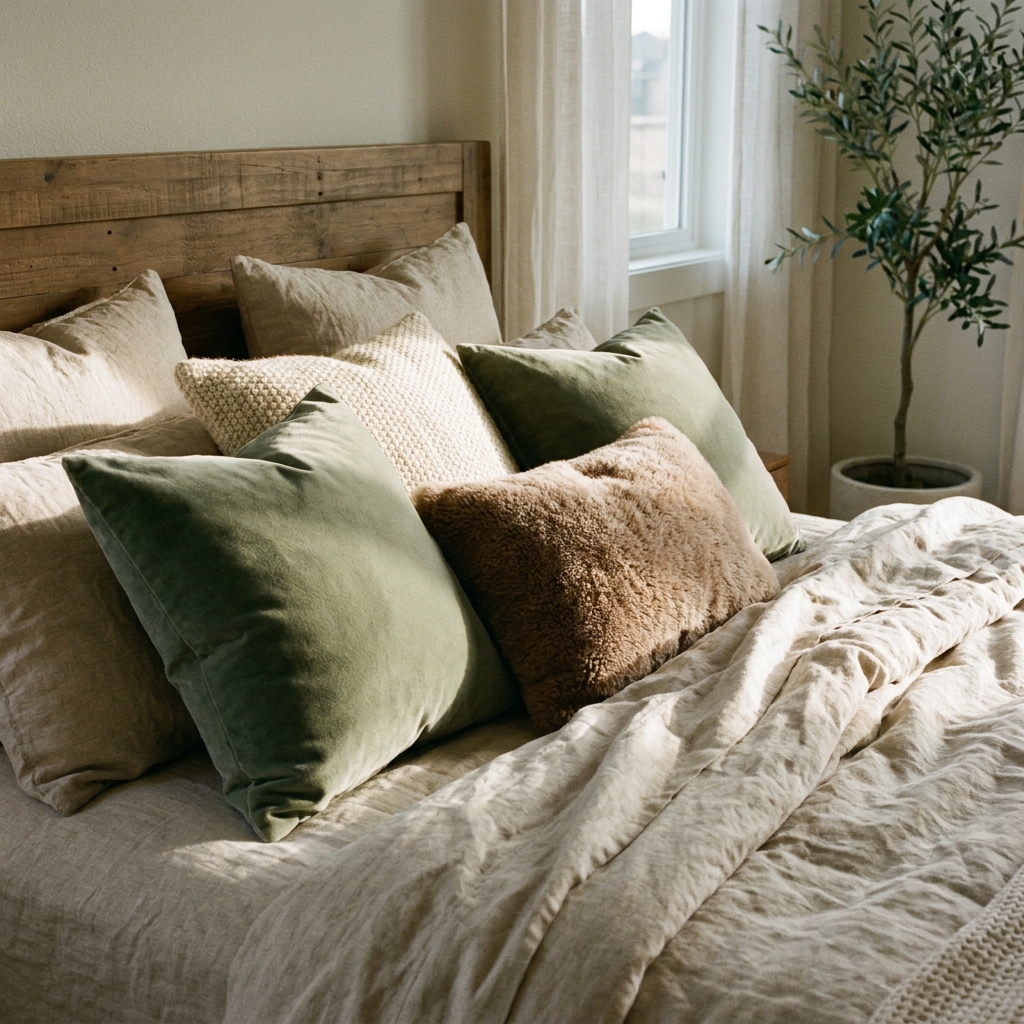
Mix fabrics like cotton, linen, and woven materials in soft greens, browns, and creams. Stick to a tight color palette so it doesn’t look chaotic. In my experience, the biggest mistake is using too many bright colors at once. Keep it calm. Cushion covers can be as low as $10–$25.
A Small Reading Corner That Feels Peaceful
Even a tiny corner can become your favorite spot if you style it right.
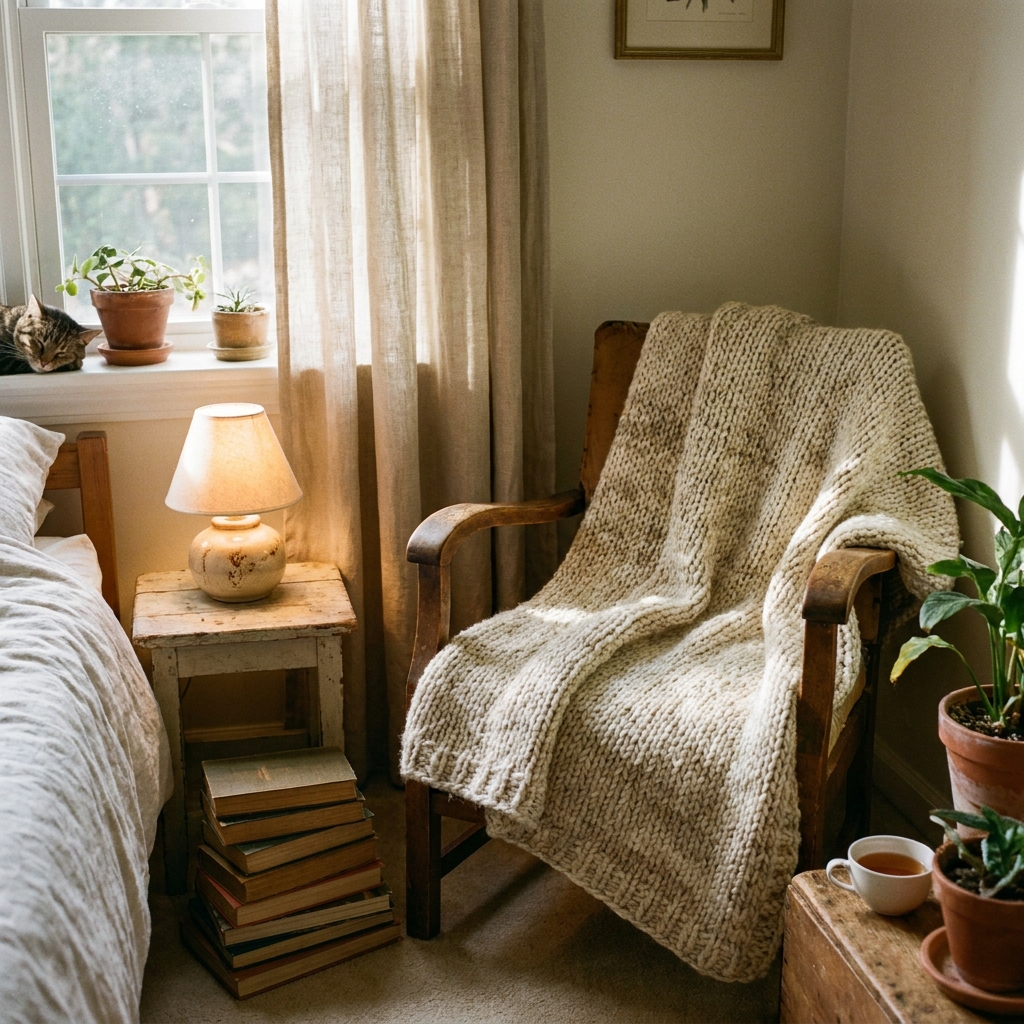
Add a simple chair, a soft throw, and a small lamp. Place it near a window if possible. This creates a quiet place to slow down. What I love about this is how personal it feels. A common mistake is overcrowding the space — keep it simple. You can put this together for under $100.
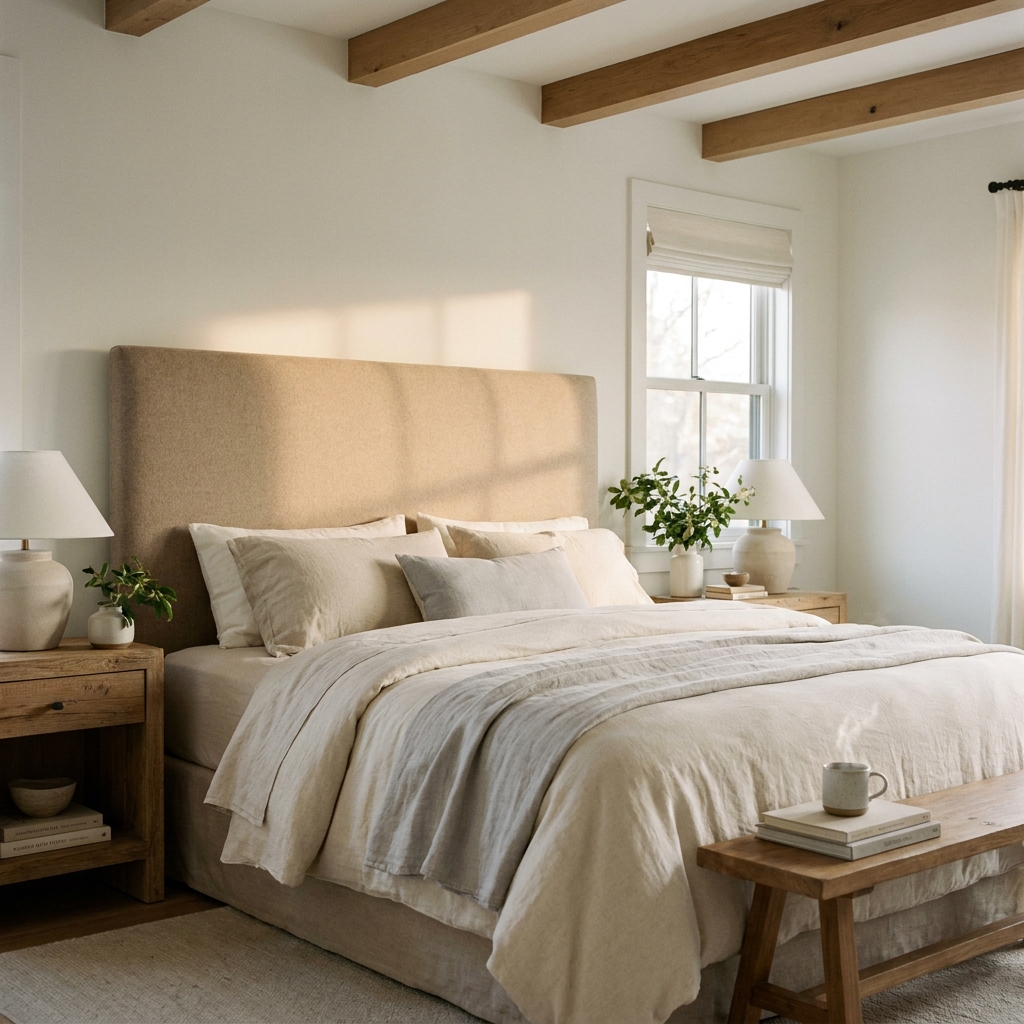
Natural Wood and Fabric Headboards That Feel Soft and Grounded
A headboard can change how your entire bed looks. Fabric or wood options keep things soft and natural.
Choose a linen-upholstered headboard in a neutral tone or a simple wooden one. Avoid anything too glossy or overly detailed. I always suggest keeping the height moderate so it doesn’t overwhelm the room. Prices range from $60–$200, but DIY options can be much cheaper.
Conclusion
You don’t need a perfect room or a big budget to bring these bedroom ideas inspired by nature into your space. You just need a starting point.
Pick one thing. Maybe it’s swapping your bedding. Maybe it’s adding a plant or finally changing those heavy curtains. Small changes build on each other, and before you know it, your room feels completely different.
In my experience, the biggest shift happens when your space starts to feel like a place you actually want to spend time in — not just somewhere you sleep.
These bedroom ideas inspired by nature are meant to work with real life, not against it. No pressure. No rules. Just simple, thoughtful choices that make your space feel better.
So tell me — which of these ideas are you trying first? I genuinely want to know.
FAQs
How do I make my bedroom feel more connected to nature on a budget?
Start with texture and color. Swap in neutral or earth-toned bedding, add one or two plants, and use natural materials like wood or woven baskets. Even small changes like a linen throw or sheer curtains can make a big difference without spending much.
What colors work best for a nature-inspired bedroom?
Soft, warm tones work best. Think beige, cream, sage green, muted terracotta, and light brown. Avoid overly cool grays or bright colors, as they can take away from that calm, grounded feeling.
Are real plants necessary for a nature-inspired look?
Not at all. Real plants help, but good-quality faux plants can still give you that visual connection to nature. If you’re not great with plant care, it’s better to go faux than let real ones struggle.
How do I avoid my room looking too plain with neutral colors?
Layer different textures. Combine linen, cotton, wood, and woven materials. This adds depth without needing bold colors. Lighting also plays a big role — soft light makes neutrals feel warmer.
What’s the biggest mistake people make with nature-inspired bedrooms?
Trying to do too much at once. In my experience, clutter and over-layering ruin the calm feeling. Keep it simple, stick to a few tones, and let each piece breathe.