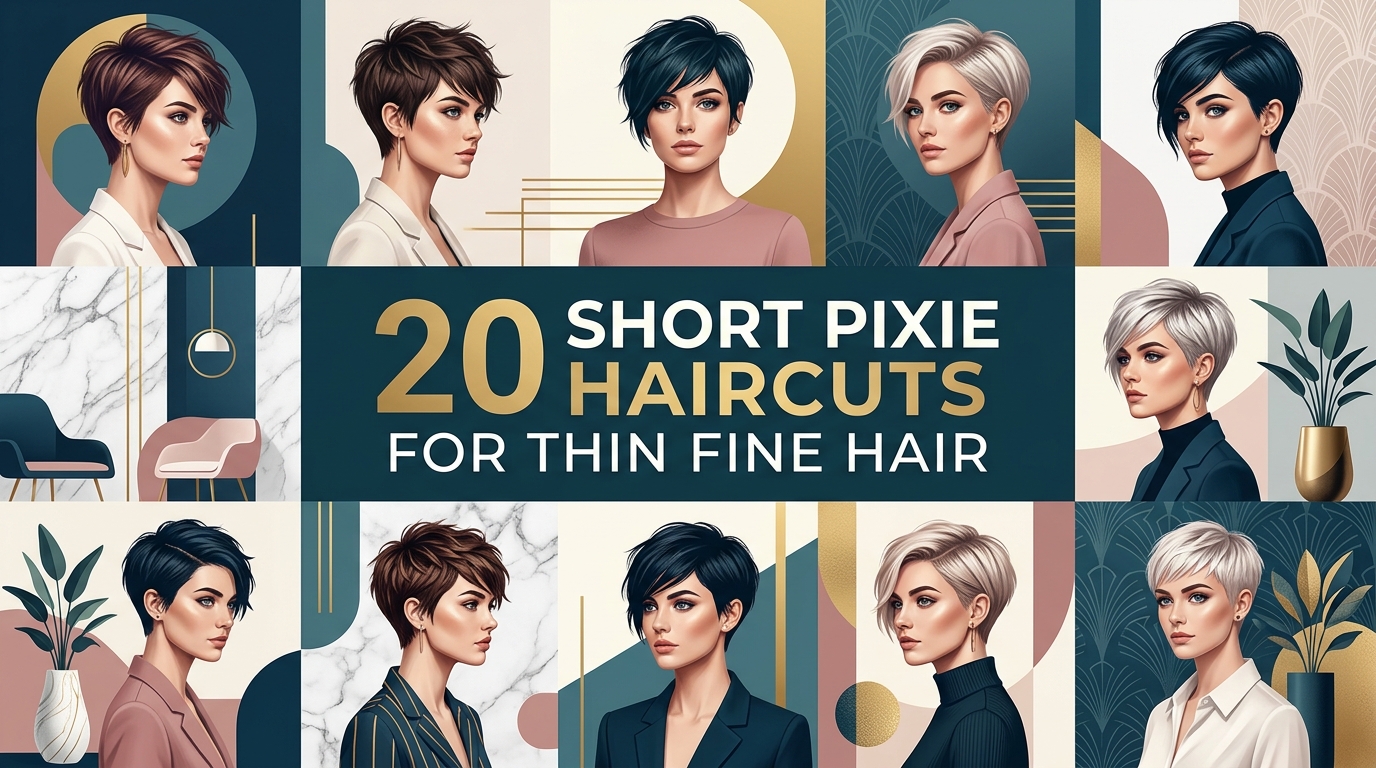
20 Short Pixie Haircuts for Thin Fine Hair That Add Shape and Volume
Thin, fine hair can make choosing a short haircut feel harder than it should. You may worry that cutting off length will expose sparse areas, flatten the crown, or leave you with fewer styling options. Long hair can also weigh fine strands down, which often makes the hair look less full than it actually is.
These 20 short pixie haircuts for thin fine hair show how the right shape can create movement, lift, and a stronger outline. Strategic layers, soft bangs, tapered sides, and textured crowns can help your hair appear fuller without demanding a long morning routine.
You will find polished cuts, relaxed styles, modern crops, and low maintenance options in this guide. Each idea includes practical advice about length, styling products, salon upkeep, and common mistakes to avoid. Whether you prefer a neat classic pixie or something soft and tousled, these haircut ideas can help you walk into your next salon appointment with a clearer plan and realistic inspiration.
1. Textured Pixie With Gentle Crown Lift
A textured pixie gives fine hair a light, airy shape that feels fresh rather than flat. Short layers sit softly around the crown, while small pieces near the forehead frame the face without covering it. The finish looks relaxed in natural light and works beautifully with simple earrings, linen shirts, and everyday outfits.
Ask your stylist for short, blended layers with slightly more length through the crown. Work a pea sized amount of lightweight texture cream through dry hair, then lift the roots with your fingertips. In my experience, the biggest mistake here is using thick wax, which can separate fine strands too much and expose the scalp. A professional cut usually costs around $40 to $90, while a light styling cream may cost $10 to $25.
2. Soft Feathered Pixie Cut
Feathered layers create movement without removing too much density. The ends fall in light, overlapping pieces, giving the hair a soft shape around the temples and crown. This cut feels graceful and easy to wear, especially if you like a polished hairstyle that does not look stiff or heavily sprayed.
Request delicate scissor cut layers instead of aggressive thinning. Your stylist can leave the top around two to three inches long and keep the sides softly tapered. Blow dry with a small round brush, directing the roots upward before smoothing the ends. A lot of people skip root direction, but it makes all the difference with fine hair. Avoid applying conditioner directly to the roots before styling. Haircuts often cost $45 to $95, and a small round brush plus volumizing spray may cost $15 to $35.
3. Tapered Pixie With a Fuller Crown
A tapered pixie keeps the neckline and sides neat while leaving extra length on top. That contrast makes the crown look fuller and gives the entire haircut a stronger silhouette. It is a smart choice when you want structure without committing to sharp lines or a severe undercut.
Ask for a softly tapered nape and sides with graduated layers through the top. The longest area can sit between two and three inches, depending on how much lift you want. Apply root spray to damp hair, then blow dry against the natural growth pattern for added height. What I personally love about this cut is how clean it looks even as it grows. Avoid cutting the crown too short, since fine strands need enough length to overlap. Expect to spend $40 to $90 on the cut and $12 to $28 on root spray.
4. Side Swept Pixie With Soft Bangs
A side swept pixie creates the illusion of density by bringing several light layers across the forehead in one direction. The diagonal shape draws attention toward the eyes and cheekbones, while the longer fringe gives fine hair a smooth, flowing appearance.
Leave the front section around three inches long and keep the opposite side shorter for balance. Apply a lightweight mousse, then blow dry the fringe across the forehead with a vented brush. Use your fingers to loosen the result so it does not look overly set. Avoid heavy straightening oils because they can pull the bangs flat. I always recommend this cut when someone wants a visible change without losing every bit of length. A salon cut may cost $45 to $100, while mousse and a vented brush typically cost $15 to $35 together.
5. Piecey Pixie With Wispy Fringe
A piecey pixie gives thin hair definition without making the style look heavy. Wispy sections around the forehead create a gentle frame, while separated layers through the top add visual movement. The finished haircut feels playful, light, and easy to pair with casual denim or a simple summer dress.
Ask your stylist to point cut the ends carefully while preserving density near the roots. The fringe should remain soft rather than sharply chopped. Rub a tiny amount of dry texture paste between your fingers, then pinch only a few ends. In my experience, applying product all over fine hair can make it look stringy. Focus on two or three visible sections instead. A haircut usually ranges from $40 to $85, while texture paste or dry styling cream costs around $10 to $24.
6. Short Pixie Haircuts for Thin Fine Hair With Crown Layers
Crown layers can give a short pixie a lifted, rounded shape that makes fine hair look noticeably fuller. The volume stays concentrated at the top, while the sides remain smooth and close to the head. This creates a balanced profile that looks polished from every angle.
Ask for short supporting layers underneath slightly longer surface pieces. This cutting method helps the top sit higher without rough teasing. Use a light root foam and dry the crown upward with a small brush. Avoid asking for too many razor cut layers, which can leave already fine ends looking weak. Salon prices generally range from $45 to $100, depending on the stylist and location. A root foam and small styling brush may add another $20 to $40 to your routine.
7. Classic Boyish Pixie Crop
A classic boyish crop feels clean, confident, and unfussy. The short sides and softly textured top create a neat outline that highlights the eyes and jawline. Because the hair stays close to the head, it can make fine strands appear more deliberate rather than sparse.
Keep the top around one and a half to two inches long, with the ears and neckline softly exposed. Ask for scissor work instead of an extremely close clipper cut if your scalp shows easily. A little volumizing powder at the roots can add grip without making the hair oily. A lot of people use too much powder, so start with one small tap and build slowly. The haircut may cost $35 to $80, while root powder typically ranges from $10 to $22.
8. Soft Curly Pixie for Fine Hair
Gentle curls can give a pixie more body and softness without requiring thick hair. Loose bends across the crown create shadows and texture, helping the style appear fuller. This look feels feminine and relaxed, especially when paired with soft fabrics, subtle makeup, and delicate jewelry.
If your hair has natural wave, ask your stylist to shape the cut around that pattern. For straighter fine hair, create loose bends with a narrow curling wand, turning only a few sections away from the face. Use heat protectant and keep the temperature moderate. What I personally love about this style is that the curls do not need to match. Avoid curling every piece in the same direction, which can make the hair look smaller. A cut may cost $45 to $95, while a small curling tool and protectant can cost $30 to $80.
9. Pixie Cut With a Micro Fringe
A micro fringe gives a short pixie a modern, artistic edge while keeping the face open. The tiny bangs sit above the brows, drawing attention to the eyes and creating a strong shape. On fine hair, the shorter length also prevents the fringe from looking limp or separated.
Ask for a soft, slightly uneven micro fringe rather than one heavy straight line. The rest of the top can remain around two inches long for contrast. Style with a light mist of flexible hairspray, then press the fringe into place with your fingertips. In my experience, the biggest mistake is cutting the bangs too wide, which can make the front look thin. A professional cut usually costs $45 to $95, and flexible spray ranges from $10 to $24.
10. Silver Pixie With Soft Texture
Silver and gray hair can look striking in a short textured pixie. The natural mix of lighter and darker strands creates depth, while small layers keep the shape from appearing flat. Under soft daylight, the silver tones reflect beautifully and give the haircut a graceful, modern feel.
Ask for gentle layering that follows your natural density. Use a lightweight purple shampoo only as needed, since too much can leave fine hair dry. A small amount of shine mist can help silver strands look smooth without flattening them. A lot of people skip moisture when caring for gray hair, but it makes a noticeable difference. Haircuts generally cost $40 to $90. Purple shampoo, conditioner, and shine mist may cost $25 to $60 altogether.
11. Tousled Pixie With Airy Layers
A tousled pixie has a light, undone quality that works beautifully with fine hair. Airy layers create movement through the crown and fringe, while the sides stay soft rather than sharply cut. The finish looks relaxed and fresh, like hair that has naturally fallen into place after a gentle breeze.
Ask your stylist to leave enough length for finger styling, especially around the top and temples. Spray a small amount of dry texture mist underneath the crown, then lift and loosen the layers by hand. Avoid rough backcombing, which can weaken fine strands over time. I always recommend this style for anyone who dislikes precise daily styling. A haircut may cost $45 to $90, while a quality texture mist usually costs $12 to $28.

12. Deep Side Part Pixie
A deep side part shifts more hair across one side of the head, which can make fine strands appear denser. The longer section creates a smooth sweep, while the shorter side adds contrast and keeps the haircut looking clean. It works well for both casual days and dressier occasions.
Ask your stylist to place the part where your hair naturally wants to fall. Keep the top long enough to cross over without breaking into thin gaps. Apply volumizing mousse only at the roots, then dry the hair in the opposite direction before sweeping it back. What I personally love about this method is the instant lift it creates. Avoid drawing a perfectly straight part, since a softer line often hides scalp visibility. Costs usually range from $45 to $100 for the cut and $10 to $25 for mousse.
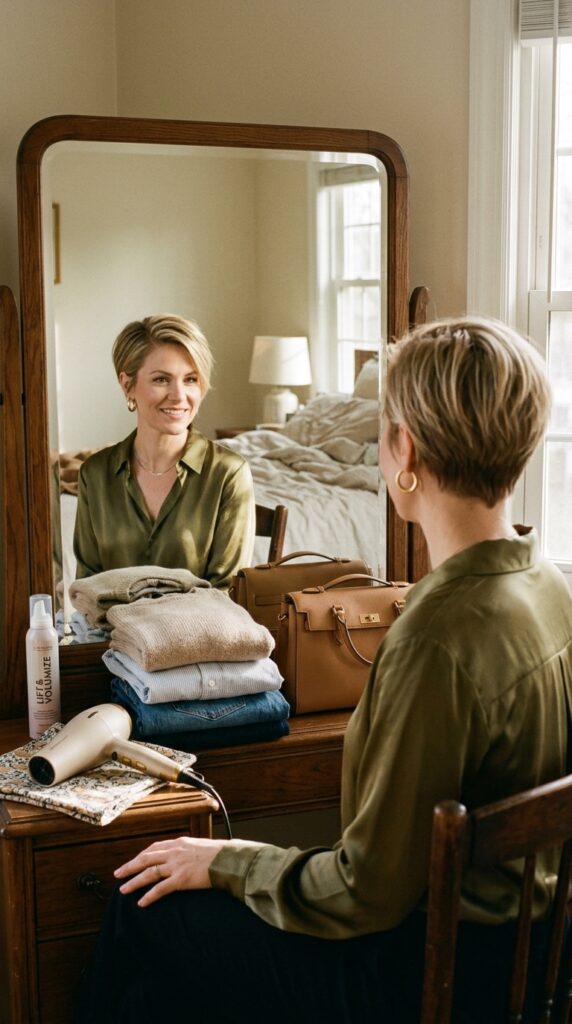
13. Pixie With a Longer Textured Top
Leaving the top longer gives a pixie greater styling flexibility. You can sweep it sideways, lift it at the roots, or create soft texture for a fuller appearance. The shorter sides keep the shape balanced, while the extra length through the crown provides coverage where fine hair often needs it most.
Ask for three to four inches on top with softly tapered sides and nape. Use a lightweight blow dry lotion, then lift the top with a vent brush. On days when you want more texture, add a small amount of dry shampoo at the roots. In my experience, the biggest mistake is letting the sides become too bulky, which can make the crown appear flatter. Salon cuts usually cost $45 to $105, with styling products ranging from $12 to $30.
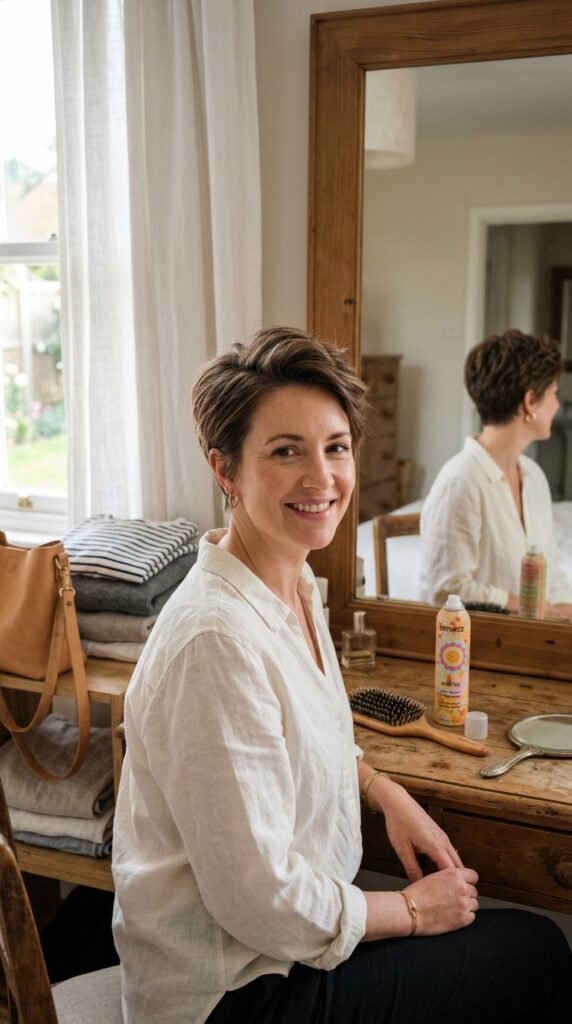
14. Cropped Pixie With a Tapered Nape
A neatly tapered nape gives a cropped pixie a strong, polished outline. The close back makes the crown appear fuller by comparison, while soft pieces around the ears keep the cut from feeling too severe. This shape looks especially clean with simple jewelry and structured clothing.
Ask your stylist to taper the neckline gradually rather than cutting a hard line. Leave enough length at the crown for light movement and coverage. Style by drying the top forward, then lifting a few pieces with your fingers. A lot of people focus only on the front of a pixie, but the back shape matters just as much. Plan for trims every four to six weeks. Each visit may cost $35 to $85, depending on your salon.
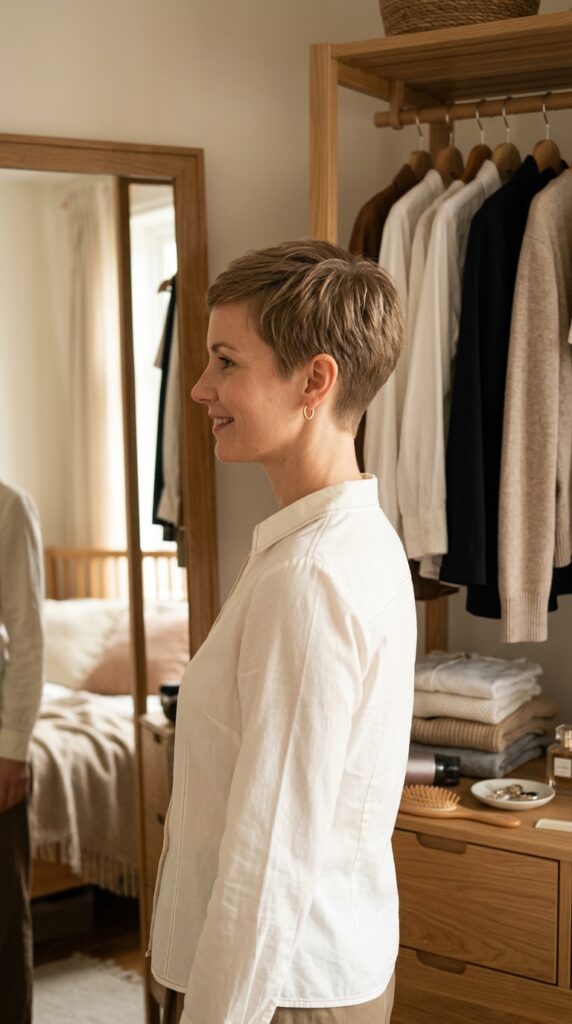
15. Short Pixie Haircuts for Thin Fine Hair With Soft Bangs
Soft bangs can make a pixie feel gentler while giving the front of fine hair more visual density. Light pieces skim the forehead and blend into the side layers, creating a smooth frame around the face. The result looks approachable, polished, and easy to style.
Ask for wispy bangs that begin slightly farther back on the crown. This gives the fringe more fullness without making it heavy. Blow dry forward with a small brush, then separate a few pieces with clean fingertips. Avoid thinning shears directly through the fringe, since fine bangs can quickly become see through. A cut may cost $45 to $95, and a small brush plus lightweight finishing spray may cost another $15 to $35.
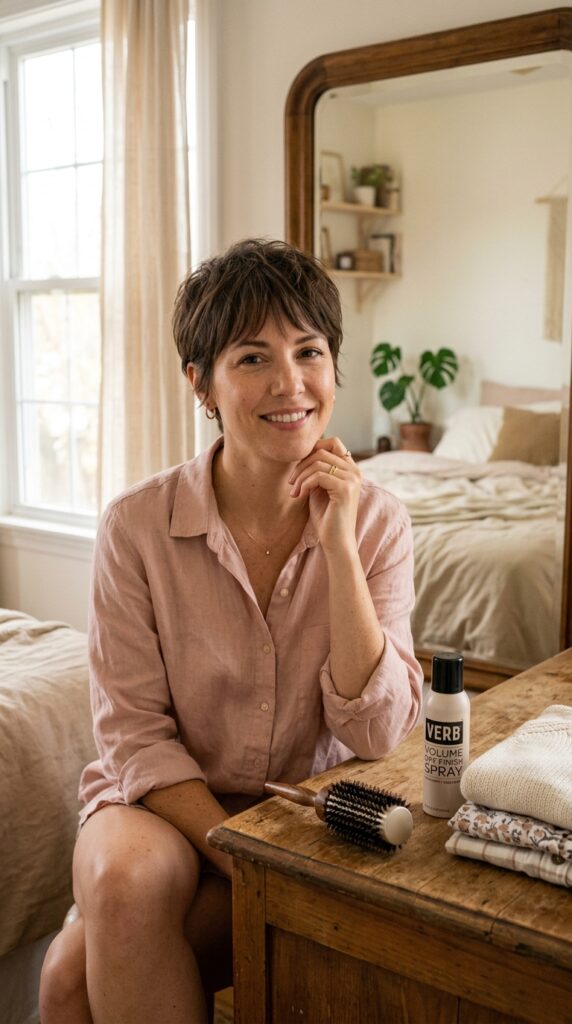
16. Sleek Brushed Back Pixie
A brushed back pixie creates a smooth, clean silhouette that feels confident and refined. The hair lifts away from the forehead, which can make the crown look taller and the face more open. Fine strands catch the light beautifully when the finish remains soft rather than wet or stiff.
Apply a small amount of lightweight mousse to damp hair, then brush everything back while blow drying from the front. Finish with flexible spray placed several inches away. In my experience, heavy gel is the main mistake with this look because it can collapse fine hair and reveal more scalp. Keep the sides softly controlled instead of pressing them completely flat. A salon cut usually costs $40 to $90, while mousse and spray may cost $20 to $45 together.
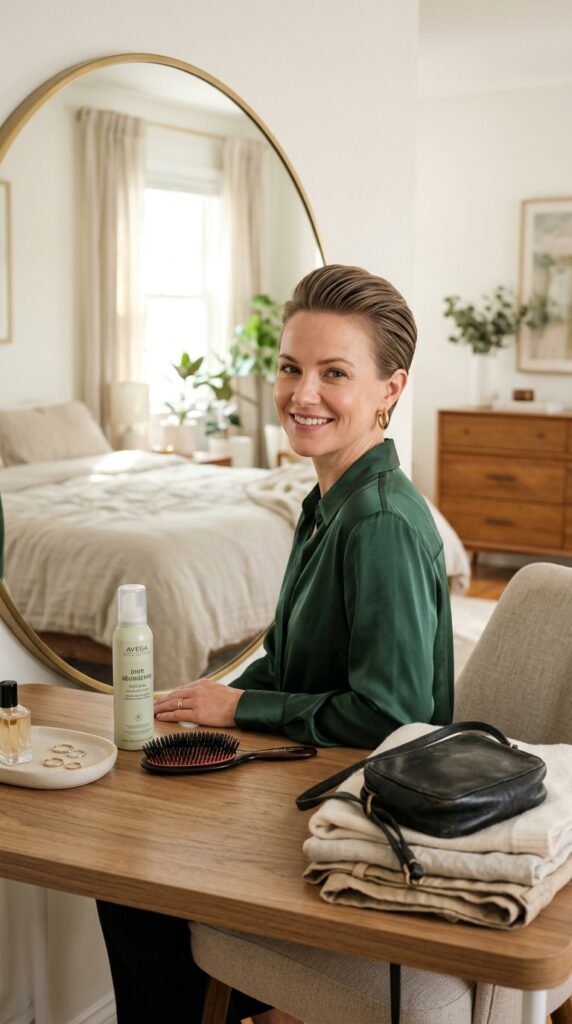
17. Soft Undercut Pixie With Volume
A soft undercut removes bulk from beneath the sides while allowing the top to remain longer and fuller. On fine hair, the contrast can create a strong shape without needing thick density. The style feels modern, but a subtle undercut keeps it wearable and easy to soften with longer side pieces.
Ask for a hidden or lightly clipped undercut rather than a dramatic shaved section. Keep the top between three and four inches long so it can fall over the shorter area. Use root spray and a vent brush to create lift. What I personally love about this cut is how quickly it dries. Avoid taking the undercut too high, since that may reduce coverage. Cuts generally cost $50 to $110, and root products range from $12 to $30.
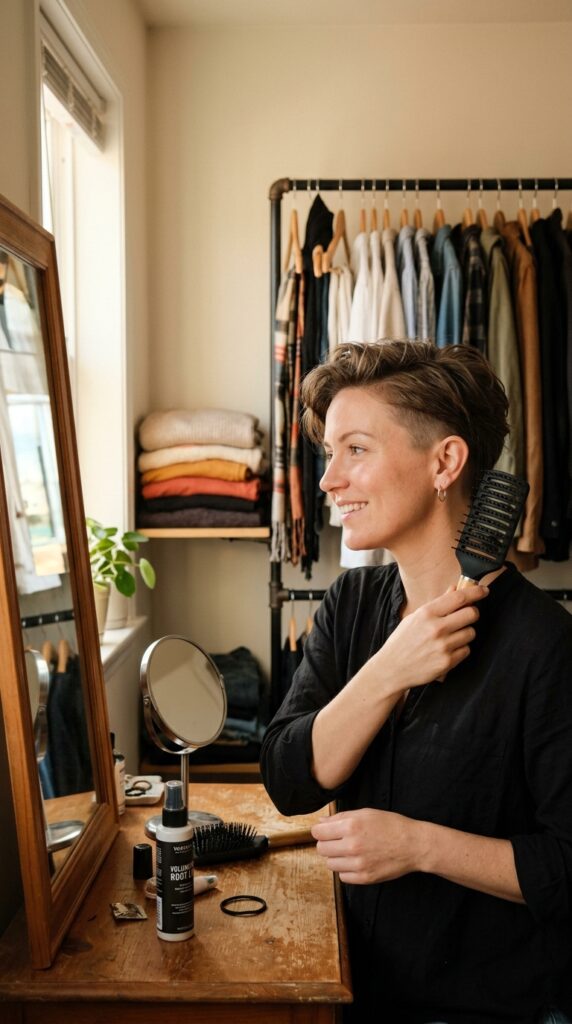
18. Rounded Pixie With a Full Looking Crown
A rounded pixie creates a smooth, balanced shape that follows the curve of the head. The crown looks fuller because the layers stack gently instead of falling flat. Soft sides and a neat neckline keep the haircut tidy, while the curved outline gives it a graceful, classic finish.
Ask your stylist for graduated layers through the back and crown, with enough surface length to cover the shorter support layers. Blow dry using a small round brush and direct each section slightly upward. Avoid over thinning the ends, which can weaken the rounded outline. I always recommend this shape when someone wants fullness without messy texture. A haircut may cost $45 to $100, while a brush and volumizing lotion usually cost $20 to $45.
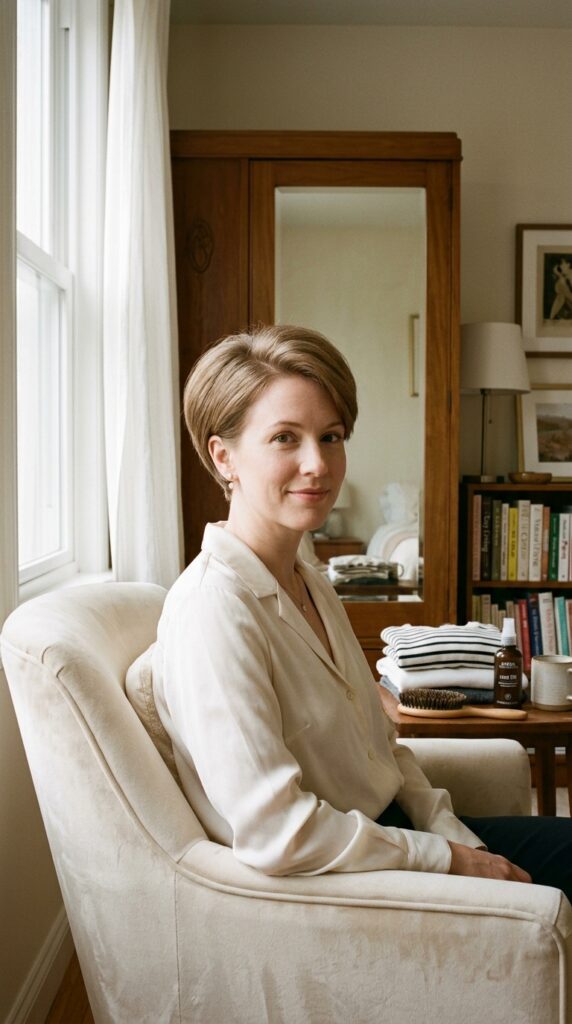
19. Short Pixie Haircuts for Thin Fine Hair With Subtle Highlights
Subtle highlights can create visual depth by separating fine layers and reflecting light through the crown. A few carefully placed ribbons around the top and fringe make the haircut look more dimensional without relying on dramatic contrast. The effect feels soft, fresh, and especially flattering in natural daylight.
Choose highlights only one or two shades lighter than your base color. Ask your colorist to concentrate them around the crown, temples, and front pieces rather than throughout every section. A lot of people add too many pale highlights, which can make fine hair appear more transparent. Color and cut services often cost $90 to $200, depending on location. A color safe shampoo and lightweight conditioner may add $20 to $45.
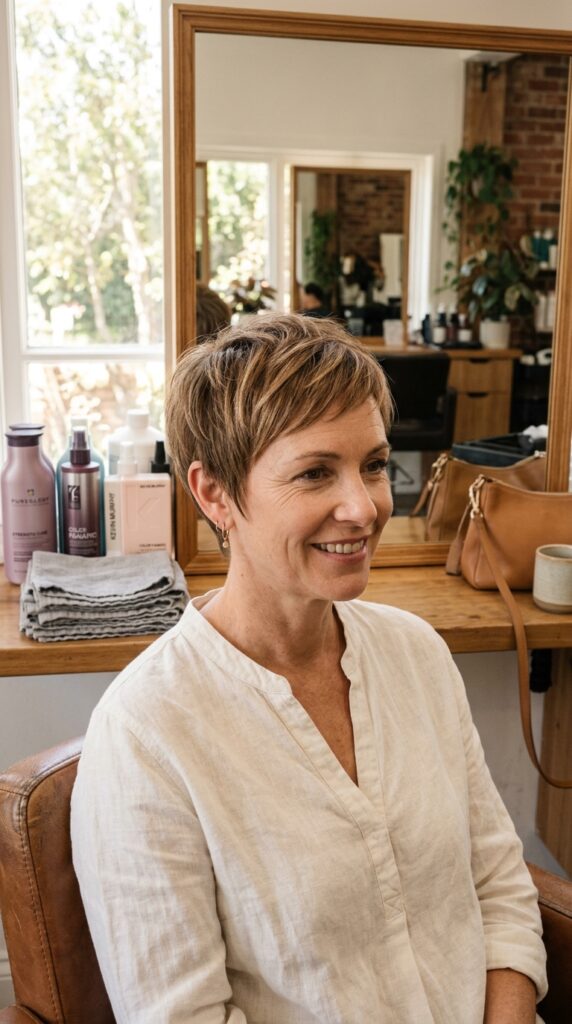
20. Low Maintenance Short Pixie Haircuts for Thin Fine Hair
A simple wash and wear pixie is a practical choice when you want your hair to look neat with very little styling. Soft, even layers follow the natural growth pattern, while a tapered outline keeps the cut from appearing shapeless. The finished look feels fresh, clean, and easy to manage on busy mornings.
Tell your stylist how much time you realistically spend on your hair. Ask for a shape that air dries well and does not depend on heat tools. Apply a small amount of lightweight leave in spray, then arrange the top with your fingers while it dries. In my experience, the biggest mistake is choosing a haircut that only looks good after professional blow drying. Trims usually cost $35 to $85 every four to six weeks, while leave in spray costs around $10 to $25.

Finding the Right Pixie Cut for Fine Hair
Choosing a short haircut can feel like a big step, especially when your hair is thin or fine. The right pixie should work with your natural density instead of asking you to fight it every morning. Strategic crown layers, soft bangs, tapered sides, and a carefully shaped neckline can all help create a fuller appearance.
These 20 short pixie haircuts for thin fine hair offer different levels of texture, maintenance, and styling freedom. Start by saving one or two cuts that match your hair pattern and daily routine. Bring clear photos to your stylist, but stay open to small changes that suit your face shape, growth patterns, and thinner areas.
You also do not need an expensive shelf of products. A lightweight root spray, a small brush, and regular trims may be enough to keep your haircut looking fresh. The strongest results usually come from a good shape rather than heavy styling.
Which pixie haircut would you try first? I’d love to hear what you’re planning.
Frequently Asked Questions
Do pixie cuts make thin fine hair look thicker?
A well shaped pixie can make fine hair appear fuller by removing weight and adding strategic layers. Crown lift, soft texture, and tapered sides help create a stronger silhouette. The result depends on your density, growth pattern, and the cutting technique used.
What pixie cut works best for very fine hair?
A layered pixie with a slightly longer crown often works well because the top pieces overlap and create coverage. Soft bangs or a side swept fringe can also add visual density around the front. Avoid excessive thinning, which may make the ends appear weaker.
How often should a short pixie be trimmed?
Most pixie cuts need a trim every four to six weeks to keep their shape. Very short tapered styles may need attention closer to every three or four weeks. Longer, softer pixies can sometimes go six to eight weeks between appointments.
Which styling products are best for thin fine hair?
Lightweight mousse, root spray, dry texture mist, and volumizing powder are useful options. Apply small amounts and focus on the roots or selected pieces. Heavy waxes, oils, and thick creams may flatten fine strands and make the scalp more visible.
Can a pixie cut hide thinning at the crown?
Strategic crown layers and a side part may provide better coverage, depending on where the thinning occurs. A stylist can adjust the direction and length of the top layers to reduce visible gaps. Sudden or significant hair loss should be discussed with a qualified healthcare professional.