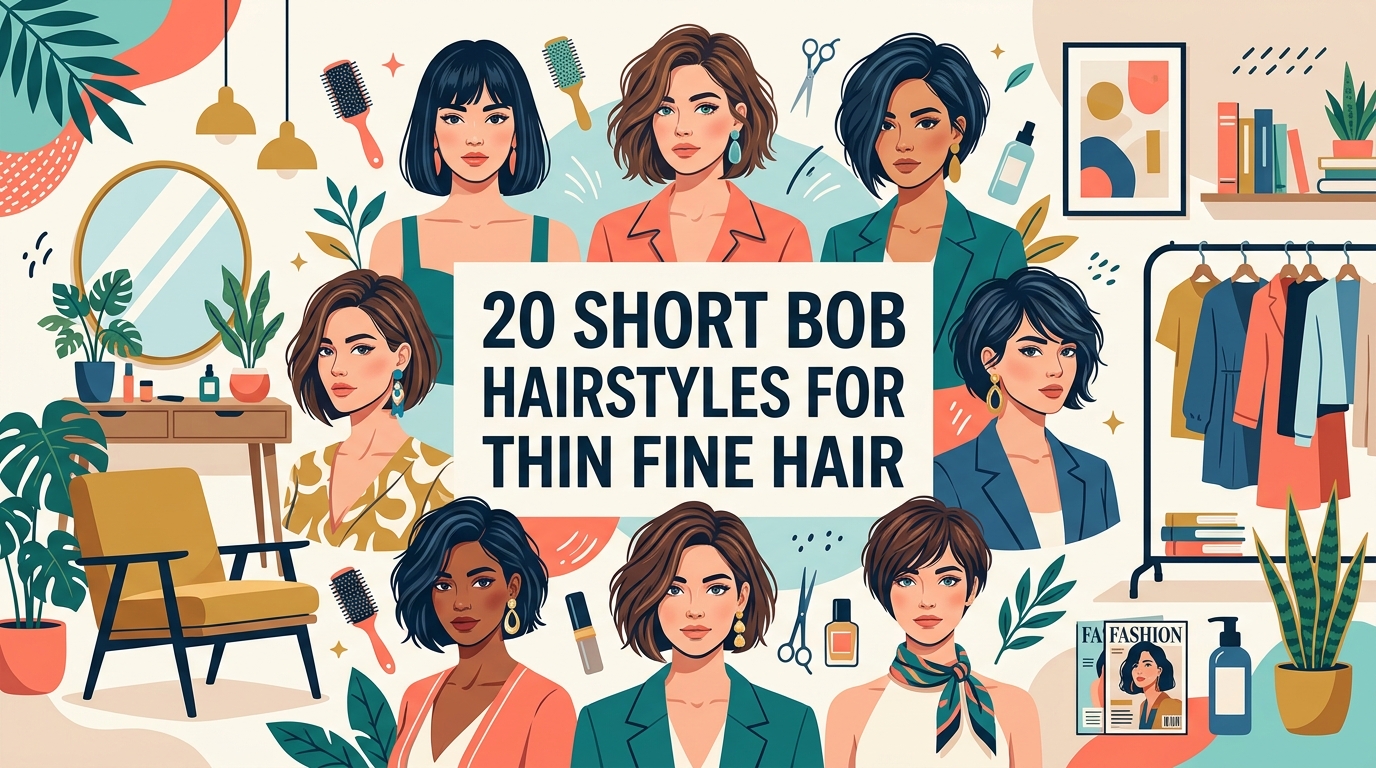
20 Short Bob Hairstyles for Thin Fine Hair That Add Volume and Shape
Thin, fine hair can make choosing a short haircut feel surprisingly difficult. You may want more body and movement, but worry that layers will leave the ends looking sparse. Keeping extra length is not always the answer either, since longer strands can pull the roots down and make the hair appear flatter.
These 20 short bob hairstyles for thin fine hair show how a carefully shaped cut can create a stronger outline, better movement, and a fuller look. A short bob usually falls between the ears and the jaw, making it light enough to lift at the roots while still giving you enough length for waves, bangs, or a tucked side.
This guide includes blunt bobs, softly stacked shapes, side parts, curtain bangs, textured finishes, and low maintenance options. Each idea explains what to ask for at the salon, how to style the cut at home, and which common mistakes can weaken fine ends. Save the styles that suit your routine, then use them as inspiration during your next haircut consultation.
1. Classic Short Bob Hairstyles for Thin Fine Hair
A classic jaw length bob creates a clean outline that makes fine ends appear stronger. The hair falls in one smooth shape around the jaw, giving the style a polished finish that looks lovely with fresh cotton shirts, simple earrings, and soft knit layers. It feels timeless without looking overly formal.
Ask your stylist to keep the perimeter mostly blunt with only light internal shaping. A length that sits just below the jaw usually gives enough movement without pulling the roots down. Blow dry with a paddle brush, then curve the ends inward with a small round brush. In my experience, the biggest mistake here is adding too many short layers, which can make the bottom look thin. A professional cut usually costs between $45 and $110. A heat protectant and styling brush may cost another $18 to $40.
2. Blunt Chin Length Bob
A blunt chin length bob gives thin hair a strong, dense looking edge. The even line catches natural light beautifully and creates a crisp frame around the face. This cut works especially well on straight or lightly wavy hair because the solid shape remains easy to see.
Ask for a precise perimeter that ends at the chin without visible layers through the bottom. Your stylist can add very subtle internal movement if the hair feels heavy. Use a smoothing lotion before blow drying, then apply one small drop of serum to the ends. A lot of people add oil near the roots, but this can flatten fine hair within a few hours. Keep richer products below the ears. Salon cuts generally range from $45 to $115, while smoothing products may cost $12 to $30.
3. Softly Layered Bob With Crown Lift
Soft crown layers can add height without removing too much weight from the ends. The top moves gently in warm light, while the lower edge remains full and neat. This combination gives the bob a light, airy shape that still feels substantial.
Ask for a few blended layers through the crown, with the shortest pieces long enough to overlap. Apply root foam to damp hair, then dry upward with a vent brush. Cool each section before releasing it to help the lift last longer. What I personally love about this cut is that the volume looks natural rather than heavily styled. Avoid aggressive thinning shears around the crown because they can expose the scalp. A salon cut may cost $50 to $120, while root foam and a vent brush usually cost $20 to $45 together.
4. Deep Side Part Bob
A deep side part moves more hair across one side of the head, creating immediate fullness around the front and crown. The diagonal sweep frames the cheekbones and makes a simple short bob feel more active. It pairs beautifully with satin blouses, structured jackets, and small hoop earrings.
Ask your stylist to keep the front slightly longer so it can sweep across without separating into thin gaps. Dry the roots in the opposite direction of the part, then flip the hair back once it cools. In my experience, this simple trick creates more lift than adding heavy styling products. Avoid making the part extremely straight, since a softer line often hides scalp visibility. A haircut typically costs $45 to $115, while a light root spray may cost $10 to $25.
5. Rounded Bob With Curved Ends
A rounded bob follows the shape of the head and curves softly inward near the jaw. The smooth outline makes thin hair look polished and substantial, while the curved ends create a gentle frame around the neck and face. This shape feels graceful and works well for both casual days and evening plans.
Ask for light graduation through the back with a strong surface layer. Blow dry using a small round brush and turn the bottom inch inward. A common mistake is rolling too much hair around the brush, which can make the bob look shorter and overly set. Keep the bend soft and natural. Salon appointments generally cost between $50 and $120. A good round brush and flexible finishing spray may add $20 to $40.
6. Short Bob Hairstyles for Thin Fine Hair With Curtain Bangs
Curtain bangs bring movement around the eyes and cheekbones while allowing the rest of the bob to remain full. The center opens softly, and the longer outer sections blend into the sides. This creates a flattering frame without using as much hair as a heavy fringe.
Ask for bangs that sit near the brows in the center and lengthen toward the cheekbones. Dry them away from the face with a small round brush before styling the rest of the hair. A lot of people cut the center too short, which can make fine bangs difficult to blend. Leave a little extra length during the first appointment. A cut with bangs often costs $55 to $130. A small brush and light styling spray may cost another $15 to $35.
7. Textured Bob With Piecey Ends
A textured bob has gentle separation through the ends, giving thin hair more movement without making it look messy. Small pieces catch the light as the hair moves, while the overall outline remains strong. It feels relaxed and works nicely with denim, soft sweaters, and casual outfit inspiration.
Ask your stylist to point cut only the bottom inch while keeping the perimeter visible. Apply a tiny amount of texture cream to selected ends instead of coating the entire head. What I personally love about this style is that it looks good even when every piece does not sit in the same place. Avoid heavy wax because it can pull fine strands into gaps. A haircut generally costs $50 to $120, while texture cream ranges from $10 to $25.
8. Short Angled Bob
A short angled bob sits slightly higher at the back and gradually lengthens toward the jaw. The diagonal outline creates movement and gives thin hair a stronger shape without relying on many layers. The longer front pieces also soften the cheekbones and jawline.
Ask for a gentle angle rather than a dramatic difference between the front and back. Keep the front no more than one or two inches longer for easier styling. Use a paddle brush to smooth the hair, then add a slight bend near the jaw. In my experience, the biggest mistake is cutting the back too short, which can make the grow out stage awkward. A professional cut may cost $55 to $130, while smoothing lotion usually ranges from $12 to $28.
9. Soft Wavy Bob
Loose waves create shadows and movement that help fine hair look more dimensional. The gentle bends sit around the jaw and cheeks, giving the bob a softer, fuller appearance. This style feels relaxed enough for daytime but can also work with a satin dress or elegant jewelry.
Ask for a mostly blunt cut with only light internal shaping. Create loose waves with a narrow curling tool or heatless rollers, alternating the direction of each section. Leave the ends slightly straight to preserve the strong outline. A lot of people curl every section in the same direction, which can make the hair form one compact shape. A salon cut may cost $50 to $120. Styling tools and heat protection can cost $35 to $100.
10. Stacked Bob With a Full Back
A softly stacked bob builds fullness through the back by placing shorter layers beneath longer surface pieces. The shape creates a smooth curve at the crown and nape, helping fine hair look denser from the side. Longer pieces near the face keep the style balanced.
Ask for a light stack rather than a steep or bulky one. The outer layer should remain long enough to cover the support layers underneath. Blow dry with a small round brush and lift the crown gently. In my experience, over stacking is the main mistake because it can remove too much hair from the upper section. A stacked bob usually costs between $55 and $135. Volumizing mousse and a brush may add $20 to $45.
11. Short Bob With Wispy Bangs
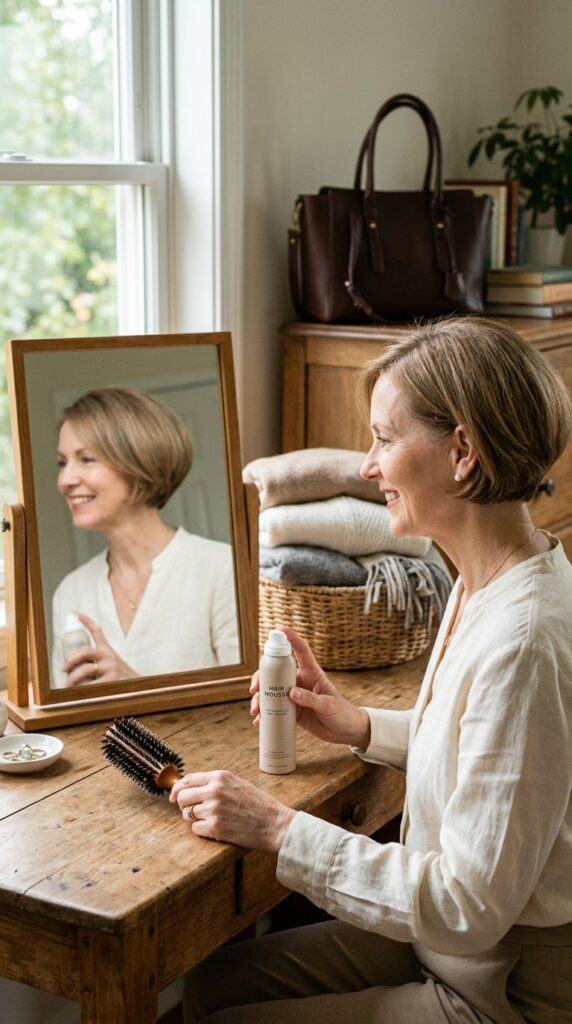
Wispy bangs add a light frame around the forehead without taking too much density from the crown. The soft fringe gives a short bob a relaxed, youthful shape, while the sides and back remain full.
Ask your stylist to use a narrow section for the bangs and leave the side pieces slightly longer. Dry the fringe first using a small brush, since fine bangs can separate as they air dry. A common mistake is taking a wide fringe section, which removes fullness from the top and sides. Keep the bang area focused near the center. A cut with fringe usually ranges from $50 to $125, while dry shampoo and a small brush may cost $18 to $35.
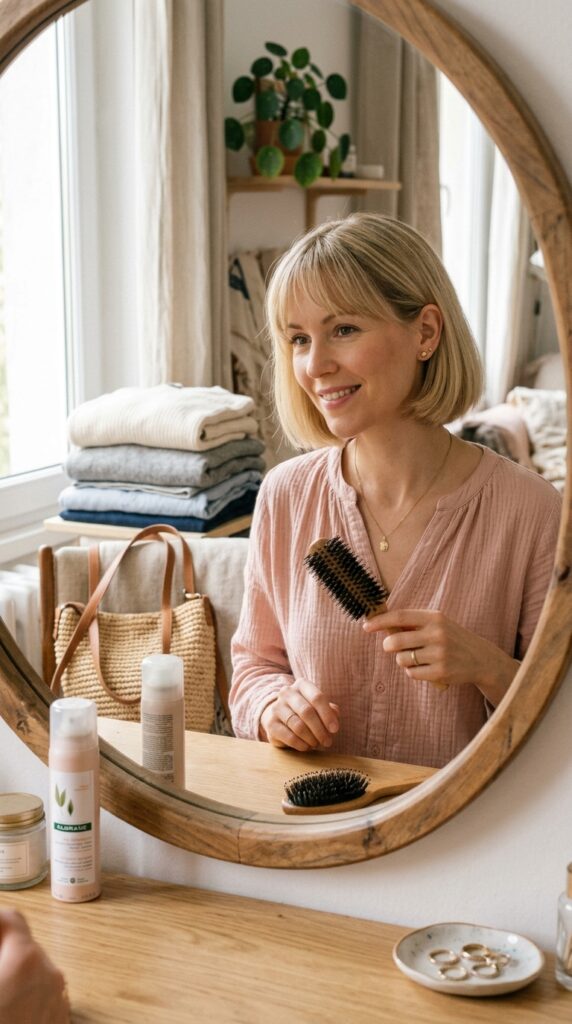
12. Sleek Tucked Bob
A sleek bob tucked behind one ear creates a clean, asymmetrical frame. The visible earring adds a polished detail, while the untucked side keeps softness around the face. This simple styling choice makes a basic short bob feel fresh without changing the haircut.
Ask for a solid jaw length perimeter with subtle shaping near the front. Apply heat protectant, then smooth the hair with a paddle brush. Tuck one side behind the ear and use a small hidden pin if the strands slip forward. What I personally love about this style is how quickly it works for both casual and dressier outfits. Avoid using too much hairspray near the ear, since fine hair may become stiff. A cut costs about $45 to $115, while pins and styling products may cost $15 to $35.
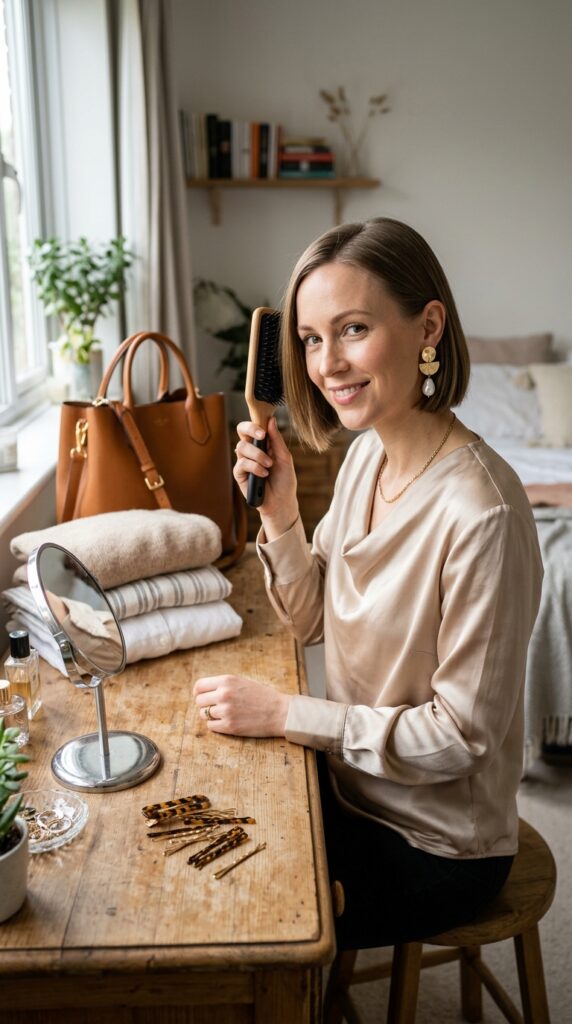
13. Tousled Bob With Airy Layers
A tousled bob creates a soft, undone finish that gives fine hair natural looking movement. Airy layers lift through the crown, while the jaw length ends remain light and active. It feels casual and looks especially good with fresh cotton, soft denim, or relaxed knitwear.
Ask for a few long layers rather than short pieces throughout the head. Spray texture mist beneath the crown, then loosen the hair gently with your fingertips. A lot of people spray product heavily over the surface, which can make fine strands dull and dry. Focus on the roots and underneath sections instead. A salon cut may cost $50 to $120, while a dry texture spray generally costs $12 to $28.

14. Short Bob Hairstyles for Thin Fine Hair With Side Bangs
Soft side bangs create a diagonal sweep that brings movement around the forehead and cheek. They blend easily into a short bob and provide more coverage than wispy bangs without using as much hair as a full fringe.
Ask for bangs that begin near the brow and lengthen toward the cheekbone. Dry them in the opposite direction first, then sweep them into place for added lift. In my experience, cutting side bangs too short is the biggest mistake because they become difficult to control under humidity or hats. Leave enough length to tuck them behind the ear. Cuts with side bangs usually cost $50 to $125, while a round brush and flexible spray may cost $18 to $40.
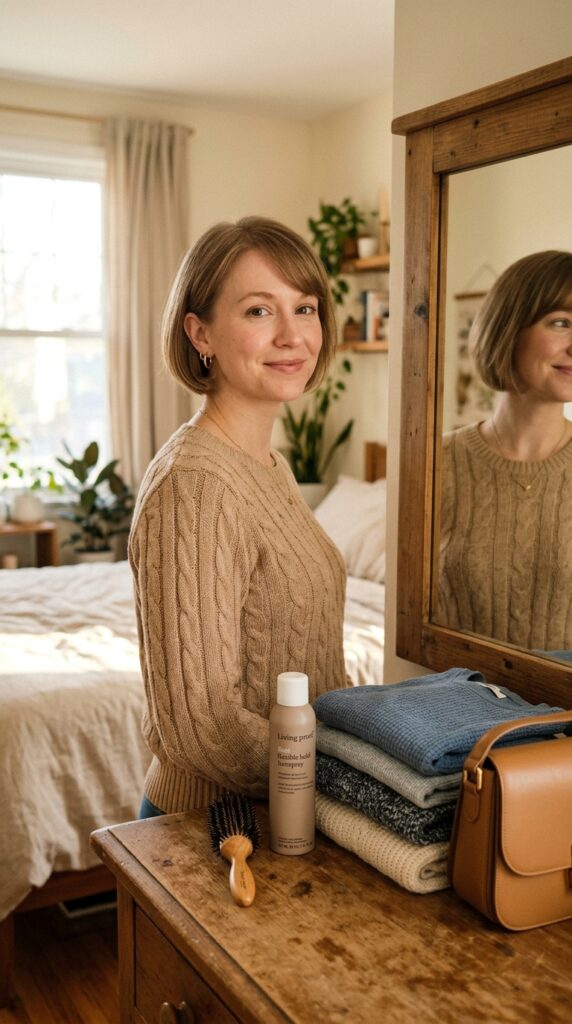
15. French Inspired Short Bob
A French inspired bob sits near the jaw with a soft, natural outline and lightly undone texture. It often includes a gentle fringe or center part, creating a relaxed style that looks charming with simple clothing and minimal jewelry.
Ask for a blunt base with very subtle texture through the ends. Keep the cut loose enough to air dry with your natural bend. Apply a lightweight leave in spray, then tuck a few pieces behind the ears. What I personally love about this cut is that it does not depend on a smooth salon blowout. Avoid cutting the fringe too thick if your hair is fine. A professional cut may cost $50 to $130, while leave in spray usually ranges from $10 to $25.
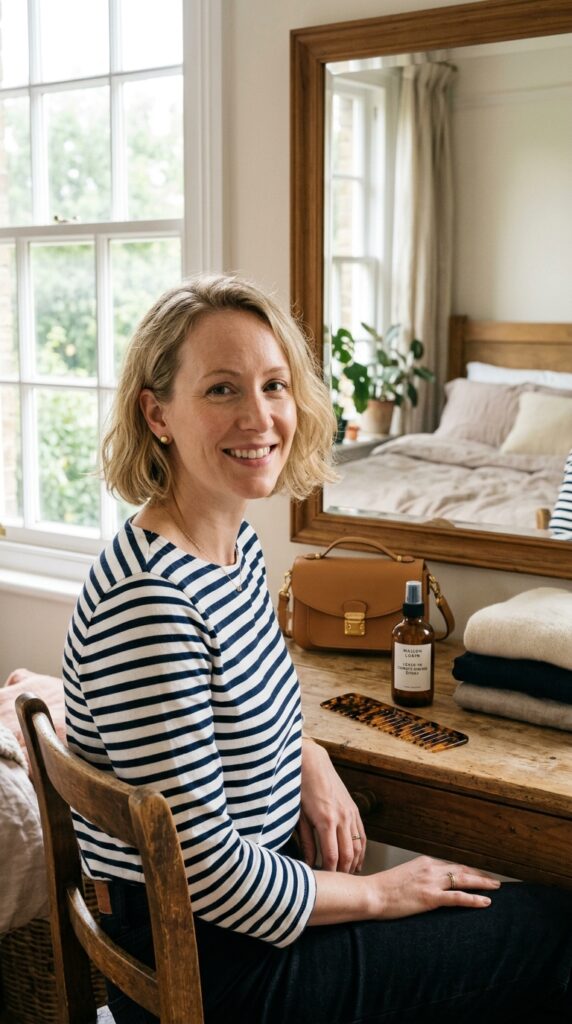
16. Bob With a Soft Middle Part
A soft middle part gives a short bob balance and a clean frame around the face. The equal sections fall smoothly on both sides, while a strong bottom edge makes the hair appear fuller. This shape works with straight hair, loose waves, or gently flipped ends.
Ask for a mostly one length bob with only subtle shaping around the front. Blow dry the front sections away from the face to prevent the roots from sitting flat. Add a small amount of volumizing powder only where needed. A common mistake is pressing the roots down with a straightener, which removes natural lift. A salon cut generally costs $45 to $115, while root powder costs around $10 to $24.
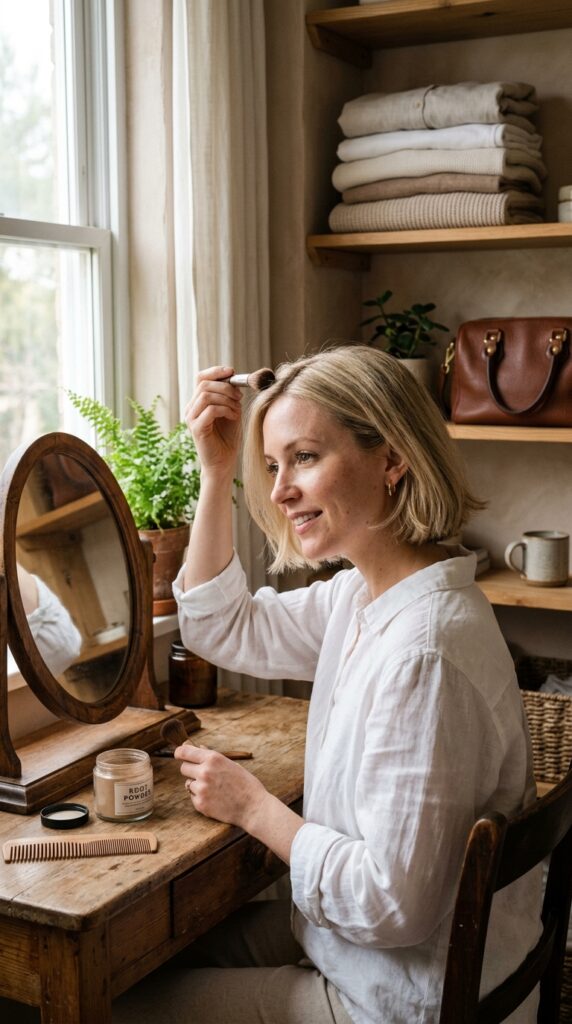
17. Short Bob With Flipped Ends
Flipped ends give a short bob a playful sense of movement. The outward bend creates width near the jaw, which can help thin hair appear fuller. The finish has a gentle vintage mood but still feels wearable with modern outfits.
Ask for a strong chin or jaw length perimeter. Use a small round brush or flat iron to turn only the bottom inch outward. Keep the crown smooth and lightly lifted. In my experience, the biggest mistake is flipping too much of the length, which can make the style look stiff. A subtle bend is easier to wear. Salon cuts usually cost between $45 and $115, while styling tools and root spray may cost $25 to $70.
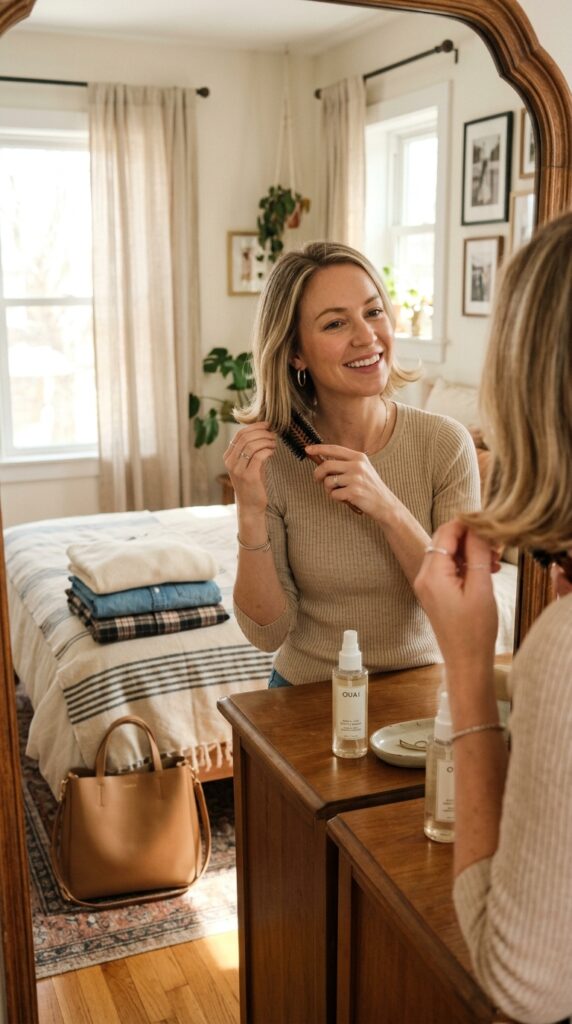
18. Low Maintenance Air Dried Bob
An air dried bob works with your natural texture instead of requiring daily heat styling. The clean perimeter keeps fine ends looking strong, while subtle internal shaping allows the hair to move as it dries.
Tell your stylist how your hair behaves without a blow dryer. Ask for a shape that follows your natural part and bend pattern. Apply a light leave in mist, gently arrange the front pieces, and avoid touching the hair until it is dry. A lot of people choose a haircut based on a heavily styled photo, then struggle to recreate it at home. A practical bob should suit your routine. A cut generally costs $45 to $110, while leave in mist costs $10 to $25.
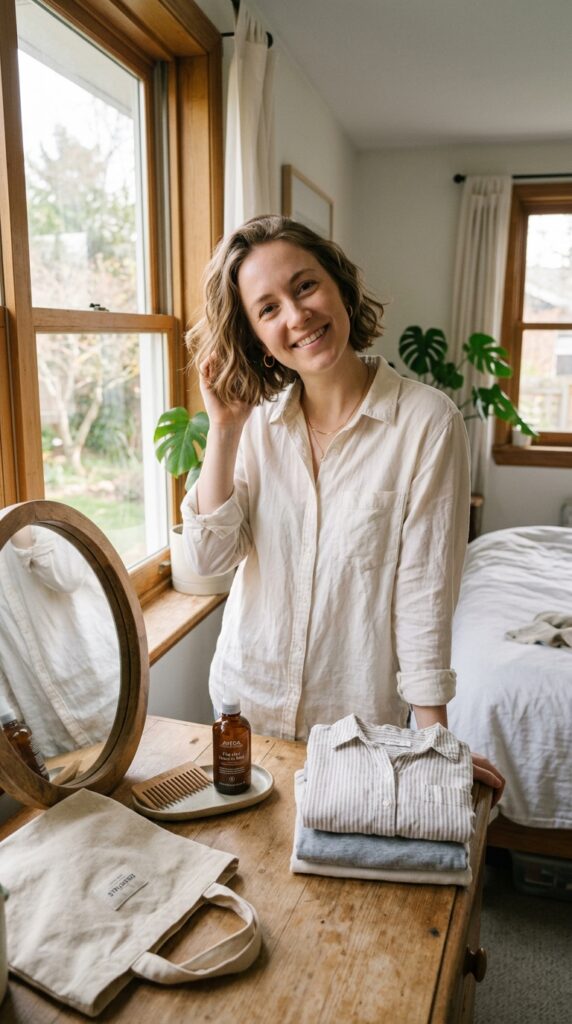
19. Highlighted Bob With Added Dimension
Fine highlights can make the layers and movement of a short bob more visible. Soft ribbons around the face and crown reflect natural light, while a deeper base creates contrast and the appearance of density.
Ask for highlights only one or two shades lighter than your natural color. Concentrate them around the part, temples, and surface pieces rather than lightening every section. In my experience, too many pale highlights can make fine hair look more transparent. Keep darker strands throughout for depth. A cut and partial highlight service usually costs between $110 and $250. Color safe shampoo and conditioner may add $20 to $50.
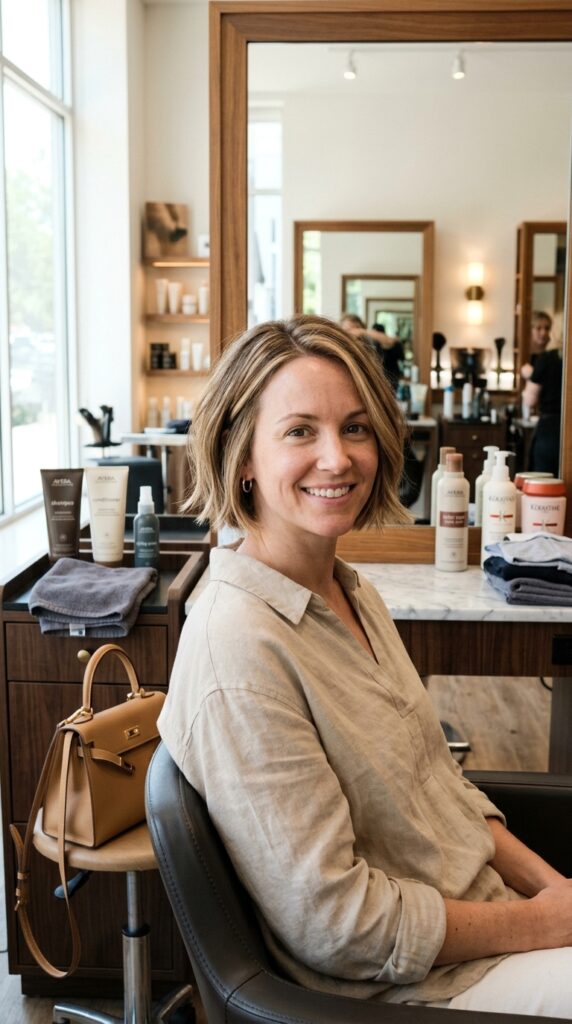
20. Low Volume Short Bob Hairstyles for Thin Fine Hair
A simple wash and wear bob can look neat without large, styled volume. The clean shape follows the natural fall of the hair, while a strong perimeter keeps the ends from appearing sparse. This is a helpful choice if you prefer a calm, smooth style rather than a lifted crown.
Ask for a chin or jaw length cut with minimal layers and a natural part. Use a lightweight smoothing spray and a paddle brush, or allow the hair to air dry. I always recommend this style when someone wants less daily work and fewer products. Avoid applying rich conditioner near the roots because it can weigh the hair down. A salon cut usually costs $45 to $110, while smoothing spray may cost $10 to $25.
Choosing a Short Bob That Supports Fine Hair
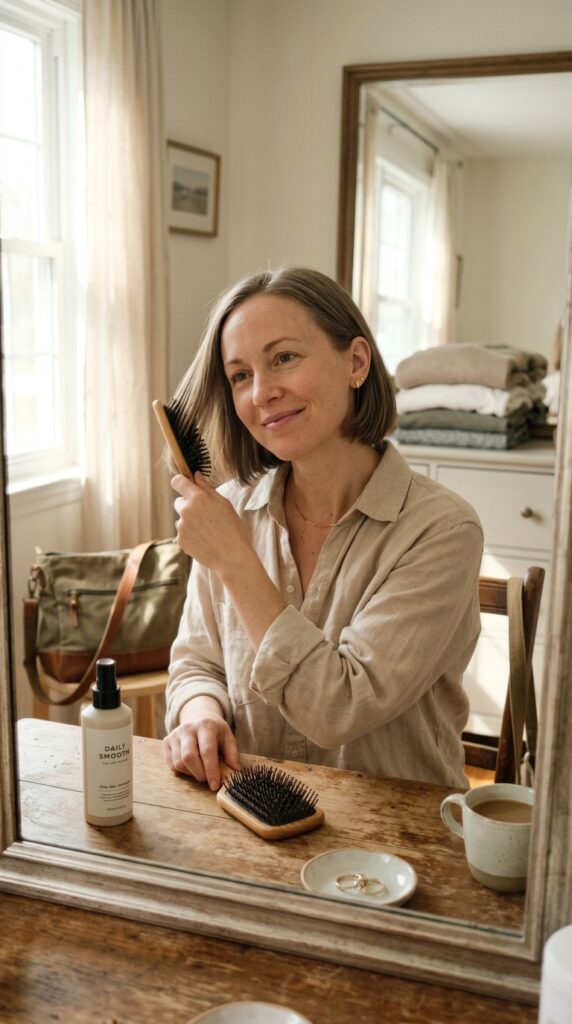
The right short bob can give thin hair a cleaner shape, stronger ends, and more natural movement. A blunt edge creates visible density, while a few well placed layers can add lift without removing too much hair. Details such as the part, bangs, and back shape also affect how full the finished cut appears.
These 20 short bob hairstyles for thin fine hair include sleek, layered, wavy, and low maintenance choices. Start by saving one or two cuts that match your natural texture and daily routine. Bring those photos to your stylist, then discuss your density, growth pattern, and preferred level of upkeep.
You do not need a costly collection of styling products either. A light mousse, root spray, heat protectant, and reliable brush are often enough. Careful cutting will usually add more shape than thick waxes or heavy oils.
Which short bob hairstyle would you try first? I’d love to hear what you’re planning.
Frequently Asked Questions
Does a short bob make thin fine hair look thicker?
A short bob can make fine hair appear fuller by removing excess weight and creating a stronger bottom edge. Blunt and lightly graduated shapes are especially useful. The final result also depends on your natural density and growth pattern.
What bob length works best for thin hair?
Chin to jaw length often works well because it creates a strong outline without weighing down the roots. A slightly longer bob may suit you if you want to tie the hair back. Your stylist can adjust the length to suit your face and neck.
Should a short bob for fine hair have layers?
Fine hair can benefit from a few subtle layers through the crown or interior. Too many short layers may weaken the ends and expose the scalp. Ask for controlled movement rather than heavy layering throughout.
Are bangs suitable for a thin hair bob?
Curtain bangs, wispy bangs, and longer side bangs can work well when the fringe section remains narrow. Thick bangs may remove too much hair from the crown. Longer fringe styles are also easier to blend as they grow.
How can I add volume to a short bob?
Apply lightweight mousse or root spray and lift the roots while blow drying. A deep side part, loose waves, and a small round brush can also create fullness. Avoid heavy oils and thick creams near the scalp.