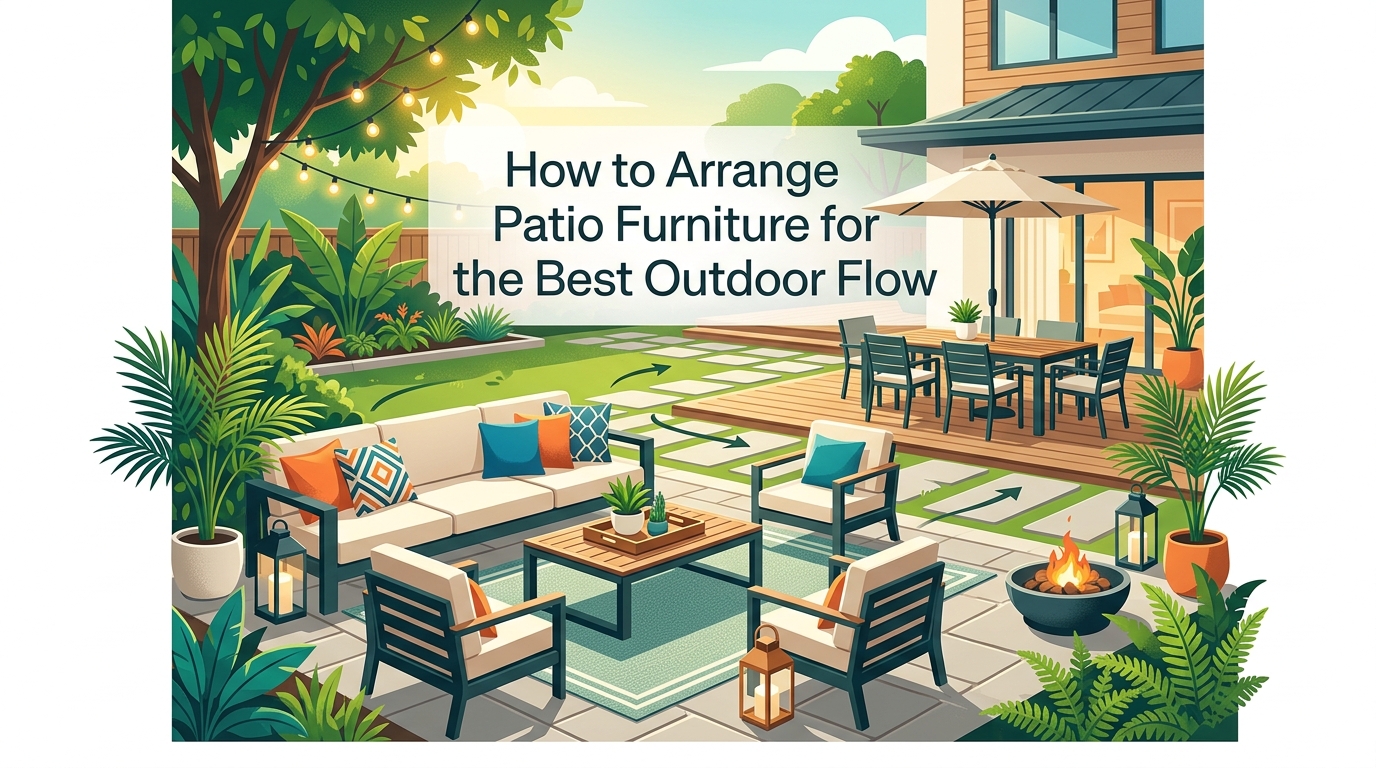
How to Arrange Patio Furniture for the Best Outdoor Flow
A patio can have beautiful furniture, stylish cushions, and lovely plants, yet still feel awkward to use. Maybe guests have to squeeze between chairs, conversations feel disconnected, or the dining table blocks the natural path through the space. These small layout problems can make your outdoor area feel smaller and less inviting than it really is.
Learning how to arrange patio furniture for the best outdoor flow can completely change the way your backyard feels without buying all new furniture. A thoughtful layout makes it easier to move around, creates comfortable conversation areas, and helps every corner of your patio serve a purpose. Whether you’re hosting friends, enjoying family dinners, or relaxing with a good book, the right arrangement makes the entire space feel more welcoming.
In this guide, you’ll find practical patio furniture layout ideas for large patios, compact balconies, and everything in between. Each tip includes styling advice, common mistakes to avoid, and budget friendly ideas that help create a patio that’s both beautiful and easy to enjoy.
1. How to Arrange Patio Furniture for the Best Outdoor Flow Around a Focal Point
Every comfortable patio begins with a clear focal point. It could be a fire pit, coffee table, outdoor fireplace, water feature, or even a beautiful garden view. When seating naturally faces one central feature, the patio immediately feels more organized and inviting. Soft cushions, woven throws, and nearby lanterns create a warm setting where conversations happen naturally instead of feeling scattered across the yard.
Start by identifying the feature you want people to notice first. Arrange chairs and sofas around it while leaving comfortable walking space behind each seat. Most homeowners can create this layout using their existing furniture, although adding a coffee table or outdoor rug may cost around $80 to $300. In my experience, the biggest mistake here is trying to face furniture in multiple directions, which often makes the patio feel confusing rather than relaxing.
2. Create Comfortable Walkways
A patio feels much larger when people can move through it without constantly stepping around furniture. Clear walking paths help guests carry drinks, children play safely, and everyone move comfortably between seating, dining, and garden areas. Wide open pathways also make the patio feel cleaner and less cluttered.
Leave approximately 30 to 36 inches between major furniture pieces whenever possible. If your patio is smaller, choose slimmer chairs or nesting tables that can be moved easily. Rearranging existing furniture usually costs nothing, while replacing oversized pieces with compact options may range from $100 to $500. A lot of people skip measuring before moving furniture, but taking a few measurements first prevents unnecessary rearranging.
3. How to Arrange Patio Furniture with Separate Conversation Zones
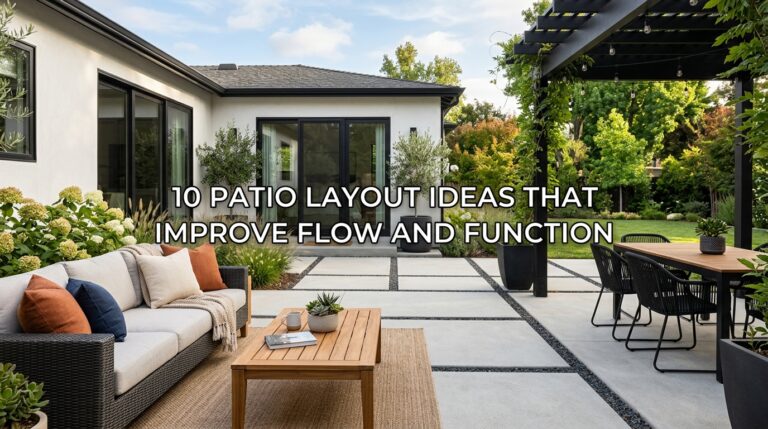
Larger patios become much more welcoming when they’re divided into smaller activity areas. One section might include lounge chairs around a coffee table, while another features a dining set or reading corner. These separate zones make the patio feel organized while giving family members different places to relax throughout the day.
Use outdoor rugs, planters, or lanterns to visually separate each area without blocking movement. Creating zones often requires only a few accessories costing between $50 and $250. What I personally love about this approach is that the patio feels much more personal because every space has a clear purpose instead of everything competing for attention.
4. Float Furniture Away from Walls
Many people automatically push every chair and sofa against the edge of the patio, hoping it will create more space. Surprisingly, the opposite is often true. Floating furniture slightly inward creates a cozy seating arrangement while allowing the patio to feel balanced and intentionally designed. It also encourages conversation because people sit closer together instead of feeling spread out around the perimeter.
Move seating just a few feet away from walls or fences and anchor the arrangement with an outdoor rug or coffee table. This update usually costs nothing if you’re simply rearranging furniture. I always recommend trying several layouts before deciding because even small adjustments can completely change how comfortable your patio feels.
5. How to Arrange Patio Furniture for the Best Outdoor Flow with a Defined Dining Area
If your patio is used for outdoor meals, giving the dining table its own dedicated space makes the entire layout feel more organized. A dining set placed near the grill or outdoor kitchen creates a natural flow while leaving the lounge area open for relaxing. Picture a wooden table with linen napkins, woven placemats, comfortable chairs, and a few potted herbs nearby. The space feels welcoming because each area has a clear purpose.
Keep at least 36 inches of clearance around the table so chairs can slide out comfortably. If your patio is compact, choose a round table to improve movement. Rearranging your current furniture costs nothing, while a new dining set typically ranges from $300 to $1,200. In my experience, the biggest mistake here is placing the dining table in the middle of every activity zone, which interrupts the natural flow.
6. Use Outdoor Rugs to Define Each Space
Outdoor rugs do more than add color. They visually organize furniture and make each seating area feel connected. A textured neutral rug beneath a sofa and chairs instantly creates the feeling of an outdoor living room, while another rug beneath the dining table separates it from nearby seating. The layered textures also make the patio feel warmer and more inviting.
Weather resistant outdoor rugs usually cost between $50 and $250. Choose a rug large enough so the front legs of your seating rest comfortably on it. A lot of people buy rugs that are too small, but a larger size creates a much more balanced appearance and helps anchor the furniture naturally.
7. How to Arrange Patio Furniture with Flexible Seating
Flexible seating makes your patio easier to adapt for everyday use and special gatherings. Lightweight chairs, nesting side tables, and movable poufs allow you to rearrange the layout whenever guests visit without making the patio feel crowded. Soft cushions, woven blankets, and neutral tones keep everything looking connected even as the furniture moves around.
Portable seating pieces usually cost between $40 and $200 each. Look for weather resistant materials that are easy to carry without sacrificing comfort. What I personally love about flexible furniture is that it lets you adjust the space throughout the seasons instead of being locked into one arrangement all year.
8. Balance the Layout with Greenery
Plants are one of the easiest ways to make patio furniture arrangements feel complete. Large planters soften empty corners, while smaller pots on tables and steps create a natural flow between different seating areas. The greenery makes the patio feel more connected to the garden and adds color without overwhelming the space.
Expect to spend around $50 to $300 for a collection of outdoor planters and plants. Mix tall, medium, and low growing varieties to create visual balance. I always recommend placing larger plants near the edges of the patio rather than in walkways. This keeps traffic moving comfortably while framing the furniture with lush greenery.
9. Leave Breathing Room Between Furniture Pieces
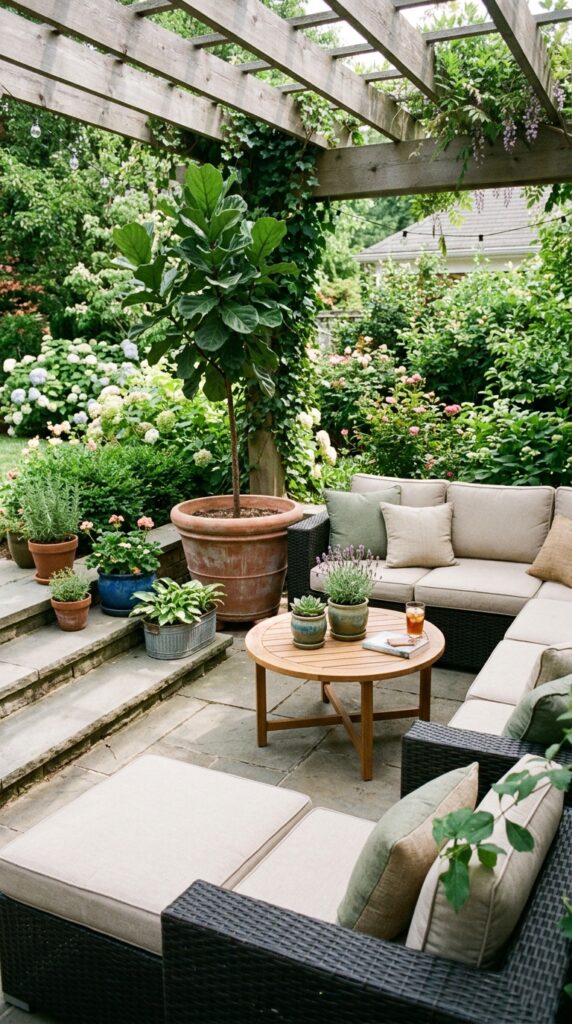
One of the easiest ways to improve outdoor flow is to resist the urge to fill every empty corner. A little open space makes the patio feel larger, cleaner, and much easier to use. Instead of squeezing extra chairs into the seating area, leave enough room for people to walk comfortably and pull out chairs without bumping into tables. The result feels relaxed and welcoming rather than crowded.
Aim to leave 18 to 24 inches between seating and coffee tables for comfortable reach, and wider clearances for walkways. This update usually costs nothing because you’re simply adjusting your layout. In my experience, the biggest mistake here is buying too much furniture for the available space. A smaller, well arranged collection almost always feels more inviting.
10. Arrange Seating to Encourage Conversation
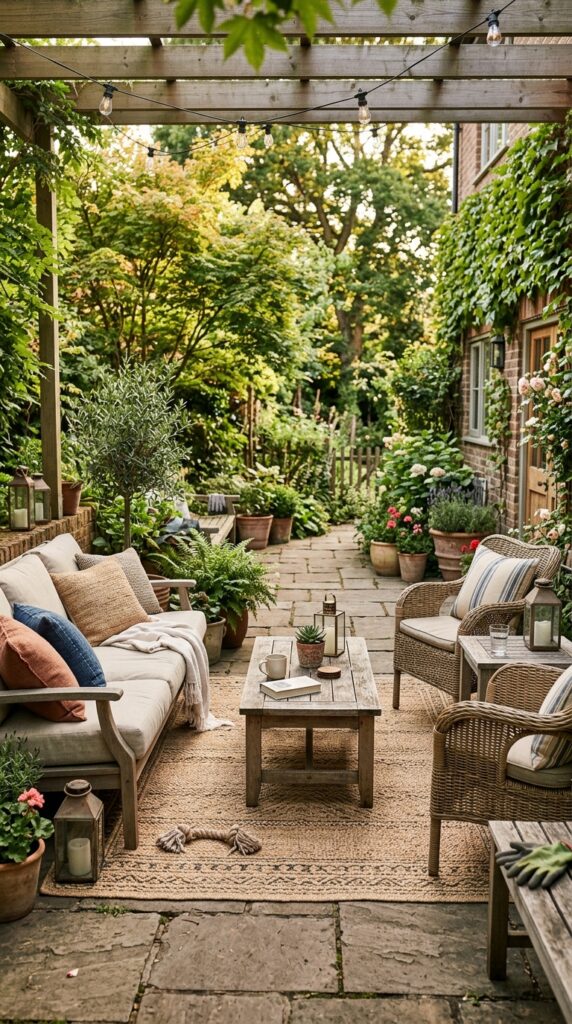
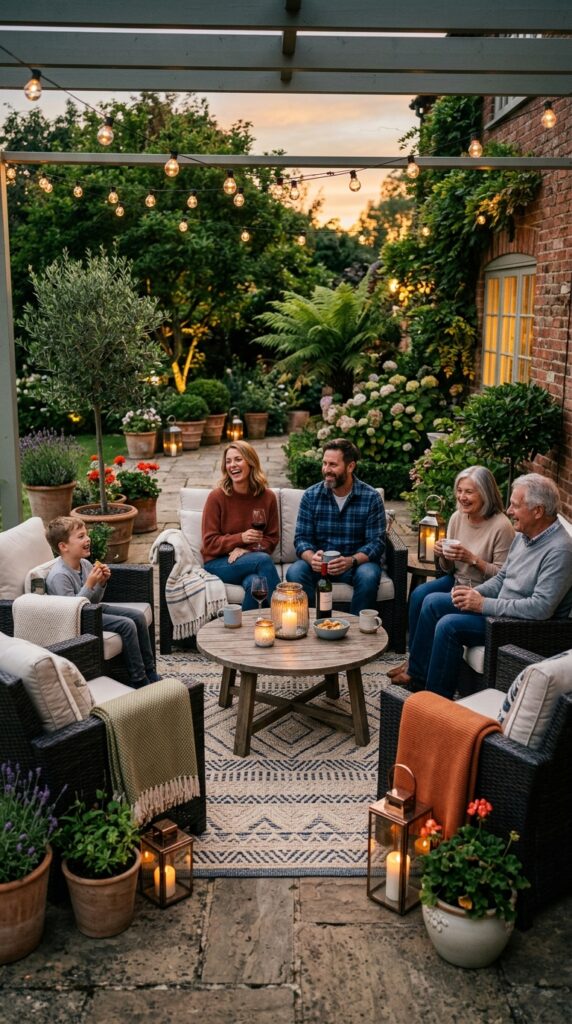
The most enjoyable patios naturally bring people together. Instead of lining chairs side by side, position seating so everyone can comfortably see and talk to each other. A simple circle or gentle U shaped arrangement around a coffee table or fire pit encourages conversation while keeping the layout balanced. Soft cushions, textured throw blankets, and warm lighting make guests want to stay outside longer.
Most homeowners can achieve this simply by moving existing furniture. If you add a new coffee table or side tables, expect to spend around $80 to $300. A lot of people skip adding a central table, but it gives everyone a convenient place for drinks, books, or snacks while helping anchor the seating arrangement.
11. Add Lighting Where People Gather
Good lighting helps guide movement across the patio while making seating areas feel warm after sunset. String lights overhead, lanterns beside chairs, solar pathway lights, and small table lamps create layers of light that make the space both practical and inviting. Instead of relying on one bright fixture, several softer light sources create a much more comfortable atmosphere.
Outdoor lighting updates typically cost between $30 and $250. Choose warm white bulbs for a softer glow, and place pathway lights where guests naturally walk. What I personally love about layered lighting is that it changes the entire mood of the patio without requiring new furniture or major renovations.
12. How to Arrange Patio Furniture for the Best Outdoor Flow by Keeping It Simple
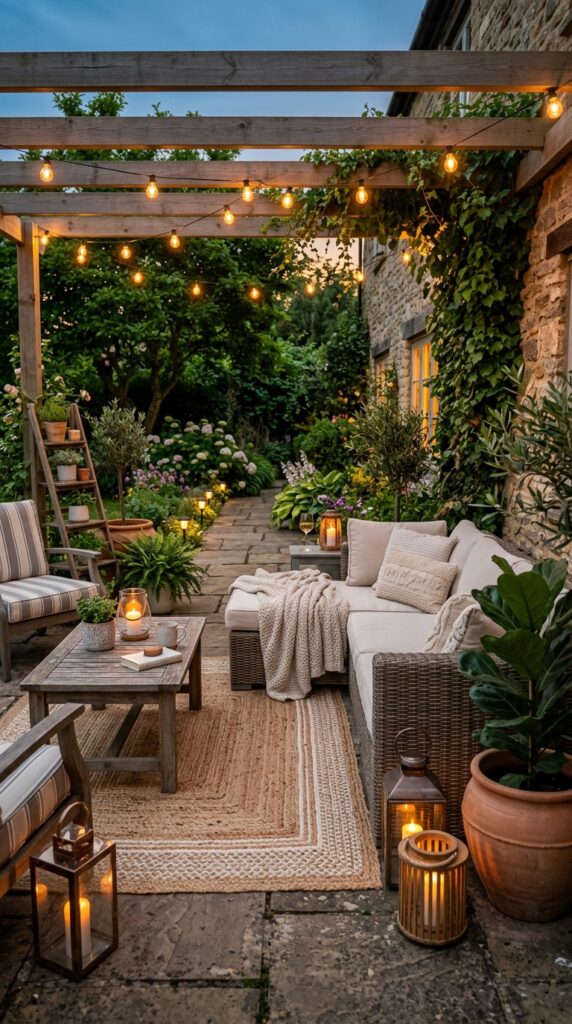
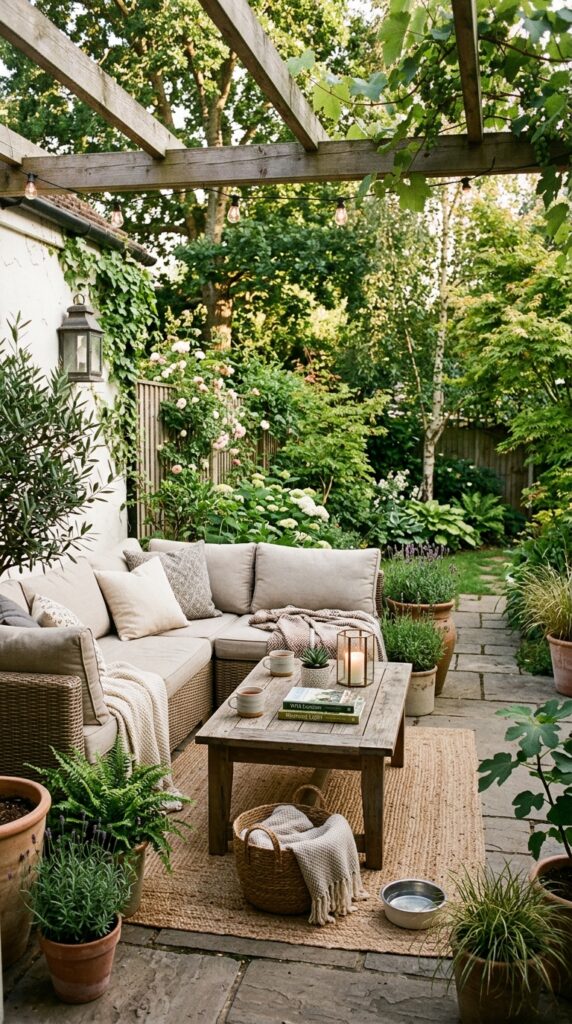
Sometimes the best patio layouts are the simplest. Instead of filling every corner with furniture and decorations, focus on a few comfortable seating pieces, one functional table, and carefully placed accessories. Clean lines, natural wood, soft fabrics, and a few healthy plants create an outdoor space that feels calm and easy to enjoy. The layout feels balanced because every item has a purpose.
You don’t need to replace all your furniture to achieve this look. Rearranging what you already own and adding a few affordable decor updates, such as new cushions or planters, can cost anywhere from $50 to $300. I always recommend this approach when someone wants a fresh look without starting over because small changes often create the biggest improvement.
Conclusion
Learning how to arrange patio furniture for the best outdoor flow isn’t about buying the newest outdoor collection or filling every inch of your patio. It’s about creating a layout that feels natural, comfortable, and easy to use every day. When furniture is arranged around a focal point, walkways stay clear, and seating encourages conversation, your outdoor space instantly becomes more welcoming.
Start with one or two changes instead of trying to redesign everything at once. Move furniture to create better flow, add a rug to define a seating area, or introduce a few large planters to soften empty corners. These simple updates can make your patio feel larger, more organized, and much more enjoyable without stretching your budget.
The best outdoor spaces are designed around the way you live. Focus on comfort, function, and a welcoming atmosphere, and you’ll create a patio that family and friends naturally want to spend time in. Which layout idea are you excited to try first? I’d love to hear how you’re planning to refresh your patio.
FAQs
How do I arrange patio furniture in a small space?
Choose furniture that fits the scale of your patio and avoid overcrowding. Leave clear walkways and use multipurpose pieces like storage benches or nesting tables. A compact layout with fewer pieces usually feels much more comfortable than trying to fit too much into a small area.
What is the best distance between patio furniture?
Leave about 18 to 24 inches between seating and coffee tables for easy reach. Walkways should generally be 30 to 36 inches wide so people can move comfortably. These simple measurements help create a natural flow.
Should patio furniture face the house or the yard?
That depends on your best view or main feature. If you have a fire pit, fireplace, or beautiful garden, arrange seating toward it. The goal is to create a comfortable focal point that encourages conversation and relaxation.
How can I make my patio feel bigger?
Keep pathways open, avoid oversized furniture, and define different areas with outdoor rugs or planters. Light colored cushions, mirrors, and layered greenery can also help create a more spacious feel without major renovations.
How do I make my patio more inviting for guests?
Comfort is the key. Add weather resistant cushions, throw blankets, side tables for drinks, warm lighting, and a few potted plants. A thoughtful layout where people can easily move around and talk to one another makes guests feel welcome.