How to Create Privacy on Your Patio With Plants and Screens
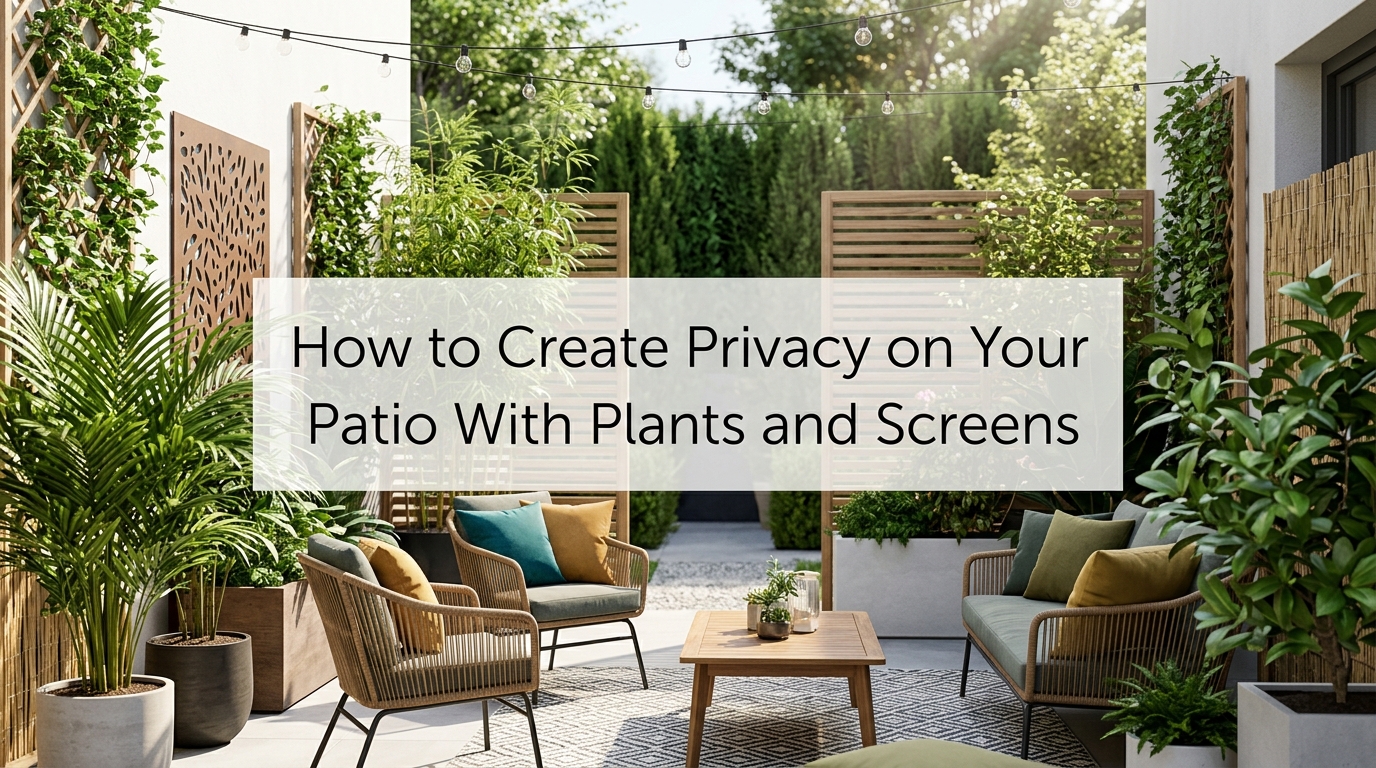
Spending time on your patio should feel relaxing, but that’s hard to enjoy when you can see straight into your neighbor’s yard or feel like everyone can see you. Even a beautifully decorated outdoor space can feel uncomfortable if it lacks privacy. The good news is that how to create privacy on your patio with plants and screens doesn’t have to involve building a tall fence or taking on an expensive renovation.
With a few carefully chosen plants, decorative screens, and simple styling ideas, you can turn an open patio into a cozy outdoor retreat. Greenery softens hard surfaces, while screens add structure and create a sense of separation without making the area feel closed in. The result is a space that feels peaceful, welcoming, and much more enjoyable for relaxing, reading, or entertaining friends.
In this guide, you’ll discover practical patio privacy ideas that suit different budgets and patio sizes. From lush potted bamboo to stylish wood screens and climbing vines, these ideas combine home decor inspiration with functional design to help you enjoy your outdoor space with confidence.
1. How to Create Privacy on Your Patio With Plants and Screens Using Tall Potted Bamboo
Tall bamboo instantly creates a natural privacy wall while adding movement and texture to your patio. The slender green stems sway gently in the breeze, creating a peaceful atmosphere that feels fresh and relaxing. Large black or terracotta planters filled with healthy bamboo bring height to the space without making it feel heavy. Add woven outdoor chairs, soft cream cushions, and a neutral outdoor rug nearby to create a cozy corner where you can unwind away from neighboring views.
Choose clumping bamboo varieties rather than running types to keep growth under control. Large containers and quality potting mix usually cost between $80 and $250 per planter. Place the pots along the patio edge where you need the most coverage. In my experience, the biggest mistake here is choosing containers that are too small. Larger pots help bamboo stay healthy and reduce frequent watering.
2. Decorative Wooden Privacy Screens
Wooden privacy screens add warmth and character while giving your patio a more enclosed feel. The natural wood grain works beautifully with greenery, woven textures, and soft outdoor fabrics. Light filters through the slats, creating gentle patterns across the patio floor throughout the day. Add hanging planters, lanterns, and a small outdoor sofa to make the space feel welcoming without looking crowded.
Freestanding wood screens generally cost between $100 and $400, depending on the size and material. Cedar and treated wood are both durable outdoor choices. A lot of people skip sealing the wood, but it makes all the difference in protecting it from rain and sunlight over time. Pair the screen with nearby plants for even better coverage.
3. How to Create Privacy on Your Patio With Plants and Screens Using Climbing Vines
Climbing vines create a living privacy wall that changes beautifully through the seasons. As green leaves spread across a trellis, they soften the edges of the patio and provide gentle shade along with extra privacy. Flowering varieties add seasonal color while creating a peaceful garden feel that blends naturally into the surrounding landscape.
Install a sturdy wooden or metal trellis and choose climbing plants suited to your climate. A basic trellis and young plants usually cost between $60 and $200. Water regularly while the vines establish themselves, and trim them once or twice each year to keep growth tidy. What I personally love about this idea is how much privacy it provides while still feeling open and natural.
4. Outdoor Curtains for Soft Privacy
Outdoor curtains create privacy without making your patio feel enclosed. Light linen style fabric moves gently in the breeze while softening bright sunlight and blocking direct views from nearby homes. Combined with comfortable seating, woven baskets, and potted greenery, the curtains create an outdoor room that feels peaceful and welcoming throughout the day.
Weather resistant outdoor curtain panels usually cost between $40 and $150 per set. Install them on a pergola, covered patio, or sturdy curtain rod designed for outdoor use. I always recommend choosing light neutral colors because they reflect sunlight and keep the patio feeling bright while still providing the privacy you need.
5. Layer Large Planters for a Natural Privacy Wall
If you want privacy without installing permanent structures, grouping oversized planters is a simple solution. Tall ornamental grasses, evergreen shrubs, and leafy tropical plants create different heights that make the patio feel lush and secluded. The mix of soft green leaves, natural wood furniture, and woven outdoor textures gives the space a relaxed garden feel. As the plants grow, they create a living wall that feels much softer than a fence.
Choose frost resistant planters if you live in a colder climate. Expect to spend around $150 to $600, depending on the number of containers and plants you select. Place the tallest planters where privacy is needed most and gradually step down the heights toward seating areas. In my experience, the biggest mistake here is placing every planter in a straight line. Staggering them creates fuller coverage and a more natural look.
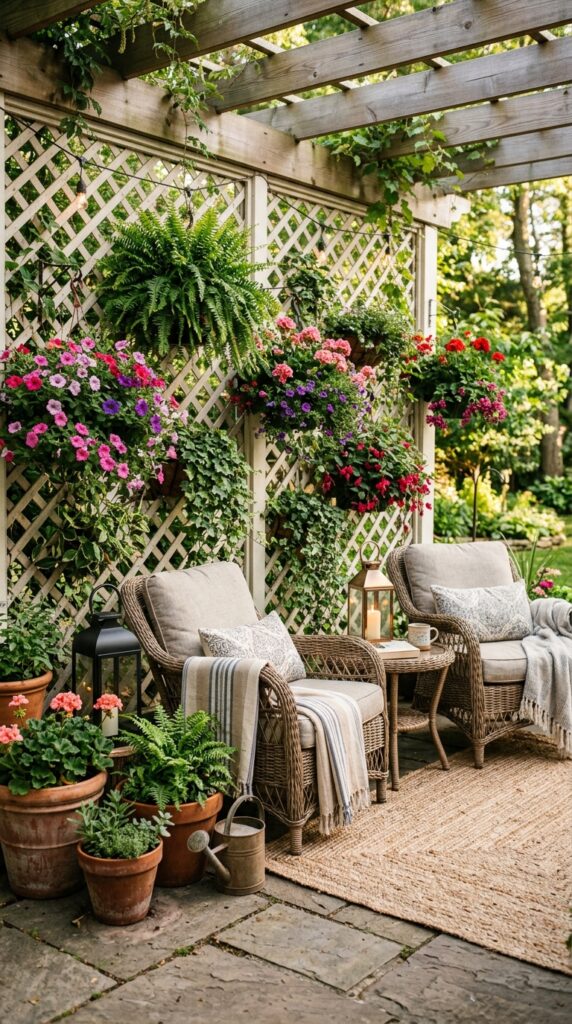
6. Add a Lattice Screen with Hanging Planters
A lattice screen offers privacy while still allowing fresh air and natural light to pass through. The open pattern keeps the patio from feeling closed in, while hanging baskets filled with trailing ivy, petunias, or ferns soften the structure with fresh greenery. Together, they create a peaceful backdrop that feels bright, welcoming, and full of texture.
Wood or vinyl lattice panels usually cost between $50 and $200. Secure the panel firmly before adding planters, especially in windy areas. A lot of people skip checking the weight of hanging baskets, but using lightweight planters helps prevent damage over time. Finish the look with outdoor lanterns and a small side table for a cozy reading corner.
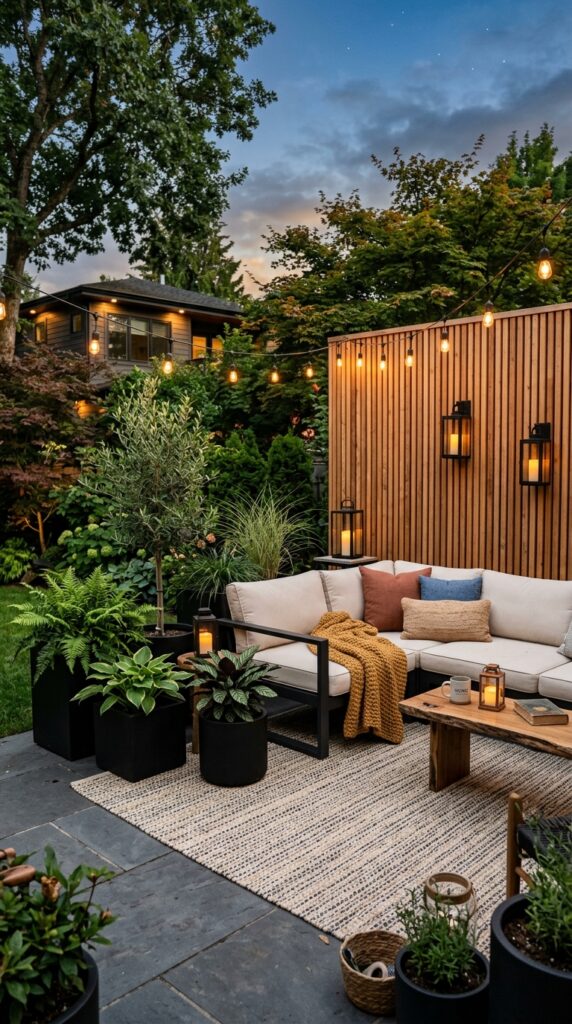
7. How to Create Privacy on Your Patio With Plants and Screens Using a Slatted Wood Wall
A vertical slatted wood wall gives your patio a modern look while creating just enough privacy to make the space feel comfortable. The evenly spaced wood slats allow light to filter through while blocking direct views from neighboring yards. Combined with black planters, leafy greenery, and simple outdoor furniture, the result feels clean, warm, and inviting.
Building a slatted privacy wall typically costs between $300 and $1,000, depending on the size and materials. Cedar is a popular choice because it naturally handles outdoor conditions well. What I personally love about this idea is that it looks beautiful on its own, even before you decorate it with plants or lighting. Add wall mounted planters or outdoor sconces for extra character.
8. Mix Shrubs and Flowering Plants for Layered Privacy
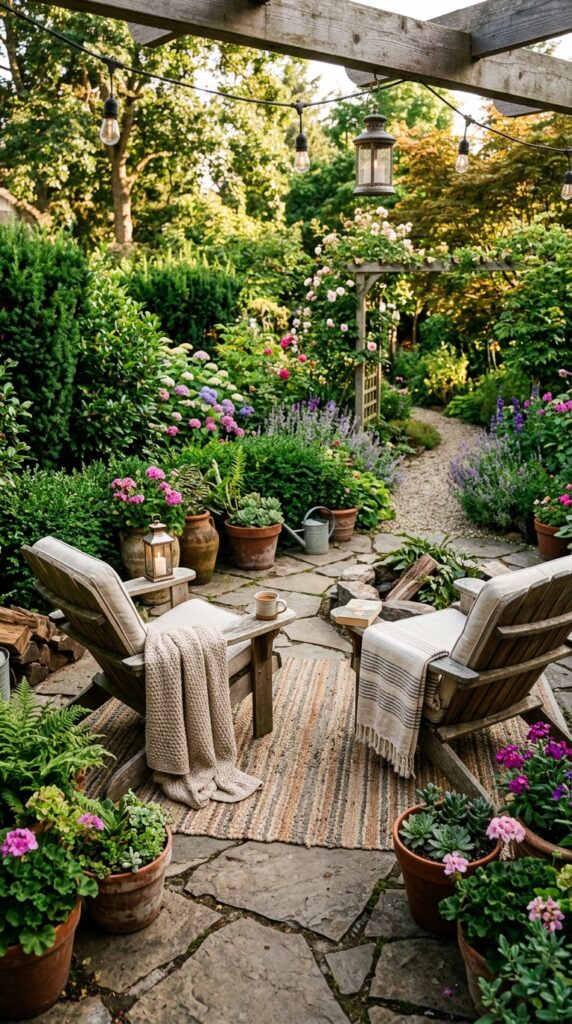
A combination of evergreen shrubs and colorful flowering plants creates privacy while making the patio feel like part of the garden. Tall shrubs provide year round screening, while seasonal blooms add color, fragrance, and movement. The mix of textures creates a backyard that feels full of life without relying on fences or solid walls.
This type of planting usually costs between $200 and $800, depending on the size of the border and the plant varieties. Choose plants with different heights to create a fuller appearance, and add mulch to help retain moisture and reduce weeds. I always recommend including at least one evergreen variety because it continues providing privacy even during the colder months.
9. Build a Pergola with Climbing Greenery
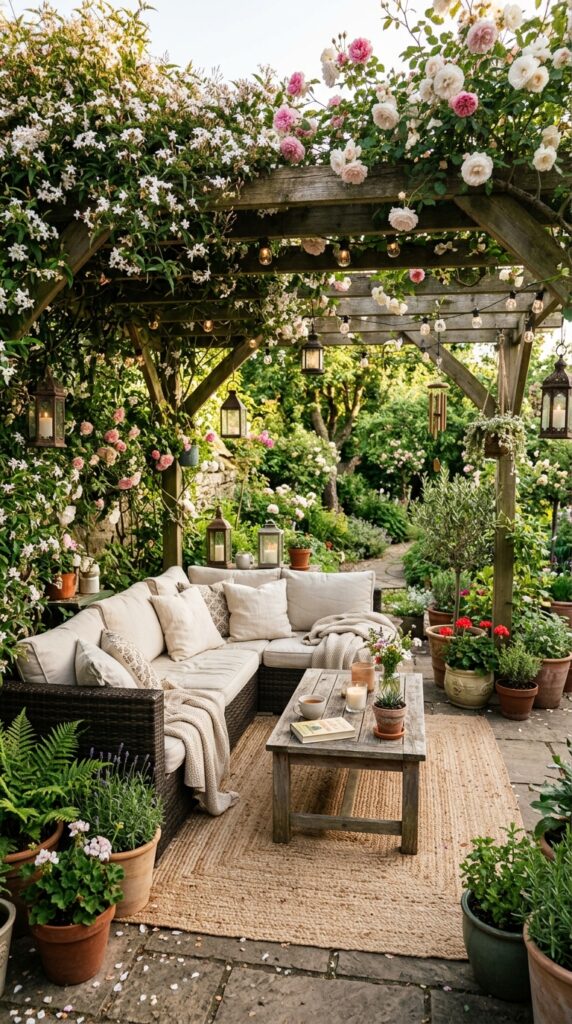
A pergola brings structure to your patio while making it feel more private without completely closing it off. As climbing roses, jasmine, or clematis weave through the beams, the overhead greenery creates soft shade and a peaceful garden atmosphere. Sunlight filters through the leaves, casting gentle patterns across outdoor cushions, woven rugs, and wooden furniture. The result feels calm and welcoming, making it easy to enjoy your patio from morning coffee to evening conversations.
A basic pergola project typically costs $800 to $3,000, depending on the size and materials. Plant climbing vines soon after installation so they have time to establish. In my experience, the biggest mistake here is expecting instant coverage. Most climbing plants need a season or two before they create the lush privacy many homeowners imagine, but the wait is well worth it.
10. Use Decorative Metal Screens with Greenery
Decorative metal screens provide privacy while doubling as outdoor artwork. Their intricate cutout patterns cast beautiful shadows throughout the day, adding interest even before you introduce plants. Pair the screens with tall planters filled with ornamental grasses or leafy palms to soften the metal and create a balanced look. The mix of natural greenery and modern materials feels stylish without overwhelming the patio.
Decorative outdoor metal screens usually cost between $150 and $500 each. Powder coated finishes hold up well in changing weather and require very little maintenance. A lot of people skip surrounding the screens with plants, but adding greenery helps soften the overall appearance and makes the patio feel more welcoming.
11. Create a Green Privacy Corner with Tall Trees
If one side of your patio feels especially exposed, a grouping of small ornamental trees can create a comfortable outdoor retreat. Trees like olive, Japanese maple, or dwarf magnolia add height while their branches soften nearby fences and neighboring views. Combined with layered planters, comfortable seating, and warm outdoor lighting, the space feels peaceful and naturally enclosed.
Depending on the tree variety and size, expect to spend between $200 and $900. Plant trees with enough room to mature and avoid placing them too close to foundations or patios. What I personally love about this idea is that it provides privacy while also adding seasonal beauty through changing leaves, flowers, or interesting bark.
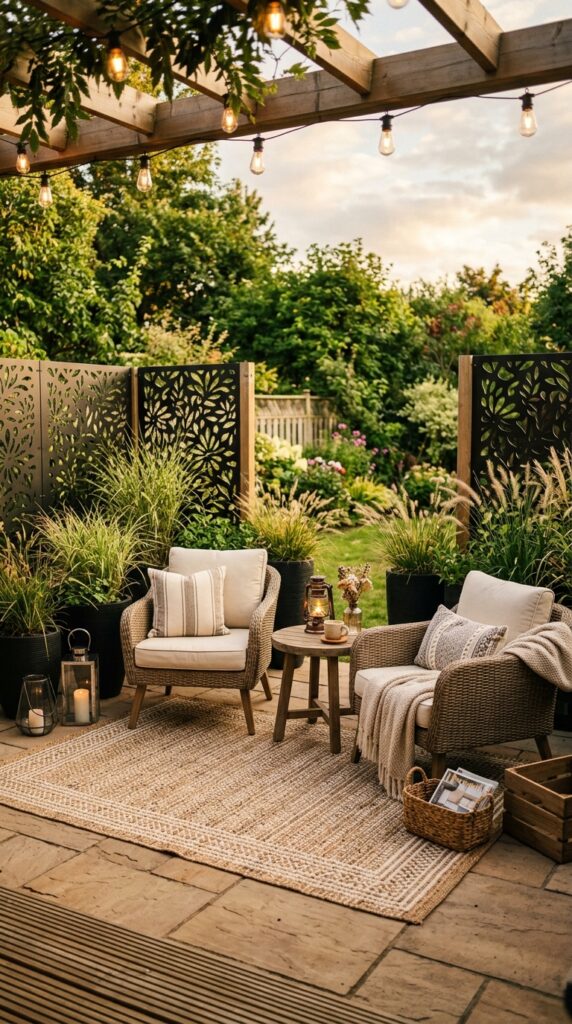
12. Combine Screens, Plants, and Lighting for Maximum Privacy
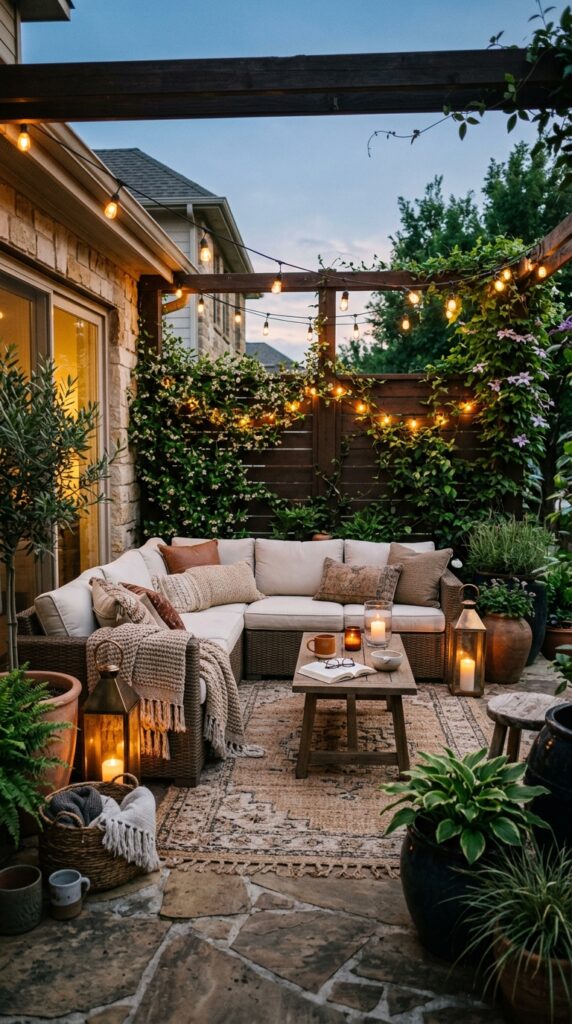
Sometimes the most inviting patios use several privacy ideas together instead of relying on just one. A wooden screen behind the seating area, large potted plants along the edges, climbing vines, and warm string lights overhead create an outdoor room that feels comfortable from every angle. Soft cushions, textured throws, woven baskets, and lanterns finish the look, making the patio feel like a natural extension of your home.
This layered approach can cost anywhere from $400 to $1,500, depending on the materials you already own. Build the space gradually by starting with one screen and a few planters, then add lighting and accessories over time. I always recommend this when someone wants a change without starting over because each addition improves the patio while staying within a manageable budget.
Conclusion
Creating a private patio doesn’t have to involve expensive renovations or tall fences. A few carefully placed plants, decorative screens, and comfortable outdoor accessories can completely change how your space feels. Whether you choose bamboo in oversized planters, a modern slatted wood wall, flowing outdoor curtains, or a pergola covered with climbing vines, each idea helps make your patio feel more peaceful and personal.
These ideas for how to create privacy on your patio with plants and screens are easy to adapt to different budgets and patio sizes. Start with one feature that solves your biggest privacy concern, then build on it over time with additional greenery, lighting, or outdoor decor. Small improvements often create the biggest difference because they make your patio somewhere you’ll genuinely enjoy spending time.
The most welcoming outdoor spaces are the ones designed around the way you live. Focus on comfort, natural textures, and layers of greenery, and your patio will quickly become your favorite place to relax. Which privacy idea would you try first? I’d love to hear what you’re planning.
FAQs
What are the best plants for patio privacy?
Clumping bamboo, arborvitae, ornamental grasses, boxwood shrubs, jasmine, clematis, and climbing roses are all popular choices. They provide different levels of coverage while adding texture and color. Select plants that match your climate and available sunlight.
How can I create patio privacy without building a fence?
Large planters, decorative screens, outdoor curtains, pergolas, trellises, and climbing plants all provide privacy without requiring a permanent fence. Combining two or three of these ideas often creates the most natural and comfortable result.
Are privacy screens or plants better for patios?
Both have their advantages. Screens provide immediate privacy, while plants become fuller and more attractive over time. Many homeowners combine both for the best balance of function and natural beauty.
What is the most affordable way to add privacy to a patio?
Outdoor curtains, lattice panels with climbing plants, and grouped planters are some of the most budget friendly options. Many projects can be completed for less than $200, especially if you already own containers or outdoor furniture.
How do I make a small patio feel private without making it feel smaller?
Choose open slatted screens, vertical planters, climbing vines, and tall container plants rather than solid walls. These options block unwanted views while still allowing light and airflow to keep the space feeling open.