15 Kitchen Layout Ideas That Improve Flow and Function
A kitchen can look beautiful in photos and still feel frustrating to use every day. Maybe you’re bumping into cabinet doors, struggling with tight corners, or constantly walking back and forth just to cook dinner. A lot of people assume they need a full remodel to fix these problems, but small layout changes can completely change how your kitchen feels and functions.
These kitchen layout ideas that improve flow and function are all about making your space easier to move through, easier to organize, and more comfortable to spend time in. Some work well for tiny apartments, while others help larger kitchens feel less chaotic and more connected. You’ll find practical ideas for storage, seating, prep zones, and traffic flow without making your kitchen feel cold or overly designed.
What I personally love about these ideas is that many of them can be adapted on different budgets. Even simple changes like shifting an island or opening a walkway can make cooking feel calmer and more enjoyable.
1. Create a Clear Work Triangle
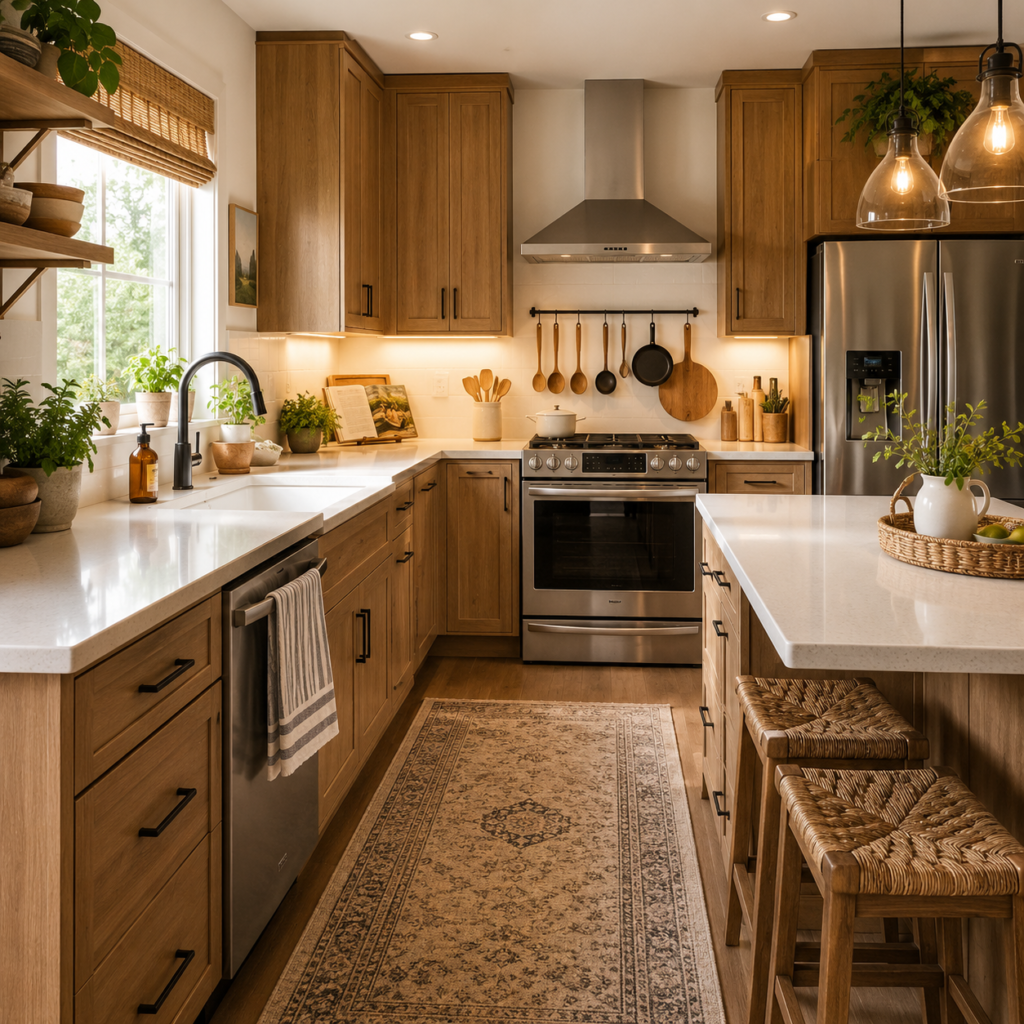
One of the easiest ways to improve kitchen flow is by keeping your sink, stove, and refrigerator within comfortable reach. A kitchen with a smooth work triangle feels calm and easy to move through. You’re not crossing the entire room while carrying hot pans or dripping vegetables from the sink. The space feels balanced, open, and practical, especially when paired with warm wood cabinets, soft under-cabinet lighting, and uncluttered counters.
Try keeping each point of the triangle about 4 to 9 feet apart. Avoid placing large islands or bulky carts directly in the walking path. In smaller kitchens, this setup works especially well with slim cabinetry and compact appliances. In my experience, the biggest mistake here is placing too many decorative pieces on work surfaces. Leave breathing room for actual cooking. A simple layout adjustment can cost nothing, while larger cabinet shifts may range from $300 to $2,000.
2. Add a Narrow Island for Better Movement
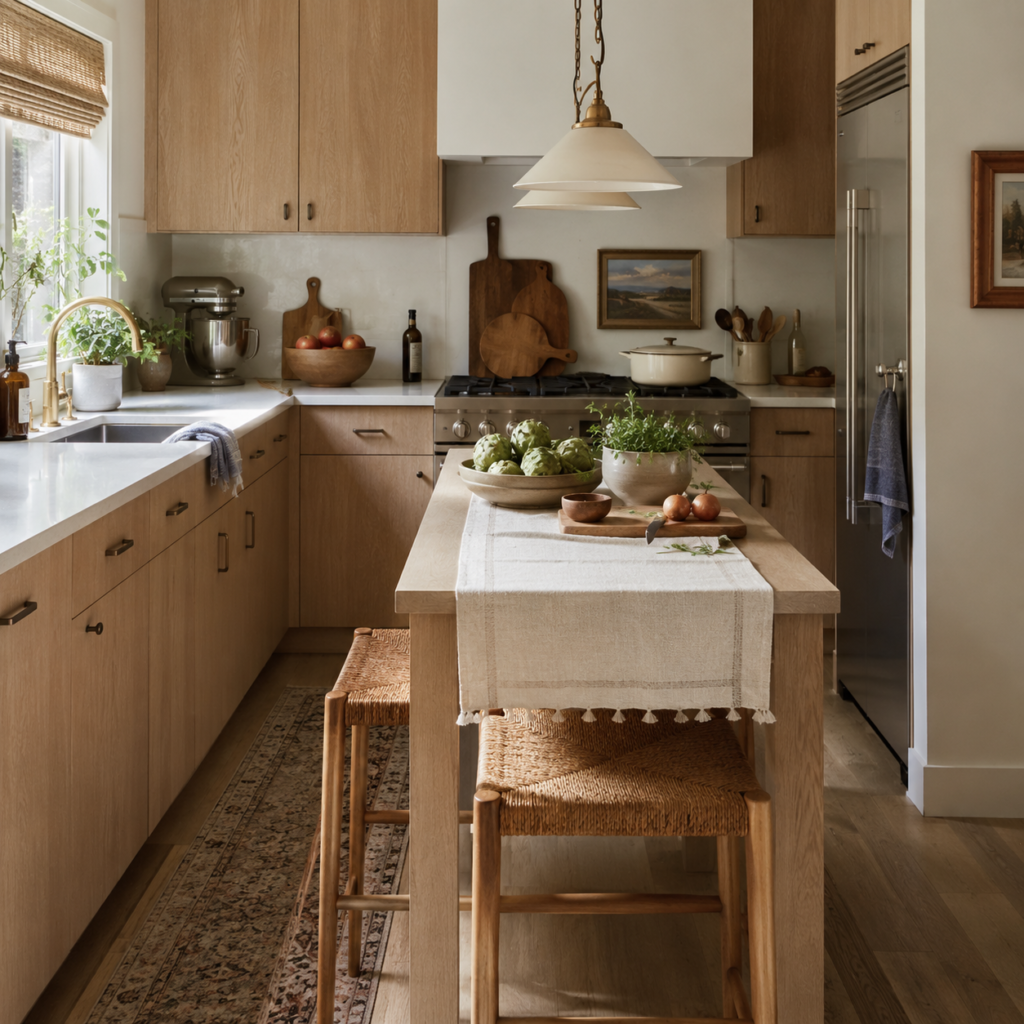
A slim kitchen island can make a space feel more organized without crowding the room. Instead of oversized islands that block movement, a narrow island creates a natural prep zone while still allowing comfortable walkways. The look feels airy and welcoming, especially with soft pendant lighting, pale oak finishes, and simple stools tucked underneath.
Aim for at least 36 inches of walking space around the island. A lot of people skip this step, but it makes all the difference in smaller kitchens. You can use a butcher block island for warmth or choose a painted base for contrast. Budget-friendly rolling islands usually cost around $150 to $400, while built-in options can range from $1,200 to $4,000. Avoid oversized seating if your kitchen already feels tight.
3. Use a Galley Kitchen Layout With Open Shelving
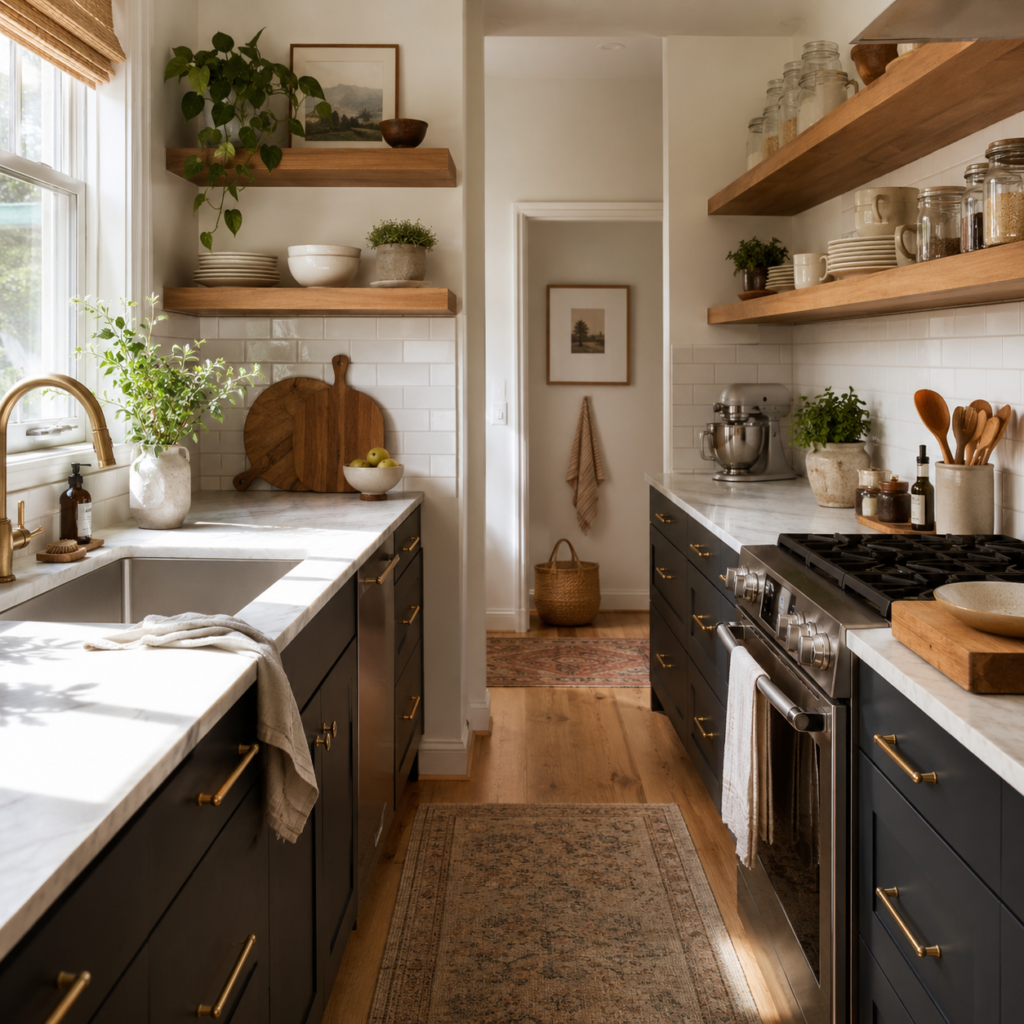
Galley kitchens can feel surprisingly cozy and efficient when designed well. Two parallel counters create a smooth cooking path, and open shelving helps the room feel less boxed in. The space feels bright and practical with stacked dishes, clear jars, warm brass hardware, and creamy wall colors reflecting natural light.
To keep this layout functional, avoid deep shelves that crowd your headspace. Stick with everyday dishes and simple decor instead of overfilling shelves. I always recommend this when someone wants a change without starting over because removing upper cabinets is often cheaper than replacing everything. Expect open shelving materials to cost about $50 to $300 depending on the wood and hardware you choose.
4. Design Separate Prep and Cooking Zones
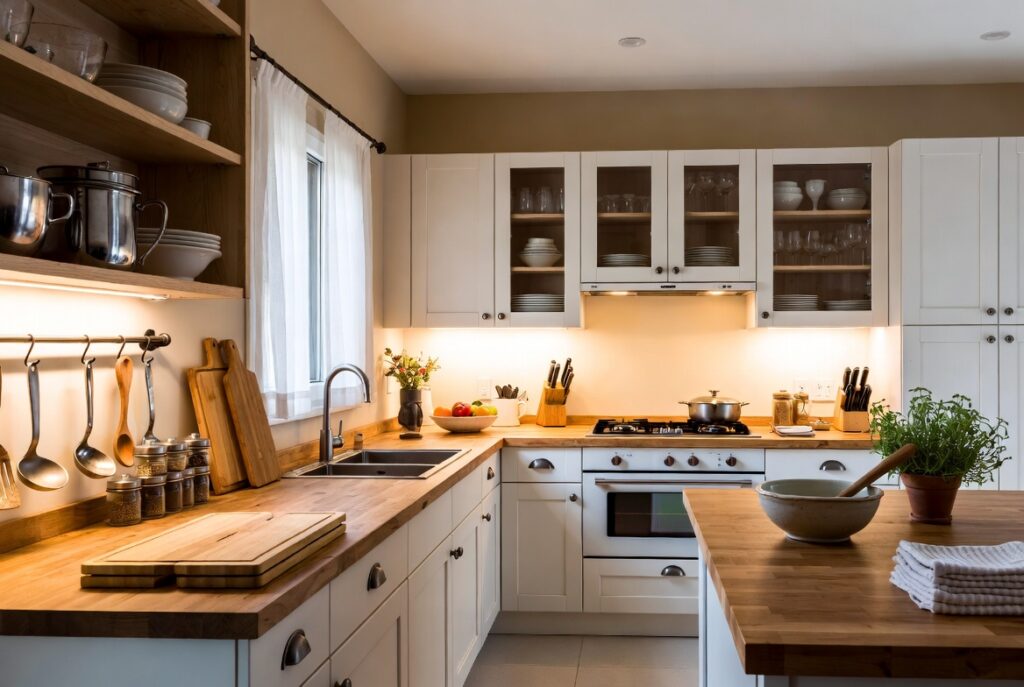
A kitchen works better when every area has a purpose. Separate prep and cooking zones help the room feel calmer during busy mornings or family dinners. Picture a clean prep counter with wooden cutting boards and bowls of fresh vegetables while the cooking area stays focused around the stove with oils, spices, and utensils within easy reach.
You can recreate this setup by grouping tools where they’re used most. Store knives, mixing bowls, and prep tools near your chopping area. Keep pots and cooking utensils near the stove. Even a small kitchen can benefit from zoning. In my experience, the biggest mistake here is storing items based on empty space instead of daily habits. Drawer organizers and shelf risers usually cost between $15 and $60 and can make a huge difference.
5. Try an L-Shaped Kitchen Layout for Open Flow
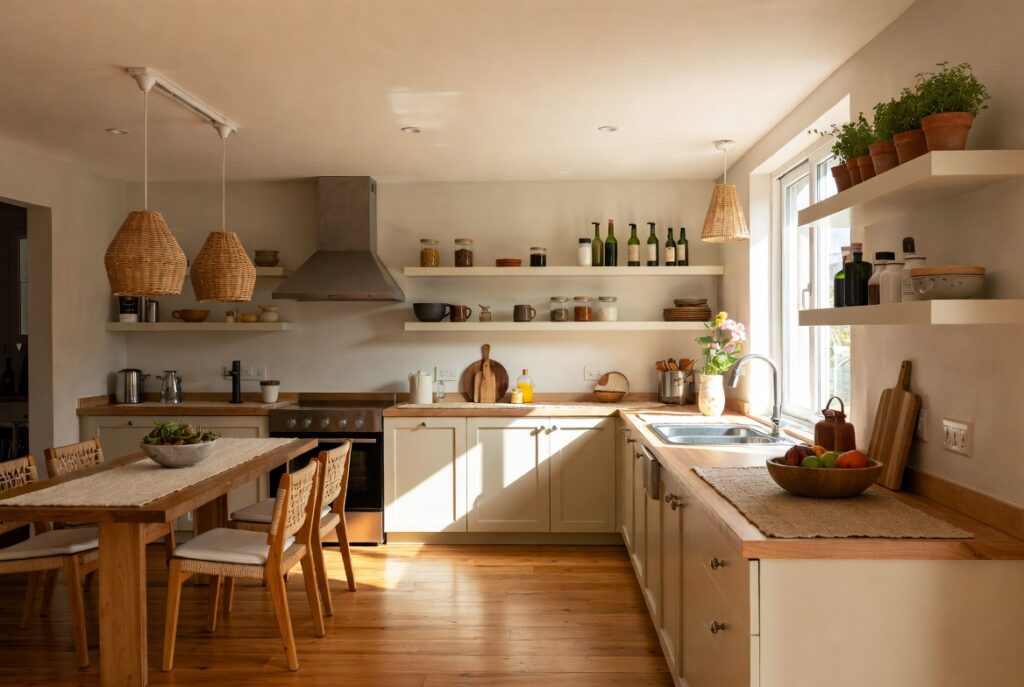
L-shaped kitchens naturally create better movement because they keep corners open and walking paths clear. This layout feels relaxed and inviting, especially in homes where the kitchen connects to the dining or living area. Warm wood floors, soft pendant lights, and textured runners help the space feel connected instead of separated.
Keep taller cabinets on one side so the room stays visually open. You can add floating shelves or lighter paint colors near the corner to prevent the space from feeling heavy. Smaller L-shaped layouts often work beautifully with compact dining nooks nearby. Depending on cabinet updates and counters, this setup can range from $1,500 to $8,000. Avoid placing bulky furniture near the kitchen entrance.
6. Add Floor-to-Ceiling Pantry Storage
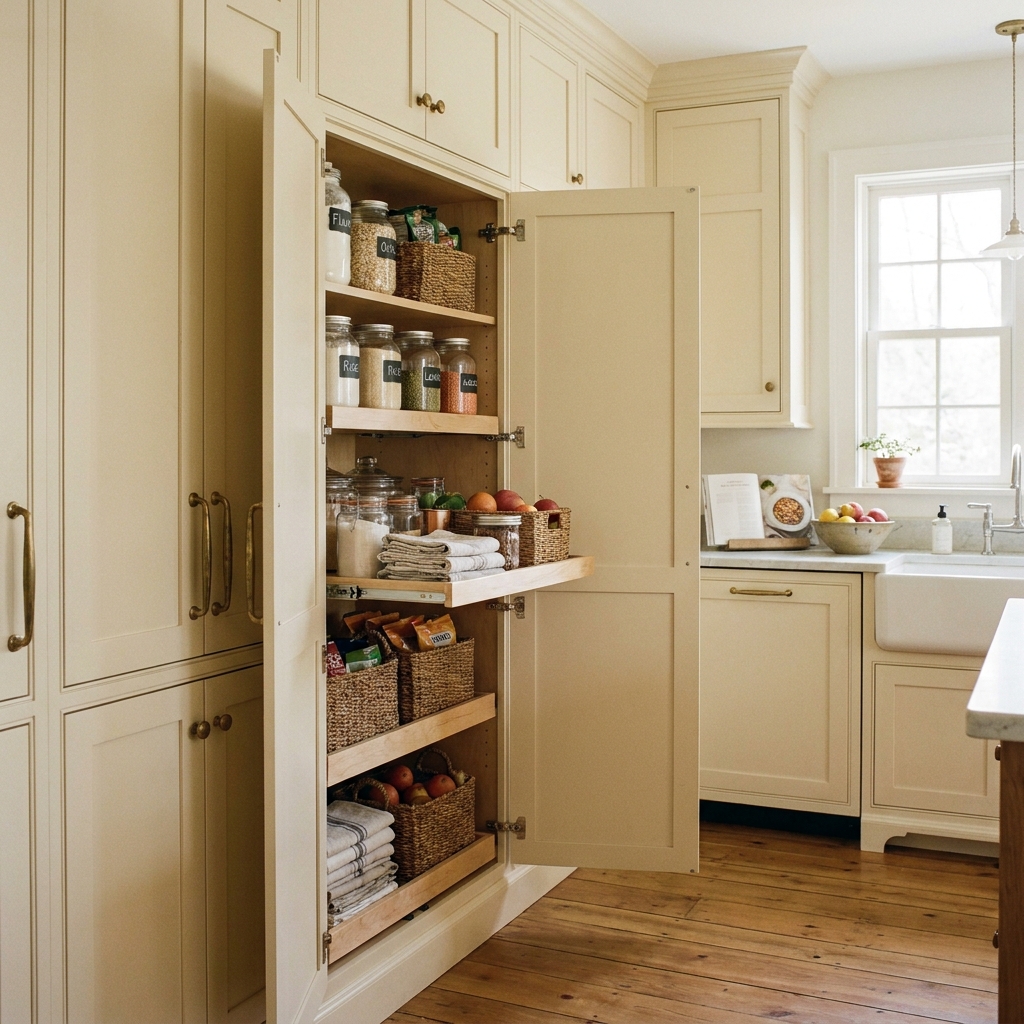
A cluttered kitchen instantly feels harder to use. Tall pantry storage creates cleaner counters and smoother movement because everything has a home. Visually, it also makes the kitchen feel more custom and organized. Picture soft cream cabinets stretching to the ceiling with woven baskets, labeled jars, and neatly stacked pantry staples hidden behind closed doors.
If possible, use pull-out shelves so items in the back stay accessible. A lot of people forget about vertical storage, but it’s one of the smartest ways to improve function in smaller kitchens. You can even add affordable pantry cabinets from home improvement stores for around $200 to $900. Avoid overstuffing shelves or using bins without labels.
7. Build a Breakfast Corner Into the Layout
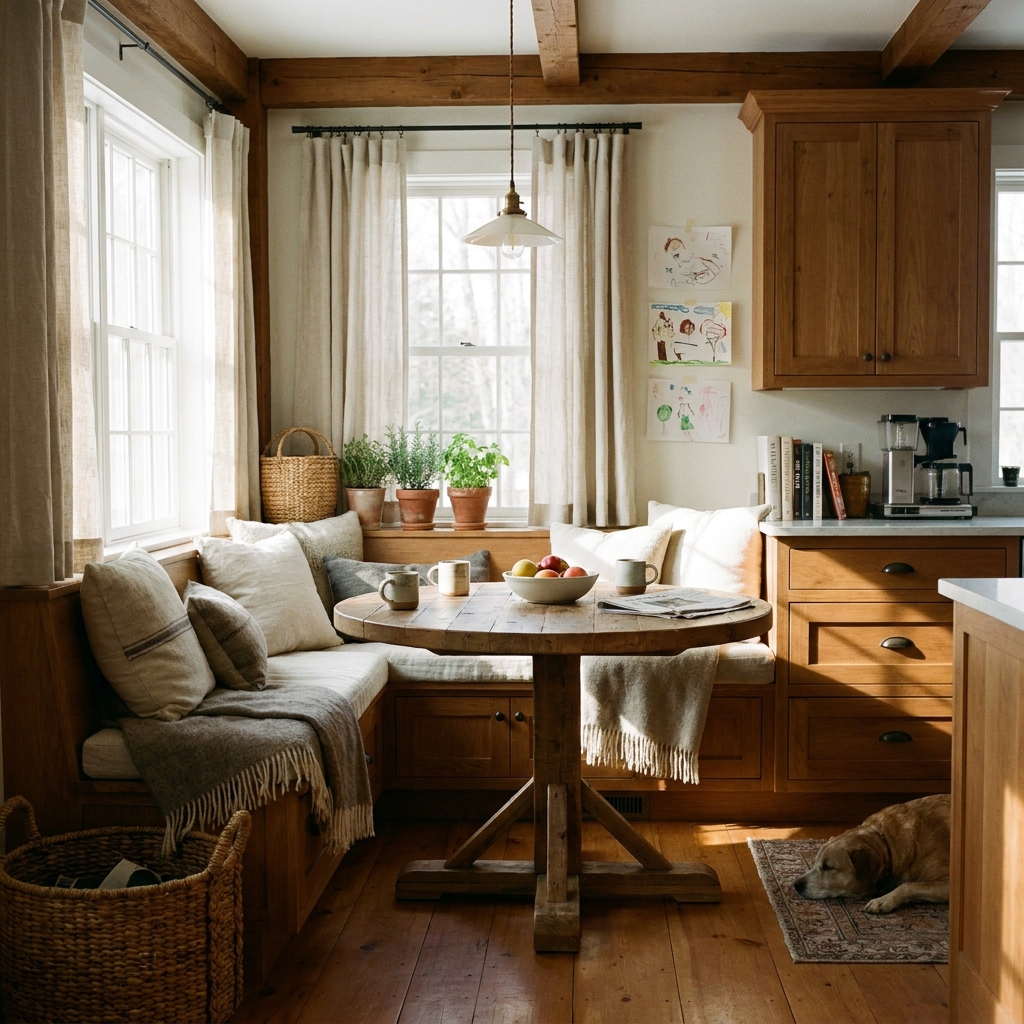
A breakfast nook can make your kitchen feel more welcoming and practical at the same time. Built-in benches soften the room and create a cozy place for coffee, homework, or casual dinners. With layered cushions, warm wood finishes, and soft morning light, the space feels lived in instead of overly formal.
You don’t need a huge kitchen to make this work. Even a small corner can hold a compact round table and bench seating. Storage benches are especially useful for hiding linens or seasonal dishes. I personally love this setup in family kitchens because it naturally brings people together without blocking the cooking area. A simple breakfast nook setup can cost anywhere from $250 to $2,000 depending on materials.
8. Use Double Entry Paths in Larger Kitchens
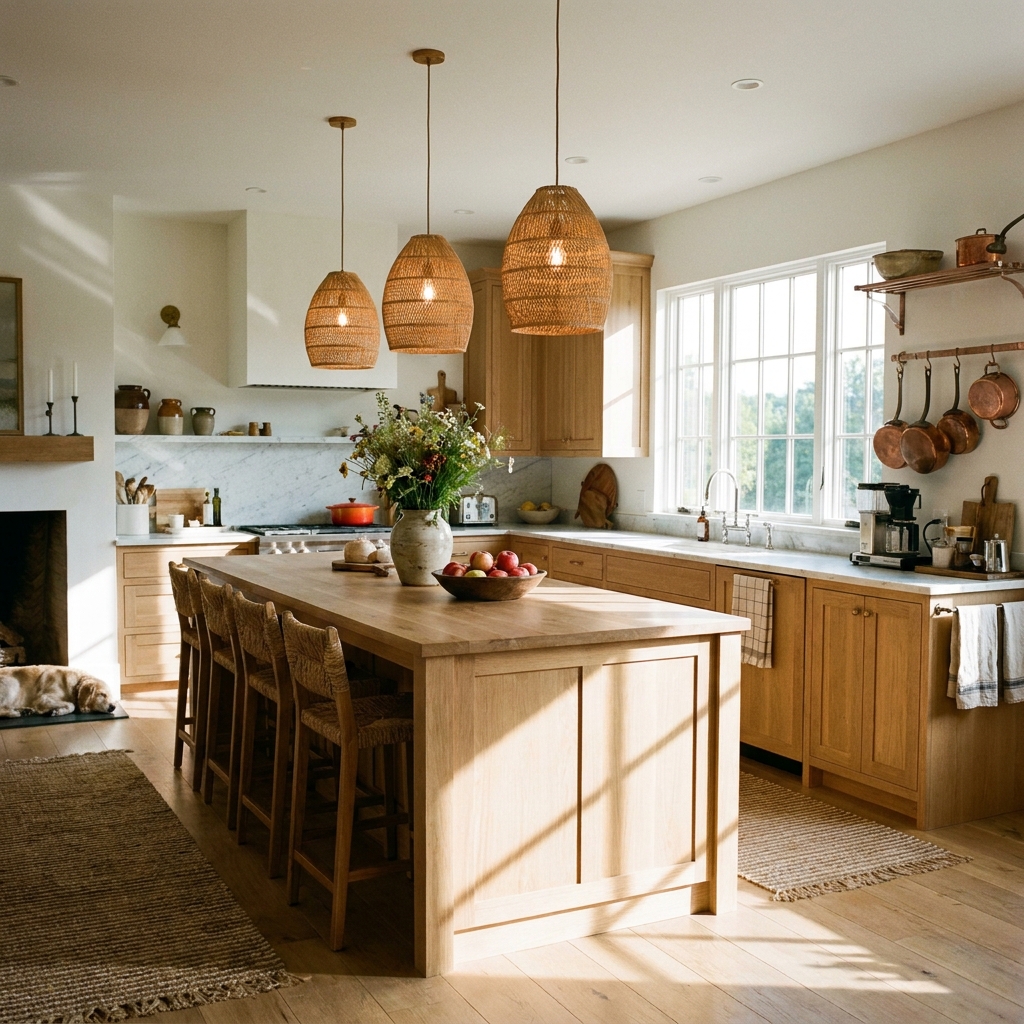
Large kitchens sometimes feel awkward because too many people cross through the same area. Double entry paths solve this by creating smoother traffic flow. The room feels open, breathable, and easier to move around during busy moments. Wide walkways paired with soft lighting and uncluttered counters make the entire kitchen feel calmer.
If you’re remodeling, consider adding two clear pathways around the island instead of one tight route. This works especially well in homes where the kitchen connects to outdoor spaces or dining rooms. In my experience, the biggest mistake here is squeezing oversized furniture into already busy layouts. Maintaining at least 42 inches of walkway space helps the kitchen feel functional instead of cramped.
9. Place Appliances Along One Wall
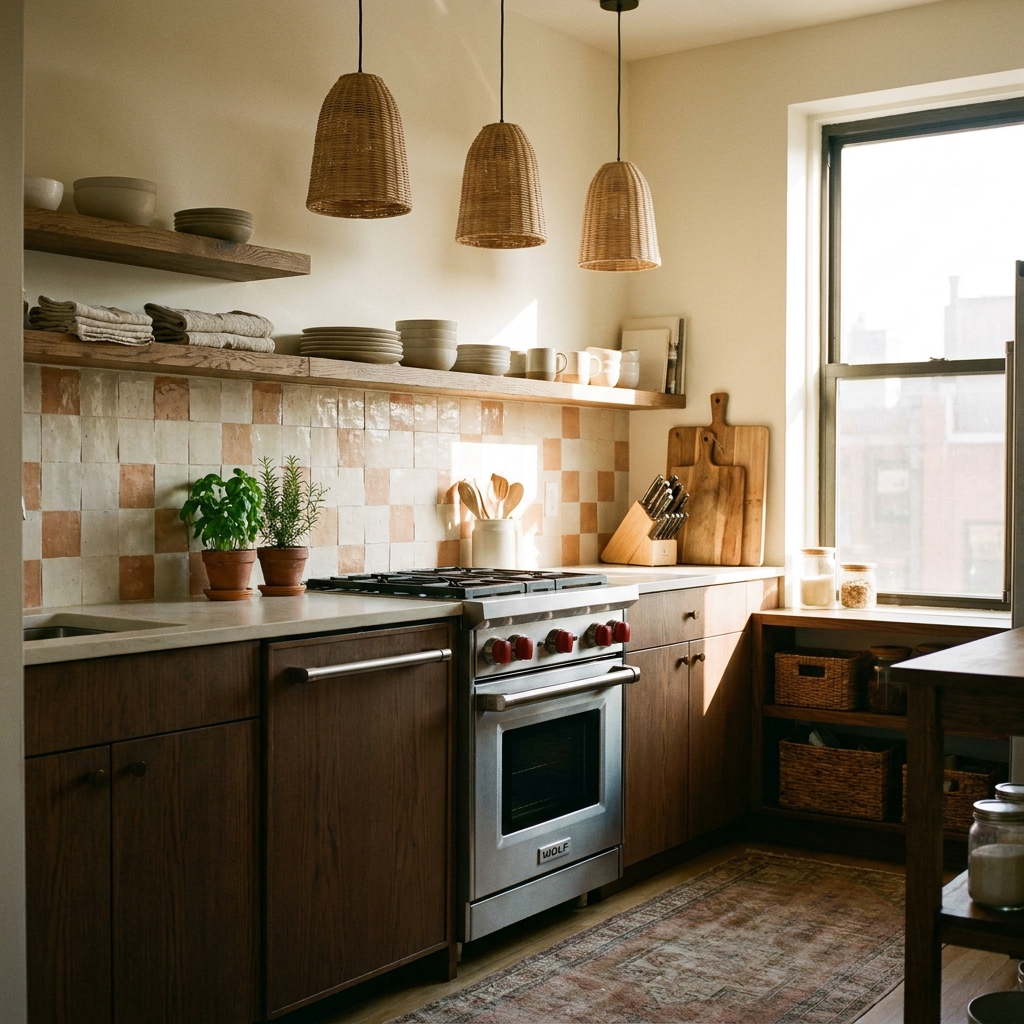
Keeping major appliances on one wall creates a surprisingly smooth workflow in smaller kitchens. The space feels simpler, cleaner, and less chaotic because everything lines up naturally. Paired with floating shelves and warm textured finishes, this layout can feel modern without becoming cold.
This setup works especially well in apartments and narrow homes. Keep your fridge, stove, and sink aligned while using the opposite wall for storage or dining. A lot of people skip proper spacing between appliances, but even a few inches help doors open comfortably. Budget-friendly updates like matching hardware or peel-and-stick backsplash tiles can refresh the look for around $50 to $300.
10. Include a Hidden Appliance Garage
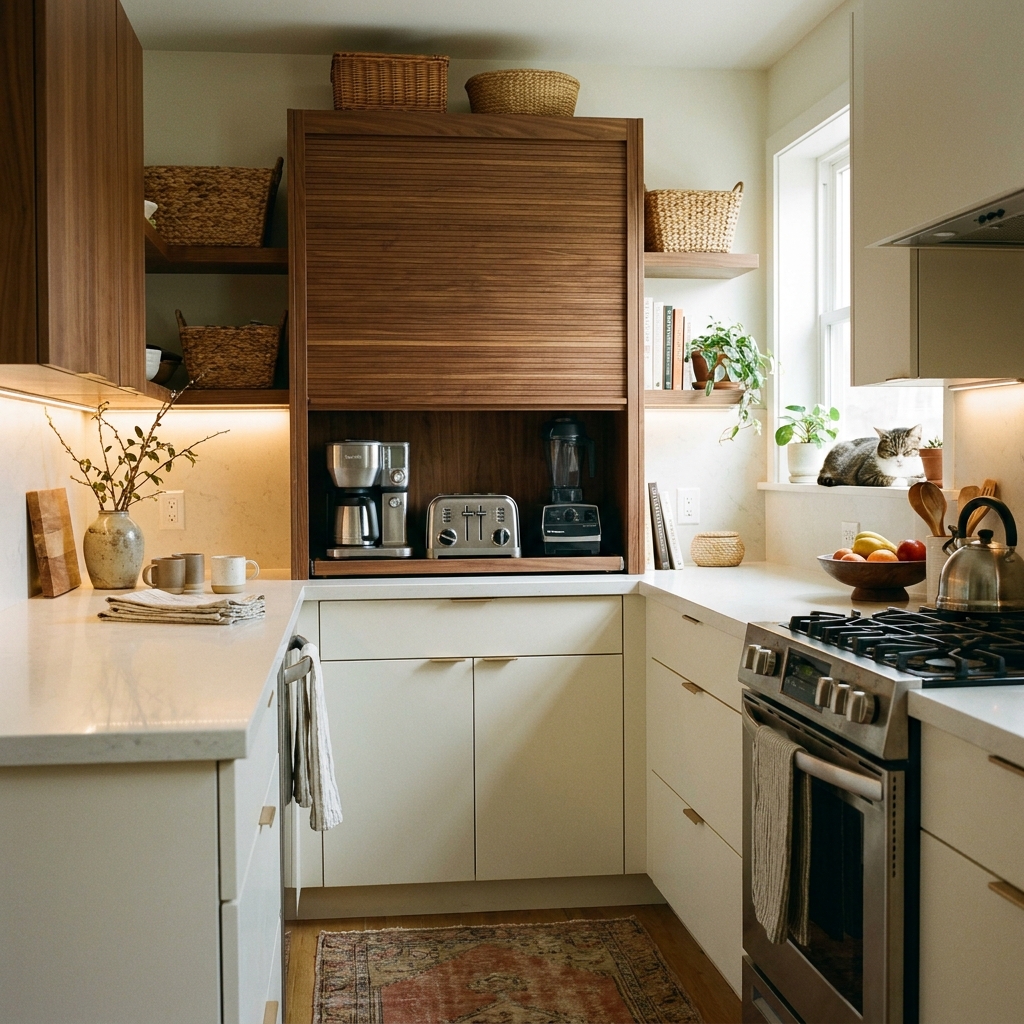
Counters instantly feel calmer when everyday appliances are tucked away. Appliance garages hide coffee makers, toasters, and blenders while keeping them easy to access. Visually, the kitchen feels cleaner and more relaxed with uninterrupted counter space, warm wood cabinetry, and soft lighting reflecting off clean surfaces.
You can build a custom cabinet with lift-up doors or use a simple roll-top style. I always recommend this for busy kitchens where small appliances tend to pile up quickly. Keep outlets inside the cabinet for convenience. One mistake people make is creating garages that are too shallow for larger appliances. Depending on materials, expect costs around $100 to $800.
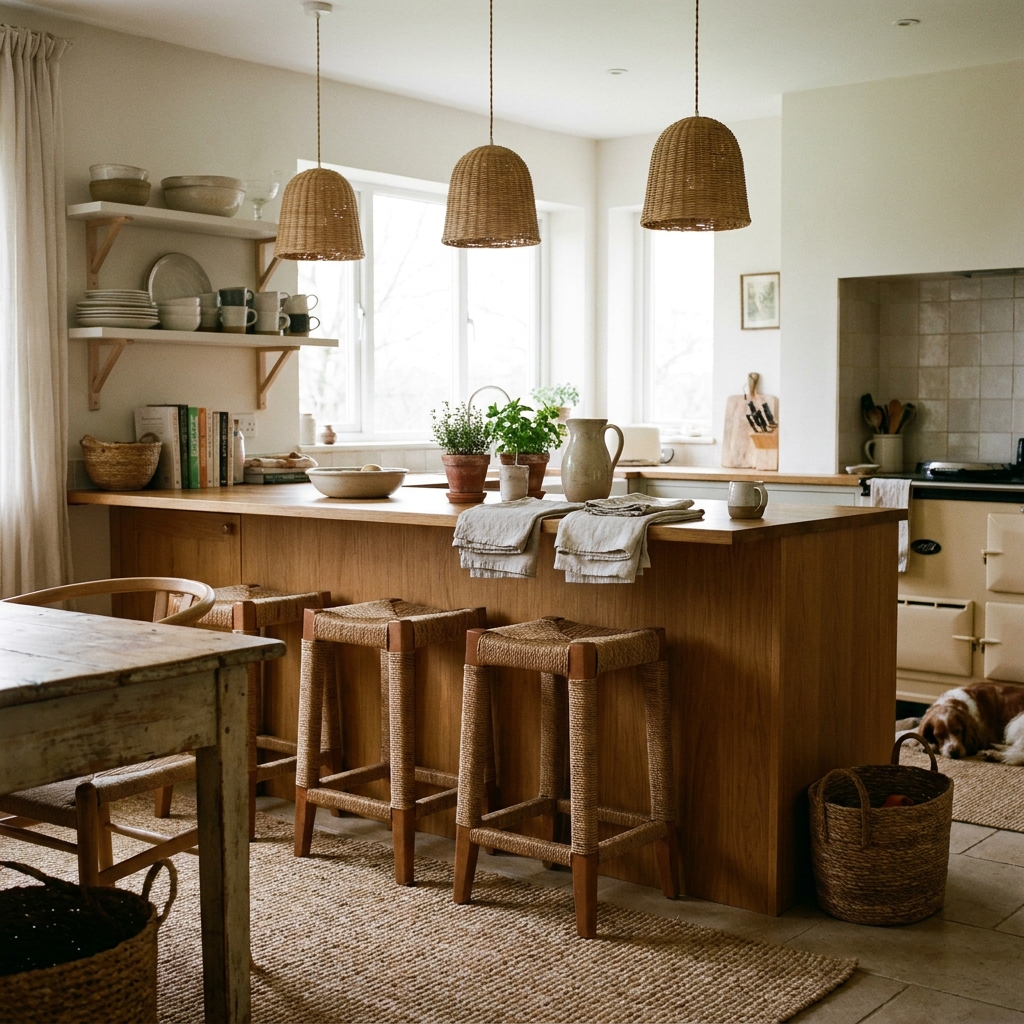
11. Create a Kitchen Layout With Bar Seating
Bar seating helps kitchens feel more social without sacrificing function. A row of simple stools along an island or peninsula creates space for casual meals, conversations, or quick morning coffee. The room feels warm and inviting with textured seating, pendant lights, and layered natural materials.
Choose stools that tuck fully underneath the counter to keep walkways open. Backless stools work especially well in compact kitchens. What I personally love about this idea is how it makes even smaller kitchens feel more connected to the rest of the home. Affordable stools often range from $40 to $150 each, and swapping lighting above the seating area can instantly refresh the mood.
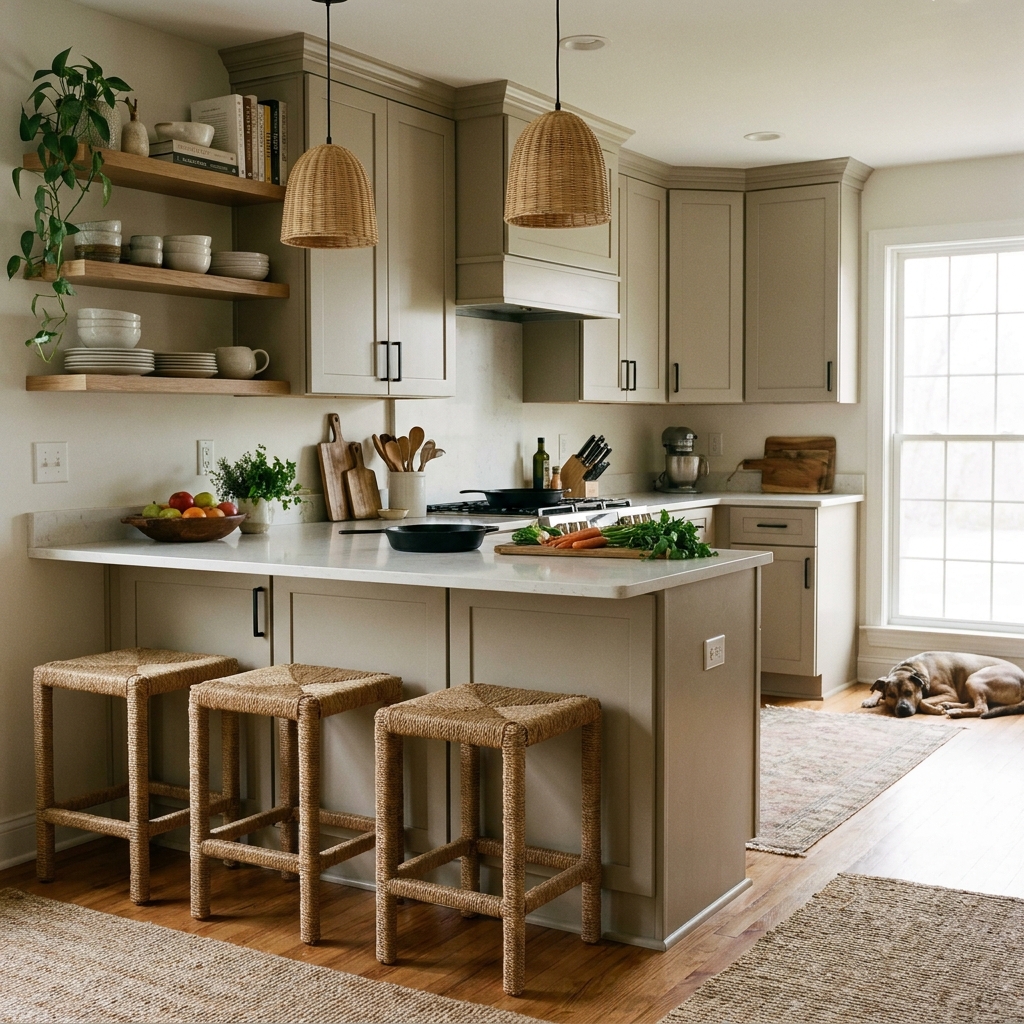
12. Add a Peninsula Instead of a Full Island
Not every kitchen has room for a large island, and that’s where a peninsula works beautifully. Connected to one wall, it creates extra prep space and seating without interrupting movement. The layout feels open but still structured, especially with soft neutral cabinetry and layered textures like wood, linen, and matte finishes.
Peninsulas are especially useful in smaller kitchens because they define the cooking area without crowding the room. Add storage underneath for pots or serving dishes. In my experience, the biggest mistake here is making the peninsula too deep, which can block comfortable movement. Compact peninsula additions can cost anywhere from $500 to $3,000 depending on cabinetry and counters.
13. Keep Corners Functional With Smart Storage
Kitchen corners often become wasted space, but smart storage solutions can completely change that. Lazy Susans, pull-out corner drawers, and angled shelving make kitchens feel easier to use because nothing gets lost in dark cabinet corners. The room feels more organized and less frustrating during daily cooking.
You can install rotating trays for spices, baking supplies, or pots depending on your needs. A lot of people ignore corner cabinets because they seem awkward, but they’re actually some of the best hidden storage spots. Simple organizers usually cost between $20 and $150. Avoid stuffing heavy appliances into deep corners where they’re difficult to reach.
14. Open the Kitchen to the Dining Area
Removing visual barriers between the kitchen and dining space can make the entire home feel brighter and easier to move through. Open layouts create better conversation flow and help smaller homes feel larger. Picture warm wood dining chairs beside soft pendant lighting, layered table linens, and a kitchen that naturally blends into the rest of the space.
You don’t always need to knock down walls to get this look. Wider doorways, matching flooring, or consistent paint colors can visually connect both areas. I always recommend adding similar textures in both spaces so the transition feels natural. Smaller cosmetic updates may cost around $200 to $1,500 compared to full renovations.
15. Add Mobile Storage for Flexible Function
Mobile storage pieces help kitchens adapt to changing needs. A rolling cart or movable butcher block creates extra prep space when cooking and can easily shift aside afterward. The kitchen feels more relaxed and flexible instead of crowded with permanent furniture.
Choose carts with shelves, drawers, or hooks for added function. Soft wood finishes and woven baskets help mobile pieces blend naturally with the rest of the kitchen. What I personally love about this idea is how renter-friendly it is. You can improve function without making permanent changes. Affordable rolling carts usually cost between $60 and $250. Avoid oversized carts that block pathways when not in use.
Conclusion
Improving your kitchen doesn’t always mean starting from scratch or spending thousands on custom renovations. Sometimes the biggest difference comes from better movement, smarter storage, and layouts that actually support your daily routine. These kitchen layout ideas that improve flow and function are meant to help your space feel easier to use, more comfortable to live in, and a little more calming during busy days.
Start with one or two changes that fit your budget and your current kitchen setup. Maybe that means adding a rolling cart, clearing your work triangle, or finally using those awkward corner cabinets more efficiently. Small updates can create a surprisingly big shift in how your kitchen feels.
I always recommend focusing on function first because once a kitchen works better, it naturally becomes more enjoyable to style and spend time in. Cozy interior inspiration and Pinterest-worthy home styling should still feel practical for real life.
Which idea would you try first? I’d love to hear what you’re planning.
FAQs
What is the most efficient kitchen layout?
The most efficient kitchen layout usually depends on the size of your space, but work triangle layouts are often considered the easiest to use. Keeping the sink, stove, and refrigerator within close reach reduces unnecessary movement. Galley kitchens also work well because everything stays accessible. The key is creating clear walkways and organized zones.
How much space should be around a kitchen island?
Most designers recommend leaving at least 36 to 42 inches of space around a kitchen island. This allows cabinet doors and appliances to open comfortably while keeping walking paths clear. Larger kitchens may benefit from even wider spacing. Tight walkways are one of the biggest reasons kitchens feel frustrating to use.
Are open kitchen layouts still popular?
Yes, open kitchen layouts are still very popular because they help homes feel brighter and more connected. They work especially well for families or people who entertain often. Even smaller changes like widening doorways or matching flooring can create a more open feeling without removing walls.
What kitchen layout works best for small spaces?
Galley kitchens, one-wall kitchens, and L-shaped layouts often work best in smaller homes or apartments. These designs keep movement simple while maximizing storage and counter space. Adding vertical storage and mobile furniture can also make compact kitchens feel more functional.
How can I improve kitchen flow on a budget?
You can improve kitchen flow without a full renovation by reorganizing storage, clearing counters, adding rolling carts, or creating better prep zones. Small changes like moving furniture or installing shelf organizers often make a noticeable difference. Budget-friendly updates can still create a cozy and functional kitchen that feels easier to use every day