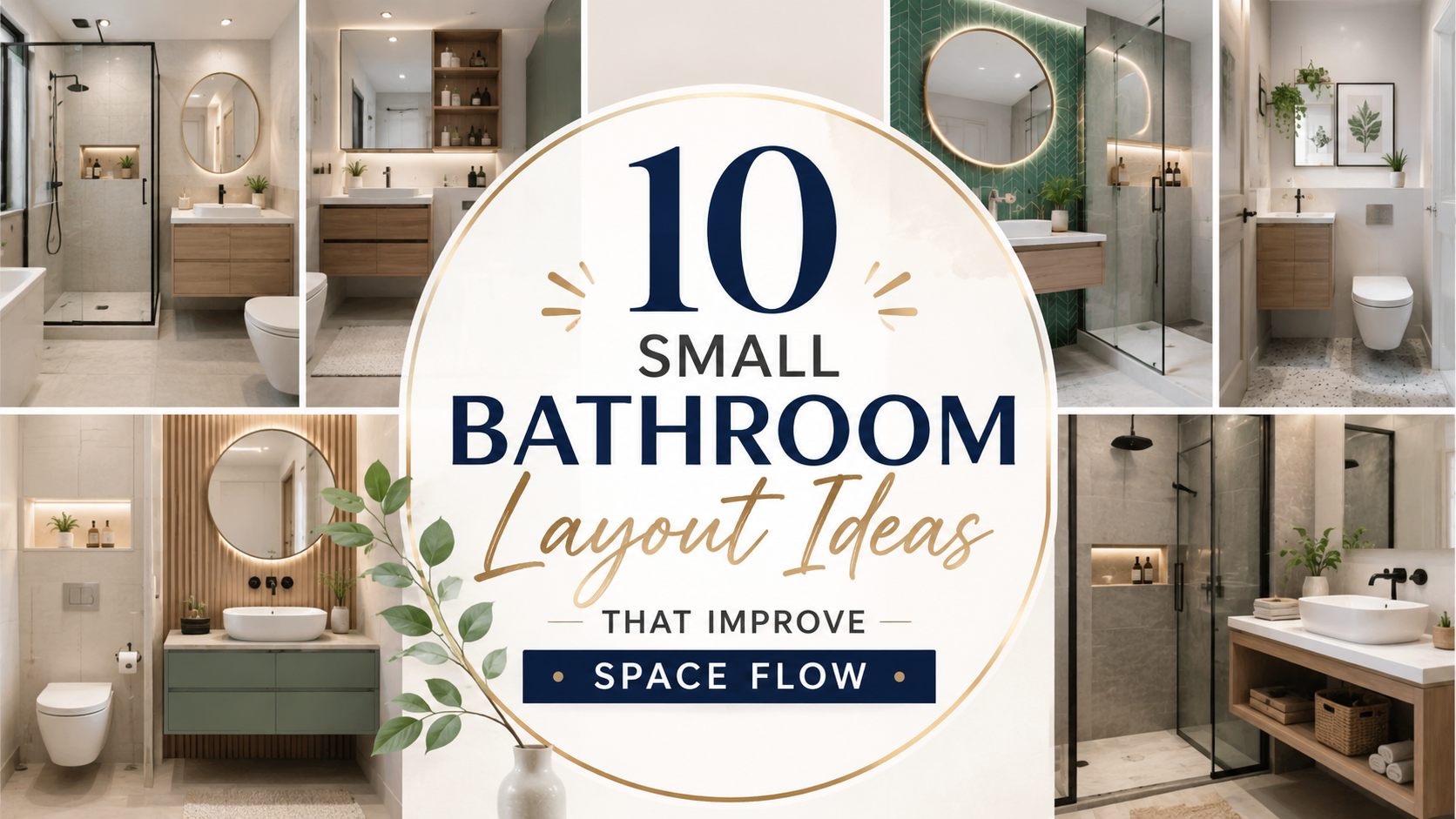
10 Small Bathroom Layout Ideas That Improve Space Flow
Small bathrooms can feel frustrating fast. One crowded corner, a bulky vanity, or awkward storage placement can make the whole room feel tight and hard to use. Even when your bathroom is clean, it may still feel cluttered because the layout simply does not work well.
That is why smart small bathroom layout ideas matter so much. A few thoughtful changes can help your bathroom feel lighter, easier to move through, and far more comfortable without needing a full renovation. In many cases, it is not about having more square footage. It is about using the space better.
In this guide, you will find 10 practical small bathroom layout ideas that improve space flow while still looking warm and stylish. Some ideas are budget-friendly updates you can tackle in a weekend, while others work well if you are planning a remodel. From floating vanities to corner showers and better storage placement, these ideas are designed to help your bathroom feel calmer, cleaner, and more functional every day.
Use a Floating Vanity to Open the Floor
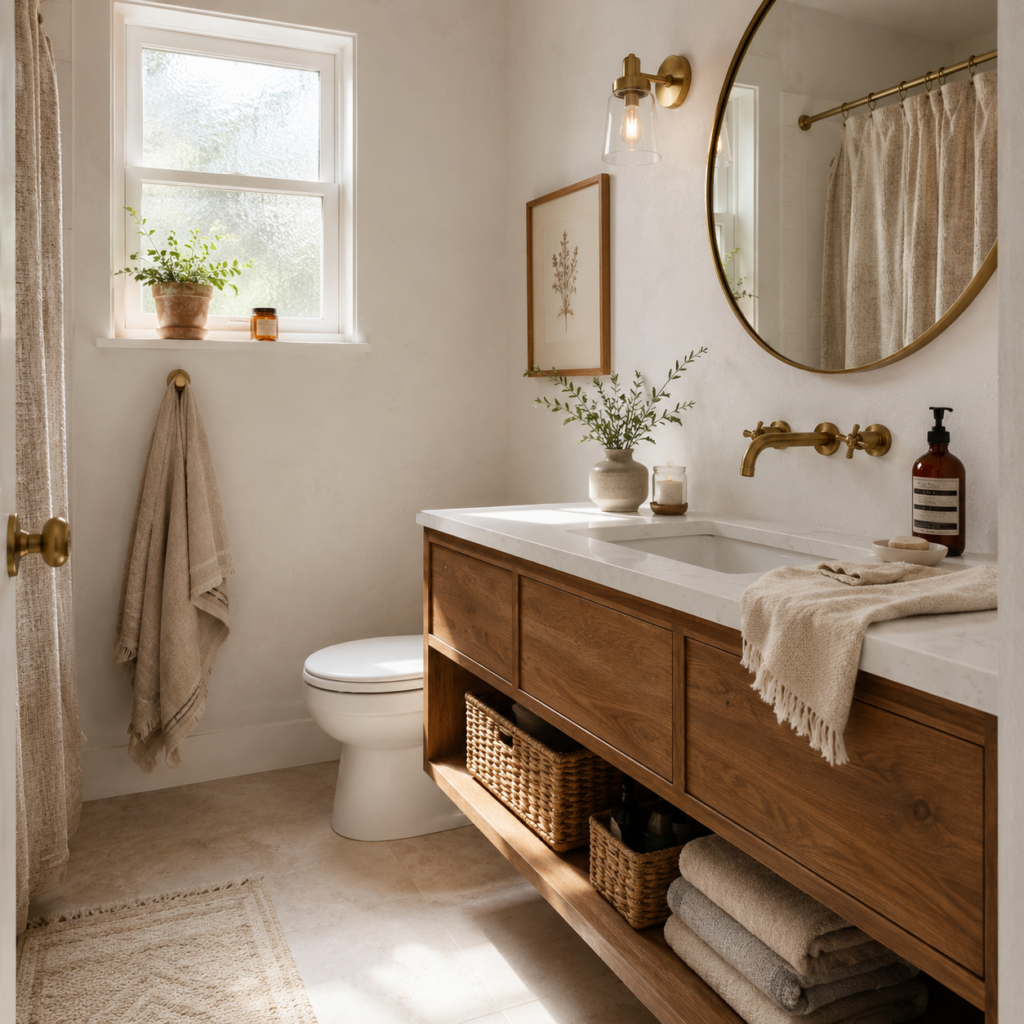
One of the easiest ways to make a small bathroom feel less cramped is by lifting the vanity off the floor. A floating vanity creates visible floor space underneath, which instantly gives the room a lighter and more open feel. Paired with soft wood finishes, warm white walls, and brushed metal hardware, the bathroom starts to feel airy instead of boxed in. I personally love how this layout makes even narrow bathrooms feel easier to walk through.
To recreate this look, choose a floating vanity between 18 and 24 inches deep so it does not overpower the room. Light oak, walnut, or matte white finishes work beautifully in small spaces. Add a woven basket underneath for towels or extra toilet paper. A lot of people skip wall-mounted storage nearby, but adding one slim shelf above the toilet helps balance storage needs. Expect to spend around $120 to $500 depending on materials and sink style.
Try a Corner Shower Instead of a Tub
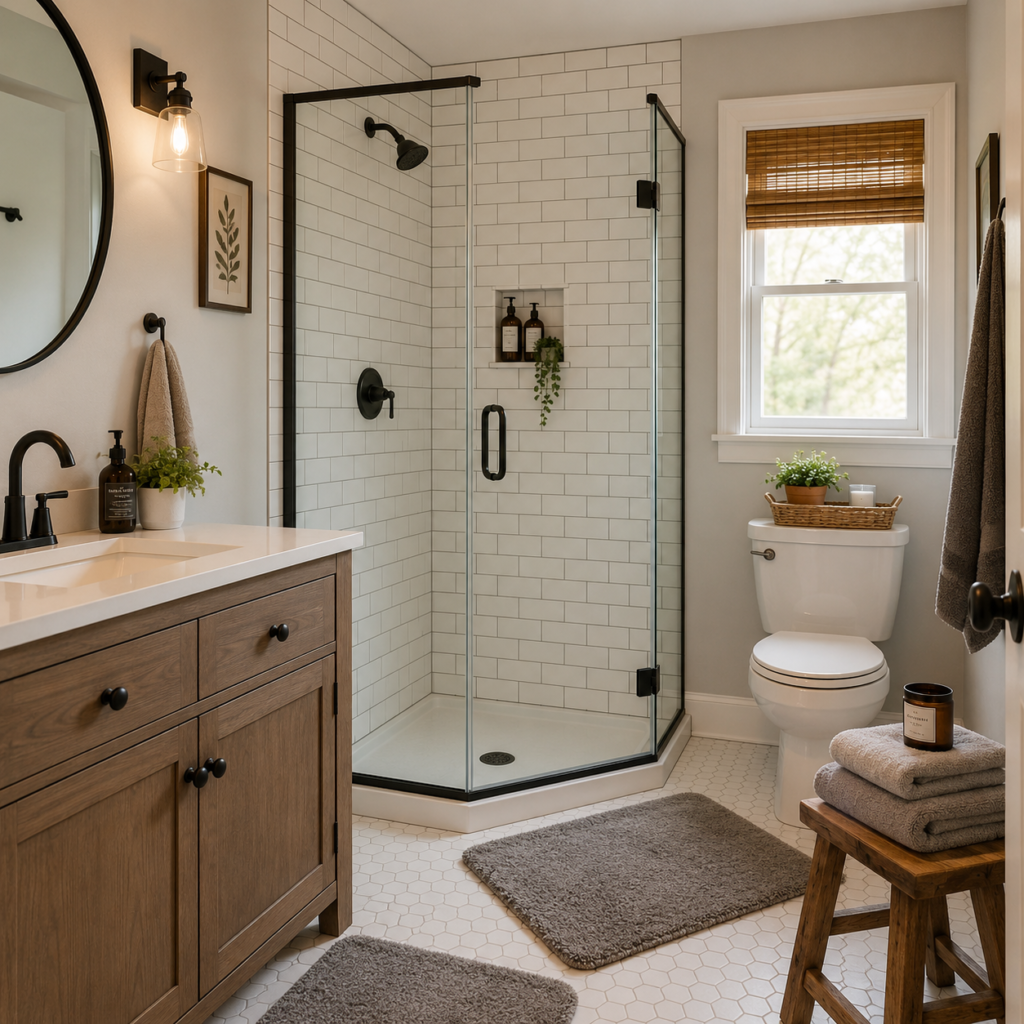
Large tubs often take up more space than necessary in compact bathrooms. Swapping one for a corner shower can completely improve the room’s flow and create more walking space. Clear glass panels help the room feel visually open, while glossy tile reflects light beautifully across the walls. The result feels fresh, clean, and easier to move around in every morning.
A corner shower works especially well in bathrooms under 50 square feet. Choose sliding glass doors instead of swinging ones to save extra space. White subway tile paired with soft gray grout keeps the room bright without looking too plain. In my experience, the biggest mistake here is choosing dark tile in a tiny shower area because it can make the room feel closed in. Budget-friendly corner shower kits typically range from $300 to $900.
Place the Sink Across From the Door
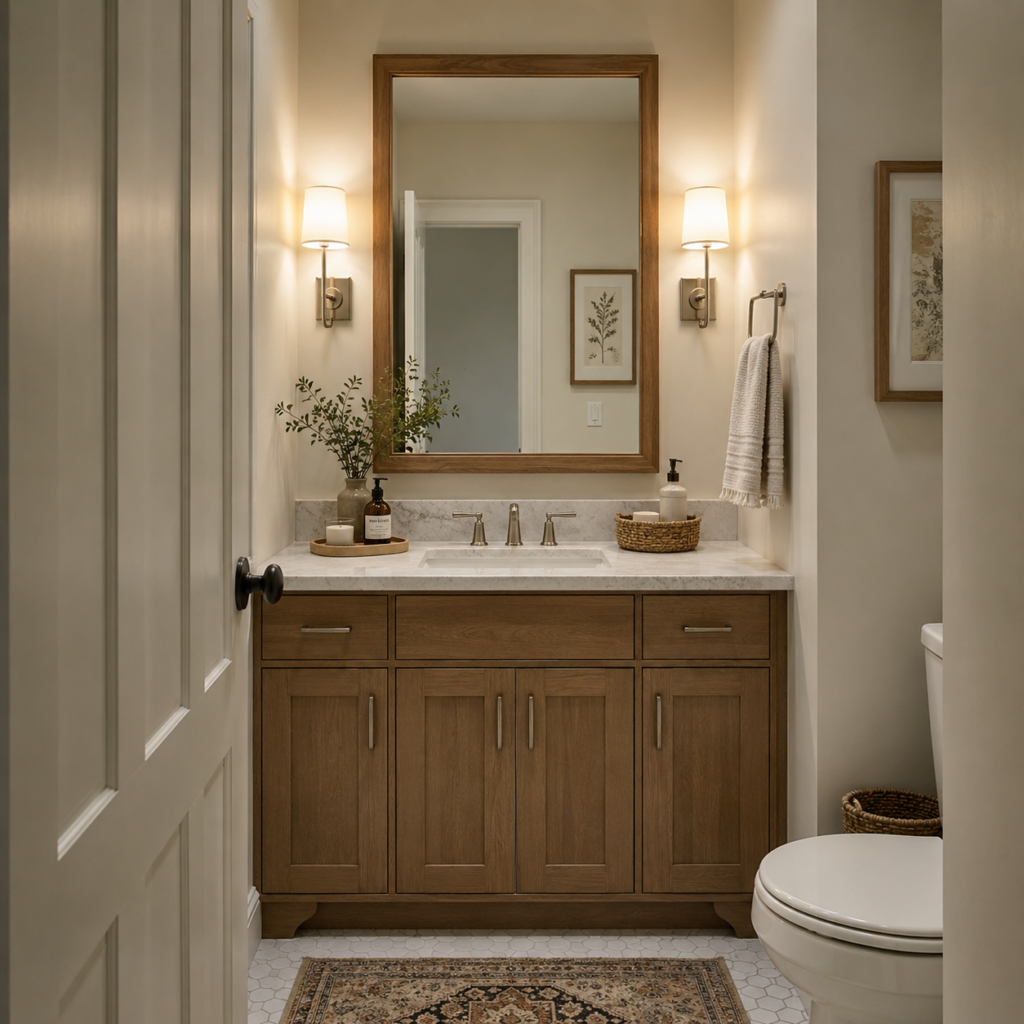
Many small bathroom layout ideas work better simply because they improve sightlines. Placing the sink directly across from the door draws the eye forward and makes the room feel wider as soon as you enter. Clean countertops, soft lighting, and a large mirror create an inviting first impression instead of a crowded one.
For this setup, use a narrow vanity with built-in storage drawers to keep daily products hidden. A mirror slightly wider than the vanity helps reflect light around the room. Stick with soft neutral shades like warm white, sandy beige, or muted sage green for a calm look. I always recommend wall-mounted faucets in tight bathrooms because they free up extra counter space. Depending on materials and plumbing adjustments, this update may cost between $150 and $800.
Add Recessed Shelving Inside the Walls
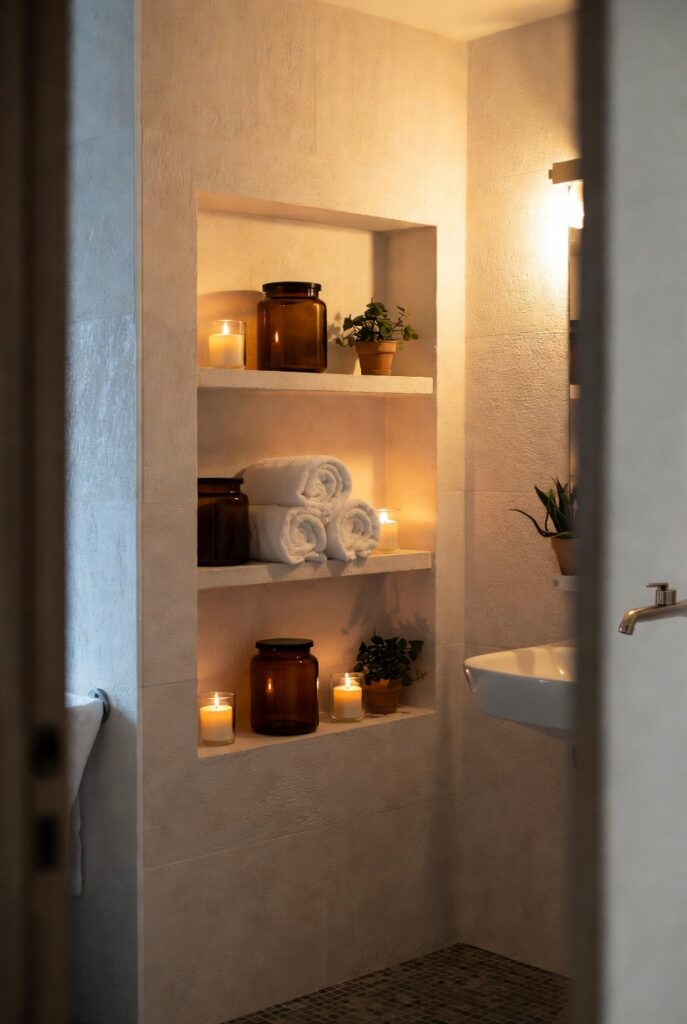
Bulky cabinets can make a small bathroom feel even tighter. Recessed shelves built into the wall keep storage functional without sticking out into the room. The clean lines create a calmer look, especially when styled with neatly folded towels, amber glass bottles, and soft cotton textures.
Install recessed shelves near the shower or above the toilet for extra storage without losing floor space. White tile niches blend beautifully into modern bathrooms, while natural wood trim adds warmth if you prefer a softer style. A lot of people forget lighting here, but adding a small LED strip inside the shelving makes the room feel more custom and expensive. Most recessed shelving projects cost between $50 and $300 depending on tile work and finishes.
Choose Pocket Doors for Better Movement
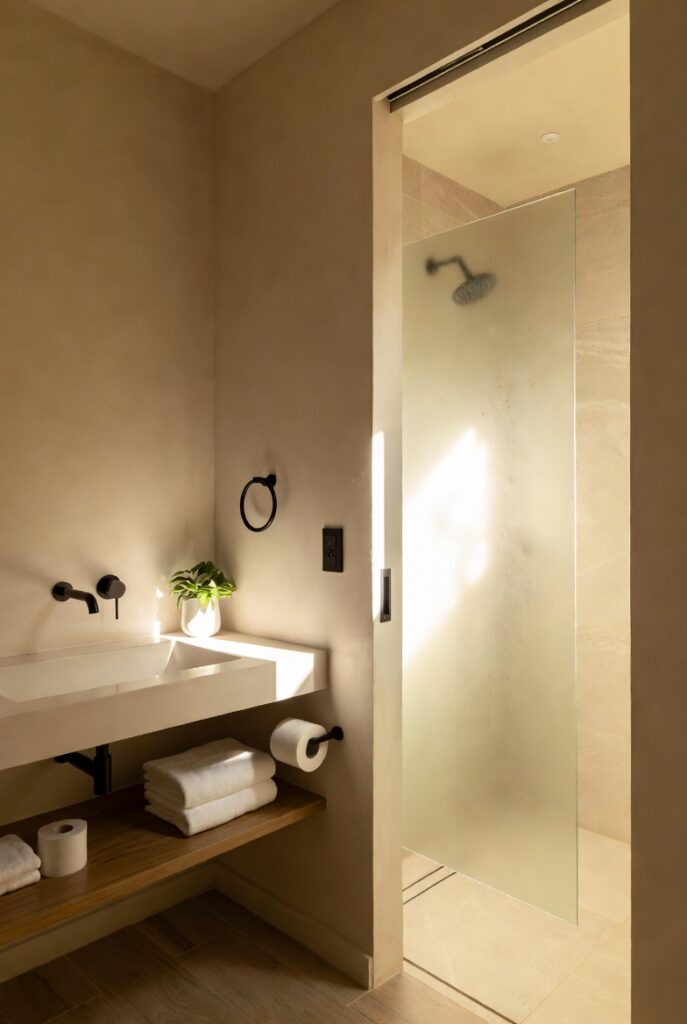
Traditional bathroom doors can eat up valuable floor space when they swing open. Pocket doors slide neatly into the wall, creating better movement and freeing up room for storage, hooks, or a larger vanity. What I personally love about this is how much smoother the entire room feels once there is no door blocking corners or pathways.
Pocket doors work especially well in tiny guest bathrooms and narrow layouts. Frosted glass styles allow natural light to pass through while still keeping privacy. Soft black hardware or brushed brass handles add a subtle modern touch. If installing a true pocket door feels too expensive, a sliding barn-style door can create a similar effect for less. Most options range from $150 to $1,000 depending on installation and materials.
Use Vertical Storage Around the Toilet
In many small bathrooms, the wall above the toilet is completely unused. Adding vertical storage here improves organization without taking up extra floor space. Open wood shelves, slim cabinets, or woven baskets create a layered look that feels functional but still warm and relaxed.
Install shelves high enough to avoid feeling crowded but low enough to reach easily. Light wood, matte white, or soft black finishes pair nicely with modern home decor trends. Keep the shelves simple with rolled towels, glass jars, candles, and small trailing plants. In my experience, overcrowding these shelves is the quickest way to make the bathroom feel messy again. Most vertical storage setups cost around $40 to $200.
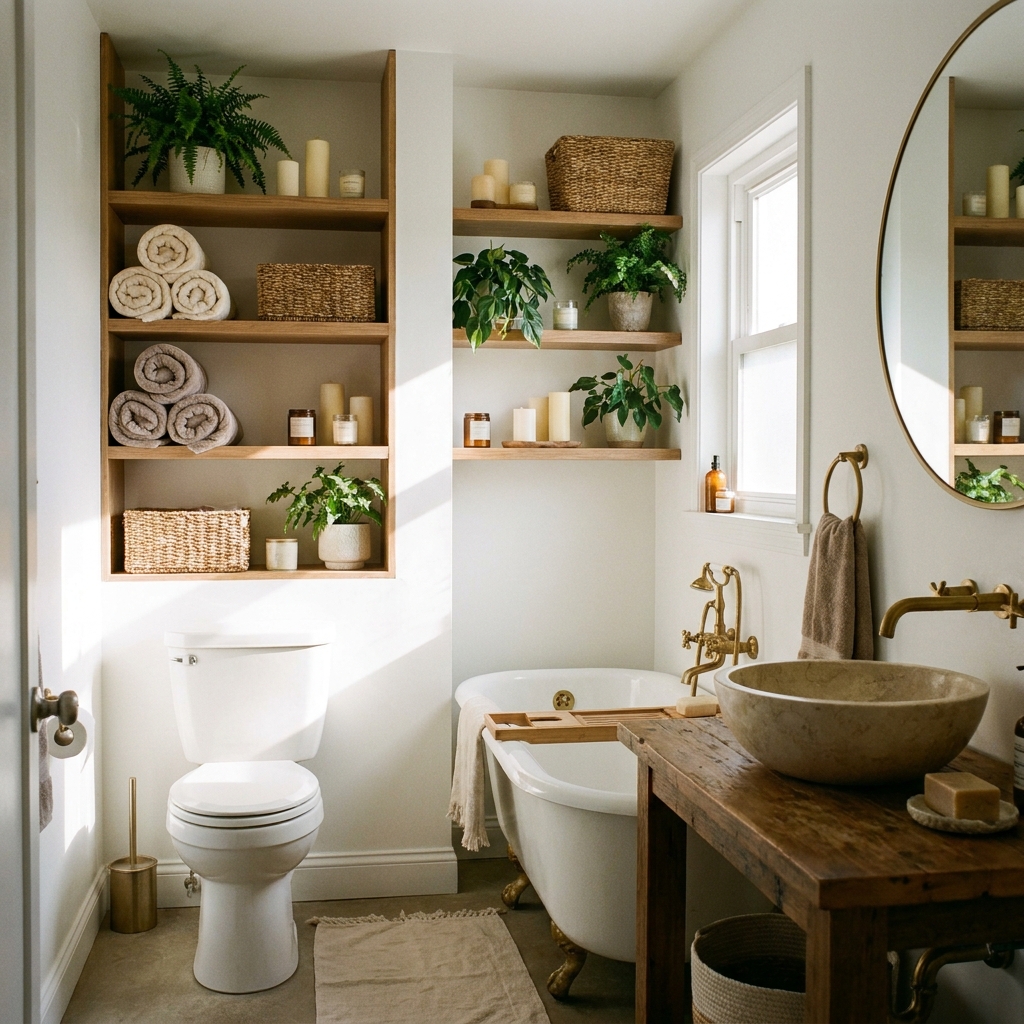
Create Better Flow With Large Floor Tiles
Tiny tiles with busy grout lines can make a bathroom floor feel visually cluttered. Large-format floor tiles create smoother visual flow because there are fewer lines breaking up the space. Soft stone textures, warm beige tones, and subtle matte finishes help the room feel calm and open.
Choose porcelain tiles in light neutral shades for the best effect. Larger tiles around 12×24 inches work especially well in narrow bathrooms. Run the tiles lengthwise to make the room appear longer. A lot of people skip proper grout color selection, but matching the grout closely to the tile creates a cleaner look. This update usually costs between $200 and $1,200 depending on the bathroom size and tile material.
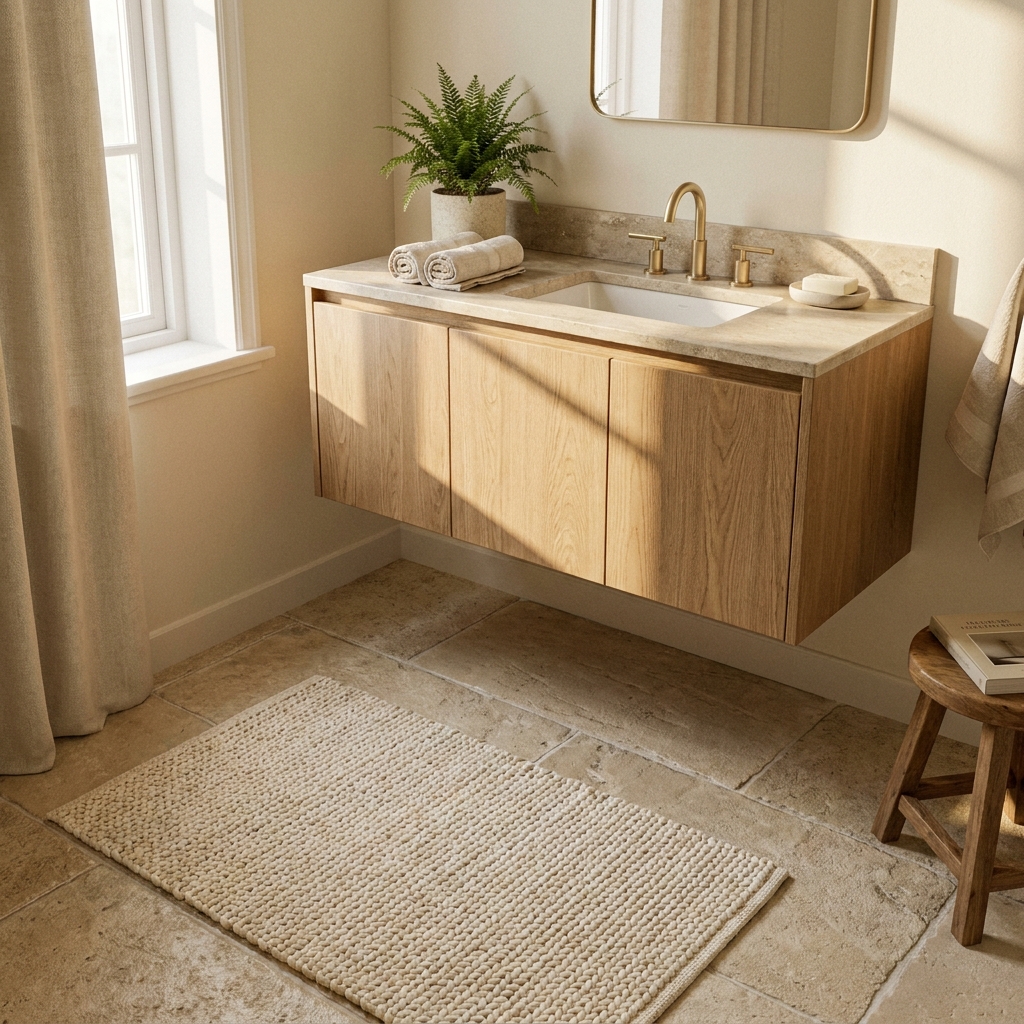
Install a Wall-Mounted Toilet for More Space
Wall-mounted toilets are one of the smartest small space storage and layout solutions for modern bathrooms. Because the tank sits inside the wall, the room instantly feels less crowded. The visible floor space underneath also makes cleaning easier and gives the bathroom a cleaner, more open look.
Pair a wall-mounted toilet with simple tile walls and compact storage for a streamlined design. Soft gray, white, or sandy beige tones keep the room feeling calm. I always recommend adding a small shelf or niche nearby for extra functionality since wall-mounted toilets usually reduce top storage space. Installation costs can range from $400 to $2,000 because plumbing adjustments are often needed.
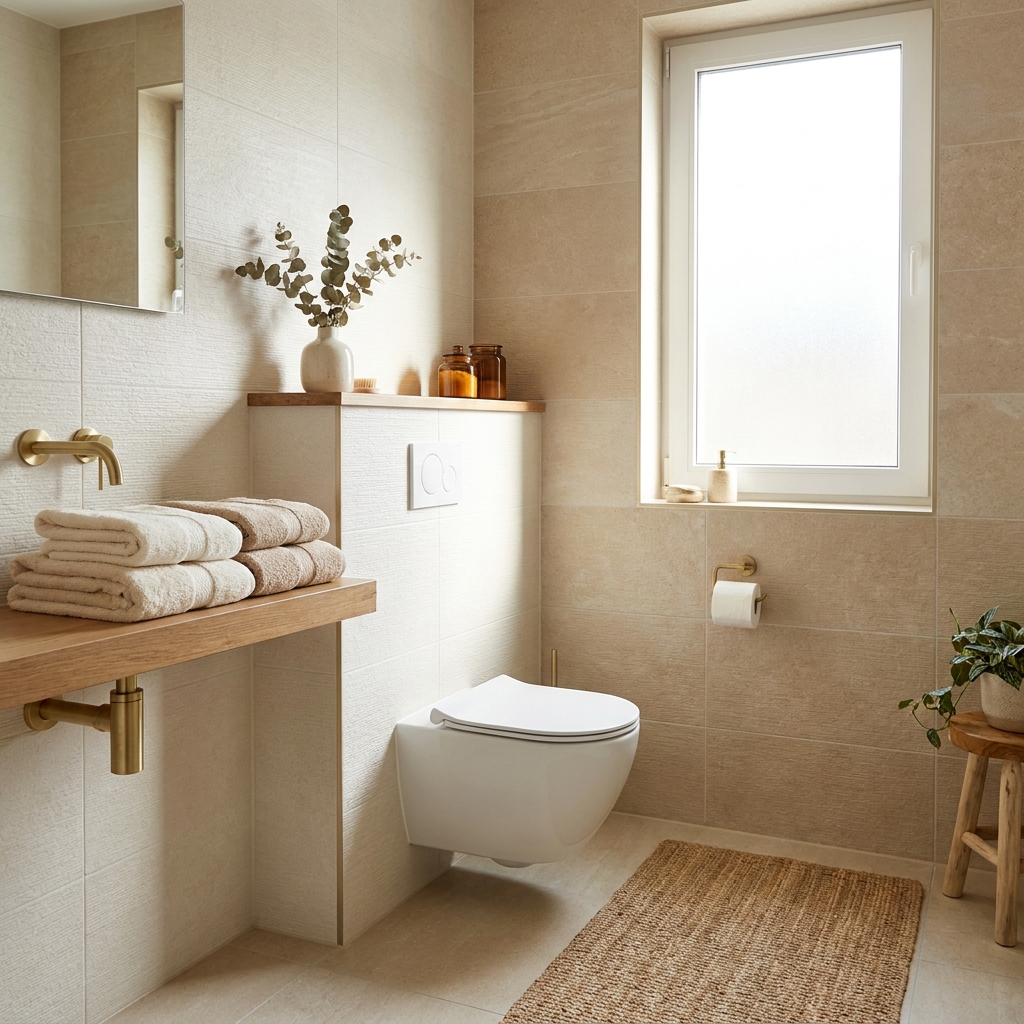
Keep the Layout Light With Glass Dividers
Heavy shower curtains and thick partitions can visually cut a small bathroom in half. Clear glass dividers allow light to move freely across the room, making everything feel more spacious. Glossy surfaces, soft reflections, and clean lines create a calm atmosphere that works beautifully in cozy interior inspiration photos.
Frameless glass panels are especially helpful in walk-in showers. Pair them with light tile and warm wood details for balance. One useful tip is to keep hardware minimal so the room feels less busy. What I personally love about this setup is that it makes small bathrooms feel brighter even during cloudy days. Most glass divider installations cost around $250 to $1,500 depending on custom sizing.
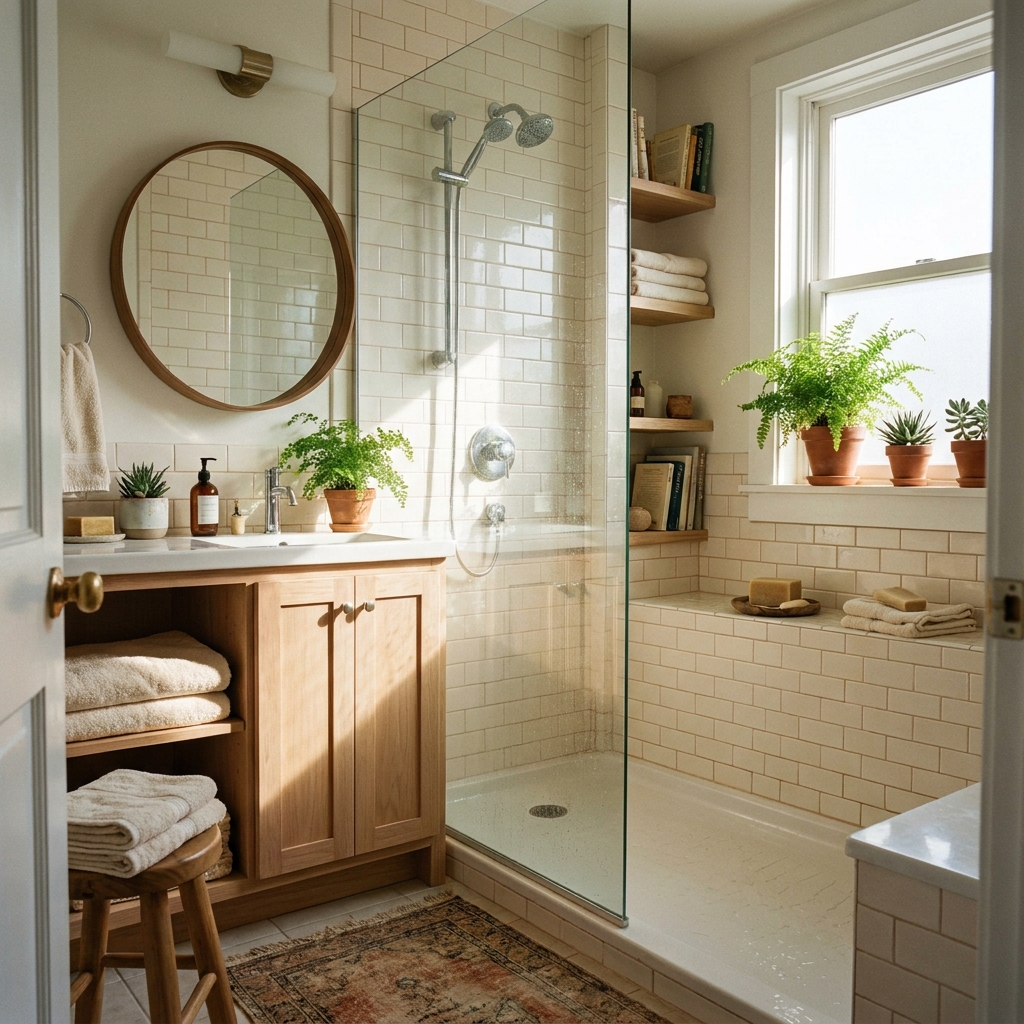
Use One Color Palette Throughout the Bathroom
One simple trick used in many Pinterest-worthy home styling photos is sticking to one consistent color palette. Too many contrasting colors can break up a small bathroom visually and make it feel busier than it really is. Soft whites, sandy beige, muted sage, pale gray, or warm taupe create smoother flow and a calmer atmosphere.
Keep the vanity, tile, shower curtain, rugs, and accessories within the same color family for a more connected look. Layer texture instead of bold color for visual interest. Linen shower curtains, woven baskets, ceramic jars, and soft cotton towels help the room feel warm without cluttering it visually. A lot of people skip texture in neutral bathrooms, but that is what keeps the space from feeling flat. This approach can work on almost any budget, from $30 accessory swaps to larger remodel updates.
Conclusion
Creating a bathroom that feels calm and easy to move through does not always require knocking down walls or spending thousands of dollars. Sometimes the biggest difference comes from smarter placement, lighter finishes, and choosing layouts that make daily routines feel simpler. These small bathroom layout ideas are designed to help your space feel more open, organized, and comfortable without losing warmth or personality.
You do not need to tackle everything at once either. Start with one or two changes that solve your biggest frustration first. Maybe that means adding recessed storage, replacing bulky furniture, or simply sticking to a softer color palette. Small updates often create more impact than people expect.
In my experience, the bathrooms that feel best are the ones that balance function with comfort. They are practical, uncluttered, and still feel personal at the same time.
Which of these small bathroom layout ideas would you try first? I’d love to hear what you’re planning.
FAQs
What layout works best for a very small bathroom?
The best layout usually keeps the walkway clear and avoids bulky furniture. Floating vanities, corner showers, and wall-mounted storage help create more open floor space. Using lighter colors and large mirrors also helps the room feel bigger visually. Try to keep the layout simple instead of squeezing in too many features.
How can I make my small bathroom feel less crowded?
Focus on reducing visual clutter first. Use closed storage, soft neutral colors, and glass dividers instead of heavy curtains. Large floor tiles and floating furniture can also help create smoother visual flow. Good lighting makes a huge difference as well.
Are floating vanities practical for family bathrooms?
Yes, especially if you choose one with built-in drawers or shelves. Floating vanities create extra visible floor space while still providing storage for daily essentials. They are also easier to clean underneath. Just make sure the vanity is securely installed for long-term durability.
What colors work best in small bathroom layouts?
Warm whites, soft beige, muted sage green, pale gray, and sandy tones usually work very well. These shades reflect light better and create a calmer atmosphere. Using one consistent palette throughout the room also helps improve visual flow. Texture matters more than bold color in smaller spaces.
How much does it cost to improve a small bathroom layout?
Simple updates like shelving, paint, or accessories can cost under $100. Mid-range changes such as floating vanities or glass dividers may range from $300 to $1,500. Larger renovations involving plumbing or tile work can cost several thousand dollars. It depends on how much of the layout you want to change.