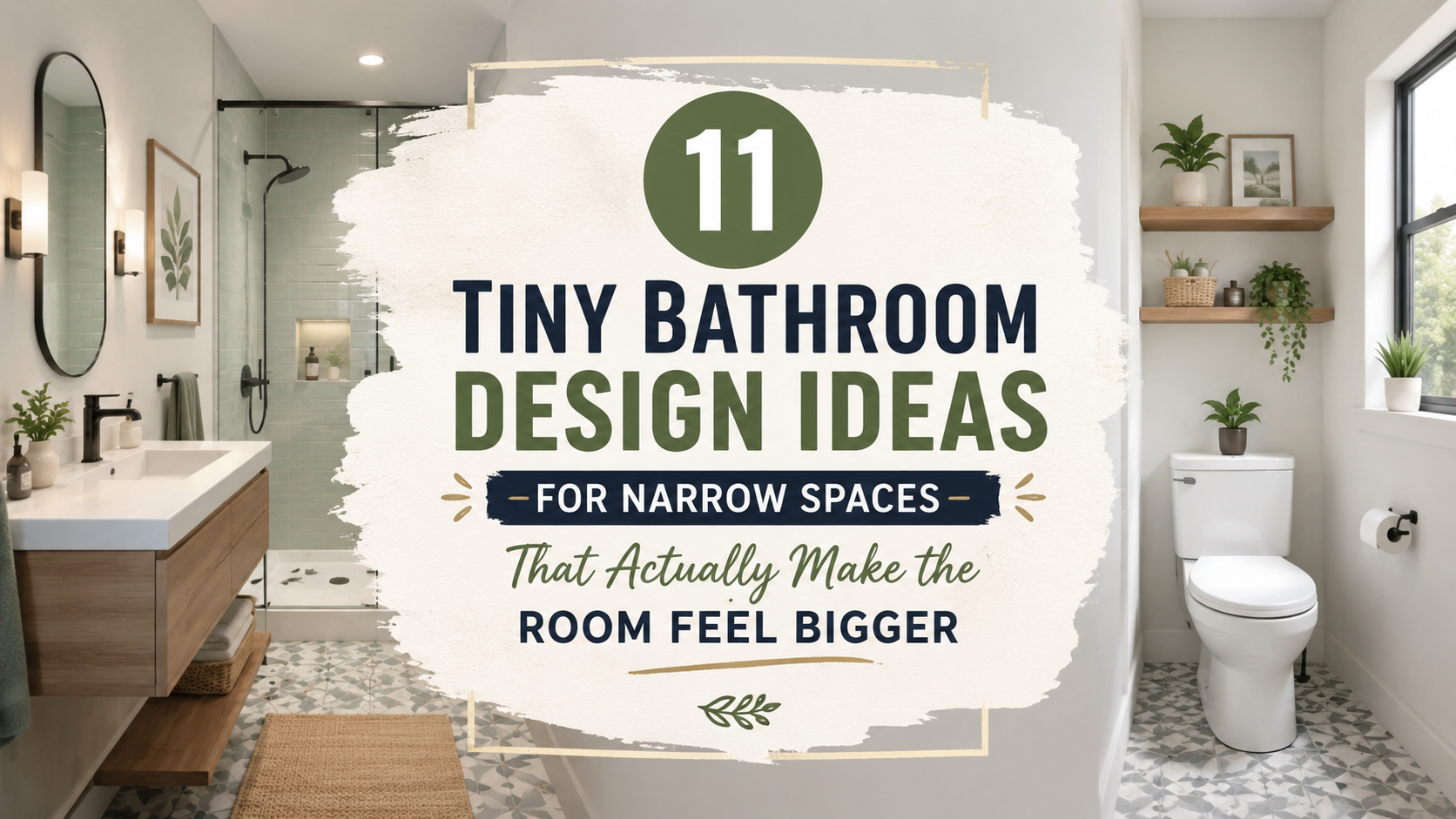
11 Tiny Bathroom Design Ideas for Narrow Spaces That Actually Make the Room Feel Bigger
You know that feeling when your bathroom feels more like a hallway with a sink shoved into it? You bump your elbow reaching for a towel, the door barely clears the vanity, and no matter how much you clean, the space still feels cramped. Tiny bathrooms can be frustrating because every inch matters, especially in narrow layouts where poor design choices make the room feel even tighter.
The good news is you do not need a full renovation to make a skinny bathroom feel brighter, calmer, and way more functional. A few smart layout tweaks, better storage choices, and softer styling details can completely change how the room works day to day. In this post, you’ll find 11 tiny bathroom design ideas for narrow spaces that are realistic, affordable, and actually doable in a real home. No luxury remodel budget required.
Some of these ideas cost less than a dinner out. Others just need better placement and a little editing. Either way, your bathroom can feel bigger than it does right now. Let’s get into it.
Floating Wood Vanities That Open Up Floor Space
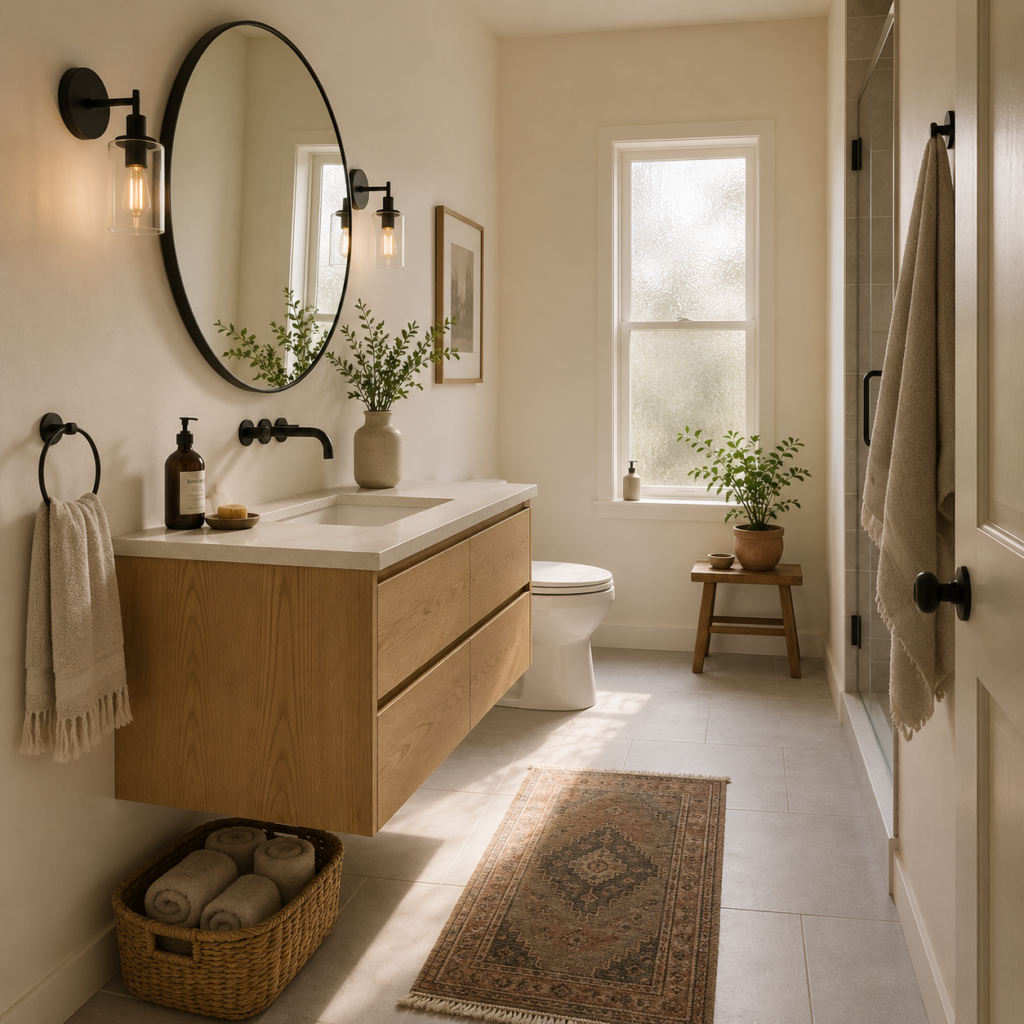
A floating vanity instantly changes how a narrow bathroom feels because you can actually see the floor underneath it. That small visual break matters more than people think. Instead of a bulky cabinet sitting heavy against the wall, the room feels lighter and less boxed in. I always suggest this when someone tells me their bathroom feels claustrophobic even after decluttering.
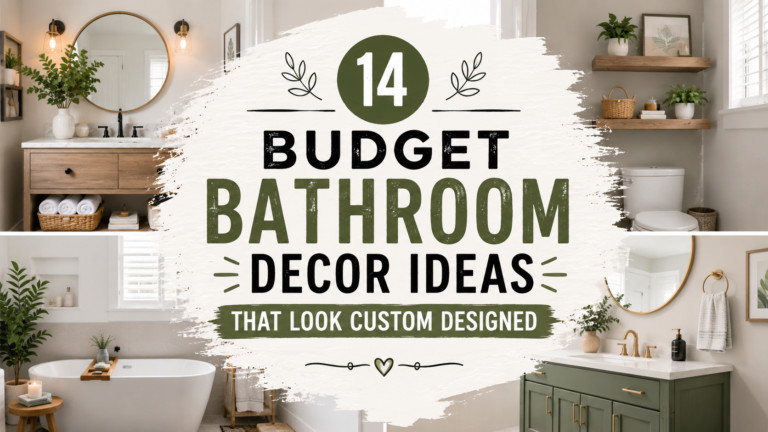
Stick with a vanity around 18 to 22 inches deep so you keep enough walking room. Warm oak or walnut tones soften all the hard bathroom surfaces and stop the room from feeling cold. Pair it with slim black hardware and a simple white countertop to keep things clean. In my experience, the biggest mistake here is choosing a vanity that’s too wide for the wall. Leave at least a few inches on both sides so the room can breathe. Budget-friendly floating vanities start around $150 at IKEA or Home Depot, and you can fake the custom look with peel-and-stick wood panels underneath.
Vertical Tile Lines That Make the Ceiling Feel Taller
When a bathroom is narrow, your eyes need somewhere to travel upward. Vertical tile placement helps stretch the room visually so the ceiling feels higher and the walls feel less tight. What I love about this is how dramatic it looks without needing expensive materials. Even simple subway tile can work if you turn it vertically instead of horizontally.
Choose elongated tiles in soft white, warm beige, muted sage, or pale gray. Run them all the way into the shower if possible so the room feels continuous. A lot of people skip this, but matching grout to the tile color makes the walls feel smoother and less busy. Avoid dark grout in tiny bathrooms unless you want every line to stand out. You can find affordable ceramic tile options starting around $3 per square foot, which keeps this update surprisingly budget-friendly.
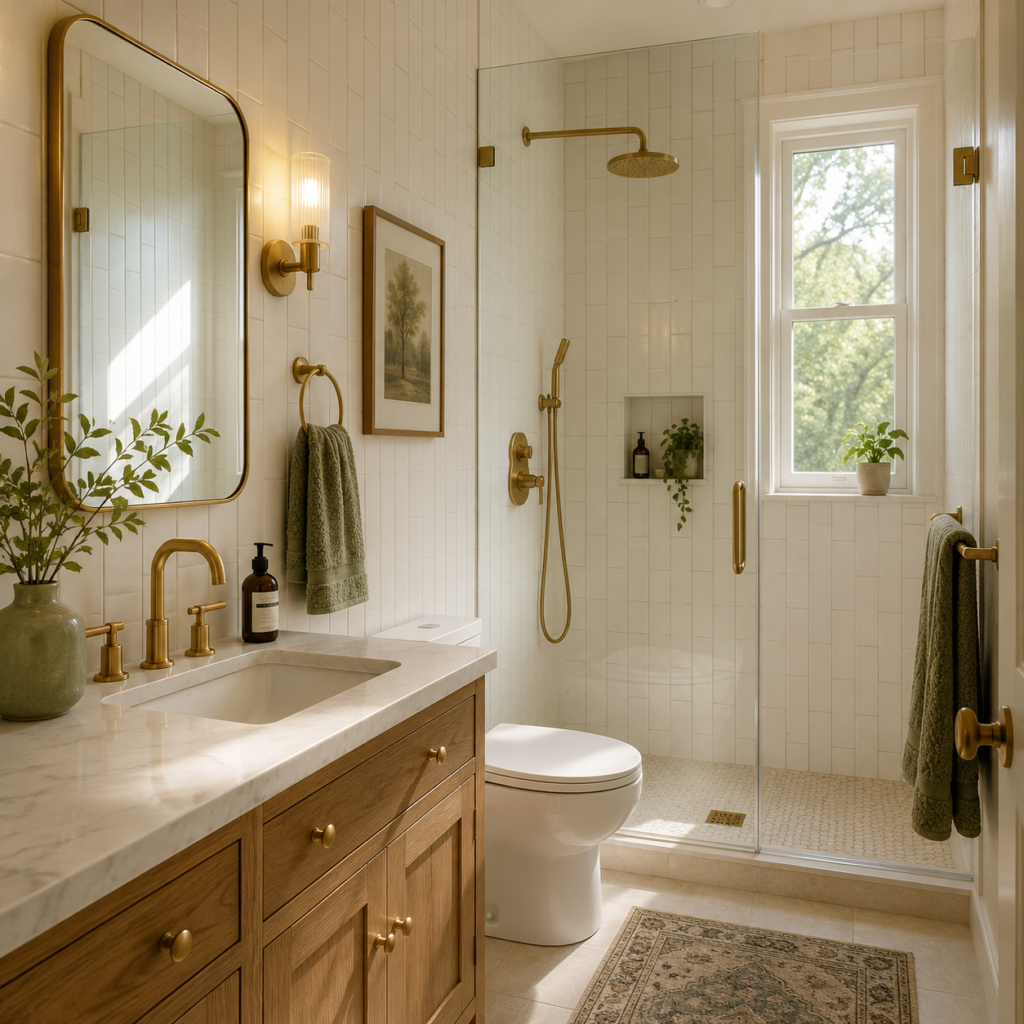
Wall-Mounted Faucets That Free Up Counter Space
Tiny counters get cluttered fast. One toothbrush holder and a soap dispenser later, the whole sink area feels crowded. Wall-mounted faucets solve that problem because they free up usable counter space while making the vanity look cleaner and more custom.
Pair a wall-mounted faucet with a compact sink that’s no deeper than 18 inches. Matte black, brushed nickel, or brass finishes all work well depending on your style. I always tell people to double-check plumbing placement before ordering because moving pipes later can get expensive. If a full install is outside your budget, you can still mimic the look with a slim faucet and minimal accessories. Expect real wall-mounted fixtures to cost between $120 and $350 depending on finish and brand.
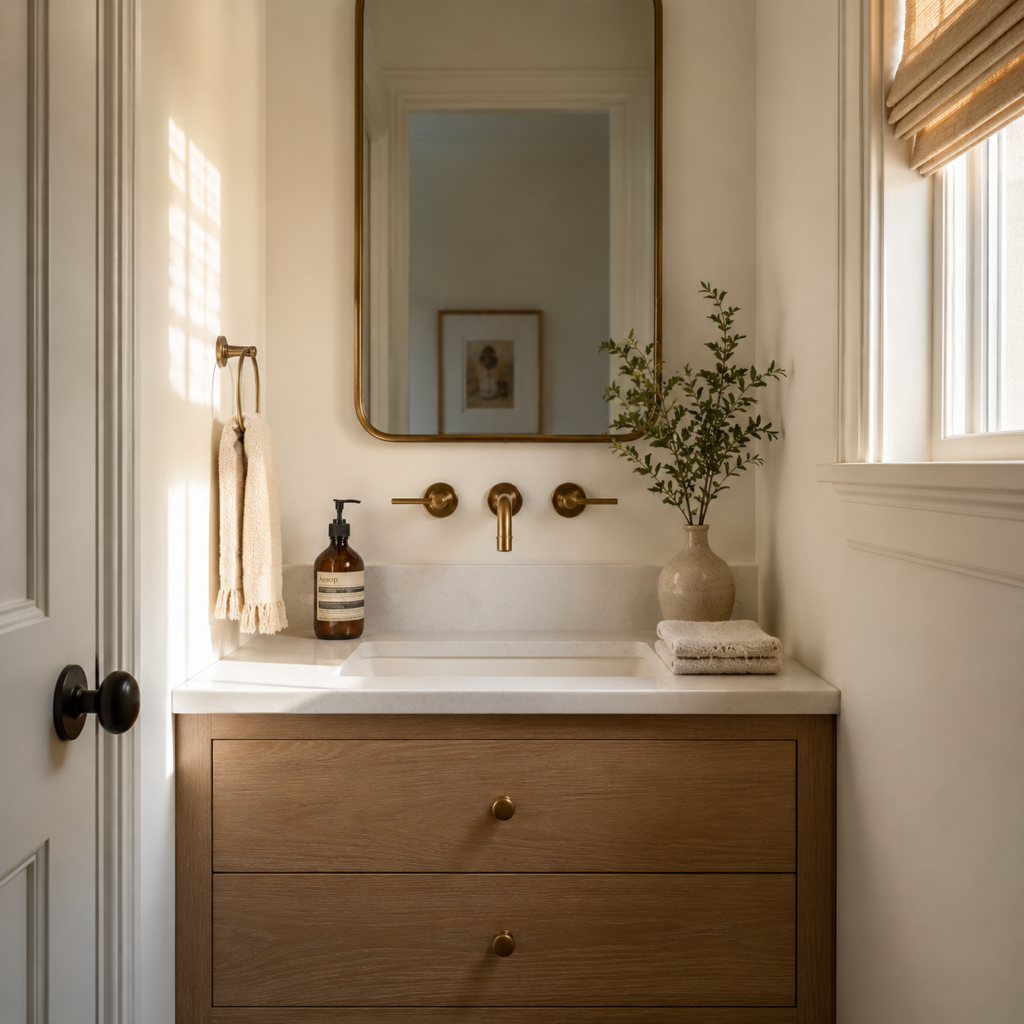
Oversized Mirrors That Double the Light
Small bathrooms need all the light they can get. An oversized mirror reflects both natural and artificial light, making the entire room feel more open. In a narrow bathroom, it also stretches the visual width of the room so it feels less tunnel-like.
Go wider than you think you should. A mirror that spans nearly the full width of the vanity usually works best. Thin black or brass frames keep it modern without adding visual weight. In my experience, the biggest mistake here is hanging the mirror too high. Keep it close to the backsplash so it feels connected to the vanity instead of floating awkwardly above it. Affordable oversized mirrors can start around $70, especially at Target or Wayfair.
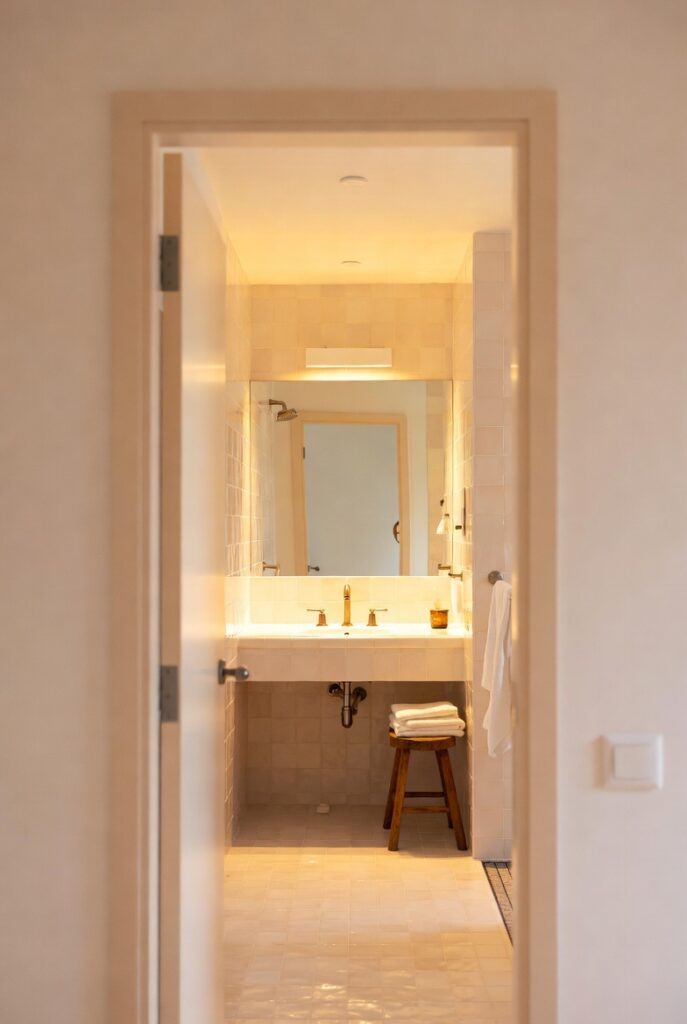
Slim Open Shelving That Keeps Essentials Reachable
Bulky storage cabinets can make narrow bathrooms feel even tighter. Open shelving keeps things practical without visually crowding the room. Plus, when styled well, it adds warmth instead of looking purely functional.
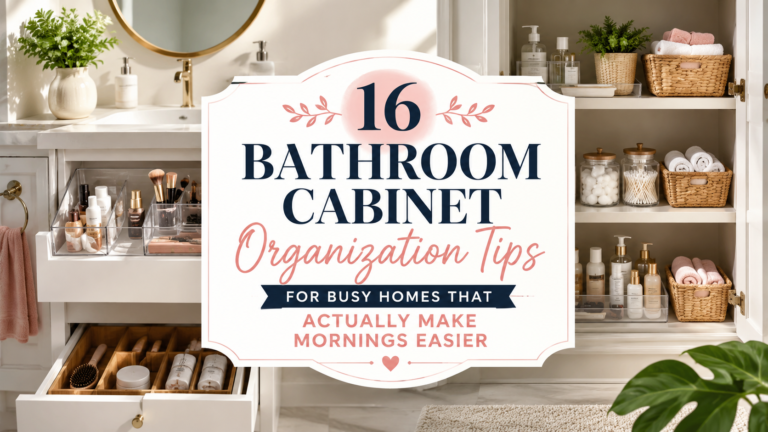
Install slim wood shelves above the toilet or beside the vanity. Keep them around 6 to 8 inches deep so they do not stick out too far into the walkway. Use baskets, glass jars, and folded neutral towels to keep everything tidy. A lot of people make the mistake of overfilling shelves with decor. Leave some breathing room. What I love about open shelving is that even affordable pine boards can look high-end once stained in warm wood tones. Most DIY shelf projects cost under $50 total.
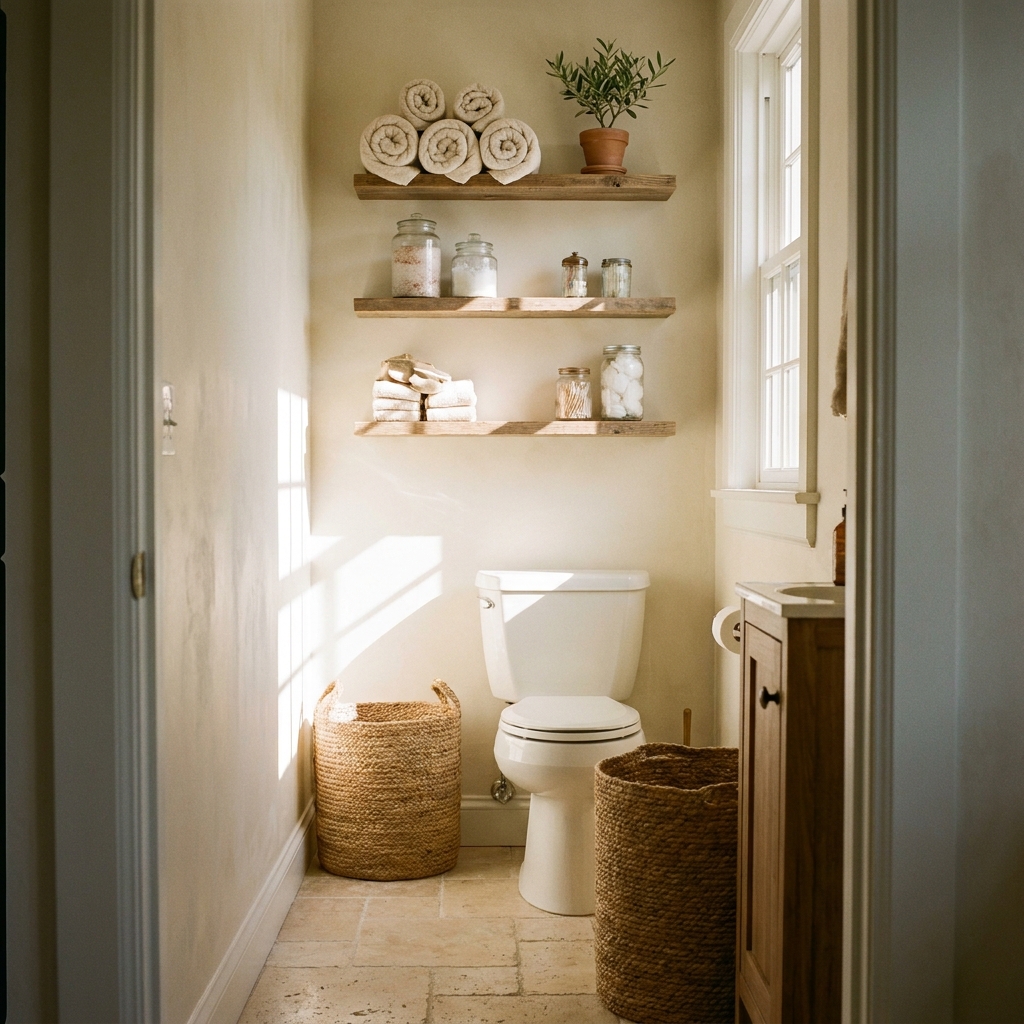
Pocket Doors That Stop the Bathroom From Feeling Cramped
Traditional swinging doors eat up precious floor space in narrow bathrooms. Pocket doors slide neatly into the wall, which instantly improves flow and makes the room feel more usable. Even standing at the sink feels easier when you are not dodging a door edge.
If installing a true pocket door feels too expensive, barn-style sliding doors can create a similar effect. Soft white, natural oak, or muted gray finishes work best for keeping the room bright. In my experience, people often forget to choose moisture-resistant materials, especially in humid bathrooms. Always seal wood properly. Professional pocket door installs can cost $500 to $1500, but simple sliding door kits are much cheaper.
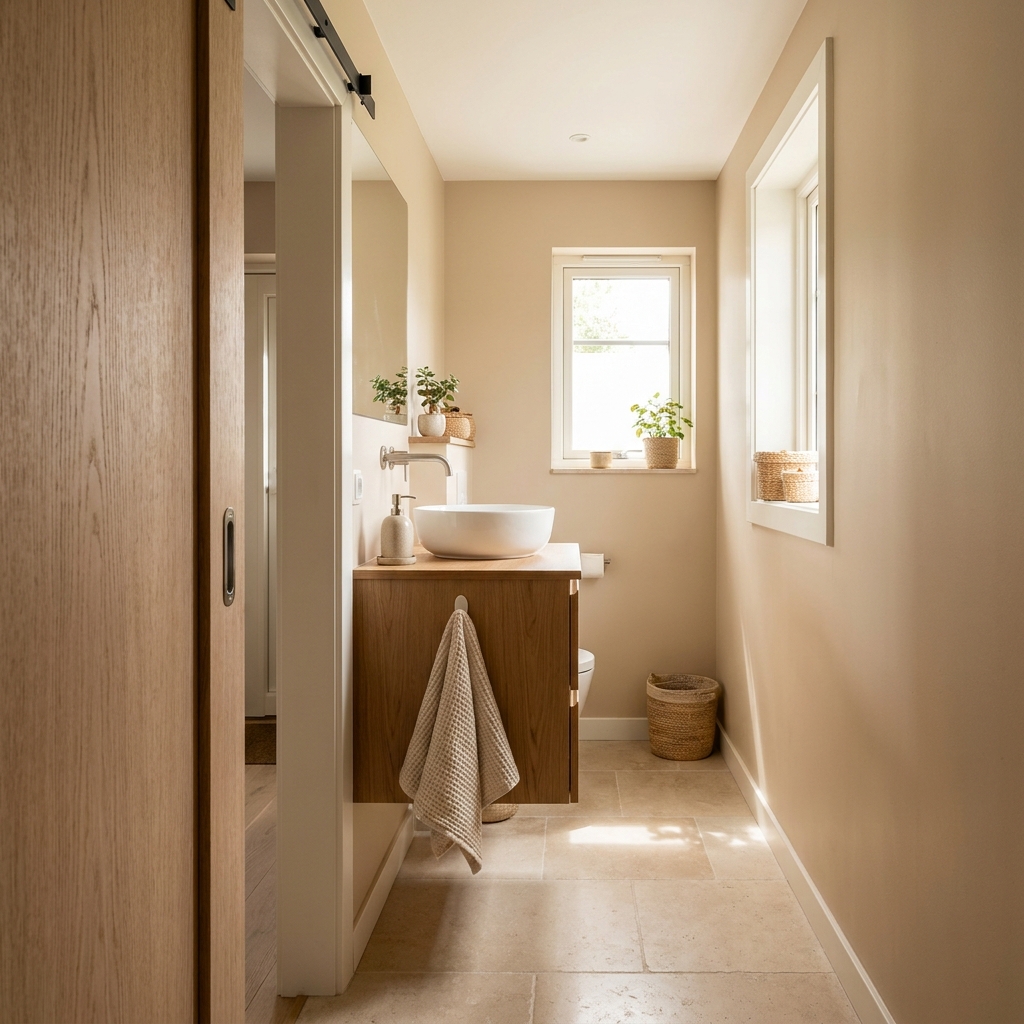
Light Floor Tiles Laid Lengthwise for a Wider Look
Flooring direction matters more than most people realize. In a narrow bathroom, laying rectangular floor tiles lengthwise helps visually stretch the room. Your eyes naturally follow the tile lines, which creates the illusion of more space.
Stick with light shades like soft gray, sandy beige, pale taupe, or warm ivory. Large-format tiles also reduce grout lines, which keeps the floor from looking busy. I always suggest matte finishes because glossy floors show water spots constantly in small bathrooms. A lot of people choose tiny mosaic tiles thinking they’ll add character, but they can make narrow spaces feel cluttered. Basic porcelain floor tiles can cost as little as $2 to $5 per square foot.
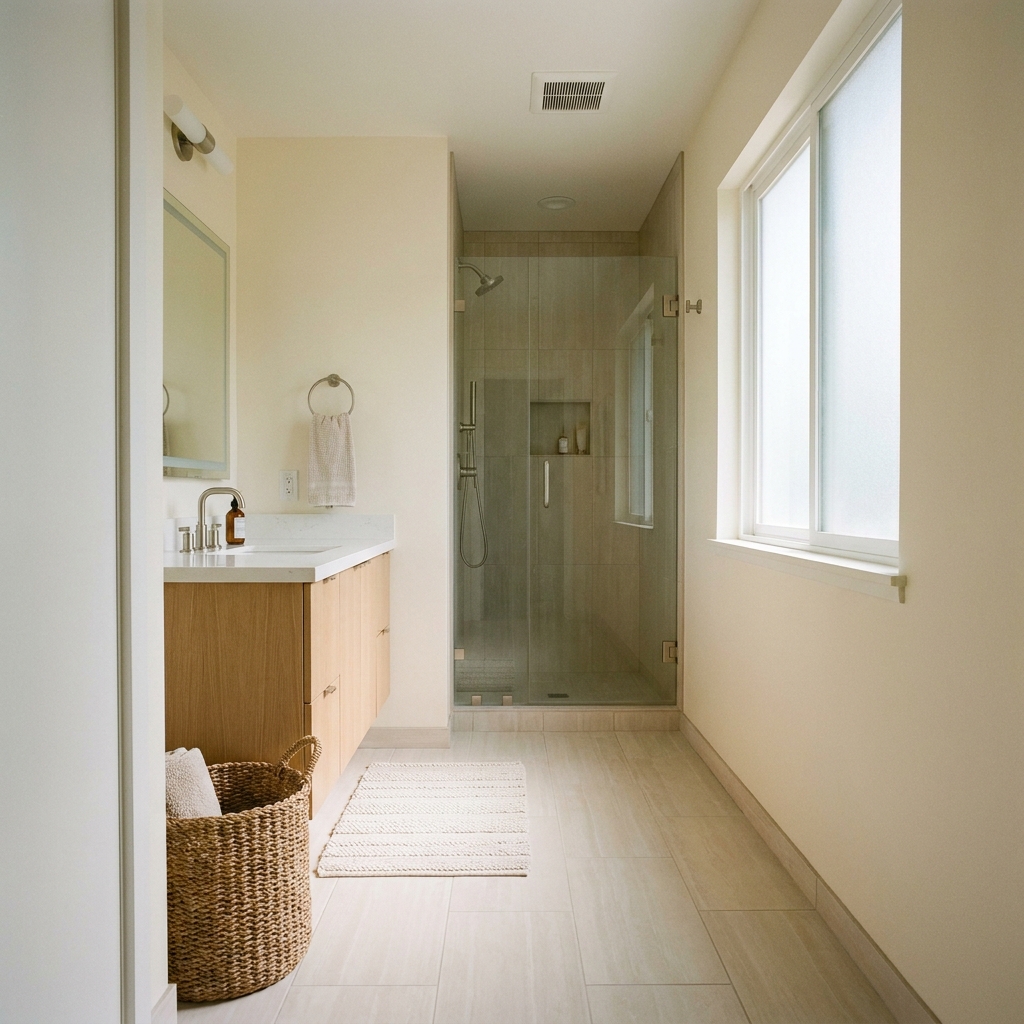
Clear Glass Shower Panels Instead of Heavy Curtains
Shower curtains visually chop up a tiny bathroom. Clear glass panels keep sightlines open, which makes the room feel much bigger instantly. What I love about this trick is how modern it looks even in older apartments.
Frameless or minimal-frame panels work best in narrow spaces. Keep the glass as clear as possible and avoid frosted designs that block light. If your budget is tight, even a curved shower rod with a lightweight white curtain can help open things up compared to dark fabric curtains. In my experience, skipping regular glass cleaning is the fastest way to ruin this look, so keep a small squeegee nearby. Basic glass panels often start around $200.
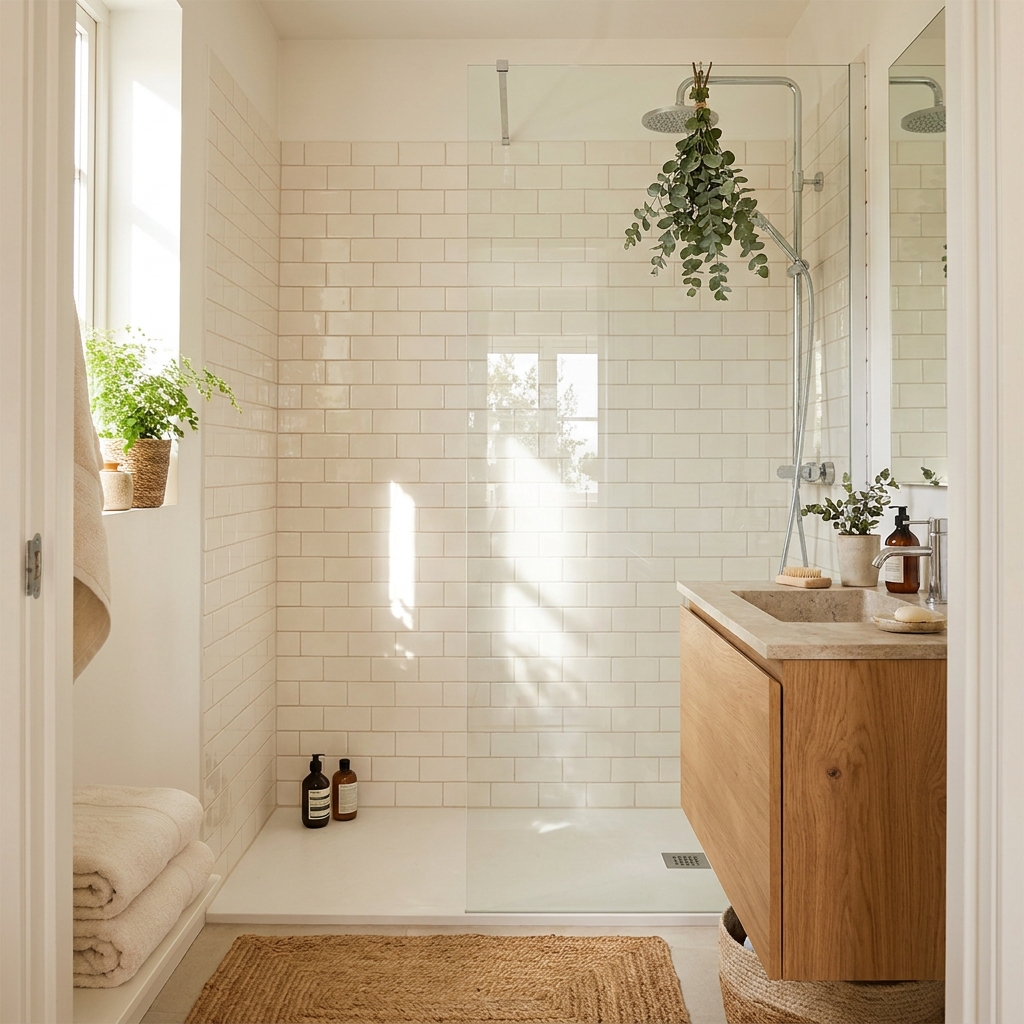
Recessed Wall Niches That Replace Bulky Storage
Tiny bathrooms do not have room for chunky storage towers or deep cabinets. Recessed niches solve that problem because the storage sits inside the wall instead of sticking into the room. They also make showers feel cleaner and less cluttered.
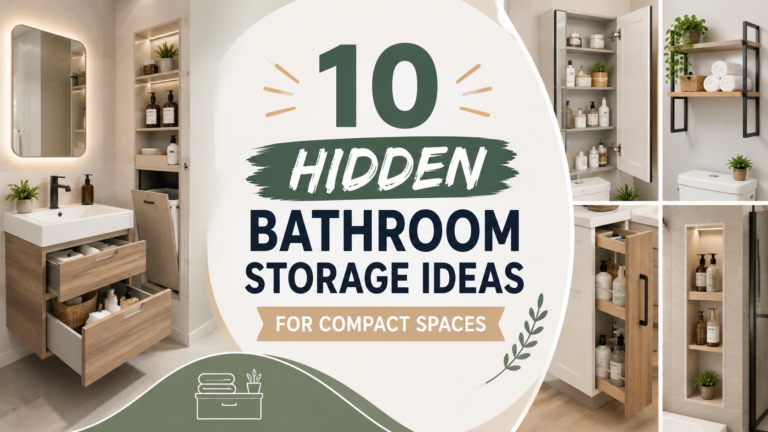
Install niches inside the shower wall for shampoo and soap, or beside the vanity for skincare and daily essentials. I always recommend adding a small built-in ledge if possible because it gives you styling space without adding furniture. A lot of people tile niches in dark accent colors, but lighter shades help the space stay open. If you’re already renovating, adding niches is relatively inexpensive compared to standalone storage units.
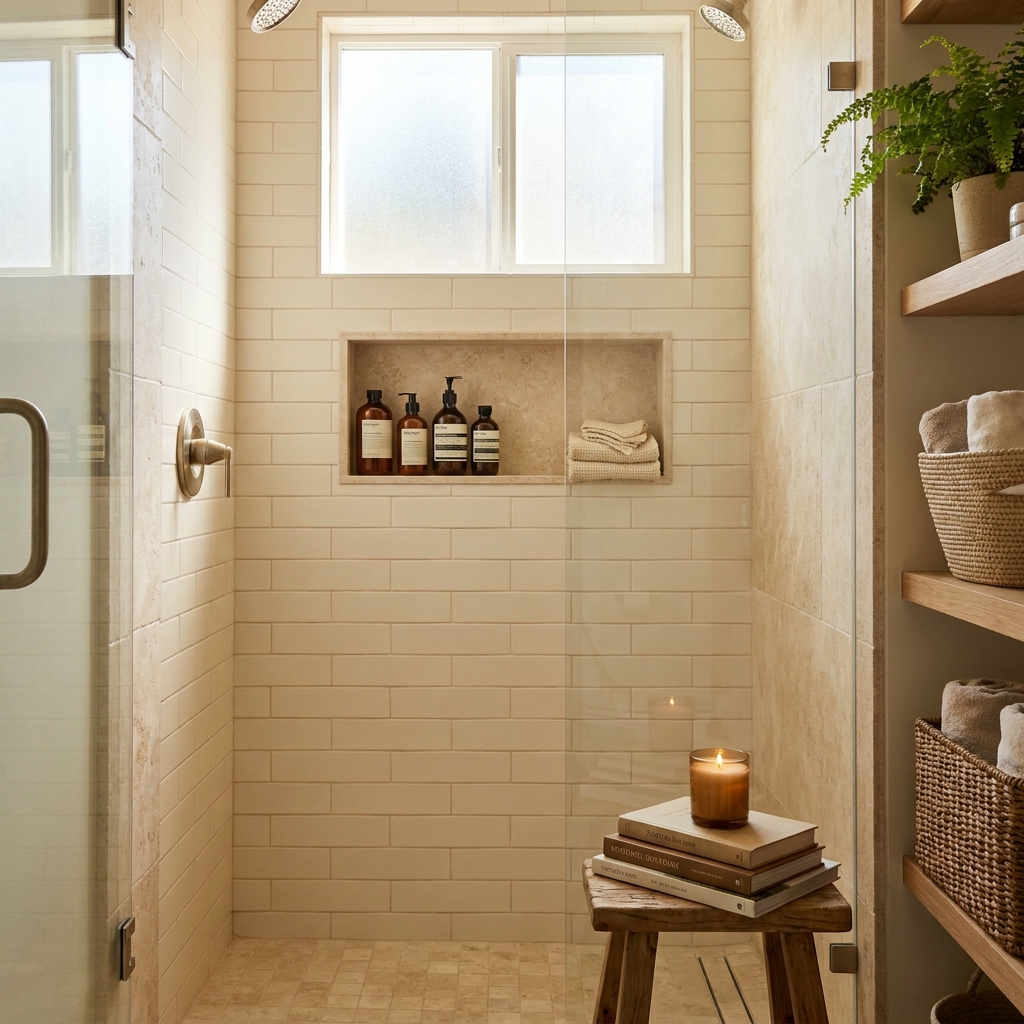
Warm Layered Lighting That Softens the Whole Room
Bad lighting makes tiny bathrooms feel harsh and even smaller. Layered lighting softens shadows and makes the room feel more comfortable at every hour of the day. You want the space to feel warm when you stumble in half asleep at 7 a.m., not like a gas station restroom.
Combine overhead lighting with sconces or soft LED mirror lights. Stick to warm white bulbs around 2700K to 3000K so the room feels cozy instead of blue and clinical. What I love about layered lighting is that it works even in rentals because battery-operated sconces have improved so much lately. In my experience, the biggest mistake is relying on one bright overhead light that casts harsh shadows everywhere.
Soft Neutral Color Palettes That Calm Visual Clutter
Color affects how cramped a room feels more than people think. Busy colors and strong contrasts can make narrow bathrooms feel chaotic. Soft neutral palettes help the room feel calmer, brighter, and more open without looking boring.
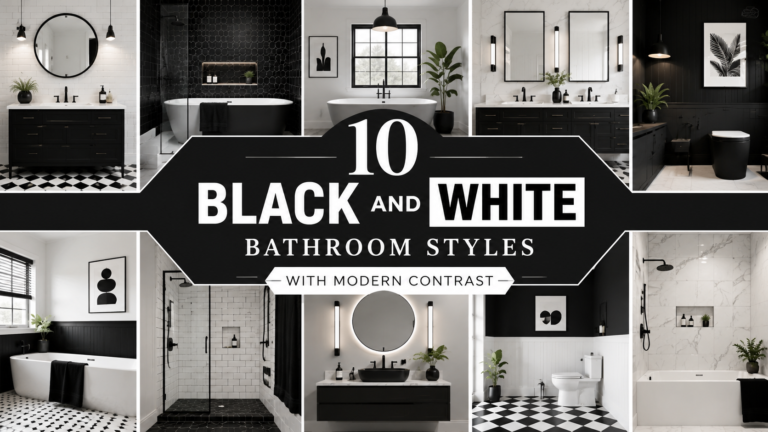
Warm ivory, soft taupe, pale sage, muted terracotta, and light gray all work beautifully together. Layer similar tones instead of sharp contrasts. Use texture through towels, woven baskets, linen curtains, or matte ceramics so the room still feels interesting. A lot of people think tiny bathrooms need pure white everywhere, but that can feel cold fast. In my experience, warmer neutrals are much easier to live with daily and hide dust better too.
Conclusion
Tiny bathrooms can feel frustrating when every inch seems to work against you, but small changes really do add up. You do not need a luxury remodel or a massive budget to make a narrow bathroom feel brighter, calmer, and easier to use every day. Sometimes it’s as simple as swapping a bulky vanity for a floating one, changing the lighting, or finally getting rid of that heavy shower curtain that makes the whole room feel boxed in.
What matters most is choosing a few tiny bathroom design ideas for narrow spaces that actually fit your lifestyle and layout. Start with one project. Then build from there once you see how much better the room feels. I’ve seen bathrooms completely shift with just smarter storage and better lighting alone.
Your home does not need to be perfect to feel good to live in. It just needs to work for you.
Which of these tiny bathroom design ideas for narrow spaces are you trying first? Tell me in the comments — I genuinely want to know!
FAQ
How do you make a narrow bathroom look bigger?
The easiest way is to keep sightlines open and reduce visual clutter. Large mirrors, floating vanities, light-colored tile, and glass shower panels all help the room feel wider. In my experience, lighting also makes a huge difference. Warm layered lighting softens shadows so the room feels less cramped instantly.
What colors work best in tiny bathrooms?
Soft warm neutrals usually work best because they reflect light without feeling harsh. Warm ivory, pale gray, soft sage, beige, and muted taupe all help create a calm look. A lot of people think pure white is the answer, but it can feel cold and sterile if there’s no texture layered in.
Are floating vanities practical for small bathrooms?
Yes, especially in narrow layouts where floor visibility matters. Floating vanities create the illusion of more space while still giving you storage underneath. Just make sure the depth stays compact. Around 18 to 22 inches deep usually works best in tighter bathrooms.
What type of storage works best in narrow bathrooms?
Slim open shelving, recessed niches, and wall-mounted cabinets work much better than bulky floor storage. You want storage that uses vertical space without blocking movement. I always suggest baskets or matching containers too because visible clutter makes tiny bathrooms feel smaller fast.
How much does it cost to update a tiny bathroom on a budget?
You can make a noticeable difference for under $300 if you focus on cosmetic changes first. Paint, lighting, shelving, mirrors, and accessories go a long way. Bigger upgrades like glass shower panels or pocket doors cost more, but even one major change can completely improve how the room feels.