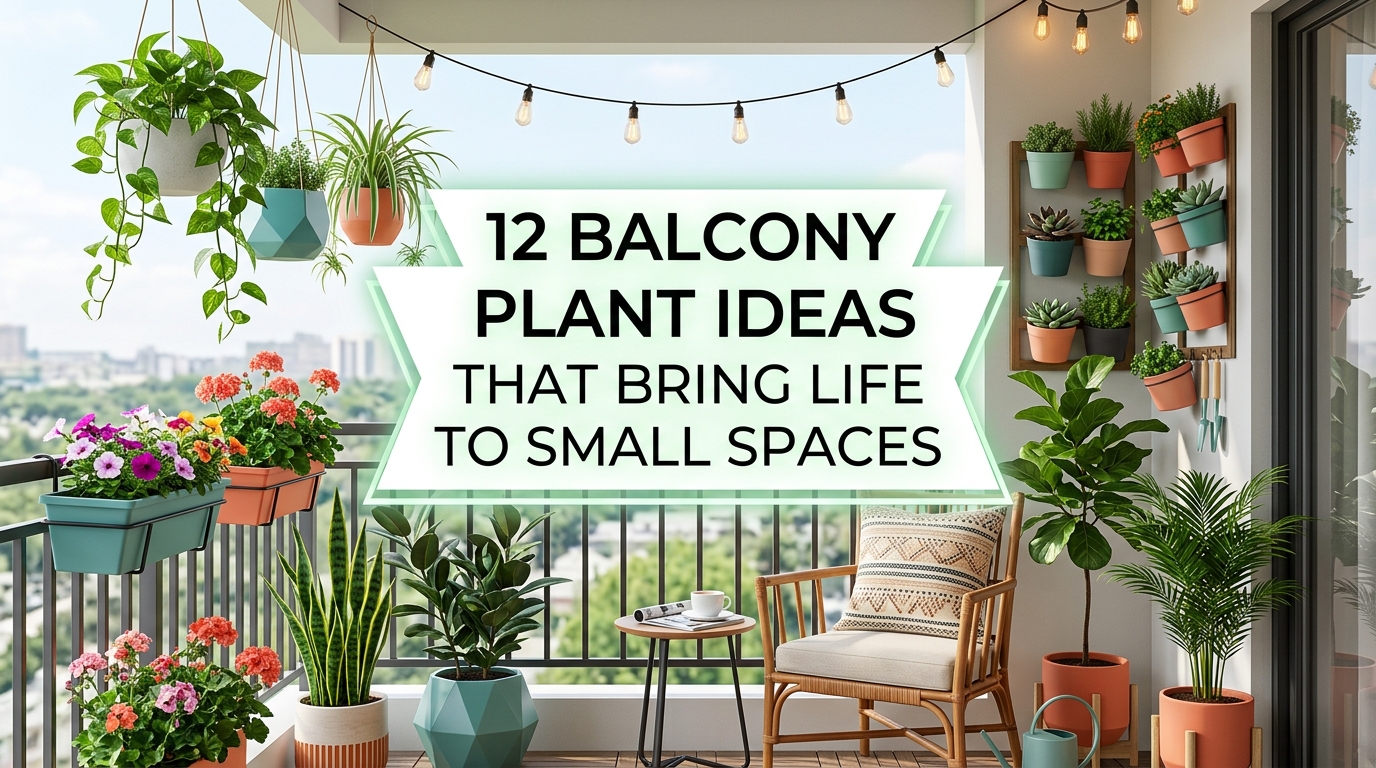
12 Balcony Plant Ideas That Bring Life to Small Spaces
A small balcony can feel flat and unfinished, especially when there is little room for furniture or decor. You may want more color and texture, but adding too many pots can quickly make the area feel crowded. It is also easy to buy plants that look beautiful at first, only to watch them struggle because the light, wind, or watering routine does not suit them.
These balcony plant ideas that bring life to small spaces focus on smart placement as much as plant choice. You will find ways to use railings, walls, corners, shelves, and tabletops without blocking the walkway. Each idea includes practical advice on containers, sunlight, styling, cost, and common mistakes.
Whether your balcony gets bright afternoon sun or stays shaded most of the day, you can create a green outdoor corner that feels fresh and personal. Start with a few plants you can care for easily. Once you understand how they respond to your balcony, you can add more layers over time.
1. Build a Layered Plant Corner with Mixed Heights
A grouped plant corner makes a small balcony feel lush without spreading pots across every inch of floor. Picture one tall leafy plant rising behind a medium ceramic pot, with a smaller trailing plant spilling gently from a stool. The mix of glossy leaves, soft greenery, and natural clay creates depth while keeping the rest of the balcony open.
Choose three to five plants with different heights and leaf shapes. Place the tallest pot at the back, medium plants in the middle, and smaller pots near the front. A wooden stool, low crate, or slim plant stand can add height for $15 to $45. Basic pots and starter plants may bring the total to $50 to $140. In my experience, the biggest mistake here is using pots that are all the same height. The display can look flat, even when the plants are healthy. Group everything tightly enough to feel connected, but leave space for airflow.
2. Use Railing Planters for Space-Saving Greenery
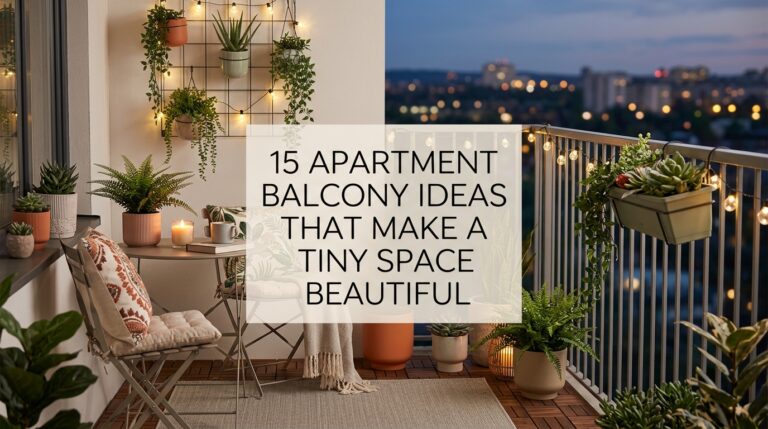
Railing planters add color without taking up floor space. Flowers and trailing leaves soften hard metal or concrete edges, creating a fuller view from both inside and outside. When the plants catch the light and move gently in the breeze, the balcony feels more alive without becoming crowded.
Choose secure railing boxes that match the width and shape of your railing. Lightweight plastic or fiberglass containers are easier to manage than heavy ceramic ones. Fill them with compact flowers, herbs, or trailing plants that suit your sunlight. A single planter usually costs $15 to $40, while a set of three may cost $45 to $100 before plants. A lot of people skip checking the weight limit, but it makes all the difference. Wet soil is much heavier than dry soil. Make sure every planter is firmly attached and cannot fall during strong wind.
3. Create a Vertical Garden on a Blank Wall
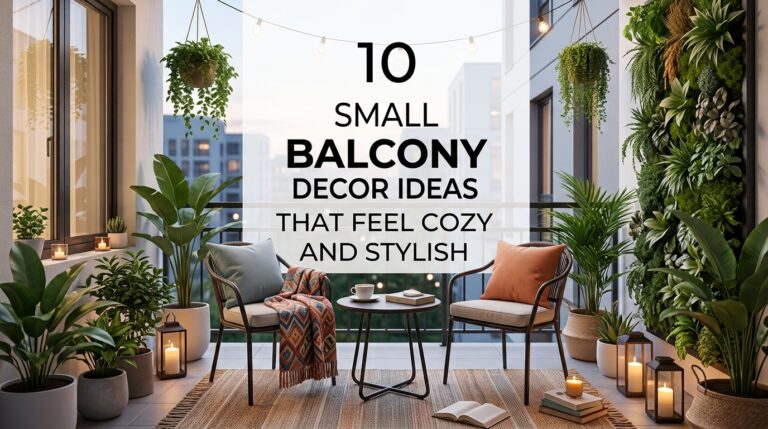
A vertical garden turns an empty wall into a living backdrop. Rows of herbs, small ferns, and trailing greenery add texture at eye level while keeping the floor free for seating. Natural wood or black metal supports give the display structure, while the plants bring softness and movement.
Use a wall-mounted planter system, hanging pockets, or a narrow ladder shelf. For renters, choose a freestanding trellis or ladder that does not require drilling. Start with six to eight small plants rather than filling every opening at once. A basic setup costs around $60 to $180, depending on the frame and containers. Water from the top carefully and place a tray underneath to protect the floor. What I personally love about this is how much greenery it adds without using valuable walking space. Avoid mixing plants with very different watering needs in the same vertical system.
4. Style an Herb Garden Near the Balcony Door
A small herb garden makes the balcony feel useful as well as beautiful. Fresh basil, mint, rosemary, and parsley add different shades of green and release a clean scent when you brush past them. Placed near the door, the pots are easy to reach while cooking and become part of your daily routine.
Use small terracotta pots, a rectangular planter, or a tiered stand. Most herbs need several hours of sunlight, though mint and parsley can handle some shade. Starter herbs usually cost $4 to $10 each, and a simple container setup can stay between $30 and $90. Add clear labels if you are growing several varieties. Keep mint in its own pot because it spreads quickly. I always recommend this when someone wants a change without starting over because herbs are affordable and useful. The common mistake is placing too many herbs in one small container, which causes competition for water and root space.
5. Let Trailing Plants Soften Shelves and Railings
Trailing plants create gentle movement and soften the sharp lines of shelves, railings, and balcony walls. Long vines spilling from a planter make the space feel fuller without adding large furniture or bulky decor. Their leaves look especially beautiful in filtered light, where soft shadows fall across the wall.
Place pothos, ivy, string of hearts, or trailing petunias on a high shelf or secure railing planter. Choose varieties based on temperature and sunlight, since some common houseplants need protection from cold or strong direct sun. A trailing plant and simple pot often cost $15 to $45. Use lightweight containers with drainage holes and a saucer underneath. In my experience, the biggest mistake here is allowing vines to tangle around doors, drains, or neighboring balconies. Trim them regularly and guide the stems along the area you want to soften.
6. Add One Small Tree for Height and Structure
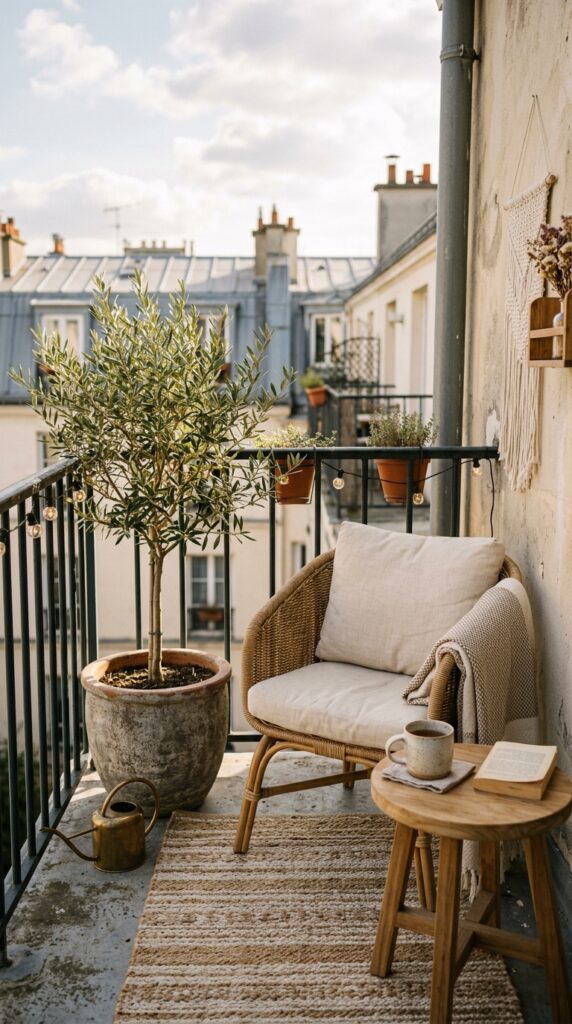
One small tree can give a balcony a strong focal point. A slender olive tree, dwarf citrus, bay tree, or ficus adds height and brings a calm, garden-like feeling to the space. The trunk creates structure, while the leaves soften the corner and cast natural shadows across the floor.
Choose a dwarf or slow-growing variety suited to containers and your local climate. Use a pot at least 16 to 20 inches wide with drainage holes. A young potted tree may cost $40 to $150, while the container and soil can add another $30 to $80. Place it where it receives the right amount of light and is protected from strong wind. A lot of people buy a tree without planning for future growth. Check its mature size and root needs first. Avoid choosing an oversized pot that is too heavy to move once filled.
7. Arrange Succulents on a Sunny Tabletop
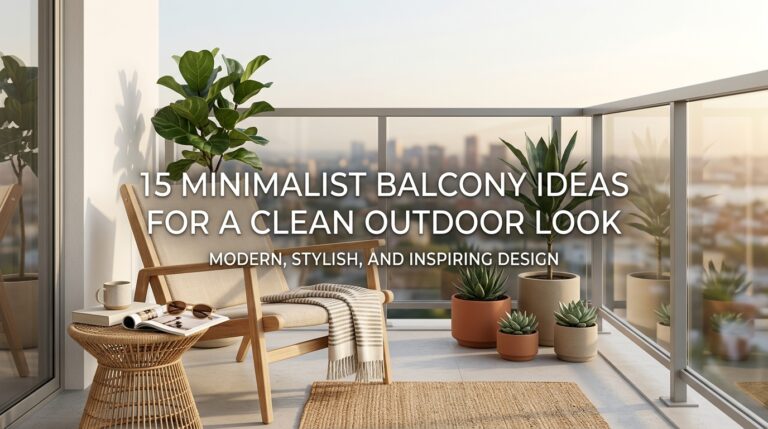
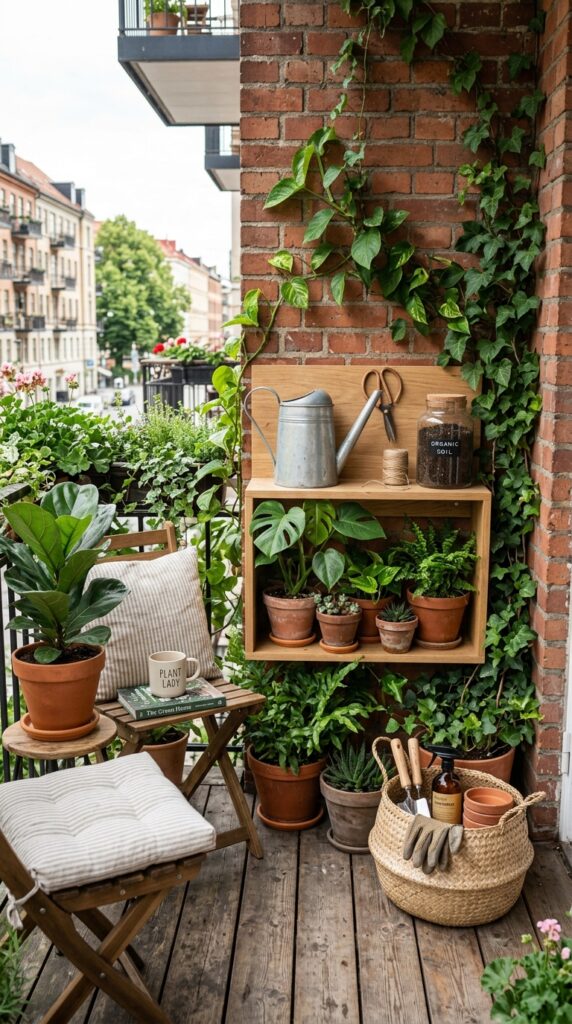
A tabletop filled with small succulents brings color and shape to a bright balcony without demanding much room. Rosette leaves, upright stems, and smooth ceramic pots create a neat collection that feels decorative but still natural. The plants look especially striking when warm sunlight highlights their muted green, blue, and dusty purple tones.
Choose a shallow tray or small table and group five to seven succulents in pots of similar colors. Terracotta helps the soil dry more quickly, while glazed ceramic retains moisture longer. A starter collection can cost $30 to $80. Use fast-draining cactus soil and make sure every container has a drainage hole. What I personally love about this is how easy it is to rearrange the display. Avoid watering all the pots on a fixed schedule. Check the soil first, since overwatering is a more common problem than underwatering.
8. Hang Baskets Above the Seating Area
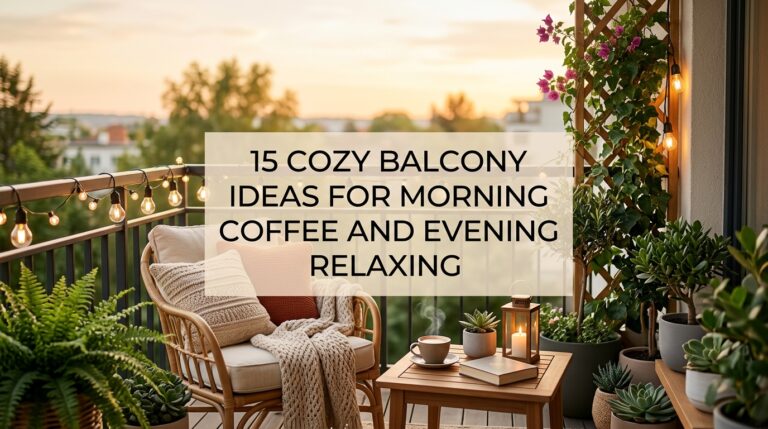
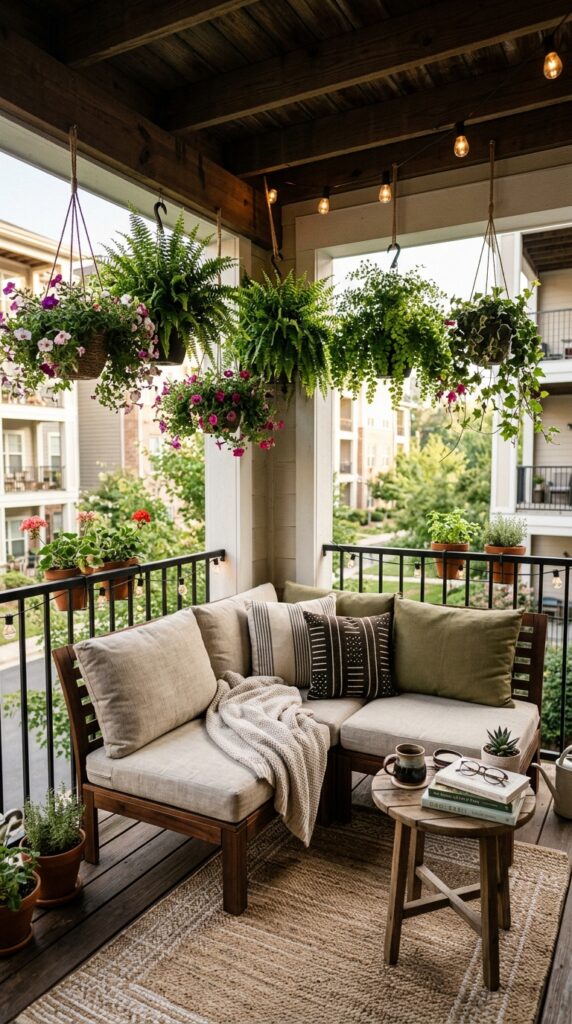
Hanging baskets bring greenery into the upper part of the balcony and help a compact seating area feel surrounded by plants. Ferns, flowering vines, and trailing foliage create soft shapes overhead while leaving the floor clear. The effect feels cozy and sheltered, especially when the leaves move gently in the breeze.
Use strong hooks rated for outdoor use and confirm that the ceiling or beam can support the weight. Renters can use a freestanding hanging plant stand instead. Keep baskets high enough that nobody bumps into them, but low enough for watering. Each planted basket may cost $20 to $60. Use lightweight potting mix to reduce weight and choose self-watering baskets if the area dries quickly. In my experience, the biggest mistake here is hanging several plants directly over cushions or tables where water can drip. Move them slightly to the side or water them elsewhere.
9. Use a Slim Plant Shelf for a Collected Look
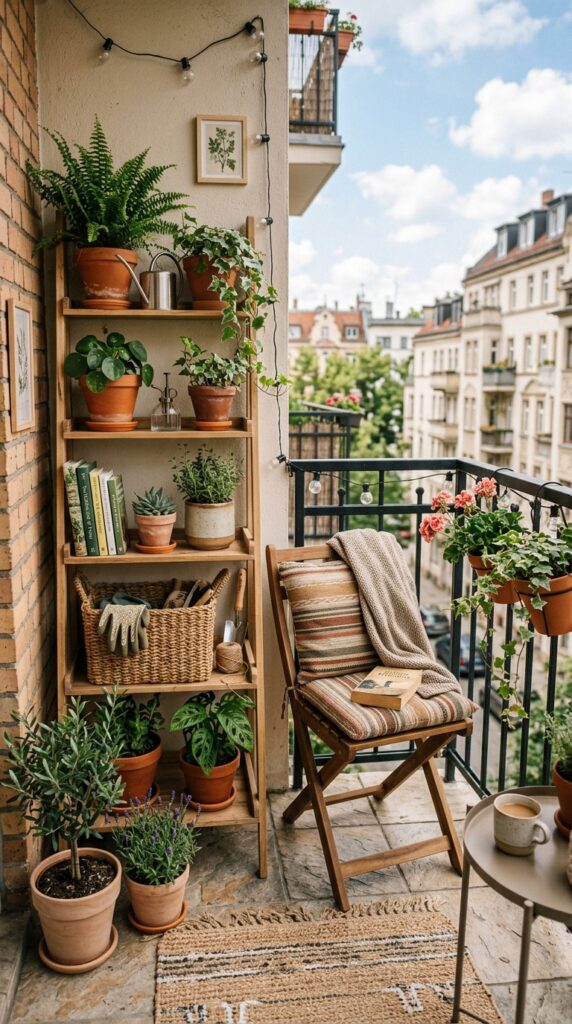
A narrow shelf helps you display more plants without filling the floor. Small pots lined across different levels create a collected look, while the open frame keeps the arrangement light. Mixed leaf shapes, clay pots, and woven baskets add texture without making the shelf feel overly decorated.
Choose a ladder shelf or metal plant stand between 12 and 24 inches wide. Place larger, heavier pots on the bottom and smaller plants near the top. A basic shelf costs $40 to $120, while plants and containers may add $30 to $100. Leave a few sections empty so the display has breathing room. Add a basket for gloves, fertilizer, and small tools. A lot of people skip securing tall shelves, but it makes all the difference on a windy balcony. Anchor the unit safely or choose a low, wide design that is difficult to tip.
10. Plant Seasonal Flowers for Easy Color
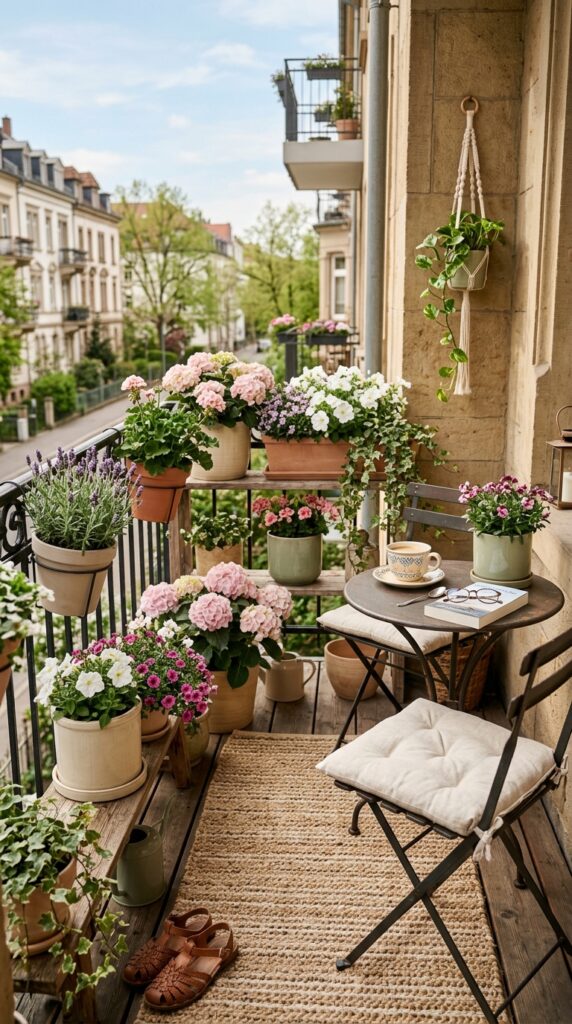
Seasonal flowers bring cheerful color to a small balcony without requiring major changes. Soft pink blooms, white petals, purple flowers, or warm orange accents can brighten neutral furniture and plain walls. A few coordinated pots look fresh and welcoming, especially near a morning coffee spot.
Choose two or three flower colors rather than mixing every shade available. Petunias, pansies, geraniums, marigolds, and begonias are common container choices, but the best option depends on sunlight and season. A small display can cost $25 to $75. Remove faded flowers regularly to encourage new blooms, and check the soil more often during warm weather. I always recommend choosing flowers after studying the light for a few days. The biggest mistake is buying sun-loving varieties for a shaded balcony, or shade plants for intense afternoon heat.
11. Create Privacy with Tall Balcony Plant Ideas
Tall plants can soften an exposed balcony and create a sense of privacy. Bamboo, ornamental grasses, palms, or tall shrubs form a green screen without the heaviness of solid panels. Their narrow leaves filter sunlight and move gently in the wind, making the area feel more sheltered.
Place two or three tall containers along the side where privacy is needed most. Choose pots with enough weight to stay stable, but avoid exceeding the balcony’s load limit. A basic privacy setup may cost $100 to $350, depending on plant size. Use narrow rectangular planters when floor space is limited. Check whether the plant spreads aggressively or grows too tall for the area. What I personally love about this is that it adds privacy while still letting light through. Avoid blocking ventilation, drainage, or access to the railing.
12. Finish with a Small Watering and Potting Station
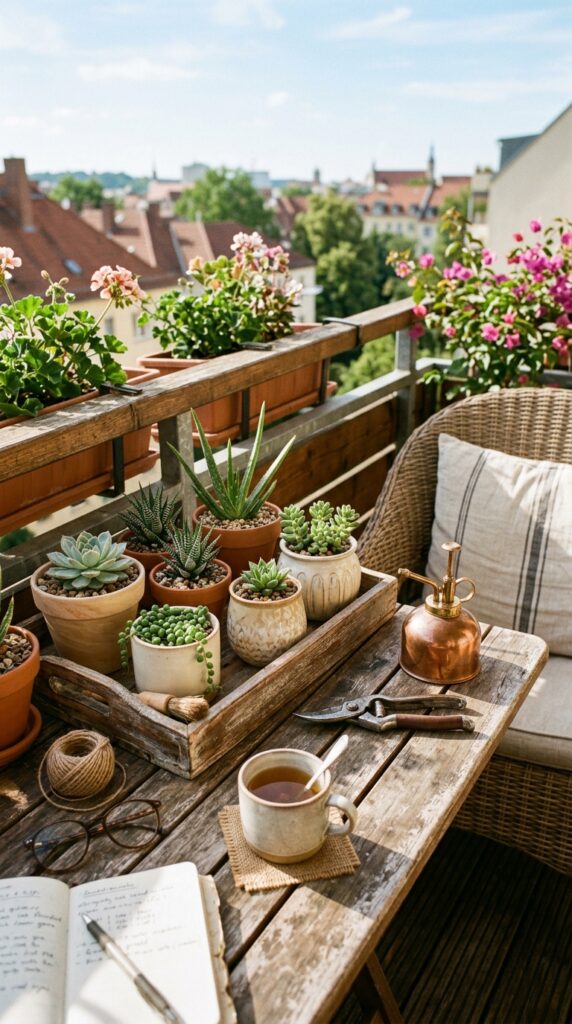
A tiny plant care station can make a green balcony easier to maintain. A small shelf with a watering can, gardening scissors, extra soil, and a few clay pots gives everyday tools a clear home. Natural wood, woven baskets, and practical items add character while keeping the balcony organized.
Use a narrow console, sturdy crate, or lower shelf of a plant stand. Store soil and fertilizer in sealed containers to prevent spills and moisture damage. A simple setup can cost $25 to $80 using items you already own. Keep the most-used tools within reach and move sensitive products indoors during extreme weather. A lot of people focus only on displaying plants and forget about caring for them. An organized station makes watering and trimming easier. Avoid leaving standing water, open soil bags, or sharp tools where children or pets can reach them.
Conclusion
You do not need a large terrace to enjoy a balcony filled with greenery. A few well-chosen plants can add color, movement, privacy, and a calmer feeling to even the smallest outdoor area. The key is using the available height, grouping containers carefully, and choosing plants that suit the actual light and weather conditions.
These 12 balcony plant ideas that bring life to small spaces can be adapted to many budgets and balcony layouts. Start with one or two ideas, such as a grouped corner, a small herb garden, or a single railing planter. Learn how those plants respond before expanding the collection.
You can also save money by growing herbs from seed, swapping cuttings with friends, or repainting containers you already own. Focus on healthy plants and practical placement rather than filling every empty surface. A smaller collection that receives proper care will look better than dozens of struggling pots.
Which idea would you try first? I’d love to hear what you’re planning for your balcony.
FAQs
What are the best plants for a small balcony?
The best plants depend on the amount of sunlight, wind, and seasonal weather your balcony receives. Herbs, succulents, ivy, pothos, ferns, dwarf citrus trees, and compact flowers are common choices. Start with a few plants that have similar care needs so your routine stays manageable.
How do I arrange plants on a tiny balcony?
Group plants in one or two corners and use stands, shelves, or railing planters to add height. Place taller plants at the back and smaller ones in front. Keep a clear walkway and avoid lining every pot along the floor.
Which balcony plants are easiest for beginners?
Herbs such as mint and rosemary, along with pothos, spider plants, snake plants, and many succulents, are often beginner-friendly. Their needs still vary, so check the sunlight and temperature requirements first. Choose two or three varieties rather than starting with a large collection.
How often should balcony plants be watered?
Watering depends on the plant, pot size, weather, and sunlight. Check the top inch of soil before watering instead of following a strict daily schedule. Small pots and sunny balconies dry faster, while shaded containers may stay moist longer.
How can I protect balcony plants from strong wind?
Place taller plants near a wall and use wide, stable pots that are less likely to tip. Secure hanging baskets and tall shelves properly. You can also group containers together or add a breathable privacy screen to reduce direct wind without blocking airflow.