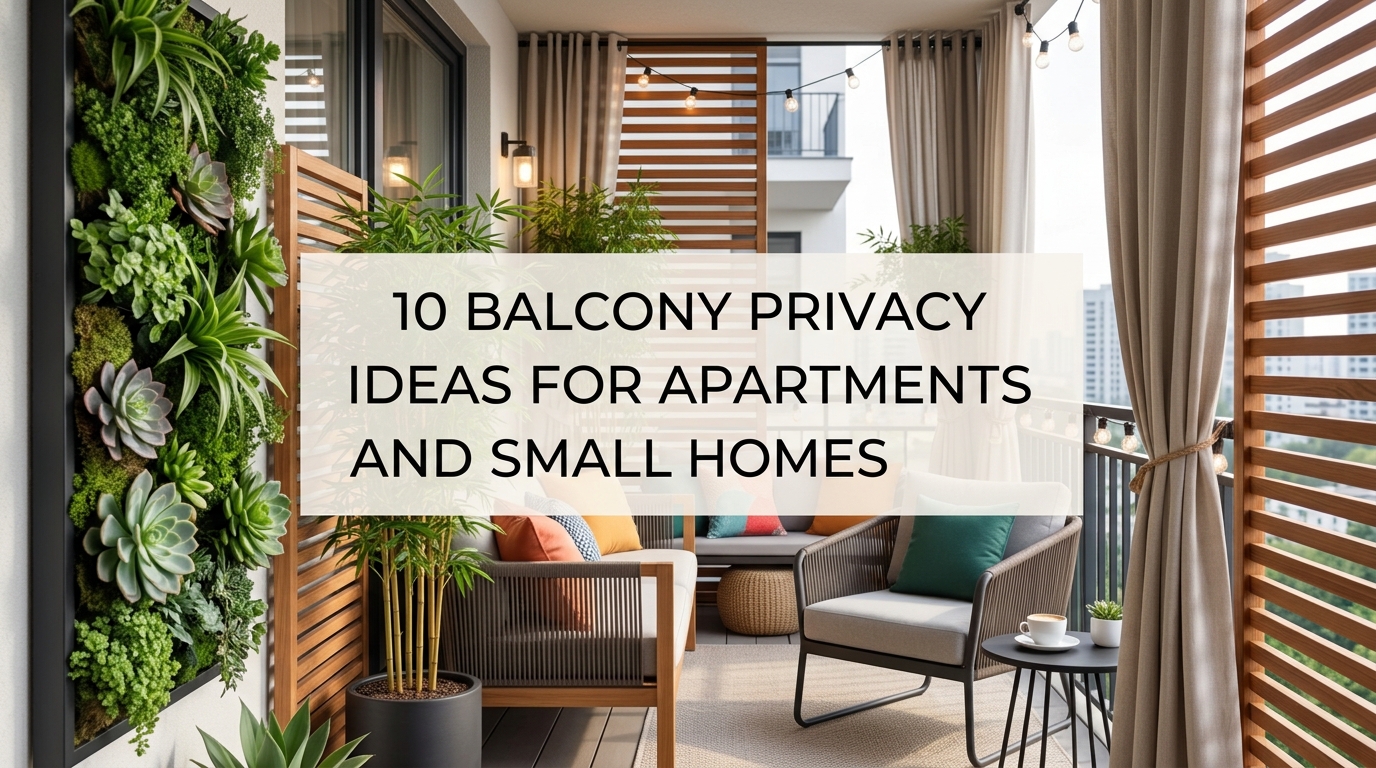
10 Balcony Privacy Ideas for Apartments and Small Homes
A balcony can be hard to enjoy when neighbors, nearby windows, or busy streets leave you feeling exposed. You may have comfortable seating and a few plants, but the space still does not feel private enough for morning coffee, reading, or quiet evenings outside. In many rentals and small homes, permanent walls are not allowed, which makes the problem feel even more limiting.
These balcony privacy ideas for apartments and small homes offer practical ways to create a more sheltered outdoor corner without making it dark or crowded. You will find renter-friendly curtains, plant screens, folding panels, railing covers, and simple DIY options for different budgets.
The goal is not to block every view. Good balcony privacy should reduce direct sightlines while allowing fresh air and natural light to move through the space. Before installing anything, check your building rules and consider local wind conditions. Start with the side that feels most exposed, then add softer decor around it so the finished balcony feels comfortable, useful, and connected to your home.
1. Add Flowing Outdoor Curtains for Soft Balcony Privacy
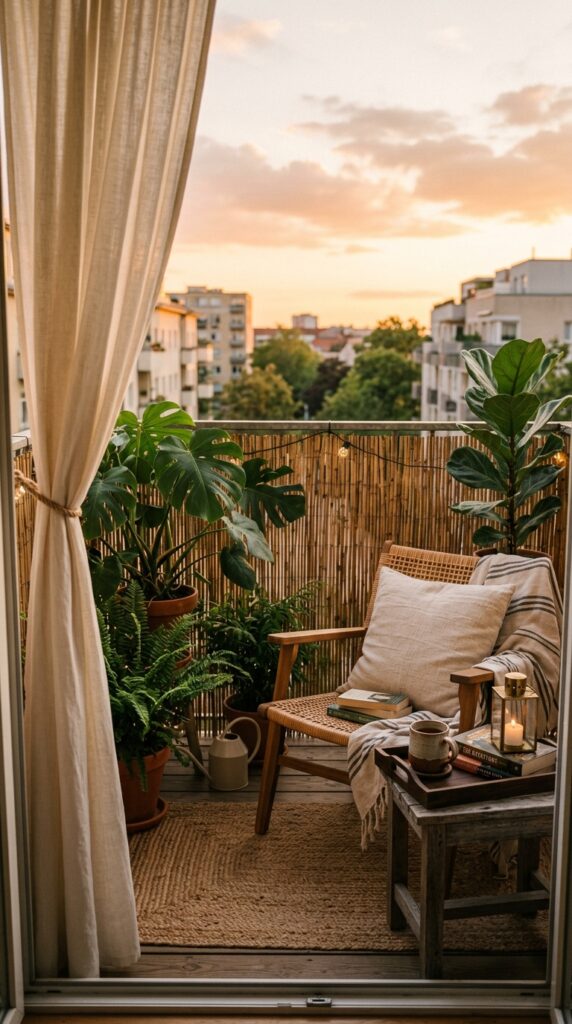
Outdoor curtains create privacy while adding softness to hard balcony surfaces. Cream, pale beige, or muted gray panels move gently in the breeze and filter bright sunlight without closing off the whole space. Against metal railings and concrete walls, the fabric gives the balcony a calmer, more sheltered feeling.
Choose lightweight, quick-drying polyester curtains made for outdoor use. Hang them from a tension rod, outdoor wire, or a freestanding frame if drilling is not allowed. A pair of panels usually costs $25 to $70, while rods and hooks may add $15 to $40. Keep the curtains one or two inches above the floor so they do not collect water or dust. Tie them back on windy days. In my experience, the biggest mistake here is using thick indoor fabric, which can stay damp after rain and become heavy. Always secure the lower corners if your balcony gets strong gusts.
2. Grow a Tall Green Screen with Potted Plants
Tall greenery creates privacy without making the balcony feel boxed in. Slender bamboo, ornamental grasses, palms, and upright shrubs soften nearby views while letting light pass between the leaves. Their movement adds a relaxed, garden-like feeling that solid panels cannot provide.
Line two or three tall plants along the most exposed side. Use narrow rectangular planters or stable pots between 16 and 22 inches wide. A simple green screen can cost $100 to $350, depending on plant size and container material. Choose plants that suit your sunlight, climate, and balcony wind. Bamboo should stay in containers so it does not spread, while grasses need regular trimming. What I personally love about this is that the screen becomes fuller over time. Avoid buying very tall plants in lightweight plastic pots because they can tip over during strong wind. Add weight at the base and keep drainage holes clear.
3. Install a Natural Reed or Bamboo Railing Cover
A reed or bamboo screen gives an open railing a warmer, more private look. The natural texture softens metal bars and creates a calm backdrop for furniture, plants, and neutral textiles. It blocks direct views at seated height while still allowing some airflow through the woven material.
Measure the full length and height of the railing before buying. Secure the screen with weather-resistant ties placed every 12 to 18 inches. Basic reed rolls often cost $25 to $70, while thicker bamboo styles may cost $60 to $150. Trim any rough ends and position the smooth side toward the seating area. A lot of people skip securing the bottom edge, but it makes all the difference during windy weather. Check the ties every few months and replace any that have weakened. Avoid attaching the screen above the legal railing height or covering required drainage and safety openings.
4. Use a Folding Screen for Flexible Balcony Privacy
A folding privacy screen works well when you only need coverage at certain times of day. It can shield a reading chair from neighboring windows in the morning, then fold away when you want more light or a wider view. Wood slats, woven panels, or soft neutral fabric can add warmth without looking heavy.
Choose a freestanding screen between 5 and 6 feet tall with a wide, stable base. Outdoor versions usually cost $80 to $250. Place it at a slight angle to block the direct sightline rather than lining it flat against the railing. This often provides more privacy with less material. For windy balconies, attach the screen to a heavy planter or secure it with removable safety straps. I always recommend this when someone wants a change without making permanent alterations. The common mistake is using a lightweight indoor room divider outside, where moisture and wind can damage it quickly.
5. Build a Slim Trellis with Climbing Plants
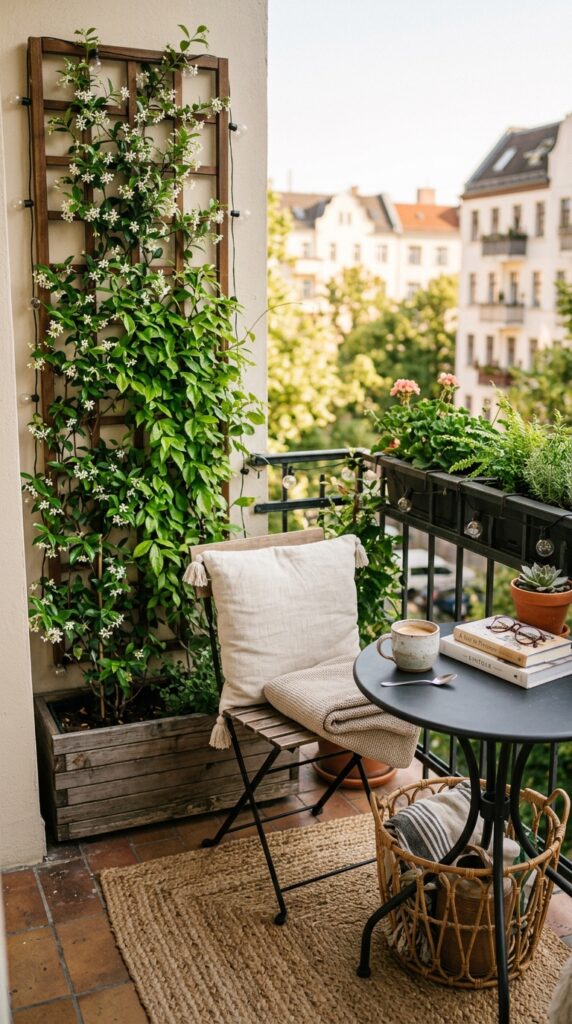
A trellis covered in climbing greenery gives you privacy and texture without using much floor space. Jasmine, clematis, ivy, or climbing roses can soften a plain wall and create a leafy backdrop near your seating area. When flowering varieties bloom, they also bring gentle color and scent to the balcony.
Use a narrow wooden or metal trellis inside a long planter. Freestanding trellis planters are useful for renters and usually cost $70 to $220. Choose a plant that suits your climate and the amount of sun the balcony receives. Guide young stems with soft plant ties and trim growth away from doors, lights, and neighboring spaces. In my experience, the biggest mistake here is expecting full coverage immediately. Climbing plants need time, so add a temporary fabric panel behind the trellis if you need privacy sooner. Avoid aggressive vines that may damage surfaces or spread beyond your balcony.
6. Hang a Weather-Resistant Fabric Panel
A single fabric panel can block one exposed side without surrounding the entire balcony. Canvas, outdoor curtain fabric, or shade cloth in warm beige, muted green, or charcoal creates a clean backdrop that makes the seating area feel more settled. It also hides unattractive railings or nearby building walls.
Measure the area carefully and leave small gaps at the sides for airflow. Attach the panel with outdoor grommets and strong ties, or mount it on a removable tension frame. A DIY fabric screen can cost $30 to $90. Outdoor canvas feels more substantial, while breathable shade cloth works better in hot climates. What I personally love about this is how easily you can coordinate the fabric with your cushions and rug. Avoid stretching the material too tightly because strong wind needs somewhere to pass through. Check that the panel does not block vents, drainage, or required emergency access.
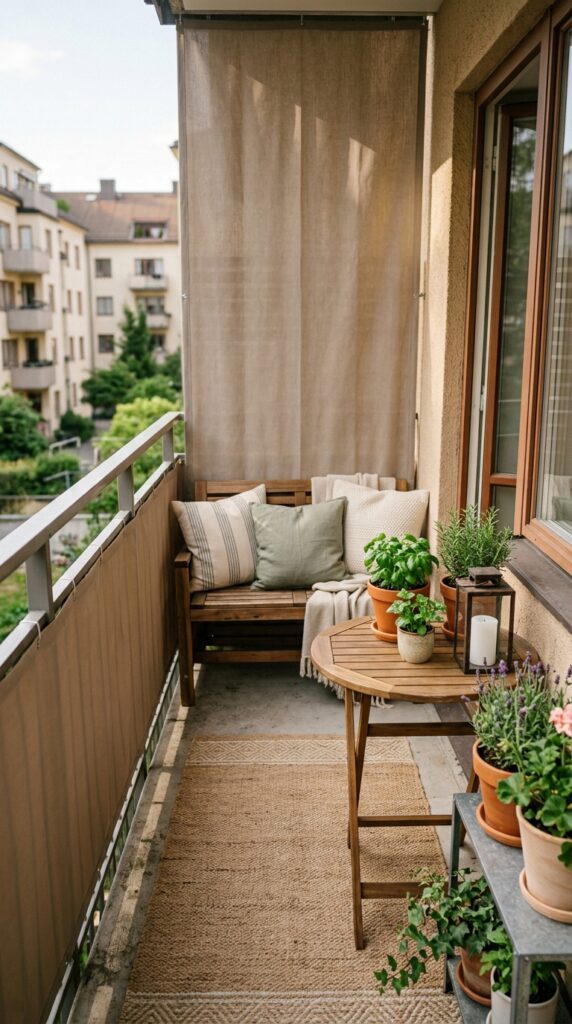
7. Create Balcony Privacy with Layered Planter Boxes
Layered planter boxes provide partial privacy while keeping the balcony bright. A tall rectangular planter at the back, medium pots in front, and trailing greenery near the railing create a lush screen with natural depth. The mix of leaves, flowers, and textured containers makes the barrier feel decorative rather than defensive.
Start with one or two long planters between 24 and 36 inches wide. Add upright grasses or compact shrubs, then place smaller pots around the base. A layered setup usually costs $80 to $250. Use similar planter colors such as terracotta, stone gray, or matte black to keep the arrangement connected. A lot of people spread pots evenly across the whole balcony, which uses too much floor space. Group them where privacy is needed most. Make sure the combined weight of containers, wet soil, and plants stays within your balcony’s safe load limit.
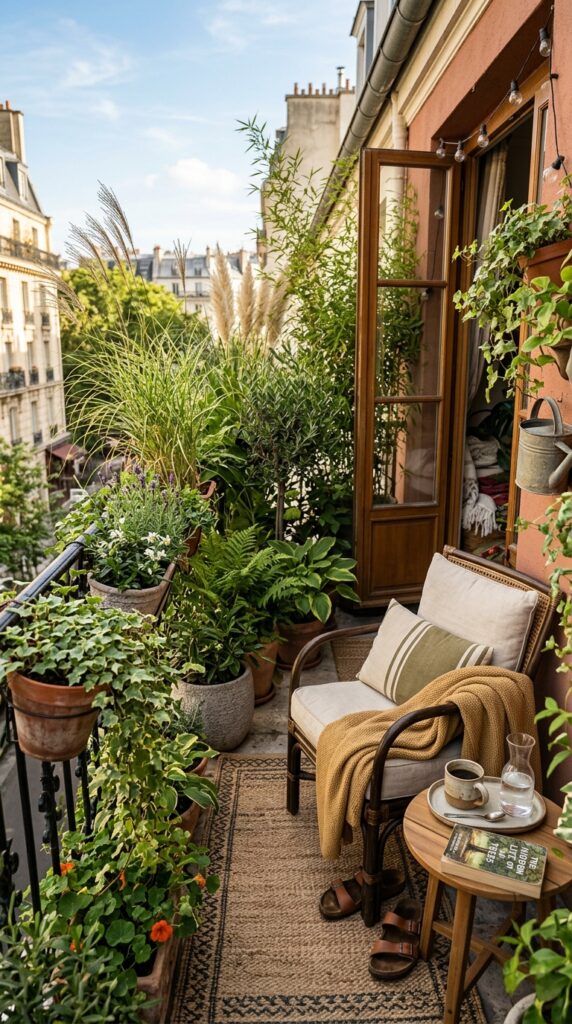
8. Use Outdoor Blinds for Adjustable Shade and Privacy
Outdoor roller blinds give you control over privacy throughout the day. Lower them when nearby windows feel too close, then roll them up when you want more sunlight and airflow. Bamboo-style blinds create natural warmth, while neutral weather-resistant fabric gives a cleaner, modern look.
Measure the opening from the ceiling or upper frame to the railing. Outdoor blinds usually cost $60 to $250, depending on size and material. Install them only where your building allows secure mounting. Choose models with tie-down clips at the bottom so the blind does not swing in the wind. I always recommend checking the sun direction before choosing opacity. A fully solid blind may make a shaded balcony too dark, while a woven blind can filter views and light more gently. Avoid leaving blinds lowered during storms or strong winds, since the fabric can act like a sail.
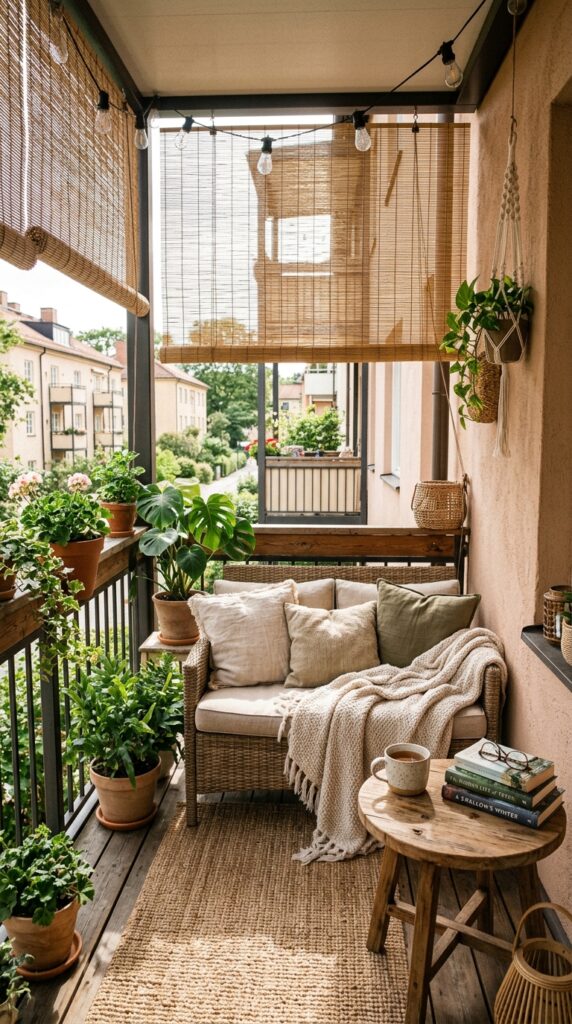
9. Add a Slatted Wood Privacy Wall
A slatted wood wall creates privacy while allowing air and light to move through the gaps. The warm grain works well with woven chairs, linen cushions, terracotta pots, and soft evening lighting. It can also support lightweight planters, small shelves, or string lights, making it useful as well as decorative.
For a renter-friendly setup, build a freestanding frame from treated wood and secure it inside heavy planter boxes. Leave gaps between the slats instead of creating a solid wall. A DIY version may cost $120 to $350, while ready-made panels can cost more. Seal the wood with outdoor stain or clear weather protection. A lot of people skip checking building rules before adding tall structures, but it makes all the difference. Confirm height limits and attachment requirements first. Do not hang heavy items from the slats unless the frame was built to support them.
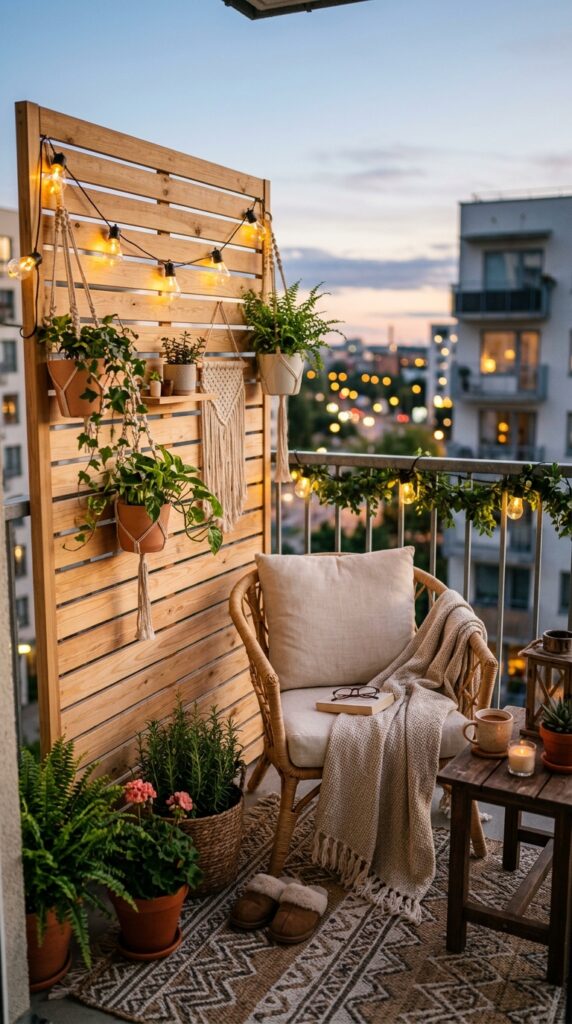
10. Combine Two Privacy Solutions for a Softer Finish
One privacy feature may not solve every exposed angle. A curtain can block the side view, while plants soften the railing. A reed screen may cover the lower half, while a light trellis adds height above it. Combining two lighter solutions often feels more comfortable than installing one large solid barrier.
Start by identifying the exact sightlines you want to reduce. Use the more solid material at seated height and add greenery or fabric above it. A mixed setup can cost $70 to $250, depending on the materials you already own. Keep the color palette simple so the layers feel connected. Cream fabric, natural bamboo, warm wood, and green plants work well together. In my experience, the biggest mistake here is covering every side of the balcony. Too much screening can block air and make a small space feel tight. Leave at least one area open to the view.
Conclusion
A private balcony does not need to feel closed, dark, or expensive. The most comfortable solutions usually block direct sightlines while still allowing sunlight, fresh air, and a little view of the outdoors. Curtains, greenery, screens, and railing covers can all work well when they suit the shape and conditions of your space.
These 10 balcony privacy ideas for apartments and small homes can be adapted for renters, homeowners, narrow balconies, and covered patios. Start with one or two updates where you feel most exposed. You might add a railing cover first, then bring in a tall plant or a soft curtain later.
Before installing anything, measure carefully and review your building rules. Wind safety matters just as much as appearance, especially with tall screens, fabric panels, and large plants. You can create a calmer outdoor corner without spending a huge amount by combining affordable decor updates with materials you already own.
Which privacy idea would you try first? I’d love to hear what you’re planning for your balcony.
FAQs
How can I make an apartment balcony private without drilling?
Use freestanding folding screens, tall potted plants, railing covers, tension rods, or trellis planters. These options can provide useful coverage without permanent wall attachments. Always secure lightweight items so they cannot shift or fall in strong wind.
What is the cheapest way to add balcony privacy?
A fabric panel, reed screen, or simple outdoor curtain is often the least expensive option. Basic materials may cost between $25 and $80. You can also use plants you already own and group them along the most exposed side.
Which plants are best for balcony privacy?
Bamboo in containers, ornamental grasses, palms, tall shrubs, and climbing vines can all create privacy. Choose plants based on sunlight, temperature, wind, and available pot depth. Avoid varieties that spread aggressively or grow too large for the balcony.
Are balcony privacy screens allowed in apartments?
Rules vary by building, landlord, and local safety code. Some properties limit screen height, color, material, or attachment methods. Check your lease or building guidelines before installing anything that changes the outside appearance.
How do I stop a balcony privacy screen from blowing over?
Choose a screen with a wide base and secure it to heavy planters or approved structural points. Use weather-resistant straps, ties, or clips and check them regularly. Fold or remove portable screens during severe weather and never rely on lightweight furniture to hold them in place.