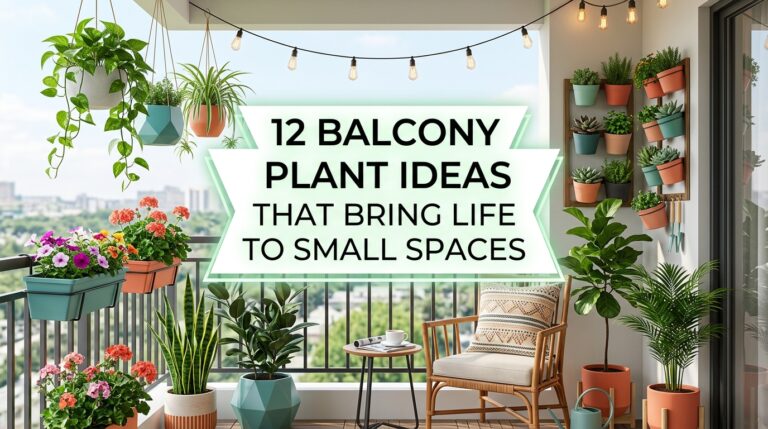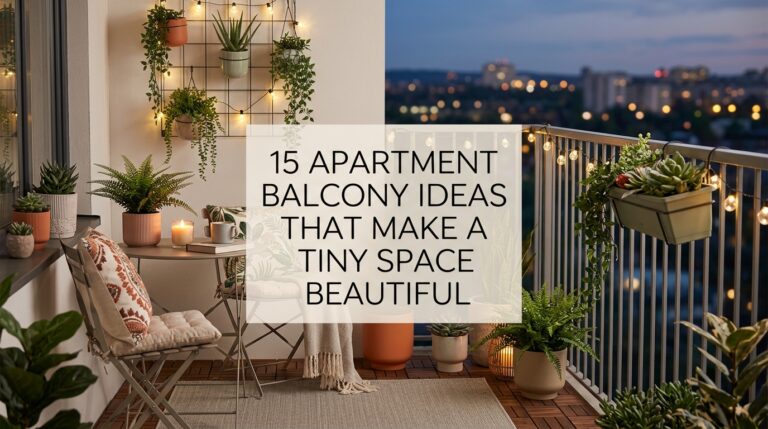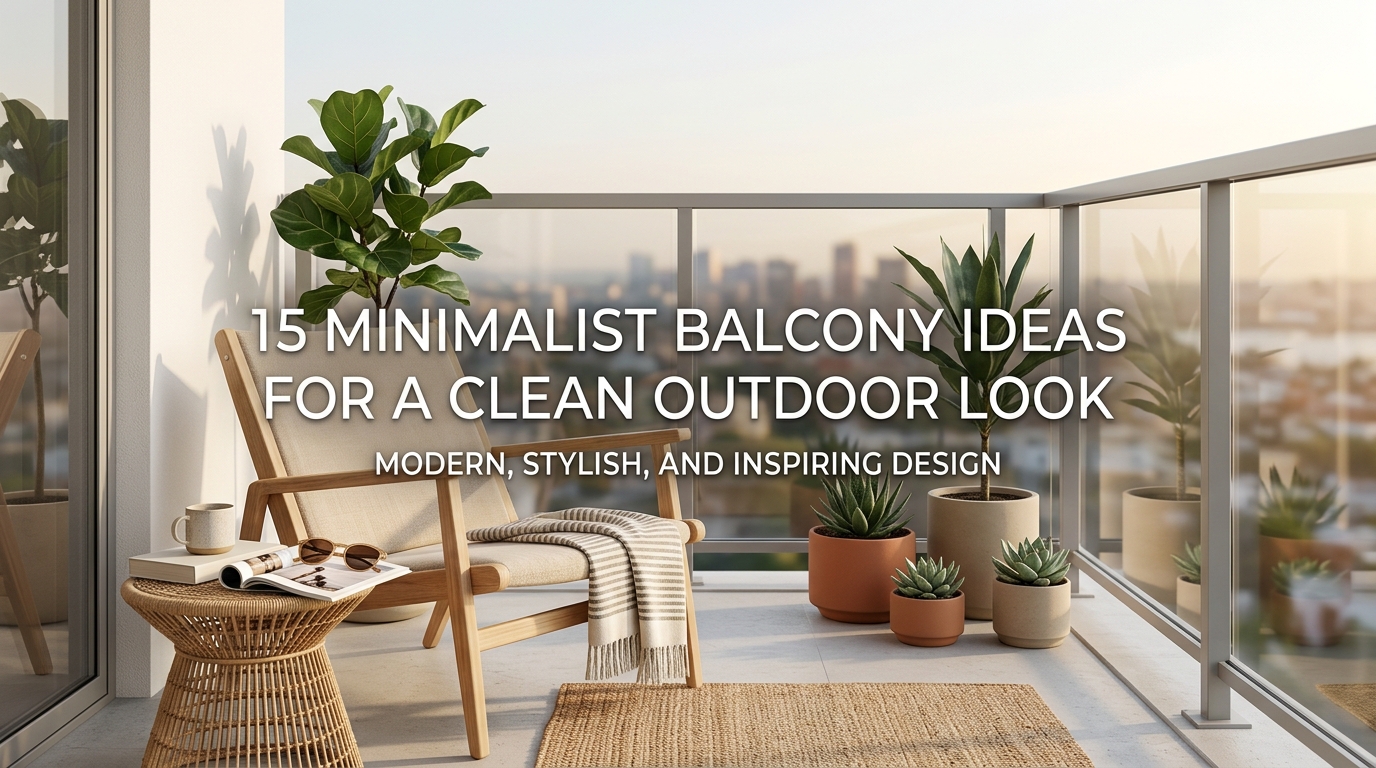
15 Minimalist Balcony Ideas for a Clean Outdoor Look
A small balcony can start feeling messy faster than you expect. One extra chair, a few mismatched plant pots, and a pile of outdoor items can make the whole area feel crowded. You may want a calm place for coffee or fresh air, but too many decorating choices can leave you unsure where to begin.
These minimalist balcony ideas for a clean outdoor look focus on simple layouts, useful furniture, soft colors, and clutter-free styling. Minimalist decor does not mean creating a cold or empty balcony. It means choosing fewer pieces and making sure each one adds comfort, function, or natural texture.
You will find ideas for compact seating, hidden storage, lighting, plants, flooring, and renter-friendly privacy. Each option includes practical measurements, affordable decor updates, realistic price ranges, and mistakes to avoid. Start by clearing the balcony and deciding how you want to use it. Once that purpose is clear, it becomes much easier to choose what deserves a place there.
1. Begin with One Clear Purpose
A minimalist balcony feels calm because everything supports one main activity. It might become a morning coffee corner, a quiet reading spot, or a simple place to sit after work. When the purpose is clear, the space feels inviting instead of filled with unrelated furniture and decorations.
Remove everything from the balcony before planning the layout. Then choose the one activity you are most likely to enjoy there. A coffee balcony may need one chair, a small table, and a mug tray. A reading corner may need a deeper seat, a cushion, and soft lighting. You may spend nothing if you reuse pieces from home, or around $40 to $150 for a few basic updates. In my experience, the biggest mistake here is trying to make one tiny balcony serve as a dining room, garden, storage area, and lounge at the same time. Choose one main use and let every item support it.
2. Choose Slim Furniture with Open Frames
Furniture with narrow legs and open frames allows more floor to remain visible. This makes a compact balcony feel lighter and easier to move through. A slim black metal chair or a simple wooden bistro seat creates structure without becoming the main focus of the space.
Measure your balcony before buying anything. Look for chairs between 20 and 26 inches wide and tables around 18 to 26 inches across. Metal mesh, narrow wood slats, and open-backed designs work well because they do not create a heavy block of color. A basic chair and table setup usually costs $80 to $220. Secondhand options can cost much less with a quick clean and fresh seat pad. What I personally love about this approach is that the furniture almost disappears into the layout. Avoid oversized arms, thick bases, and deep lounge chairs unless the balcony is wide enough to keep a clear walkway.
3. Use a Soft Neutral Color Palette
Soft neutrals create a quiet background that helps a small balcony feel ordered. Cream, warm gray, light wood, muted taupe, and gentle stone tones work well together. Greenery adds natural contrast without interrupting the calm look.
Choose one main neutral and one supporting shade. For example, combine cream textiles with light wood and gray planters. You can then add black details through a lantern or chair frame. New cushion covers, a small rug, and paint for old pots may cost $25 to $80. Reuse what you already own by removing pieces that do not match the palette and storing them for another season. A lot of people skip this editing step, but it makes all the difference. Minimalist home decor ideas work best when larger surfaces stay quiet. Avoid combining several strong patterns, bright planters, and different wood tones in a very small area.
4. Create Minimalist Balcony Ideas with Hidden Storage
Clutter is much easier to control when everyday items have a hidden home. A storage bench or lidded outdoor box can hold watering cans, cleaning supplies, cushions, and folded throws. With everything tucked away, the balcony stays ready to use without constant tidying.
Choose a storage piece between 30 and 48 inches wide, depending on your layout. A low box can double as a table, while a taller bench provides seating. Weather-resistant resin options usually cost $60 to $180. Wood versions may range from $120 to $300 and need regular sealing. Add one fitted cushion if you want to use the top as a seat. I always recommend this when someone wants small space storage without adding more cabinets. The common mistake is filling the box with damp textiles. Allow cushions and throws to dry fully before storing them, and avoid placing the box where it blocks drainage.
5. Add One Statement Plant Instead of Many Small Pots
One healthy plant can have more visual impact than a group of struggling pots. A small olive tree, dwarf citrus tree, or tall leafy plant brings height, movement, and softness to a balcony while keeping the floor uncluttered.
Choose a plant that suits your sunlight and climate. Place it in one clean-lined container between 14 and 20 inches wide. A young plant and pot may cost $40 to $150. For a lower-cost option, choose a snake plant, palm, or tall ornamental grass. Keep the planter color connected to the furniture and flooring. In my experience, the biggest mistake here is choosing a plant based only on how it looks in a shop. Check its light, temperature, watering, and mature size first. A single well-placed plant should frame the seating area rather than block the door, railing, or view.
6. Keep the Floor Visually Simple
A clean floor makes a small balcony feel wider and easier to use. One continuous material, such as plain outdoor tiles, a flatwoven rug, or simple deck squares, creates a steady base for the rest of the decor. The eye moves across the space without stopping at several competing textures.
Use one flooring treatment rather than layering multiple rugs and mats. Interlocking wood-look deck tiles usually cost $40 to $150 for a compact balcony. A weather-resistant rug may cost $25 to $90. Choose a size that leaves a small border of visible flooring around it. What I personally love about deck tiles is that they soften bare concrete without permanent installation. Check whether water can drain beneath them, and clean underneath a few times each year. Avoid tiny rugs that float awkwardly between the furniture or large rugs that bunch against the walls.
7. Mount a Narrow Railing Table
A railing table provides a useful surface while keeping the center of the balcony clear. It works well for coffee, breakfast, reading, or using a laptop outdoors. The slim design creates function without adding another piece of furniture to the floor.
Look for a table between 10 and 16 inches deep. Confirm that the bracket fits the shape and thickness of your railing. Railing tables usually cost $45 to $140. Pair one with a backless stool that slides underneath or a folding chair that can hang on the wall when not needed. Keep the surface mostly clear, with only a mug and one small herb pot. A lot of people choose a table that is too deep and then struggle to move behind it. Measure the walkway first. Also check building rules before attaching anything to the railing, and secure the table according to the manufacturer’s instructions.
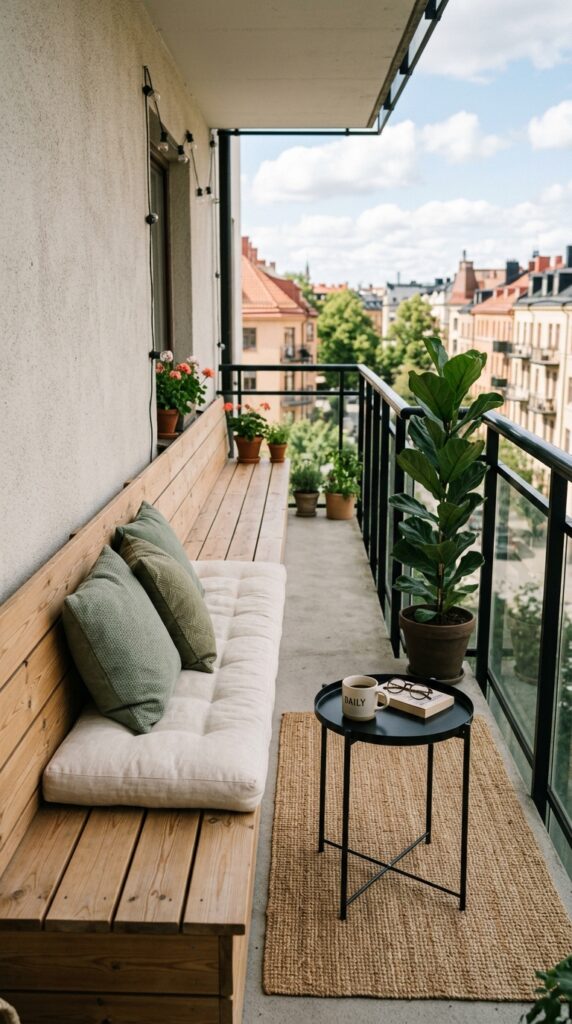
8. Use One Continuous Bench Along the Wall
A simple bench creates a clean horizontal line that makes a narrow balcony feel organized. It can provide more seating than separate chairs while keeping the walkway open. With one long cushion and a small side table, the setup feels soft but still restrained.
Choose or build a bench between 16 and 20 inches deep and around 17 to 18 inches high before adding the cushion. A basic treated wood bench may cost $80 to $220. You can also place two outdoor storage boxes side by side and cover them with one long cushion. Use a solid fabric in cream, gray, or muted green. I always recommend limiting the bench to two or three pillows at most. Too many cushions reduce usable seating and make the layout feel busy. Avoid making the bench so deep that it narrows the main walkway.
9. Choose One Simple Lighting Style
A single lighting style keeps the balcony calm after sunset. Warm string lights, one wall lamp, or a small lantern can create enough glow without filling the area with different fixtures. Soft light brings warmth to neutral furniture and natural wood.
Choose outdoor-rated warm white lighting between 2200K and 3000K when that information is available. One neat string of lights may cost $12 to $35. A rechargeable table lamp or LED lantern often costs $20 to $60. Place the light near the seating area rather than trying to brighten every corner. In my experience, the biggest mistake here is mixing cool overhead lights, colorful string lights, and several lanterns in one small space. Pick one source as the main light and add only one supporting candle or lamp if needed. Keep wires neat and away from drainage areas.
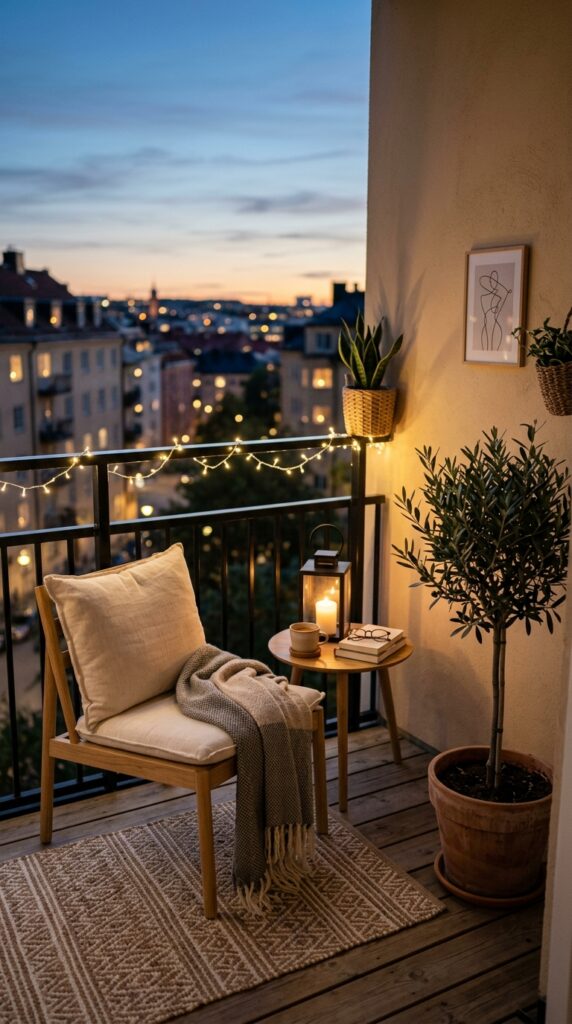
10. Create Privacy with Clean Vertical Lines
Privacy can support a minimalist balcony when the screen looks simple and connected to the architecture. A slatted wood panel, plain outdoor curtain, or tall narrow planter can reduce direct views without surrounding the whole space.
Cover only the side that feels most exposed. A fabric panel may cost $30 to $90, while a freestanding wood screen can range from $100 to $300. Choose neutral fabric, narrow slats, or planters with upright grasses to maintain clean vertical lines. What I personally love about this is that privacy becomes part of the design rather than an added barrier. Make sure any panel can handle local wind and does not exceed building rules. Avoid covering all sides of a small balcony. Too much screening can block airflow, natural light, and the sense of openness you are trying to create.
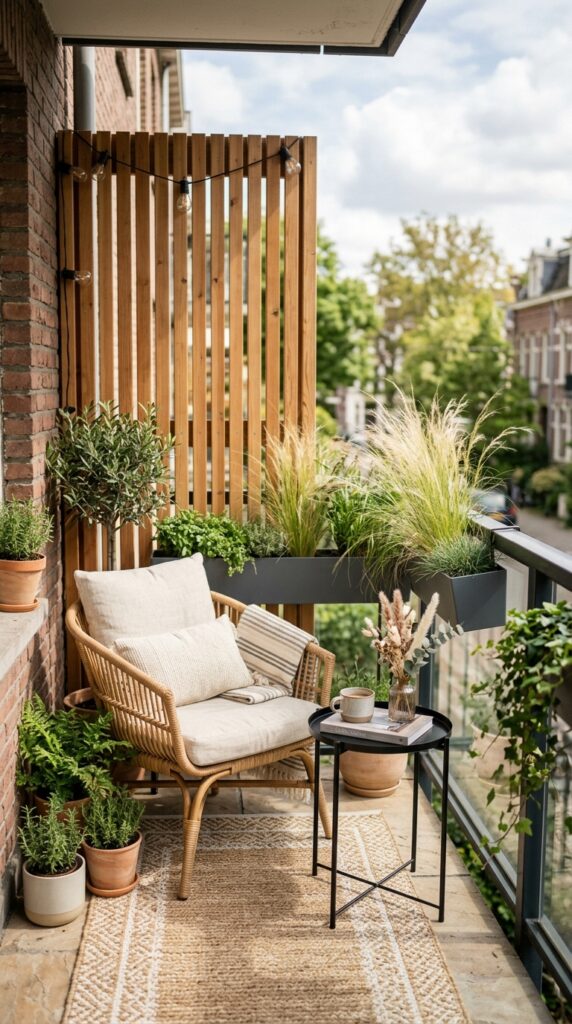
11. Display Decor in One Small Group
A minimalist space can still feel personal. The easiest way to add character is to group a few useful items on one tray or tabletop. A ceramic mug, a candle, and a small plant feel warm and lived in without spreading clutter across the balcony.
Choose a tray between 10 and 14 inches wide. Use it to hold two or three items that connect through color or material. A wooden tray with a cream candle and small terracotta pot works well with natural furniture. You may spend $10 to $40, though you can often use pieces from inside your home during dry weather. A lot of people place one small object on every available surface, which creates visual noise. Grouping items together makes them look more connected and leaves the rest of the balcony easy to clean. Bring delicate decor indoors when the weather changes.
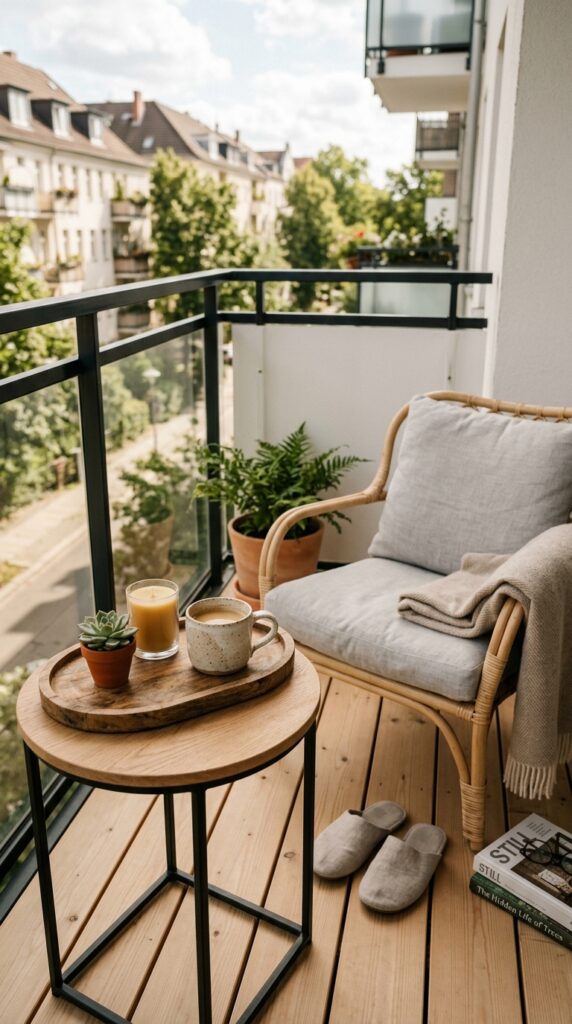
12. Use Repetition for a Clean Outdoor Look
Repeating the same shape, material, or color creates order without requiring extra decoration. Two matching planters, repeated black metal frames, or the same cream fabric across the cushions can make the balcony feel connected and calm.
Choose one element to repeat two or three times. You might use identical terracotta pots in different sizes or repeat natural wood in the chair, table, and plant stand. This can cost $20 to $80, depending on what you already own. You do not need matching furniture sets. Similar finishes are enough. In my experience, the biggest mistake here is repeating too many details at once. If the planters match, let the plants have different shapes. If the furniture frames match, vary the textiles slightly. Repetition should create rhythm, not make the balcony feel like a showroom.
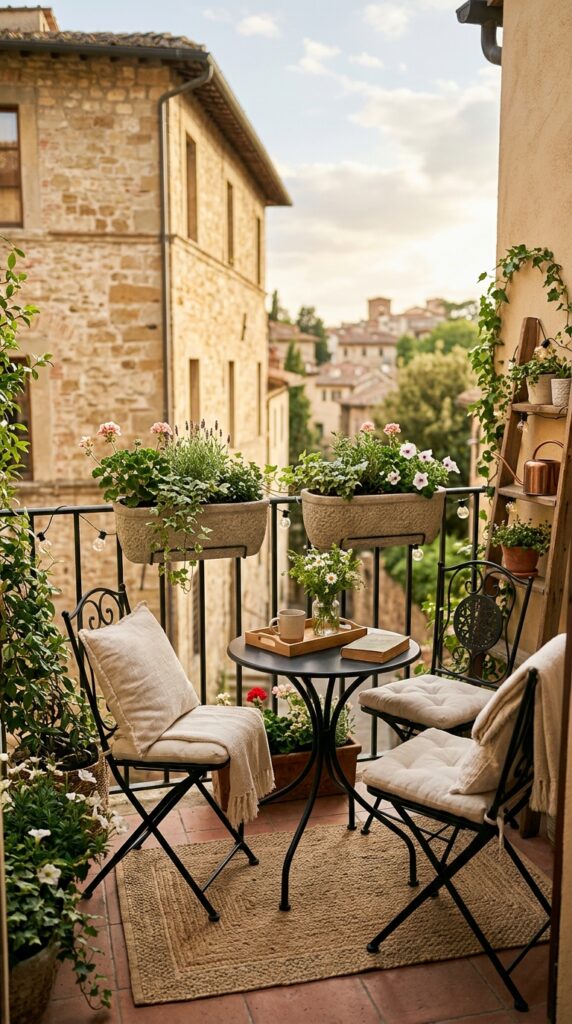
13. Add Texture Through Natural Materials
Minimalist decor can feel warm when you use natural texture instead of extra objects. Woven rattan, smooth wood, linen-look fabric, matte ceramic, and leafy greenery add depth while keeping the color palette quiet.
Choose two or three textures and repeat them across the balcony. Pair a wooden stool with a woven chair and one linen cushion. Add a matte planter instead of several decorative accessories. Small texture updates may cost $25 to $100. A woven basket can also provide hidden storage for a throw or gardening tools. What I personally love about this is that the balcony feels comfortable without becoming visually crowded. Avoid using several different wood stains, glossy plastics, patterned fabrics, and metallic finishes together. Keep the material story simple and let sunlight create natural variation.
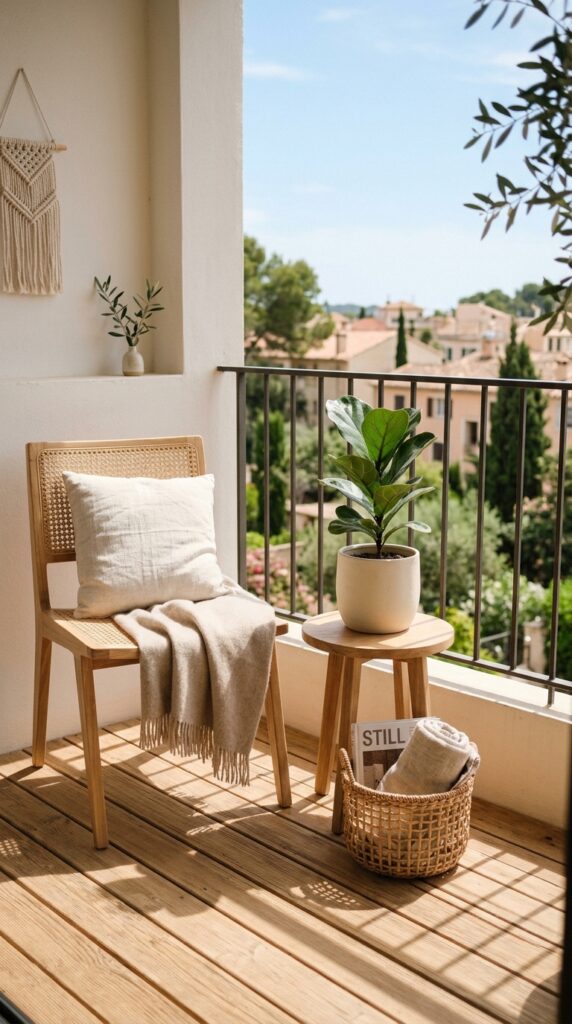
14. Leave Open Space Around Every Piece
Empty space is an important part of minimalist balcony design. A visible patch of floor between the chair, table, plant, and railing helps each piece stand out. It also makes the balcony easier to walk through and clean.
Aim for a walkway of at least 24 inches where possible. Keep the area near the door clear and avoid placing planters in narrow traffic paths. You may need to remove furniture rather than buy something new, so this idea can cost nothing. Test the layout by moving through the balcony while carrying a tray or watering can. A lot of people skip this step, but it makes all the difference. Furniture can fit on paper and still feel awkward in daily use. Avoid filling empty corners simply because they look bare. Open floor space helps the entire balcony breathe.
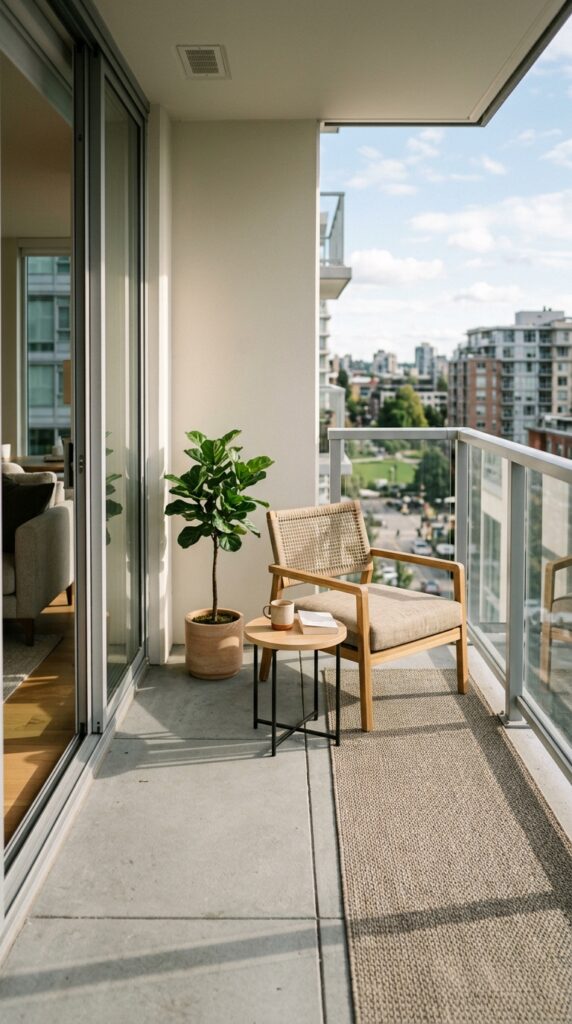
15. Build a Simple End-of-Day Reset Routine
A minimalist balcony stays clean when it is easy to reset. A folded throw, empty mug, watering can, and book can quickly create clutter if they remain outside for days. A short evening routine keeps the space calm and ready for the next morning.
Place a basket or hidden storage box near the door for cushions, books, and small accessories. Keep a cloth nearby for wiping the table and chair after dusty or wet weather. A basket may cost $15 to $45, while a storage box may range from $50 to $150. Spend two minutes clearing the surface and returning items after each use. I always recommend this when someone wants a clean look without constant deep cleaning. The biggest mistake is choosing storage that is difficult to open or too far from the seating area. Keep the routine simple enough to repeat every day.
Conclusion
A minimalist balcony does not need to feel empty or overly strict. It should feel easy to use, easy to clean, and comfortable enough that you actually want to spend time there. A few useful pieces can create more warmth than a balcony filled with furniture and decorations that compete for attention.
These 15 minimalist balcony ideas for a clean outdoor look can work in apartments, small homes, and narrow outdoor spaces. Start with one or two changes that reduce the most clutter. You might remove extra furniture, choose a simple color palette, or add hidden storage. Once the layout feels clear, you can bring in one plant, one light source, and a few soft textures.
You do not need a large budget to create Pinterest-worthy home styling. Reusing furniture, painting old planters, and editing what you already own can make a noticeable difference. Let function guide each choice, and give the remaining pieces enough room to breathe.
Which idea would you try first? I’d love to hear what you’re planning.
FAQs
How do I make a small balcony look minimalist?
Start by removing anything you do not regularly use. Choose one purpose for the balcony, then keep only the furniture and decor that support it. A limited color palette and visible open floor space will help the area feel calmer.
Which colors work best for a minimalist balcony?
Cream, beige, warm gray, muted green, soft black, and natural wood work well in small outdoor spaces. Choose one main neutral and one or two supporting colors. Repeat them across furniture, planters, and textiles rather than introducing many unrelated shades.
Can a minimalist balcony still feel cozy?
Yes. Use warm light, one comfortable cushion, natural wood, woven texture, and a healthy plant. Cozy interior inspiration comes from softness and practical comfort, not from filling every surface. Keep the layers simple and useful.
What furniture is best for a minimalist balcony?
Slim chairs, folding bistro sets, continuous benches, railing tables, and hidden storage seats work well. Look for open frames and simple shapes that leave the floor visible. Measure carefully and protect a clear walkway near the door.
How can I decorate a minimalist balcony on a budget?
Reuse indoor accessories during dry weather, paint mismatched pots, and shop for secondhand furniture. Focus on one strong update, such as a rug, chair, storage bench, or plant. Removing clutter often makes a bigger difference than buying more decor.