Can You Do Nails Without a License? What Beginners Should Know in 10 Steps
Learning nail art at home can start as a relaxing hobby, then quickly turn into requests from friends, relatives, and social media followers. Someone may offer to pay for a gel manicure, book an acrylic set, or exchange another service for your time. At that point, it is natural to wonder whether your growing hobby has crossed into licensed work.
So, can you do nails without a license? What beginners should know is that the answer depends on what you are doing, where you live, and whether you receive money or another form of payment. Doing your own nails is different from providing professional services to the public. Rules may also apply to the person performing the service, the location where it happens, and the type of treatment offered.
This guide uses current United States licensing examples to explain the main issues. It is general information rather than legal advice. Always confirm the rules with your state board, local authority, or the regulator where you plan to work before accepting clients.
1. Can You Do Nails Without a License on Yourself?
You can learn basic nail care by practicing on your own hands, using display tips, or working on a silicone practice hand. This gives you room to explore polish application, gel techniques, shaping, and simple nail art without the pressure of handling a paying client. A tidy table, good lighting, labeled products, and clean tools create a calm place to build confidence.
Licensing rules generally focus on professional services provided to other people, particularly when payment or another form of consideration is involved. New York, for example, defines nail specialty as providing nail services for a fee or any consideration or exchange. California also states that a license is needed to perform barbering and cosmetology services for a fee. (Department of State)
A practice hand may cost between $15 and $50, while a basic polish kit can range from $20 to $60.
2. Understand When a Hobby Becomes a Service
Painting your own nails is not the same as advertising appointments, setting prices, taking deposits, or regularly performing manicures for other people. Once you begin serving clients, your activity may fall under your location’s definition of professional nail care.
Do not assume that avoiding the word “payment” solves the issue. Tips, gifts, product exchanges, social media services, or bartered work may count as consideration in some jurisdictions. New York’s definition specifically includes services provided for a fee or any consideration or exchange. Its nail specialty category covers cutting, shaping, beautifying, and applying or removing artificial nails. (Department of State)
In my experience, the biggest mistake is accepting “practice money” without first checking the rules. Write down exactly what you plan to offer and send that description to the regulator. Asking an official question costs nothing and can prevent expensive problems later.
3. Check the Rules Where You Actually Work
Nail licensing is not based on one nationwide set of requirements in the United States. Training hours, exams, license names, fees, and permitted workplaces vary by state. Local zoning, business registration, and home occupation rules may add further requirements.
Official examples show how different the pathways can be. California lists a 400 hour manicurist program, Texas requires a 600 hour licensed school course followed by written and practical examinations, New York’s standard education route requires 250 hours and examinations, and Florida requires a 180 hour nail specialty program for registration. (California Barbering & Cosmetology)
A lot of people search for a general answer online but forget that the client’s location and work location matter. Use an official government licensing page, not an old forum post. School tuition varies widely, so compare approved programs and ask for the full cost in writing before enrolling.
4. Know What Beginners Can Do Before Licensing
You can build valuable skills without presenting yourself as a licensed nail professional. Practice polish control on swatch sticks, learn color theory, photograph nail art on display tips, study sanitation, and become familiar with product instructions. You can also attend an approved school or follow a lawful trainee route when one exists.
Do not use an unlicensed practice period to perform hidden salon work. New York offers a Nail Specialty Trainee registration, but the trainee must work under a licensed nail specialist and be employed by a licensed appearance enhancement business. The state also requires the trainee to meet its application conditions. (Department of State)
What I personally love about display tips is that they let you create a strong portfolio without risking someone else’s natural nails. A box of tips, stands, brushes, and polish may cost between $20 and $70. Avoid presenting practice designs as paid client appointments when they were created on artificial displays.
5. A Certificate Is Not Always a Professional License
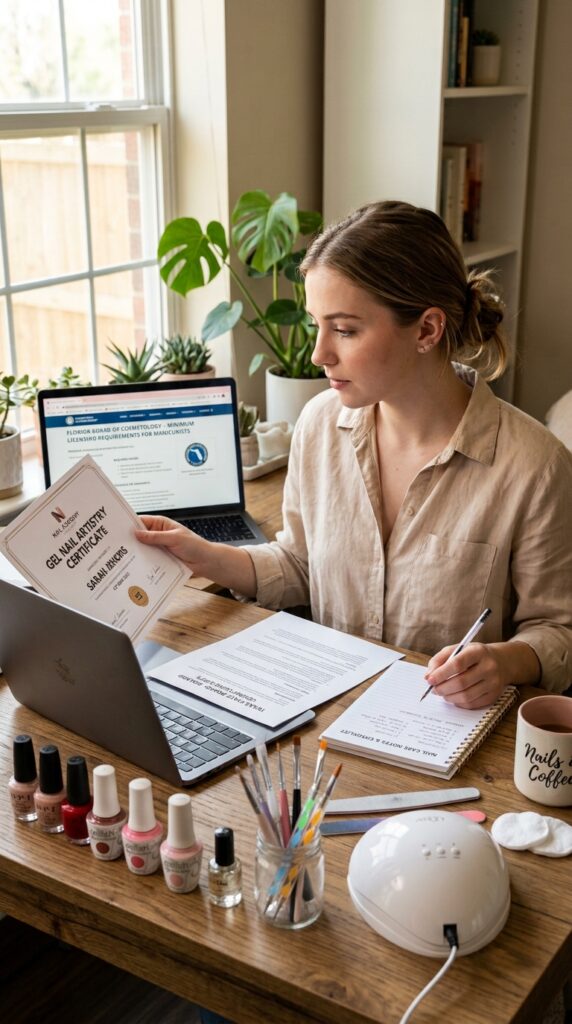
Online courses and private workshops can teach useful skills, but a completion certificate may not replace a government issued license. The document may show that you finished a class while still leaving you legally unable to accept clients in a regulated location.
Before paying for a course, ask whether the school is approved by your state or local licensing authority. Confirm the required hours, examination route, and exact credential you will receive. Texas requires its manicurist education to be completed through a barbering or cosmetology school licensed in Texas. California also requires applicants to meet the board’s manicurist education and examination pathway. (Texas DLR)
In my experience, the biggest mistake is choosing a cheap online certificate because the page uses words such as “accredited” or “professional.” Verify those claims directly with the regulator. Short online classes may cost $20 to $200, while approved licensing programs can cost substantially more.
6. Can You Do Nails Without a License From Home?
Working from a spare bedroom or converted home studio does not automatically remove licensing requirements. You may need a personal nail credential, approval for the premises, a business registration, insurance, or local permission to receive customers at home.
Some states regulate the business location separately from the practitioner. New York requires an appearance enhancement business license to operate an establishment offering nail specialty services. Texas also issues establishment licenses, including full service, specialty, mini, and mobile establishment categories. California explains that an establishment license is tied to the location and owners for which it was issued. (Department of State)
A lot of people spend money decorating a home studio before checking whether clients are legally allowed to visit. Contact the licensing board and local planning office first. Application costs vary. Current examples include a $60 New York appearance enhancement business application and a $78 Texas establishment application. (Department of State)
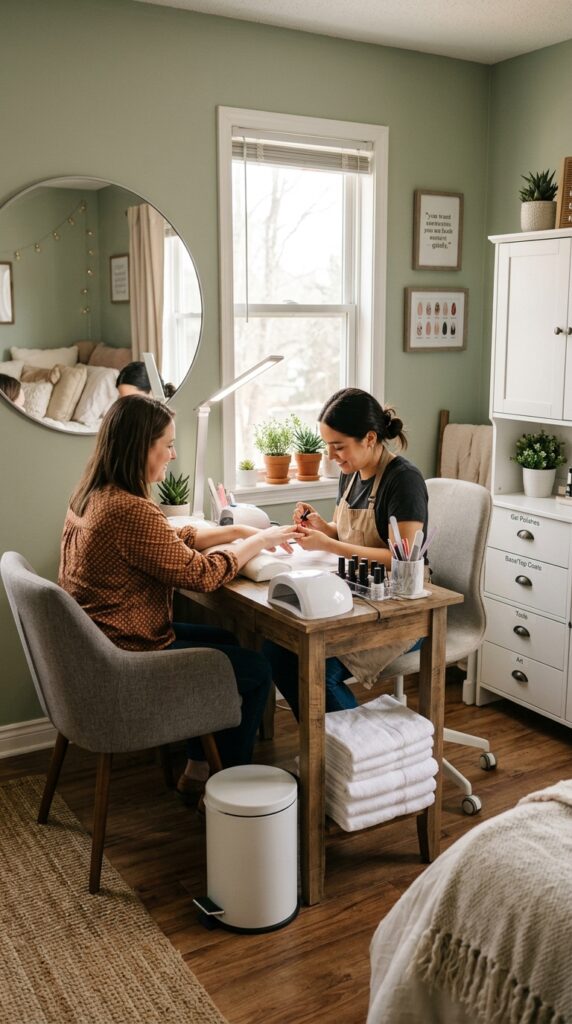
7. Treat Sanitation as a Core Skill
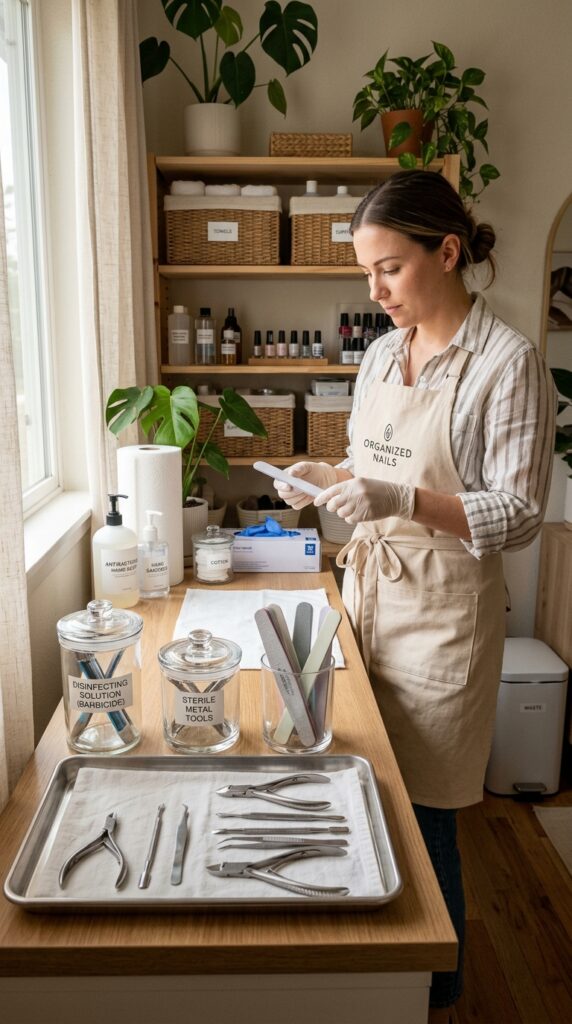
A beautiful manicure does not make unsafe work acceptable. Nail services involve repeated contact with hands, feet, skin, tools, dust, and chemical products. Shared implements can become a hygiene concern when they are not cleaned and handled correctly.
The CDC advises cleaning nail grooming tools before use and states that tools shared in commercial nail settings should be sterilized before use. It also warns against cutting cuticles because they help act as a barrier against infection. OSHA identifies chemical, biological, and ergonomic hazards in nail salon work, including contact with infected skin, nails, blood, product vapors, and repetitive hand movements. (CDC)
A common mistake is spraying a dirty tool and immediately returning it to a drawer. Learn the official cleaning, disinfection, storage, and single use item rules for your area. Basic covered containers, gloves, disposable items, and approved supplies may cost between $30 and $100.
8. Plan for Ventilation and Product Safety
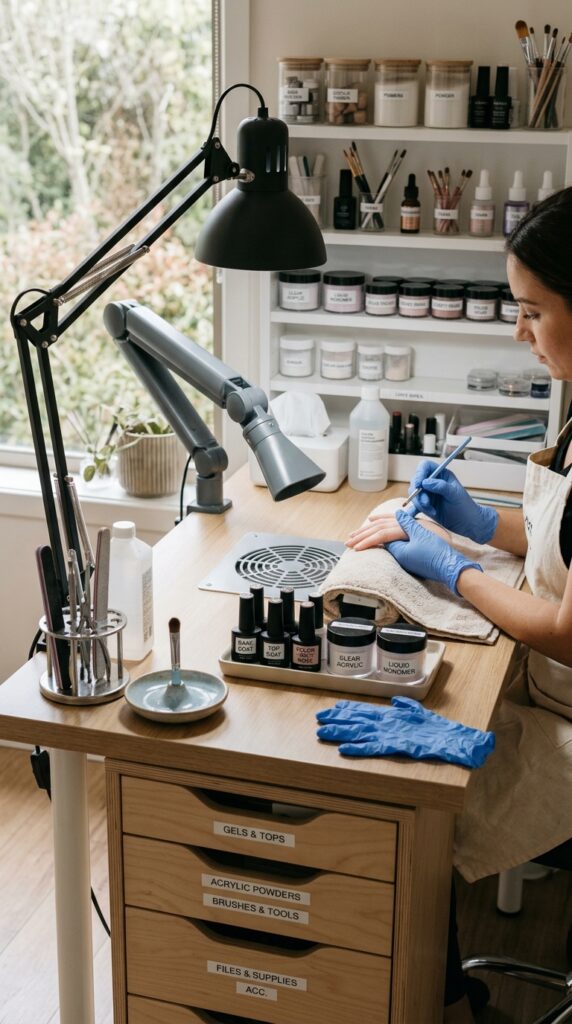
Gel, acrylic, polish, glue, and removers can expose a nail worker to dust, vapors, and ingredients that may irritate the eyes, skin, or breathing system. Opening one small window may not provide enough control for frequent professional services.
OSHA recommends reading product labels and safety information, keeping containers closed when they are not in use, and using effective ventilation. Its nail salon guidance explains that local exhaust ventilation can reduce worker exposure to nail product chemicals. (OSHA)
What I personally love about planning safety early is that it keeps the work area practical instead of filling it only with decorative furniture. Store products away from heat, follow manufacturer instructions, and keep food and drinks away from the manicure table. A dust collector or tabletop extraction system may cost between $50 and $250, while a more complete professionally installed system can cost considerably more.
9. Stay Inside the Legal Scope of Nail Services
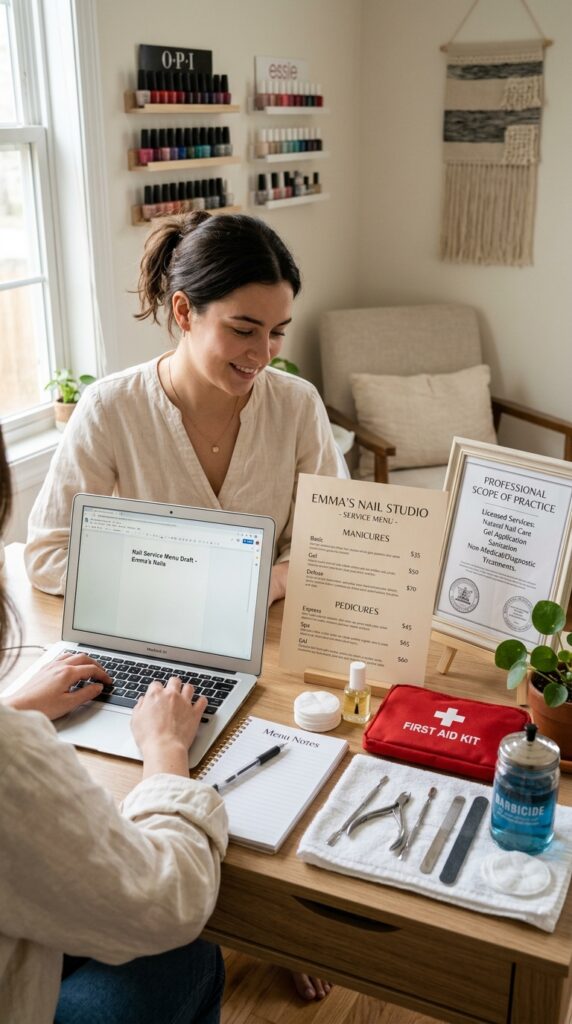
A nail license does not usually authorize every beauty or health related procedure. Your legal scope may describe which manicure, pedicure, artificial nail, massage, or skin services you can perform. Work involving infection, injury, or medical treatment may need to be referred to a healthcare professional.
Florida defines nail specialty as manicuring and pedicuring and includes nail extensions within its regulated services. Texas publishes a separate scope of practice guide for manicurists, while California provides a manicurist scope resource for licensees. (MyFloridaLicense)
In my experience, the biggest mistake is adding new treatments after watching a short tutorial without checking whether they fall inside the license. Create a written service menu based on your regulator’s current scope. Do not diagnose nail conditions or work over painful, swollen, bleeding, or visibly infected areas. Reviewing the official scope is free and should happen before purchasing specialist equipment.
10. Build a Legal Path Before Accepting Clients
Start by identifying your regulator and reading the current practitioner requirements. Next, find approved schools, compare total tuition, and ask what is included in the student kit. Plan for exams, application fees, business requirements, sanitation supplies, insurance, taxes, and suitable work premises.
Official fees are often only one part of the total cost. New York currently lists a $40 initial nail specialty application, plus separate written and practical examination fees under its standard route. Texas lists a $50 specialty practitioner license fee in its current licensing summary. California’s 2026 board newsletter lists a $50 practitioner renewal fee. (Department of State)
I always recommend building your portfolio on display tips while completing the lawful pathway. Avoid collecting deposits or publishing an opening date until you know when you may legally work. A basic practice portfolio may cost between $30 and $100, while education and business costs depend heavily on location.
Can You Do Nails Without a License? The Main Takeaway
So, can you do nails without a license? What beginners should know is that personal practice and professional client work are not the same. You can build your technique on your own nails, artificial tips, and practice hands. Once you begin offering services to other people, especially for money, tips, gifts, barter, or another benefit, licensing and business rules may apply.
Do not rely on advice from another beginner whose location may have different laws. Start with one or two practical actions. Find your official regulator and write down exactly which services you hope to provide. Then confirm the required education, examinations, workplace license, and sanitation standards.
You do not need to build an expensive studio immediately. A clean practice area, a small product collection, and a display tip portfolio are enough while you research and train. Taking the legal route protects your future business as well as the people who trust you with their nails.
Which part of becoming a nail technician are you researching first? I’d love to hear what you’re planning.
Frequently Asked Questions
Can I do my friends’ nails for free without a license?
The answer depends on local law and the exact arrangement. Do not assume that calling a service free makes it exempt, especially if you receive tips, products, gifts, promotion, or another exchange. Ask the licensing authority to confirm whether unpaid model practice is permitted and under what conditions.
Can I charge only for nail products without a license?
Charging only for materials may still be connected to providing a regulated service. Some laws cover services performed for any consideration or exchange, not only a listed manicure price. Get a written answer from the regulator before collecting money.
Can I sell press on nails without being licensed?
Selling finished press on sets may be treated differently from applying, shaping, or removing products on another person. Business registration, product labeling, tax, and consumer rules can still apply. Confirm local requirements before offering application appointments with the sets.
Does an online nail course make me licensed?
Not automatically. A course certificate shows that you completed that provider’s training, but the government licensing process may require an approved program, set training hours, examinations, and an application. Check the course with your regulator before enrolling.
Do I need both a nail license and a salon license?
You may need a personal practitioner credential and separate approval for the location or business. New York, Texas, and California all distinguish in some way between practitioner licensing and establishment requirements. (Department of State)