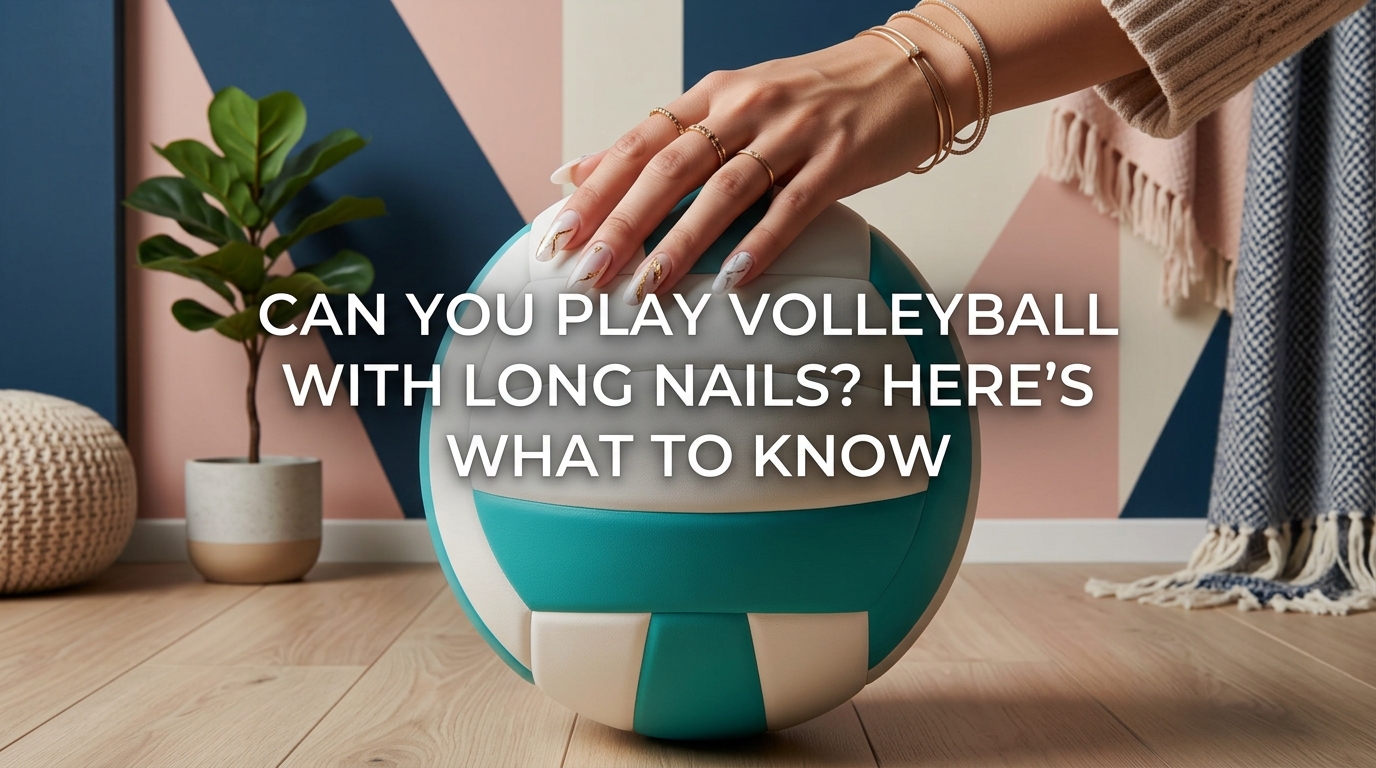
Can You Play Volleyball With Long Nails? Here’s What to Know in 10 Steps
You may love the look of long almond, coffin, or square nails, then feel unsure when volleyball practice appears on your schedule. The ball moves quickly, your hands make repeated contact, and one awkward hit can put pressure on a nail extension. You may also worry about scratching another player or being stopped by an official.
So, can you play volleyball with long nails? Here’s what to know: it may be possible during casual play, but very long, sharp, loose, or heavily decorated nails can create safety concerns. Competitive rules may not name one required nail length. Instead, officials commonly use a broader standard that prohibits anything likely to cause injury. The current FIVB and USA Volleyball indoor rules both state that objects or equipment that may cause injury must not be worn.
This ten step guide explains the rules, possible nail injuries, safer shapes, manicure care, and what to check before practice or a match.
1. Can You Play Volleyball With Long Nails? The Direct Answer
You can sometimes play recreational volleyball with moderately long nails, especially when they are smooth, secure, and softly rounded. However, long extensions are not the safest choice for regular training. Volleyball involves serving, setting, blocking, diving, and reaching near other players, so your fingers and nails can experience sudden impact.
For organized competition, the referee or event staff may decide that a nail shape presents an injury risk. FIVB Rule 4.5.1 prohibits objects that may cause injury, while the current USA Volleyball rulebook uses the same broad safety principle for personal equipment and prohibited items.
Ask your coach before match day rather than waiting for the pregame inspection. In my experience, the biggest mistake is assuming that a manicure is allowed simply because another player wore something similar. Rules and safety decisions can vary by league and official.
2. Check Competitive Volleyball Rules Before the Match
Neither appearance nor nail material alone decides whether you can participate. The main question is whether the nails could injure you or another player. USA Volleyball’s current indoor rules prohibit objects or equipment that may cause injury and place safety judgments with officials and tournament staff.
Contact your coach, league organizer, or referee before paying for a long manicure. Send a clear photo if needed and ask whether there is a local nail length or shape policy. School, club, beach, recreation, and private tournament rules may not be identical.
A lot of people skip this step, but it makes all the difference. Filing down a fresh extension in the locker room can damage the shape and leave rough edges. A home nail file costs about $5 to $15, while salon shortening and reshaping may cost around $10 to $30.
3. Understand the Risk of Playing Volleyball With Long Nails
Long nails extend beyond the supported fingertip, so they have more opportunity to bend or catch when your hand hits the ball, floor, net, clothing, or another player. A loose artificial nail may also lift farther if it receives a sudden impact. Dermatologists recommend keeping nails short to reduce bending and catching, particularly when playing sports.
The risk is not only a broken decorative tip. A hard impact can hurt the natural nail underneath, and sharp edges may scratch a teammate during a block, scramble, or celebration. Very long stiletto and pointed almond shapes create more exposed length than short oval or squoval nails.
What I personally love about recognizing the risk early is that you can adjust the manicure before damage occurs. Do not wait for the first painful bend to decide that the length is difficult to manage.
4. Choose a Short, Rounded Volleyball Nail Shape
Short oval, rounded, and squoval nails are easier to manage during volleyball because they have fewer sharp corners and less unsupported length. They can still look polished with glossy red, milky pink, French tips, chrome, or simple nail art.
Ask for the free edge to stay close to the fingertip. Run a finger across every nail after filing. The surface should feel smooth, with no pointed corners, gems, or rough decorations that could catch. In my experience, the biggest mistake is keeping a long square shape and only rounding the corners slightly. The length still creates leverage even when the corners feel softer.
A glass file may cost around $8 to $20. A salon reshaping service may range from $10 to $30, depending on whether gel or acrylic product needs removal. Keep a small file in your gym bag for minor roughness, but never file through a deep crack.
5. Be Careful With Acrylic, Gel, and Press On Extensions
Artificial nails can feel strong, but strength does not remove the risk of leverage. When a long acrylic or builder gel extension catches, pressure can travel toward the natural nail. Press on nails may loosen during play, creating another distraction or safety concern.
Inspect each nail before practice. Look for lifting near the cuticle, sidewall cracks, movement, or a painful feeling when you apply light pressure. Do not play with an extension that is already loose. The American Academy of Dermatology notes that artificial nails can be hard on natural nails, and repeated maintenance may leave them thin or brittle.
I always recommend a short overlay when someone wants added strength without dramatic length. A salon gel overlay may cost about $35 to $70. At home press on sets may cost $8 to $25, but they are not a reliable protective solution for active play.
6. Test Passing, Setting, and Serving Before Game Day
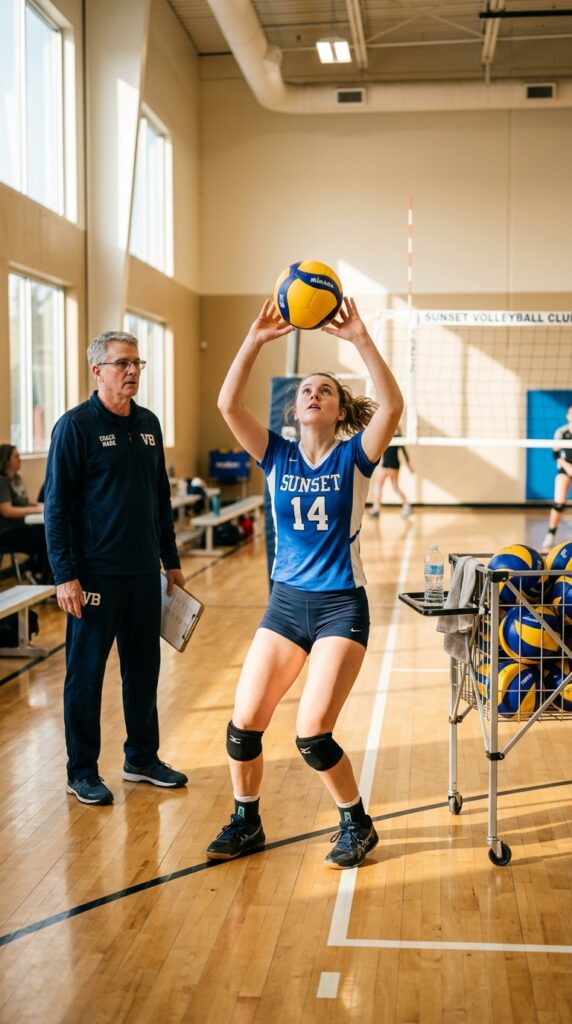
Different volleyball skills place your hands in different positions. Forearm passing usually keeps the nails away from the ball, but setting brings the fingers close to fast contact. Blocking, serving, diving, and emergency saves can also expose the fingertips to unexpected force.
Test the manicure during a controlled practice rather than during a competitive match. Begin with light partner passing, gentle setting, and easy serves. Stop if the nails press into your palms, change your hand position, or feel unstable. Your technique should not become awkward simply to protect the manicure.
A common mistake is assuming that successful forearm passing means every skill will feel safe. Ask a coach to watch your hand position during setting and blocking. A private lesson may cost around $30 to $80, but feedback during regular team practice usually requires no additional spending.
7. Avoid Raised Gems, Charms, and Sharp Decorations
Rhinestones, metal charms, pointed crystals, and raised sculpted art add texture that may catch on clothing or scratch skin. Even when the base nail is fairly short, a hard decoration can change how safely the hand moves near teammates.
Choose flat designs for volleyball weeks. Fine French tips, painted stars, dots, flowers, chrome powder, and smooth foil can provide detail without a raised surface. Check that the top coat fully seals any small sticker or foil edge.
What I personally love about flat nail art is that it still looks expressive while remaining easier to maintain. Avoid covering a raised charm with tape and assuming the issue is solved. Tape can loosen with sweat, and the hard shape remains underneath. Flat nail art may add $5 to $20 at a salon, while simple stickers and top coat may cost $10 to $25 for home use.
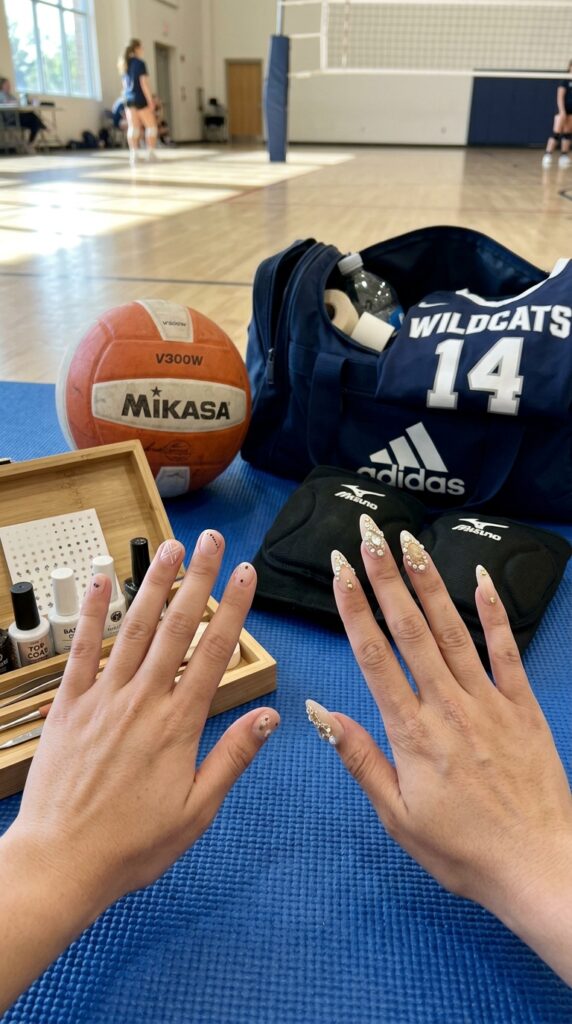
8. Do Not Depend on Tape to Make Long Nails Safe
Wrapping fingertips may seem like an easy way to cover long nails, but tape does not remove the length or pressure placed on the natural nail. Thick wrapping may also affect how your fingers spread and feel the ball. An official can still decide that the underlying shape creates a safety concern.
Use sports tape only for a purpose approved by your coach, athletic trainer, or medical professional. Do not tightly wrap a healthy fingertip simply to hide a pointed extension. Check circulation and remove tape if the finger becomes numb, cold, discolored, or increasingly painful.
In my experience, the biggest mistake is waiting until warmups to experiment with tape. Test any approved wrapping method before match day. A roll of athletic tape generally costs between $5 and $15, but shortening the nail is usually a more direct solution when length is the concern.
9. Know What to Do if a Nail Breaks
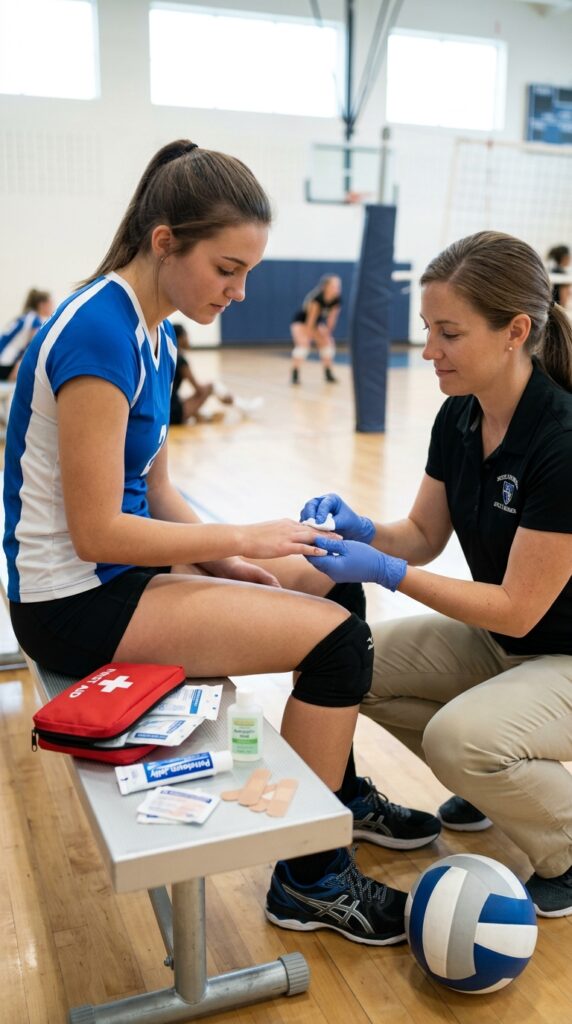
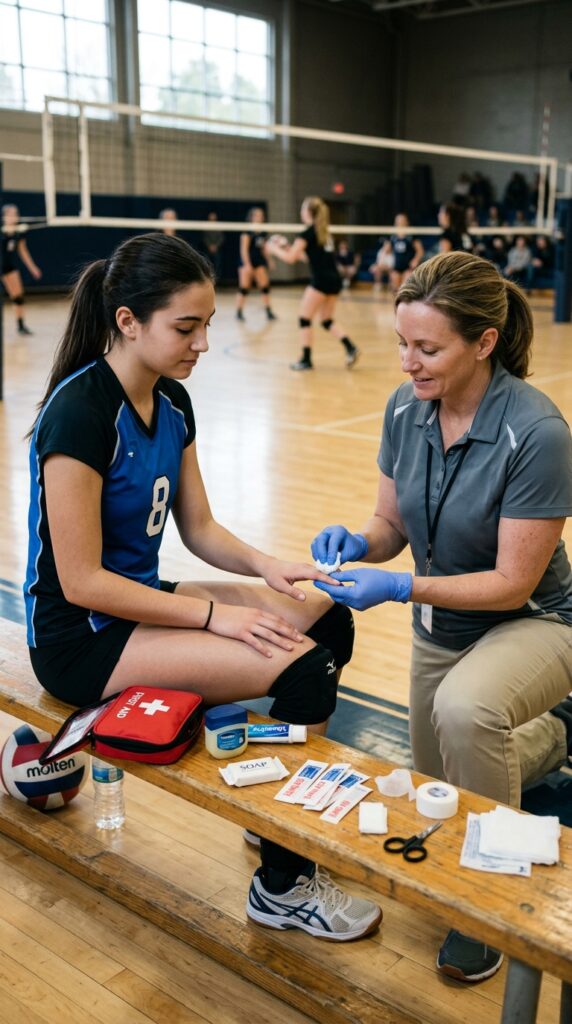
Stop playing if a nail cracks deeply, lifts from the nail bed, bleeds, or causes sharp pain. Continuing to hit the ball may make the injury worse. Move away from the court so the area can be cleaned and protected.
The American Academy of Dermatology advises gently trimming only the nail portion that is no longer attached, cleaning the injury with soap and water, applying petroleum jelly, and covering it with gauze or a bandage. Seek medical care for severe pain, heavy bleeding, a deep cut, increasing swelling, or signs of infection.
Do not pull off a partly attached nail or apply nail glue over an open injury. Keep a small first aid pouch in your gym bag. Basic gauze, bandages, petroleum jelly, and a clean clipper may cost between $10 and $25.
10. Build a Volleyball Friendly Manicure Routine
Plan your nail appointments around your playing schedule. Choose shorter lengths during tournaments, training camps, or busy match weeks. Save longer extensions for a break when you will not be practicing regularly.
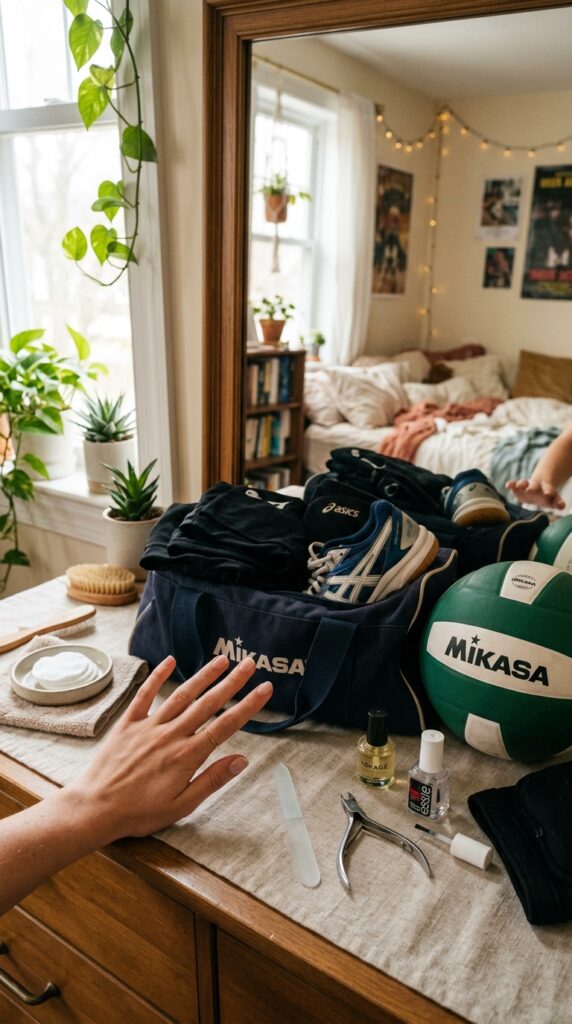
Inspect your nails the evening before every match. Smooth rough edges, remove loose decorations, moisturize the surrounding skin, and check for lifting. Keep polish colors and designs simple enough that shortening one nail will not ruin the full set. A glossy solid shade, micro French tip, or tiny painted detail is easier to repair than complex raised art.
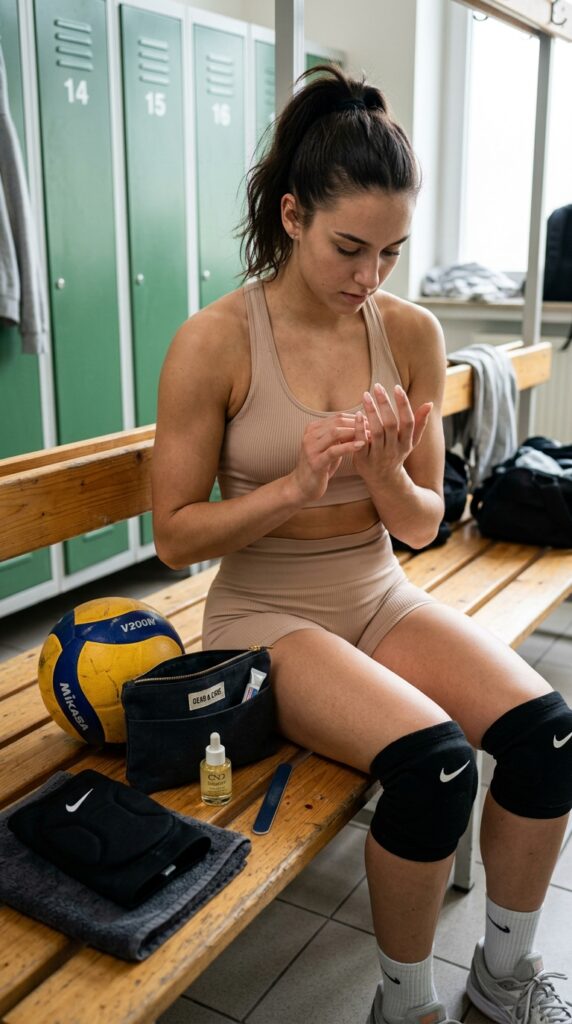
A lot of people focus only on preserving the manicure and forget that comfortable hand movement comes first. A basic care kit with a glass file, clippers, cuticle oil, and clear polish may cost between $15 and $40. Regular small adjustments are usually easier than emergency repairs before a game.
Can You Play Volleyball With Long Nails Safely?
So, can you play volleyball with long nails? Here’s what to know: moderate length may be manageable during casual play, but long, pointed, loose, or heavily decorated extensions increase practical safety concerns. Competitive officials may also stop you from playing when they judge that your nails could cause injury under the event’s safety rules.
You do not need to give up stylish nails completely. Begin with one or two sensible changes. Shorten the free edge, choose a rounded shape, or switch raised decorations for flat painted art. These updates can preserve the polished look while making setting, serving, blocking, and diving more comfortable.
A sports friendly manicure also does not require a large budget. A dependable file, cuticle oil, and a few wearable polish shades can create many neat designs. Check the rules before a match and place the safety of your hands and teammates first.
Would you shorten your nails for volleyball or switch to a rounded gel overlay? I’d love to hear what you’re planning.
Frequently Asked Questions
Are long nails officially banned in volleyball?
The current FIVB and USA Volleyball indoor rules do not provide one universal nail length in the cited safety sections. Instead, they prohibit objects or equipment that may cause injury. This allows officials to address a long or sharp manicure when it presents a safety concern.
What nail length is safest for volleyball?
A short free edge that stays close to the fingertip is easier to manage than a long extension. Rounded, oval, and squoval shapes also remove sharp corners. Your coach or league may apply additional requirements.
Can I set a volleyball with acrylic nails?
You may be able to set with short, secure acrylic nails, but long extensions can affect finger position and receive direct impact from the ball. Test them during controlled practice first. Stop if you feel bending, pressure, movement, or pain.
Can I tape over long nails for a match?
Tape does not shorten the extension or remove pressure on the natural nail. It may also affect finger movement and ball control. Ask the referee, coach, or athletic trainer before relying on tape.
What should I do if my nail lifts during volleyball?
Stop playing and avoid pulling the nail. If the nail is bleeding, deeply cracked, very painful, or separating from the nail bed, clean and protect it and seek medical advice when needed. Dermatologists recommend keeping injured nails from catching while they heal.